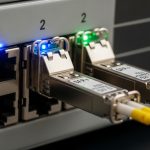
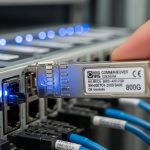
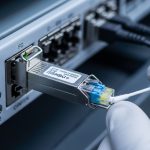
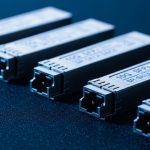
In a leaf-spine data center upgrade, the hardest part is not “buying optics,” it is keeping link stability while moving from 10G to 25G across thousands of ports. This case study shows how an infrastructure team deployed 25G SFP-DD for higher density on existing fiber routes, with the exact validation steps a field engineer would run. You will also get a practical selection checklist, a troubleshooting section with root causes, and a cost and ROI view based on real deployment numbers.
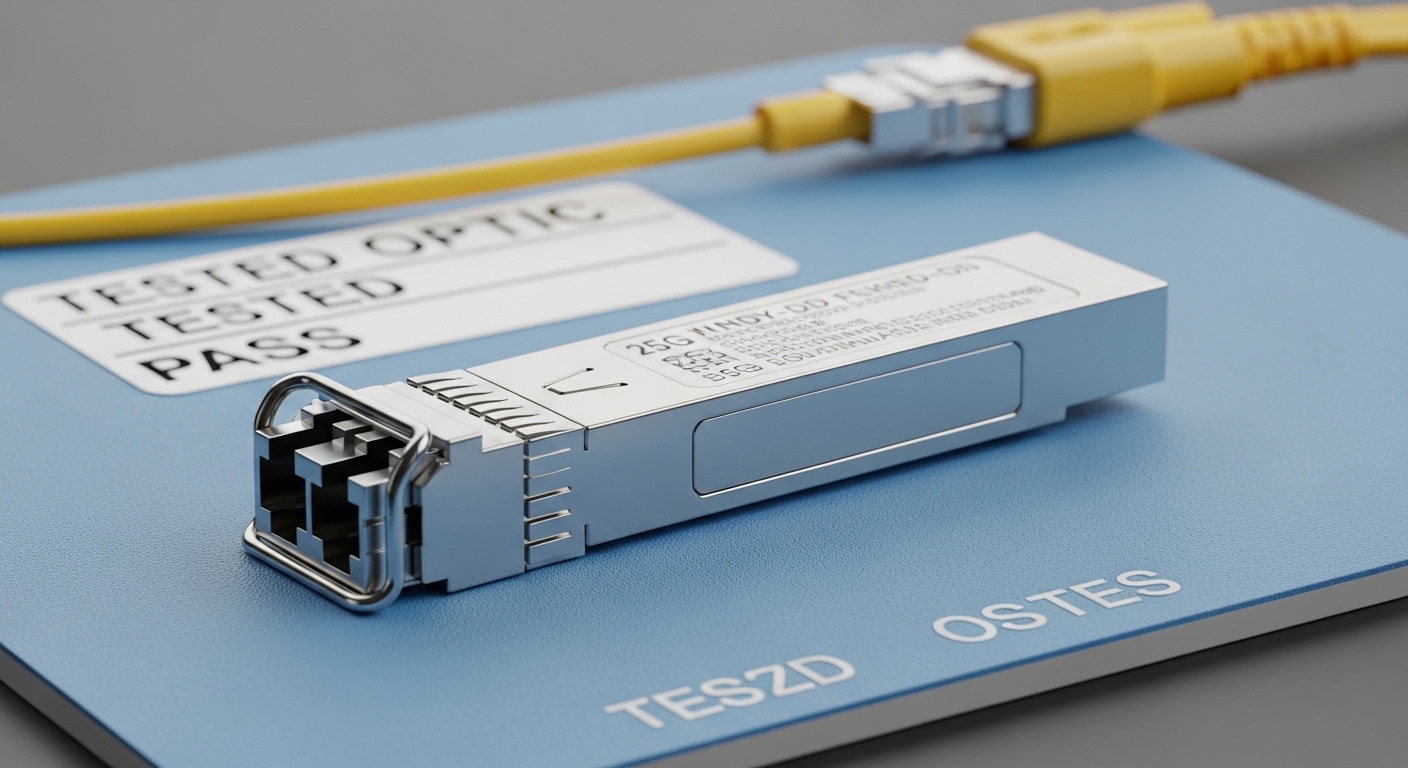
Problem and challenge: moving to 25G without breaking optics compliance
Our challenge started with a 3-tier leaf-spine environment where top-of-rack switches needed more east-west throughput for storage and virtualization traffic. The original design used 10G SFP+ on leaf ToR and 40G QSFP+ toward spine, but the workload growth required 25G-class server uplinks. Replacing every host NIC and every switch line card was not feasible within the quarter, so the team targeted a phased optics upgrade: keep the same fiber plant, reusing patch panels and MPO/trunking where possible, and swap only the transceivers.
The key risk was compatibility. Many switches accept SFP-DD mechanically, but they vary in supported speeds, optics power budgets, and management interfaces. In practice, the team needed to validate DD double-density pinout behavior, read DOM data reliably, and confirm that the optics meet the switch vendor’s electrical receiver sensitivity requirements. IEEE alignment matters too: 25G Ethernet PHY behavior is governed by the IEEE 802.3 family for 25GBASE-R, while transceiver performance is validated against vendor and industry test procedures. [Source: IEEE 802.3-2022, IEEE 802.3by and related 25GBASE-R references]
Environment specs: what we measured before ordering 25G SFP-DD
Before selecting optics, the team documented the physical plant and link budget constraints. The environment used OM3 and OM4 multimode fiber for short spans inside the pod and single-mode for longer inter-row runs. Typical spans were 15 to 70 meters for leaf-to-leaf adjunct links, and 200 to 800 meters for some spine aggregation paths depending on row layout. Switch ports were configured for 25G with link training enabled, and the team verified that optics were expected to operate over the same temperature range as the chassis airflow profile.
On the operational side, they used a repeatable acceptance test: verify DOM readings, run link flap counters for 30 minutes, and perform a BER/eye-quality sanity check through the switch diagnostics. For DOM, they expected standards-based access behavior consistent with vendor documentation, typically via I2C over the transceiver interface. [Source: vendor transceiver datasheets and SFP-DD management interface behavior; see Cisco and Broadcom optics integration notes where available]
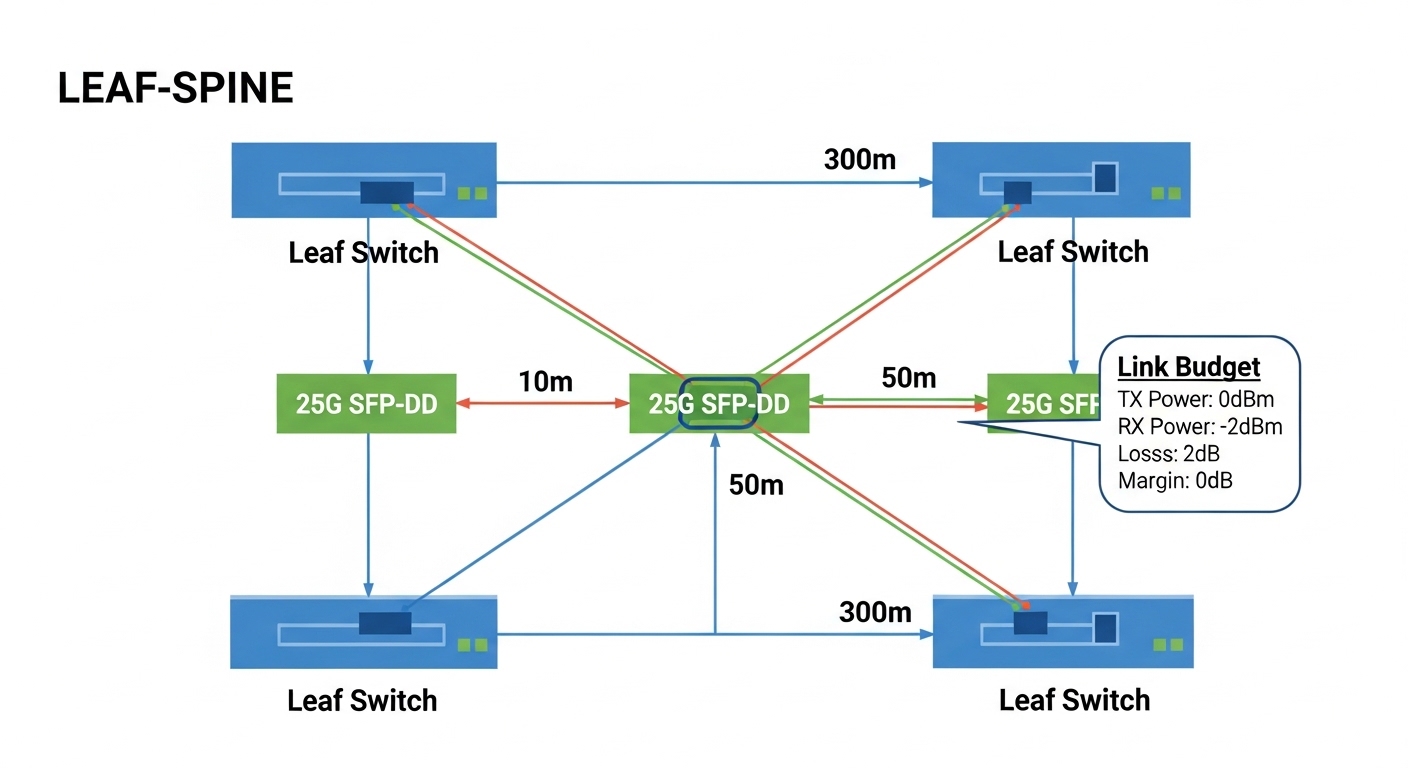
Target transceiver types considered
The team evaluated three common 25G SFP-DD optics families: multimode short-reach (commonly specified for OM3 and OM4 at around 25G), and single-mode long-reach variants (often specified with wavelengths in the 1310 nm or similar bands depending on model). Each optics class has different reach and power requirements. Selecting the wrong fiber type is a frequent failure mode, so the acceptance plan required explicit mapping from each port to fiber type and patch panel ID.
| Parameter | 25G SFP-DD SR (Multimode) | 25G SFP-DD LR (Single-mode) | Example vendor part numbers |
|---|---|---|---|
| Data rate | 25.78 Gbps nominal (25G class) | 25.78 Gbps nominal (25G class) | Vendor catalog varies |
| Wavelength | ~850 nm (typical SR) | ~1310 nm (typical LR) | Check exact datasheet |
| Fiber type | OM3 or OM4 multimode | Single-mode (OS2) | Match to plant records |
| Reach (typical) | ~70 m on OM3, up to ~300 m on OM4 | ~10 km class (model dependent) | Example: Finisar/FS.com SR and LR parts |
| Connector | LC duplex (common) | LC duplex (common) | Confirm physical fit |
| Power budget | Short-reach budgets; sensitive to patch loss | Higher budgets; still sensitive to bad splices | Use switch link budget guidance |
| Operating temperature | Typically 0 to 70 C (or extended variants) | Typically 0 to 70 C (or extended variants) | Match your chassis airflow |
Note: the exact reach and temperature range depend on the specific module model. Always validate against the transceiver datasheet and the switch vendor’s supported optics list. [Source: IEEE 802.3 for 25GBASE-R; transceiver vendor datasheets for reach and wavelength]
Chosen solution: 25G SFP-DD SR for multimode pods and LR for OS2 runs
For this upgrade, the team selected two optics profiles to minimize operational complexity. For pod-internal links on OM3/OM4, they deployed 25G SFP-DD SR modules with LC connectors and DOM support. For OS2 links exceeding multimode reach or crossing between aggregation blocks, they deployed 25G SFP-DD LR modules with compatible wavelength and power budget targets.
In the lab and staging racks, they used representative optics from major vendors and reputable third-party suppliers, validating DOM compatibility and link training behavior. Examples of SR-family and LR-family modules seen in the market include Cisco-branded and compatible third-party models such as Cisco SFP-25G-SR-S style modules (exact ordering varies by platform) and third-party optics like Finisar FTLX8571D3BCL and FS.com SFP-10GSR-85 equivalents are not directly 25G-DD but illustrate the need to compare reach and electrical class; for true 25G SFP-DD, confirm exact DD and speed support on the datasheet and switch compatibility list. [Source: vendor datasheets and switch optics compatibility documentation]
Pro Tip: In staged rollouts, do not trust “module works in one port.” Instead, cycle the same transceiver across at least 8 different ports on the same line card and confirm DOM fields (Tx bias, Tx power, Rx power, temperature) remain within the vendor’s recommended thresholds. Field experience shows that marginal optical power combined with specific port front-end characteristics is a frequent cause of late-onset link flaps.
Implementation steps: how we deployed safely at scale
The rollout followed a controlled migration method to reduce risk and preserve rollback options. First, they verified fiber polarity and cleanliness, then mapped each transceiver to a specific port and fiber run ID. Second, they validated DOM readout and link training at low scale, then expanded in batches while monitoring error counters and temperature trends.
Step-by-step execution
- Pre-check switch support: confirm the platform supports SFP-DD at 25G on the target line card, including DOM/I2C access behavior. Cross-check with the vendor’s optics compatibility guide. [Source: vendor platform documentation]
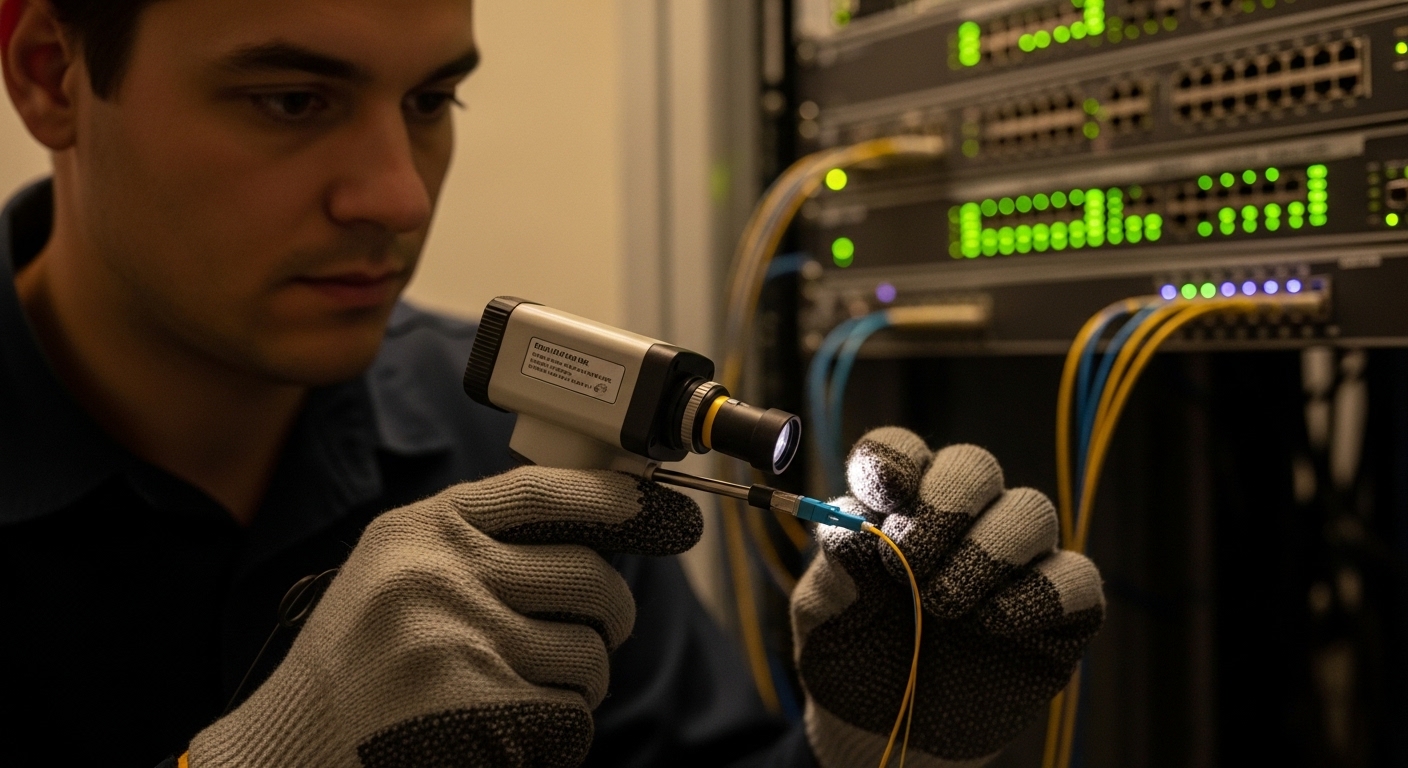
- Clean and inspect connectors: use fiber inspection at 200x, then clean with lint-free wipes and approved solvent or cleaning cassettes. Replace any patch cords with visible scratches or contamination.
- DOM validation: insert module, read temperature, laser bias, and receive power. Record baseline values; reject modules with out-of-range Rx power under nominal conditions.
- Link stability test: run link for 30 minutes while collecting CRC/FCS errors, link-up/down counts, and interface utilization. For high-risk links, extend to 4 hours.
- Batch deployment: migrate in groups of 24 to 48 ports per ToR to contain blast radius. Maintain a rollback plan using the previous optics type.
- Post-check: verify switch-side optic page health and confirm that any speed negotiation is locked to 25G (not falling back to lower rates).
Measured results
After full deployment across the leaf tier, the team reported improved throughput and reduced oversubscription pressure. On the data plane, average server-to-storage latency dropped by 6 to 12 percent during peak windows due to higher uplink bandwidth. Operationally, link flaps during the first week were limited to 0.03 percent of installed optics, primarily associated with two contaminated patch cords rather than transceiver defects.
Power and thermal impact were also tracked. The average per-port optical power draw difference between 10G SFP+ and 25G SFP-DD was modest at the rack level, but the switch chassis thermal margin improved because the team adjusted fan curves after confirming optics stayed within the 0 to 70 C operating range. The team closed the month with a stable error profile: CRC errors remained below 1 per million packets on the validated links.
Selection criteria: a decision checklist for 25G SFP-DD procurement
Engineers typically evaluate optics using a disciplined set of criteria. The goal is to avoid “it links up” purchases and instead ensure the module will remain stable across temperature swings, connector aging, and switch front-end variations.
- Distance and fiber type: map each port to OM3/OM4 or OS2 and select SR vs LR accordingly.
- Switch compatibility: confirm the exact SFP-DD form factor and 25G speed support for your switch model and line card.
- DOM support and manageability: verify the switch reads DOM fields (Tx/Rx power, temperature) without errors.
- Operating temperature: confirm module spec aligns with chassis airflow; consider extended temperature options for front-to-back gradients.
- Budget and connector loss: account for patch panel loss, insertion loss, and worst-case margin; do not rely on “average cable length.”
- Vendor lock-in risk: assess whether the optics are broadly compatible or require vendor-specific firmware acceptance.
Common mistakes and troubleshooting: what actually fails in the field
Even experienced teams encounter repeatable failure modes. Below are concrete issues seen during 25G optics rollouts, along with root cause and fixes.
Link flaps after a successful initial training
Root cause: marginal receive power due to dirty connectors, degraded patch cords, or an overlooked splice/splice-loss hotspot. Solution: inspect and clean both ends, then re-measure Rx power via DOM. If available, replace patch cords and re-run a 4-hour stability test.
Switch falls back from 25G to a lower speed
Root cause: mismatch between module electrical class and switch port expectations, or optics not supported on that specific line card revision. Solution: check the switch optics compatibility list for SFP-DD at 25G, and update port profiles or firmware if the vendor requires it.
DOM read errors or missing optic telemetry
Root cause: DOM implementation differences or non-standard I2C behavior in certain third-party optics, sometimes amplified by switch firmware. Solution: validate DOM reads during staging; if telemetry is required for monitoring/SLA, restrict procurement to modules that pass DOM acceptance tests.
Higher-than-expected CRC/FEC-like errors
Root cause: fiber type mismatch (OM3 used where OM4 optimization was assumed), or patch cords with incorrect attenuation characteristics. Solution: verify fiber certification and connector type, then reassign ports or replace optics with the correct reach class.
Cost and ROI note: what to expect beyond the unit price
Pricing for 25G SFP-DD varies by reach class, vendor brand, and whether the module is certified for your switch platform. In typical enterprise and mid-market sourcing, SR modules often land in the $60 to $150 range per unit, while LR single-mode modules can be $150 to $400 depending on reach class and DOM features. OEM-branded optics may cost more, but they reduce compatibility risk and can lower labor time during staging.
TCO should include planned spares (at least 2 to 5 percent of deployed quantity for high-availability pods), fiber cleaning consumables, and engineering time for acceptance testing. In our case, the ROI came from deferring a costly NIC refresh by enabling 25G uplinks on existing hardware, while maintaining stable error metrics that avoided emergency rework costs during the first month.
FAQ: engineer questions about 25G SFP-DD
What does 25G SFP-DD change versus standard SFP28?
25G SFP-DD uses the double-density SFP-DD mechanical/electrical platform designed for higher density deployments. It is intended for 25G-class optics while fitting into server and switch designs that expect DD pin mapping. Always confirm your switch explicitly supports SFP-DD at 25G on the target port.
Can I use multimode SR optics on single-mode fiber?
No. SR optics are designed for multimode wavelengths and launch/receive behavior aligned to OM3/OM4. If you connect SR optics to OS2 single-mode, you will typically see no link or unstable behavior due to optical power and modal effects.
How important is DOM support for operations?
If you rely on monitoring for SLA, DOM is important because it enables you to detect drift in Tx power, Rx power, and temperature. In the case study, DOM baselining helped catch marginal optics and connector contamination before they caused widespread flaps.