
Wastewater treatment plants run on uptime: SCADA alarms, pump control, and telemetry fail fast when the fiber link is unreliable. This article helps engineers and plant IT leads choose the right water treatment fiber transceiver for harsh environments, focusing on real SCADA deployments that combine outdoor runs, long distances, and strict power budgets. You will compare common transceiver families, learn selection criteria, and avoid the failure modes that show up during commissioning and maintenance.
SCADA reliability: multimode vs single-mode water treatment fiber links
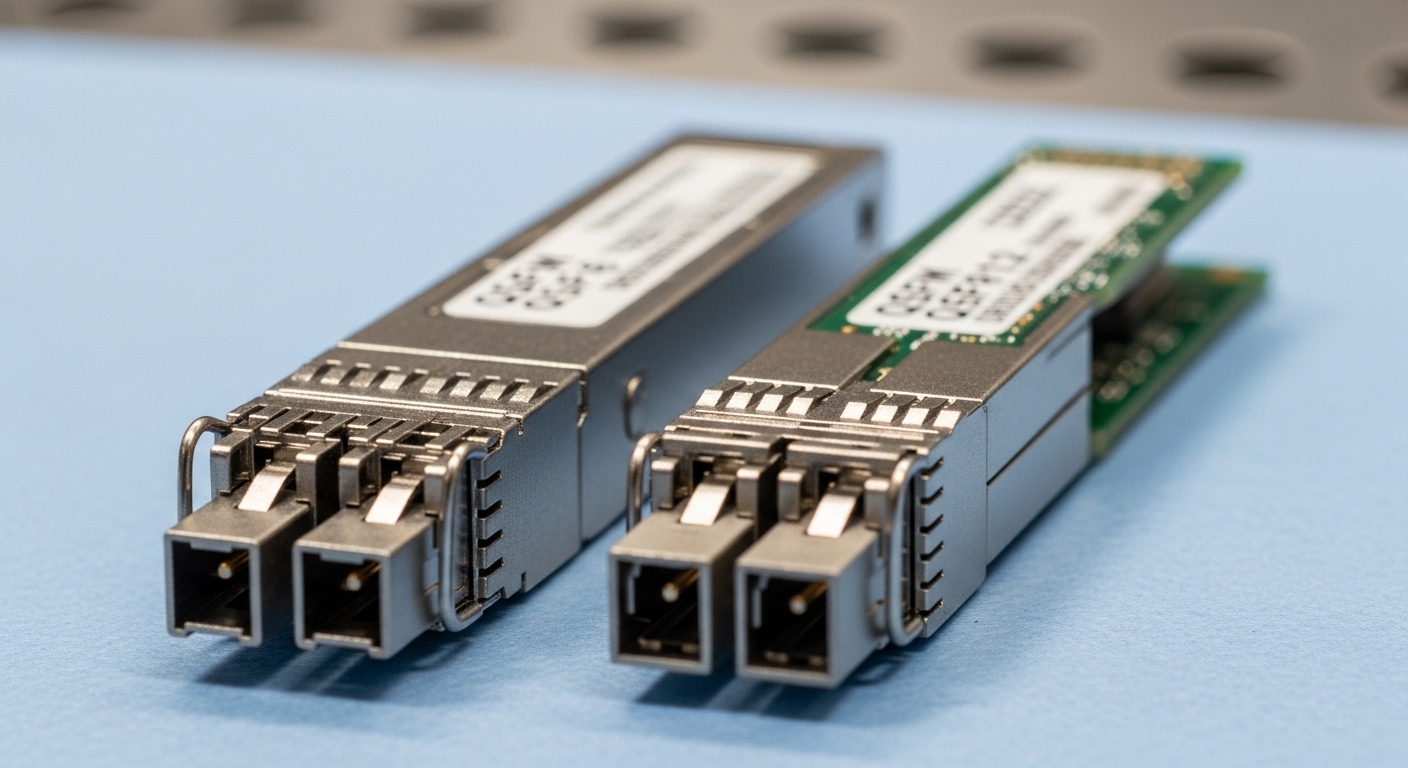
For wastewater treatment SCADA, the first decision is whether you need multimode (MMF) or single-mode (SMF). In practice, many plants start with existing MMF inside buildings, then move to SMF for outdoor spans between lift stations, clarifiers, and control buildings. IEEE 802.3 Ethernet optics typically define link budgets by wavelength, receive sensitivity, and dispersion limits, so the “right” choice is a function of distance and fiber quality—not just port availability. If you are integrating with existing cabling, measure attenuation and verify the fiber plant class before buying optics.
Performance angle: reach and dispersion realities
MMF optics often work well for short runs through cable trays and equipment rooms, but they are more sensitive to modal bandwidth limits and patch-cord quality. SMF optics handle long distances with lower dispersion impact, which matters when you extend runs across outdoor routes. In both cases, link reliability depends on connector cleanliness and splice quality as much as on nominal reach.
Head-to-head comparison table: key optics specs
Below is a practical head-to-head for common 10G Ethernet optics used in plant networks and similar industrial networks. Always confirm compatibility with your switch model and optics vendor list.
| Option | Typical data rate | Wavelength | Fiber type | Reach (typical) | Connector | DOM / monitoring | Operating temp |
|---|---|---|---|---|---|---|---|
| Cisco SFP-10G-SR (example) | 10G | 850 nm | MMF | ~300 m (varies by model) | LC | Usually supported in Cisco ecosystem | Often 0 to 70 C (confirm datasheet) |
| Finisar FTLX8571D3BCL (example) | 10G | 850 nm | MMF | ~300 m | LC | DOM (varies by SKU) | 0 to 70 C (confirm datasheet) |
| FS.com SFP-10GSR-85 (example) | 10G | 850 nm | MMF | ~400-550 m (model-dependent) | LC | DOM commonly available | Commercial or industrial grade (confirm SKU) |
| 10G SR optics are not a substitute for SMF long spans | 10G | 850 nm | MMF | Limited by MMF modal bandwidth | LC | Varies | Varies |
| SMF option (common 10G LR example) | 10G | 1310 nm | SMF | ~10 km typical for 10G LR | LC | DOM typically supported | Commercial/industrial grade available |
The key takeaway: MMF SR optics are usually cost-effective inside buildings, but SMF LR optics are the safer bet for multi-kilometer outdoor routes common in water treatment sites.
Pro Tip: In wastewater facilities, the most common “mystery outage” is not the transceiver. It is patch-cord contamination and fiber dust after maintenance. Plan a cleaning kit and loss verification (OTDR or at minimum end-to-end attenuation checks) as part of every transceiver swap, then you will see fewer intermittent link drops.
Compatibility and DOM behavior: what SCADA engineers must verify
SCADA networks often run on strict monitoring, and optics that do not provide the expected telemetry can complicate troubleshooting and maintenance. Most modern SFP and SFP+ transceivers support Digital Optical Monitoring (DOM), but the switch may enforce compatibility rules via vendor IDs, optical diagnostics thresholds, or “transceiver whitelist” behavior. Before standardizing on a third-party optic, validate it in a lab with the exact switch model and firmware version used at the plant.
Compatibility checks that prevent field rework
Ask your field team to confirm three things: DOM status visibility, alarm thresholds, and physical form factor support. For example, a switch expecting SFP+ will not accept an SFP module without a different port type. Also verify whether the switch reads temperature, laser bias current, and received power in the way your monitoring system expects.
Vendor lock-in risk vs operational flexibility
OEM optics can reduce compatibility friction, but they often come with higher unit cost and longer lead times. Third-party optics can cut budget, yet you must manage interoperability risk by testing and by keeping a maintained spares list. In water treatment environments where maintenance windows are tight, the ability to procure compatible spares quickly can matter more than saving a few dollars per module.
Cost and ROI: balancing module price, downtime risk, and power
Budget is real, but SCADA uptime is the true cost driver. A transceiver that is cheaper upfront can become expensive if it increases troubleshooting time or triggers compatibility alarms that slow response during an incident. In industrial Ethernet deployments, total cost of ownership (TCO) includes spares stocking, labor time, cleaning and test equipment, and the risk of extended downtime.
Typical pricing and TCO thinking
As a realistic range, many 10G SR optics are commonly priced from roughly $60 to $250 per module depending on OEM vs third-party, temperature grade, and DOM support. SMF LR optics often run higher due to optics complexity and regulatory testing, frequently $120 to $400 per module. If your facility experiences even a single unplanned outage per year, the ROI can swing dramatically toward optics that are known to be compatible and reliable with your switch fleet.
Energy and thermal constraints
Transceiver power draw is usually small compared to switch chassis power, but in cabinets with poor airflow, optic heat can contribute to thermal stress. Choose an operating temperature grade that matches your environment. For outdoor cabinets, industrial-rated optics with wider temperature ranges typically reduce derating risk, but always confirm datasheet limits.
Use-case comparison: inside-building MMF vs outdoor SMF for wastewater SCADA
Consider a typical plant network: a 3-tier architecture with a core switch in the main control building, aggregation switches at two lift-station sites, and multiple remote I/O racks. In one deployment, the engineering team used 10G Ethernet over MMF SR for intra-building links (about 120 to 250 m runs) from the server room to the aggregation rack. For the outdoor spans between sites, they standardized on 10G Ethernet over SMF LR for roughly 4.5 to 8 km distances, using LC connectors in sealed splice closures. During commissioning, they validated end-to-end loss with OTDR and saved at least one maintenance trip by catching a patch-cord polarity and contamination issue before energizing SCADA alarms.
When each option wins
- MMF SR wins when you already have MMF infrastructure and the distances fit the link budget with margin.
- SMF LR wins when you need long outdoor reach and want more tolerant dispersion behavior.
- Industrial temperature grade wins when optics are installed in cabinets that see wide seasonal variation.
Selection criteria checklist for water treatment fiber transceivers
Use this ordered checklist to avoid late-stage surprises. It is written from the perspective of what field teams actually need to confirm before pulling fiber patch cords and closing cabinets.
- Distance and link budget: confirm required reach with margin using your measured attenuation and connector/splice loss.
- Fiber type: verify MMF vs SMF, core size, and actual installed cabling specs.
- Switch compatibility: match port type (SFP vs SFP+), speed, and supported wavelength.
- DOM and monitoring: confirm DOM visibility and whether your monitoring system supports the thresholds.
- Operating temperature: choose industrial grade optics for outdoor cabinets; confirm minimum and maximum ambient specs.
- Connector strategy: ensure LC type and whether you need pre-terminated jumpers with known loss.
- Vendor lock-in risk: validate OEM and at least one tested third-party alternative; stock spares.
- Regulatory and safety: confirm laser class and compliance requirements per your facility standards.
For standards context, Ethernet over fiber transceiver behavior is aligned with IEEE 802.3 optical specifications, while transceiver electrical/optical parameters come from vendor datasheets. [Source: IEEE 802.3] IEEE 802.3
Common mistakes and troubleshooting tips in wastewater fiber SCADA
Even experienced teams hit predictable failure modes. Below are concrete mistakes, root causes, and fixes that show up during commissioning and later maintenance.
Intermittent link flaps after maintenance
Root cause: fiber end faces contaminated with dust or residue after patching. Symptom: link comes up, then drops under vibration or temperature cycling. Solution: clean connectors with lint-free wipes and approved fiber cleaning tools, then re-seat connectors; verify with optical power readings and re-check DOM receive power.
“Works in the lab” but fails at site over distance
Root cause: lab testing used shorter patch cords or better-cleaned connectors than the installed path, reducing effective link margin. Symptom: link fails during cold mornings or during SCADA polling bursts. Solution: measure end-to-end loss with OTDR or at least calibrated OLTS; ensure you have headroom for aging and additional patching.
DOM alarms or switch errors with third-party optics
Root cause: transceiver is electrically compatible but diagnostics thresholds or vendor IDs do not match expectations, causing port shutdown or monitoring confusion. Symptom: switch logs show transceiver warning events; SCADA dashboards show missing telemetry. Solution: test in the exact switch/firmware environment; standardize on optics SKUs that pass your compatibility checks; set monitoring to handle expected DOM ranges.
Wrong wavelength class selection
Root cause: installing an optics type intended for one wavelength band (or incompatible reach class) into a link that requires different optical budgets. Symptom: no link light, or link negotiates then fails. Solution: verify wavelength in the transceiver datasheet (for example, 850 nm for SR MMF vs 1310 nm for LR SMF) and confirm the fiber plant type.
Which option should you choose?
If you are building a new SCADA backbone, start with a clear plan: use MMF SR where distances are short and the fiber plant is already multimode, then use SMF LR for outdoor and long-haul spans. For brownfield upgrades, prioritize compatibility with your current switch models and firmware, and treat DOM behavior as a first-class requirement for operational monitoring. If you need the lowest operational risk, choose optics that are known to work with your switch fleet and are available as tested spares.
- Choose MMF SR if your runs are typically under a few hundred meters, you have verified MMF cabling, and you want to minimize module cost.
- Choose SMF LR if you have outdoor spans, multi-kilometer distances, or you want maximum margin against attenuation and connector aging.
- Choose industrial temperature grade when optics sit in cabinets with wide ambient swings or direct sun exposure.
- Choose OEM or fully validated third-party when SCADA monitoring and maintenance windows make incompatibility expensive.
FAQ
What is water treatment fiber in SCADA terms?
It refers to the fiber optic cabling and the transceiver optics used to carry SCADA Ethernet traffic between control rooms, remote I/O, and telemetry aggregation points. In practice, it includes selecting correct wavelength, reach class, and connector types so your link stays stable during environmental stress.
Should we use multimode or single-mode for wastewater sites?
Use multimode for shorter indoor runs when your installed cabling is multimode and you can verify link margin. Use single-mode for outdoor or long-distance spans where you need greater reach and tolerance.
Do we need DOM support for SCADA monitoring?
DOM is strongly recommended because it enables visibility into received optical power and transceiver health. Even if your SCADA system does not directly consume DOM, your network monitoring tools can flag degrading optics before they fail.
Are third-party transceivers safe for industrial networks?
They can be safe when you validate specific SKUs against your exact switch models and firmware. The risk is not the concept of third-party optics; it is untested compatibility and mismatched diagnostics behavior.
What causes most fiber SCADA outages?
The most common causes are connector contamination, insufficient link margin due to unmeasured losses, and incorrect optics selection for the fiber type. Transceiver failure happens, but it is often less frequent than installation and maintenance issues.
How do we estimate ROI for transceiver upgrades?
Model TCO using module cost plus labor for swaps, spares inventory, cleaning/test consumables, and expected downtime cost. If your facility values rapid restoration, validated spares and compatibility testing usually outperform chasing the lowest unit price.
If you want to reduce downtime risk, treat water treatment fiber transceiver selection as an operational system: optics, monitoring, cleaning, and verified link budgets. Next, review fiber link budget and OTDR verification for industrial networks to build a repeat
