
In a smart grid AMI rollout, the utility meter network backhaul can fail in the field due to wrong optics, thermal stress, or DOM mismatches. This reference helps operations and field engineers choose fiber optic transceivers that stay link-stable from headend to substations. You will get concrete selection steps, a spec comparison table, and troubleshooting patterns tied to real deployments.
What AMI backhaul requirements mean for a utility meter network
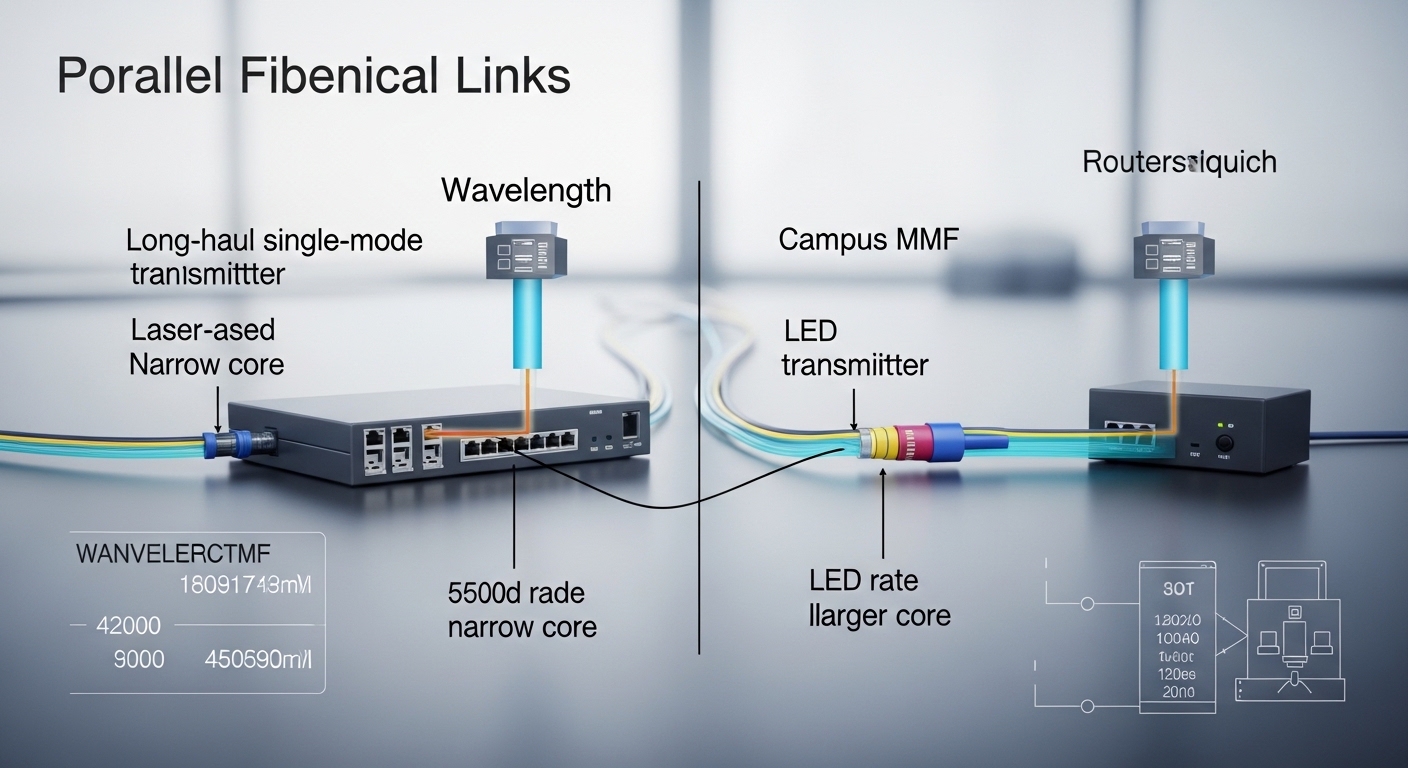
AMI traffic is typically carried over Ethernet (often 1G or 10G) between collectors, concentrators, and the headend. Engineers must match the transceiver to the fiber plant (single-mode vs multimode), budget (distance and splitter loss), and switch optics behavior (link partner expectations). In practice, you also verify DOM support so monitoring platforms can alarm on optical power drift before outages.
When deploying in mixed vendor environments, confirm that the transceiver’s digital diagnostics format aligns with the switch expectations (commonly vendor-specific thresholds, but usually compatible with standard I2C/MDIO-style monitoring). For standards grounding, optical Ethernet behavior follows the physical-layer framework in IEEE 802.3 and optics class definitions supported by vendor datasheets.
Fiber transceiver spec comparison for AMI links
Use this table as a fast reality check for common AMI backhaul choices. Values below reflect typical module classes; always verify exact reach, connector type, and temperature range in the vendor datasheet before purchase.
| Module example | Data rate | Wavelength | Fiber type | Reach (typical) | Connector | Tx/Rx power class | Operating temp |
|---|---|---|---|---|---|---|---|
| Cisco SFP-10G-SR | 10G | 850 nm | MMF (OM3/OM4) | ~300 m (OM3) / ~400 m (OM4) | LC | Varies by datasheet revision | Commercial / vendor-defined |
| Finisar FTLX8571D3BCL | 10G | 850 nm | MMF (OM3/OM4) | ~300 m class | LC | Varies | Commercial |
| FS.com SFP-10GSR-85 | 10G | 850 nm | MMF (OM3/OM4) | ~400 m class on OM4 | LC | Varies | Commercial |
| Typical 10G LR (SM) | 10G | 1310 nm | SMF | ~10 km | LC | Higher budget | Varies by model |
For AMI, MMF 850 nm optics are common inside controlled buildings, while SMF 1310 nm optics are favored for longer outdoor runs and higher splitter budgets. For standards reference on optical interfaces, see transceiver and Ethernet physical-layer guidance in IEEE 802 overview and the specific module datasheets from vendors.
Field deployment scenario: from headend to substation
In one 3-tier AMI backhaul design, a utility deployed 10G uplinks from 48-port ToR switches at feeder collection sites to aggregation at the substation. The run lengths were 1.8 km from indoor cabinets to outdoor splice enclosures and 6.5 km to the regional headend, with planned spare for future collectors. Engineers used SMF 1310 nm optics for the 6.5 km segment and MMF 850 nm optics only for the short in-cabinet cross connects.
Operationally, the team pre-tested fiber with an OTDR and confirmed end-to-end attenuation plus connector loss stayed inside the link budget margin. They then validated DOM telemetry by polling Tx/Rx power and ensuring alarms mapped correctly in the NMS. This reduced repeat truck rolls because optical drift and connector contamination were caught during commissioning, not during peak polling windows.
Selection checklist engineers use before ordering
Follow this ordered checklist to avoid mismatches that only show up after installation.
- Distance and fiber type: confirm SMF vs OM3/OM4 MMF and measured attenuation, not just cable labels.
- Link budget margin: include connector loss, splices, and any splitters; add at least a practical contingency (field teams often target extra headroom for aging).
- Switch compatibility: verify exact transceiver support for the switch model and port type; some platforms are strict on optics identification.
- DOM and telemetry: confirm Tx power reporting, thresholds behavior, and whether the NMS expects specific alarm names.
- Operating temperature: outdoor cabinets can exceed comfort ranges; choose modules with datasheet temperature ratings that match your enclosure profile.
- Vendor lock-in risk: if using third-party, validate in a pilot and document acceptance criteria for link stability and diagnostics.
Pro Tip: If your utility meter network NMS raises “optical low power” alarms too late, it is often because the transceiver thresholds are vendor-tuned. During commissioning, capture baseline Tx power and set alarm thresholds based on observed drift rate rather than generic defaults.
Common pitfalls and troubleshooting patterns
Pitfall 1: Wrong fiber mode or patching loss — Root cause is using OM3/OM4 optics on a mismatched fiber plant or incorrect patch cord polarity/connector cleanliness. Solution: verify fiber type with test records, clean connectors, re-terminate if needed, and re-check optical power after cleaning.
Pitfall 2: Link comes up but flaps under temperature — Root cause is operating a module outside its rated temperature range or using marginal power budgets with rain-cooled or sun-heated cabinets. Solution: confirm module temperature rating, improve enclosure airflow or shielding, and validate link margin using measured attenuation.
Pitfall 3: DOM alarms do not match expectations — Root cause is DOM implementation differences or threshold interpretation mismatches in the monitoring stack. Solution: validate DOM fields during commissioning, align NMS threshold logic to the module’s reported units, and document the mapping for future swaps.
Pitfall 4: Vendor compatibility failures — Root cause is strict optics ID checks on certain switch/port combinations, especially when using third-party transceivers. Solution: run a pilot with the exact switch model and firmware, and keep a known-good approved list for field spares.
Cost and ROI note for AMI optics
Typical street pricing varies by rate and reach. As a rough range, 10G short-reach optics often land in the low hundreds to mid hundreds per module, while long-reach SM optics can be higher. Total cost of ownership depends more on spares strategy, truck rolls, and failure rates than on purchase price alone.
Third-party OEM-compatible modules can reduce unit cost, but ROI depends on acceptance testing and warranty terms. For utilities, the biggest savings usually come from fewer repeat visits: a transceiver that passes DOM telemetry and stays stable under enclosure thermal swings can save days of downtime during scheduled meter polling windows. For vendor-specific pricing and warranty terms, review each datasheet and distributor listing; for optical interface fundamentals, cross-check with ANSI” target=”_blank” rel=”noopener”>ANSI and IEEE 802.3 related guidance.
FAQ
Q: What transceiver type should I start with for a utility meter network AMI backhaul?
A: Start with a fiber-plant assessment: use 850 nm MMF for short indoor segments and 1310 nm SMF for longer or outdoor runs. Then verify measured attenuation and connector/splice loss against the module reach spec.
Q: Do I need DOM support for AMI operations?
A: Strongly recommended. DOM lets you track Tx/Rx power drift and temperature trends so you can remediate before link loss, especially in remote cabinets where on-site access is infrequent.
Q: Can I use third-party optics on utility switches?
A: Sometimes, but compatibility is model- and firmware-dependent. Run a pilot on the exact switch hardware and document pass/fail criteria for link stability and DOM telemetry before scaling.
Q:
