
When a submarine system faults, the clock does not tick in minutes; it ticks in logistics and ocean miles. This guide helps network engineers, program managers, and field teams specify and operationalize undersea fiber optic transceivers for submarine optical cable links—so the link comes up cleanly, stays stable, and costs less over its life. You will get a step-by-step implementation plan, a concrete deployment scenario, and a troubleshooting playbook grounded in real transceiver behavior and standards.
Prerequisites: what you must verify before you touch the transceiver
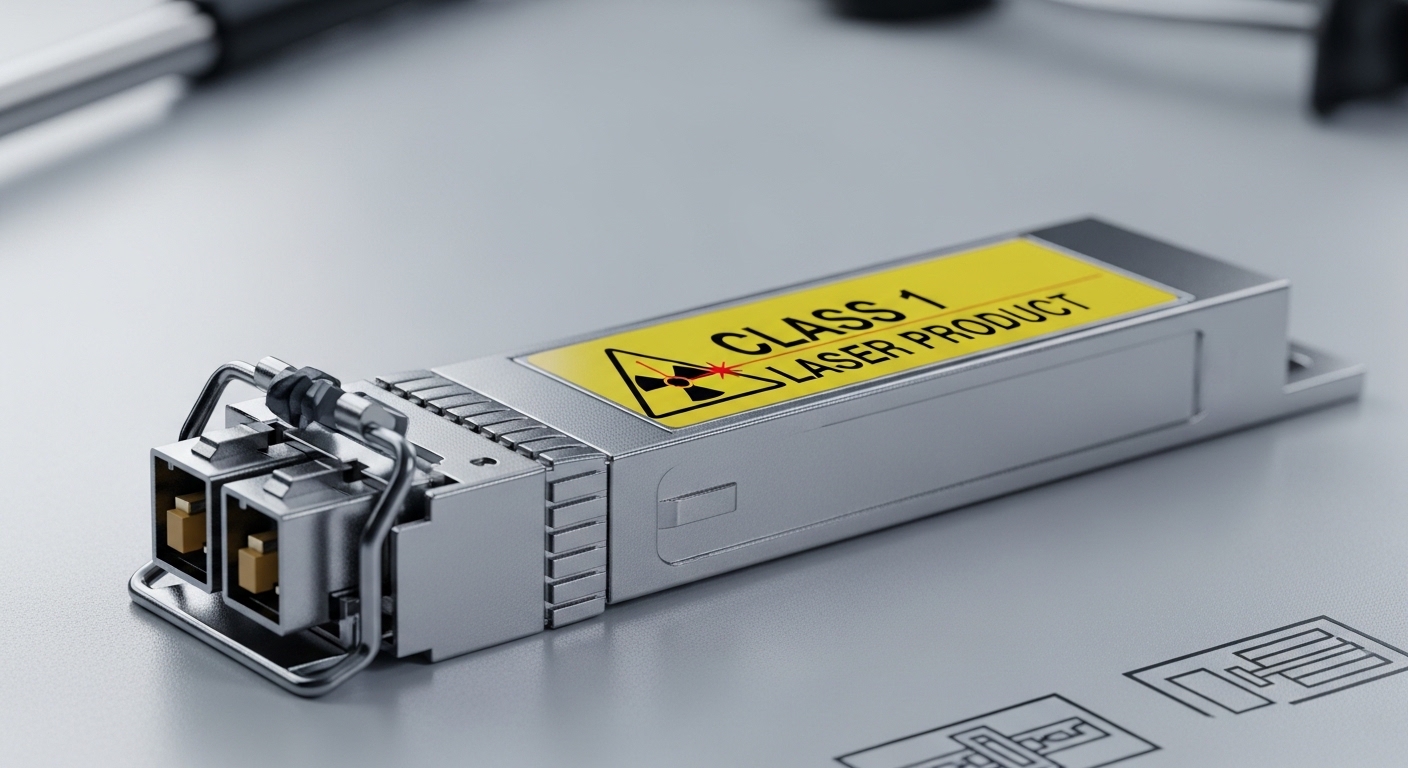
Before procurement or installation, align the optical and electrical assumptions across the entire path: landing station optics, terminal equipment, and the submarine cable plant. Undersea systems commonly use coherent or advanced direct-detect optics depending on project design, but even when the modulation differs, the optical budget, dispersion tolerance, and connectorization must match the cable and terminal.
Gather the inputs (measured, not guessed)
Collect these artifacts from the submarine cable provider and landing station integrator. You need wavelength plan, target launch power, allowable receive power, and any dispersion limits. For optical layer conformance, confirm the relevant Ethernet and optical interface profiles and the power/monitoring interface expectations. Reference points include IEEE 802.3 for Ethernet PHY behavior and vendor datasheets for optical module electrical/optical limits. [Source: IEEE 802.3 Ethernet standards]
Also confirm the facility side: rack power, grounding, environmental control, and the optical transceiver cage type and faceplate requirements. If you plan to use pluggable optics, validate that the landing equipment supports the exact form factor (for example, CFP2/CFP4/OSFP) and the required digital interface features.
Step-by-step implementation: specify, integrate, and commission undersea fiber optic optics
Think of this as a chain of commitments: the submarine cable has physics, the terminal has interfaces, and the transceiver has limits. If any link is mismatched, the first symptom may be link flaps; the second symptom may be silent optical degradation that only shows up during maintenance windows.
Map the submarine link requirements to a transceiver class
Start with the end-to-end design targets: data rate, modulation approach, and whether you are using direct-detect or coherent transceivers. Then map those to the transceiver family supported by the landing station. In practice, teams often standardize on a small set of transceiver part families to reduce operational variance.
Expected outcome: a shortlist of transceiver types that match both data rate and optical interface expectations, including the correct wavelength plan and monitoring interface.
Validate optical budget and reach against vendor power limits
For undersea fiber optic links, you must reconcile launch power, fiber attenuation, connector losses, and any additional system losses with the transceiver’s specified receive sensitivity and maximum input power. If your design uses coherent optics, confirm receiver sensitivity for the modulation format and the allowable optical signal-to-noise ratio.
When the cable provider provides an optical budget, treat it as a baseline and add realistic margins for aging and maintenance handling. Vendor datasheets for modules such as coherent pluggables or specialized submarine terminal optics will list minimum and maximum received power and any required control loop behavior. [Source: Vendor datasheets for coherent and submarine-grade optical modules]
Expected outcome: a budget spreadsheet showing that the receive power stays within module limits across temperature and operational conditions.
Confirm connectorization, wavelength, and interface compatibility
Undersea systems are unforgiving about connector and wavelength mismatches. Confirm the landing station uses the planned connector type and that the transceiver’s optical connectorization matches the harness. Also validate that the transceiver supports the exact wavelength (for example, C-band vs specific ITU grid slots) and that any tuning mechanisms are permitted by the terminal equipment.
Expected outcome: a verified mechanical and optical compatibility checklist with no “adapter surprises” at install time.
Integrate with the terminal and set electrical parameters
Integration is where many projects stumble. Field engineers typically configure the terminal to the transceiver’s expected electrical profile: lane mapping, forward error correction mode, and any required diagnostics. If the transceiver uses digital diagnostic monitoring, confirm the management plane can read optical power and temperature through the supported interface (commonly an I2C-based diagnostics model in many pluggable ecosystems, though exact implementations vary by form factor and vendor).
On the Ethernet side, confirm the PHY configuration aligns with IEEE 802.3 expectations and any vendor-specific interoperability notes for the chosen optics. [Source: IEEE 802.3 and vendor interoperability guidance]
Expected outcome: link bring-up settings that align with the transceiver’s electrical limits and monitoring capabilities.
Commission using measured optical levels and stability checks
During commissioning, do not rely solely on “link up.” Measure transmit power, receive power, and any available optical diagnostics. Verify that the link remains stable under normal operating temperature and that alarms clear when you return to nominal conditions.
Also perform a controlled “change test”: reseat the module only if the system design allows it safely, or perform a controlled optical attenuation sweep if permitted by the terminal. The goal is to confirm the transceiver’s control loops and receiver thresholds behave as expected.
Expected outcome: a commissioning record with measured power levels, error counters, and alarm thresholds.
Put in place maintenance and replacement readiness
Undersea fiber optic transceivers often face long repair cycles, so operational readiness matters. Define spares strategy by part number, ensure compatibility with the terminal firmware/software release, and confirm that diagnostics output is actionable for incident triage.
Expected outcome: a runbook that reduces mean time to restore service, including “what to check first” and “what values are normal.”
Key technical specifications to compare before you buy
Different transceiver families can look similar at the rack, yet behave differently at the optical layer. The comparison below is a practical template for engineering review. Always confirm exact values in the specific datasheet for your chosen part and terminal.
| Spec category | What to check | Why it matters for undersea fiber optic links |
|---|---|---|
| Wavelength & grid | C-band ITU slot or fixed wavelength | Misalignment can cause out-of-plan dispersion/Q penalty or terminal rejection |
| Reach / link budget | Specified reach and min/max receive power | Ensures margin across attenuation and connector losses |
| Data rate & modulation | Direct-detect vs coherent, symbol rates | Determines sensitivity and allowable optical OSNR |
| Optical connector | Connector type and mating interface | Prevents insertion loss spikes and contamination faults |
| Power & thermal | Module power draw, operating temperature | Protects against thermal drift and derating |
| Diagnostics (DOM) | DOM support, alarm thresholds, readings | Enables early warning and faster incident isolation |
Illustrative part examples you may encounter
Many landing stations use specialized submarine-grade optics rather than generic data center transceivers. Still, engineers often reference common pluggable families during early scoping to understand optical/electrical behavior. For example, short-reach optics used in terrestrial segments include models like Cisco SFP-10G-SR and Finisar FTLX8571D3BCL, while FS.com offers comparable SFP-10GSR variants; these are typically not substitutes for submarine terminal optics, but they help validate interface assumptions and DOM behavior in adjacent network segments. [Source: Cisco product documentation; Source: Finisar/FiberMall datasheets; Source: FS.com product listings]
Expected outcome: a comparison dossier mapping your undersea fiber optic requirements to the exact technical envelope of the module family you will deploy.
Pro Tip: In field commissioning, the “correct” receive power is less important than the stability of diagnostics over time. Teams that track not only absolute power but also drift rate (for example, temperature-coupled optical power change) catch aging lasers and connector contamination earlier than alarms alone.
Selection criteria checklist engineers actually use
When decisions must be fast and defensible, teams reduce ambiguity with an ordered checklist. Use this as a gating workflow for undersea fiber optic transceiver selection.
- Distance and optical budget: confirm attenuation, connector losses, and required margin at operating temperature.
- Reach vs receive sensitivity: verify min/max received power stays inside module limits across worst-case scenarios.
- Switch and terminal compatibility: validate form factor, lane mapping, and PHY settings supported by the landing equipment.
- DOM and alarm integration: ensure diagnostics are readable in your NMS/telemetry pipeline, with thresholds that match your incident workflow.
- Operating temperature and derating: confirm both module rating and the rack’s thermal profile at the landing station.
- Vendor lock-in risk: evaluate whether replacements require the same vendor and whether firmware dependencies exist.
- Connectorization and contamination control: confirm cleaning tooling, inspection policy, and connector type match the harness.
- Spare strategy and lead times: undersea projects often need validated spares; factor shipping and qualification cycles.
Real-world deployment scenario: leaf-spine landing aggregation with coherent optics
Consider a 3-tier data center and edge aggregation environment feeding a submarine landing station. A coastal site terminates a submarine undersea fiber optic link into a dedicated optical transport platform, then hands off 400G Ethernet to a leaf-spine fabric. In one common pattern, you might run 48-port 400G leaf switches uplinking to spine routers over QSFP-DD optics, while the submarine side uses coherent optics with strict power and OSNR requirements. Engineers commission by measuring receive power and optical diagnostics at the landing platform first, then validate Ethernet error counters and FEC status at the leaf. The operational goal is simple: link stability for weeks, not just minutes, with alarms tied to actionable thresholds.
Expected outcome: a submarine-to-fabric path with predictable optical margins and measurable packet-layer health indicators.
Common mistakes and troubleshooting: three failure modes you can prevent
Undersea fiber optic troubleshooting is often a detective story where the clues are optical levels, DOM readings, and error counters. Here are three frequent failure points with root causes and solutions.
Failure mode 1: Link flaps after initial bring-up
Root cause: electrical profile mismatch (lane mapping, FEC mode, or PHY settings) or marginal receive power near threshold. Some terminals will “up” the link, then flap when control loops correct for temperature drift.
Solution: lock terminal configuration to the transceiver’s supported settings, then verify measured receive power is comfortably above the minimum sensitivity. Use DOM/telemetry to correlate flaps with temperature or optical drift.
Failure mode 2: High insertion loss after installation
Root cause: connector contamination or incorrect mating (adapter mismatch, wrong connector type, or imperfect cleaning). Even a small contamination film can create a persistent loss spike.
Solution: inspect both ends with an inspection scope, clean using the correct connector-specific method, and remeasure optical power after cleaning. Replace any suspect patch leads rather than repeatedly mating the same connector.
Failure mode 3: Diagnostics show abnormal temperature or bias current
Root cause: thermal path issues: poor airflow, blocked vents, or rack temperature excursions causing laser bias instability. In some cases, the transceiver is out of its intended operating envelope for the landing station environment.
Solution: verify rack airflow and sensor readings, confirm module temperature is within the datasheet operating range, and check for firmware-controlled power or bias derating behavior.
Cost and ROI note: what you pay, what you recover
In undersea fiber optic systems, the transceiver cost is only part of total cost. Typical module pricing varies widely by technology and form factor; specialized coherent or submarine-grade optics can run from hundreds to several thousands of dollars per unit, while terrestrial pluggables may be far cheaper. The real ROI comes from reduced downtime and fewer incident escalations: better DOM visibility, predictable thermal behavior, and spare compatibility can cut restoration time.
OEM options often reduce integration risk but can increase replacement lead times and lock-in. Third-party optics can be cost-effective for terrestrial segments, yet for submarine terminal roles, engineers should be cautious and require qualification testing for performance and alarm behavior. Over a multi-year lifecycle, a modest unit-price premium can be cheaper than repeated troubleshooting and expedited shipping.
FAQ
What makes undersea fiber optic transceivers different from data center optics?
They are engineered for stricter operational envelopes: tighter power and sensitivity constraints, more robust diagnostics expectations, and compatibility with submarine terminal equipment. Many submarine systems also require specific optical interface behavior that generic data center pluggables may not guarantee.
How do I verify optical compatibility during procurement?
Request the module datasheet with explicit min/max receive power, operating temperature range, wavelength plan, and diagnostics interface details. Then map those values to the submarine cable optical budget including connector losses and maintenance margins.
Do I need DOM support for undersea fiber optic operations?
Yes, because incident response depends on early warning signals. DOM readings for optical power, temperature, and bias current help correlate faults with environmental drift and connector issues before service-impacting failures.
What is the fastest way to troubleshoot a no-link condition?
First confirm receive power is within module limits and that connectorization is correct and clean. Next validate terminal configuration: PHY profile, FEC mode, and lane mapping, then check optical diagnostics for bias or temperature anomalies.
Can third-party optics replace OEM optics in submarine-related roles?
Sometimes, but only after qualification against your specific terminal firmware and measured performance requirements. For undersea fiber optic terminal functions, treat third-party modules as “candidate parts” until you can prove stable diagnostics and error-rate behavior.
How should I plan spares for a submarine landing station?
Stock by exact part number and ensure compatibility with the terminal software release that will be running during replacement. Maintain documented commissioning measurements so you can compare a new module’s behavior against an expected optical and diagnostic profile.
Next, you can extend this approach to terrestrial segments that feed the submarine landing with resilient optical reach by reviewing fiber optic transceiver selection for data center uplinks.
Author bio: I have deployed optical transport and transceiver ecosystems in production networks, from lab commissioning to rack-level fault isolation, using measured power, error counters, and DOM telemetry. I write with a field engineer’s lens: what breaks, how it fails, and how to prevent it before the ocean does the rest.
