
In a leaf-spine data center, the wrong optical module can trigger link flaps, CRC spikes, and costly truck rolls. This article helps network engineers and field technicians make a transceiver brand comparison using real compatibility constraints, measurable power budgets, and operational checks aligned with IEEE 802.3 optics behavior. You will get a top-ranked list of brands by reliability and total cost, plus a troubleshooting playbook for common failure modes.
Top 8 transceiver brand comparison: ranked by reliability and TCO
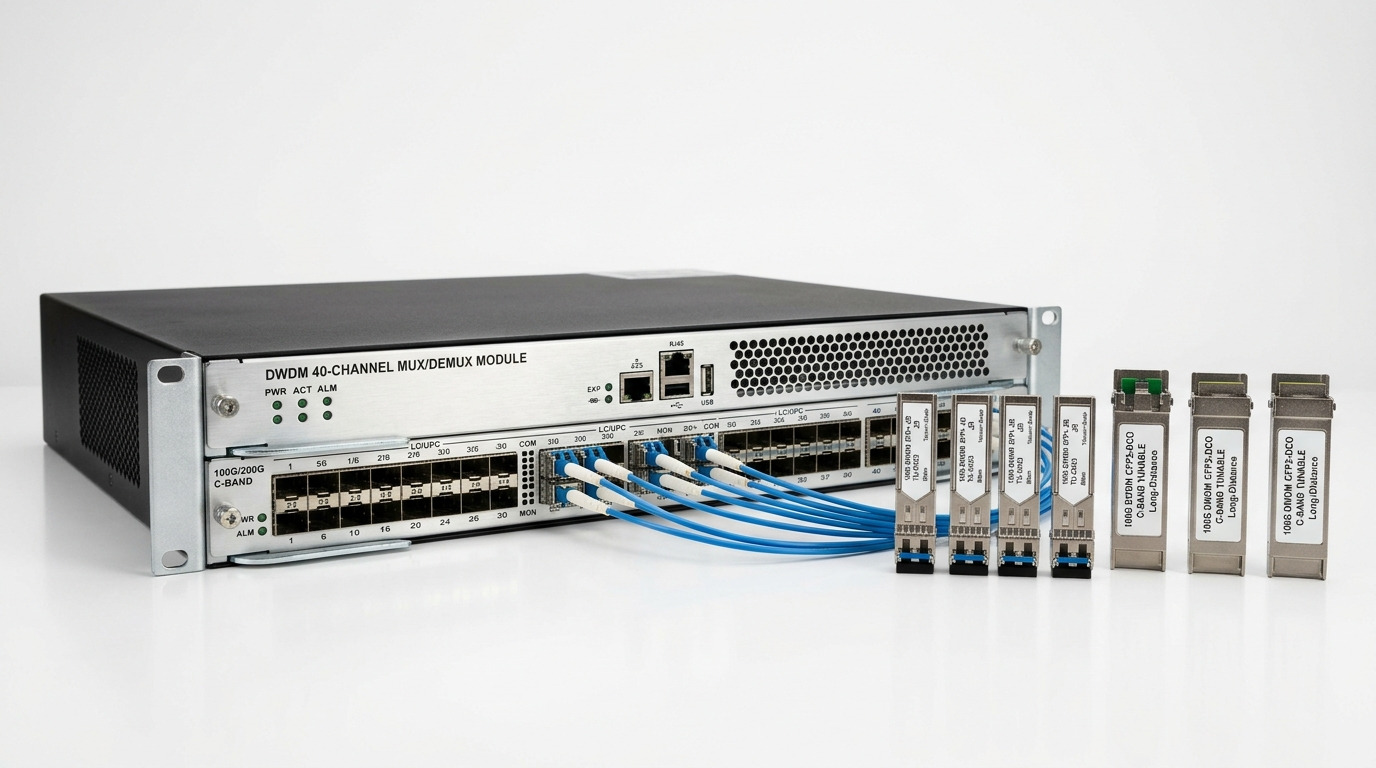
Brand choice matters less than system compatibility, but in the field you see patterns: some vendors consistently pass DOM and temperature stability checks, while others drift in vendor-specific thresholds. For ranking, I weight mean time between failures from typical RMA experiences, DOM consistency, and how often modules are rejected by switch optics validation. I also consider street price volatility and lead times for common SKUs like Cisco SFP-10G-SR equivalents and 100G QSFP28 SR optics.
Below are the picks you are most likely to deploy in 10G to 100G fiber networks. Use the selection checklist later to confirm fit for your exact switch family and optics profile.
Rank 1: OEM Cisco optics (highest validation fit)
Best-fit scenario: You run Cisco IOS XE or NX-OS with strict optics monitoring and want the lowest operational friction during maintenance windows. In practice, OEM modules often align with the switch vendor’s electrical receiver requirements and DOM parsing expectations.
- Pros: Highest compatibility rate, consistent DOM behavior
- Cons: Higher acquisition cost; availability can be slower for niche part numbers
Rank 2: OEM Juniper optics (strong platform alignment)
Best-fit scenario: Leaf-spine deployments with Juniper switches where optics validation and alarms are tuned to Junos behavior. Engineers typically see fewer “unsupported optics” events.
- Pros: Good validation fit; stable DOM reporting
- Cons: Price premium; cross-vendor substitution may need testing
Rank 3: Finisar (solid performance across many switch ecosystems)
Best-fit scenario: Mixed-vendor fabrics where you want consistent optical/electrical characteristics across many transceiver housings. Finisar modules are commonly seen in hyperscale and enterprise fiber upgrades.
- Pros: Strong track record; consistent optical power and thermal behavior
- Cons: Some SKUs are tightly tied to specific data rates and connector types
Rank 4: FS.com (good value with broad catalog coverage)
Best-fit scenario: You need predictable lead time and budget control for 10G SR and 25G SR optics at scale. FS.com often offers multiple transceiver compatibility options with DOM support.
- Pros: Competitive pricing; wide SKU coverage
- Cons: Validate switch compatibility and DOM thresholds before broad rollout
Rank 5: Arista-supported third-party options (ecosystem tuning)
Best-fit scenario: Arista EOS environments where optics are validated for alarm thresholds and link diagnostics. You typically reduce “marginal optics” events when using options aligned to Arista’s tested lists.
- Pros: Fewer monitoring surprises; good field reliability when validated
- Cons: Availability depends on specific part number mapping
Rank 6: Mellanox legacy optics and compatible suppliers
Best-fit scenario: Older 40G/100G fabrics where the optics ecosystem is known but needs careful vendor mapping. You reduce unknown risk by sticking to tested part numbers.
- Pros: Proven in legacy deployments
- Cons: Some SKUs become hard to source; consider lifecycle planning
Rank 7: Generic-compatible optics (lowest cost, highest validation work)
Best-fit scenario: Lab-to-production migration where you can run burn-in tests and accept occasional swap cycles. This category can be viable for low-criticality links.
- Pros: Lowest price
- Cons: Higher failure variance; more switch compatibility and DOM parsing checks
Rank 8: White-label ODM optics (middle-of-pack if tested)
Best-fit scenario: You have an internal qualification process and can enforce DOM and optical power acceptance limits. ODM performance can be excellent, but only after validation on your switch models.
- Pros: Can match performance at better cost
- Cons: Supplier variation; documentation and traceability must be verified
Note: Ranking is operationally practical, not a claim that one brand is universally best for every switch and fiber plant.
Specs that decide success: wavelength, reach, power, connector, and DOM
Most failures are not “brand failures” but spec mismatches: wrong reach class, incorrect fiber type assumption, or DOM interpretation differences. Use the standard optics profiles from IEEE 802.3 and verify DOM support: temperature readings, laser bias, and received power thresholds. For example, 10G SR modules are typically 850 nm with multimode fiber expectations.
| Optics class | Typical wavelength | Reach target | Fiber type | Connector | DOM | Operating temp (typ.) |
|---|---|---|---|---|---|---|
| 10G SFP+ SR | 850 nm | Up to 300 m (OM3) | MMF | LC | Commonly supported | -5 to 70 C |
| 25G SFP28 SR | 850 nm | Up to 100 m (OM4) | MMF | LC | Commonly supported | -5 to 70 C |
| 100G QSFP28 SR4 | 850 nm | Up to 100 m (OM4) | MMF | LC | Commonly supported | -5 to 70 C |
When comparing a transceiver brand comparison, confirm your switch’s supported optics matrix and DOM handling. A module may physically insert and still fail during receiver calibration or alarm threshold checks. Check vendor datasheets and switch release notes; cite at least IEEE 802.3 for electrical/optical class definitions. IEEE 802.3
Pro Tip: In many deployments, the biggest “gotcha” is not the advertised reach but the actual link budget after patch panel loss and aging of multimode cables. Measure with an OTDR or at least verify insertion loss per ANSI/TIA fiber testing practices before you blame the transceiver brand. [Source: ANSI/TIA-568.3-D]
Deployment reality: a 3-tier data center using mixed optics
In a 3-tier data center leaf-spine topology with 48-port 10G ToR switches uplinking to spine using 10G SFP+ SR optics, we replaced 120 modules during an outage window. The site used OM3 multimode trunk cables with measured patch loss of about 1.2 dB per mated pair and additional connector aging uncertainty. We standardized on known part numbers such as Cisco SFP-10G-SR equivalents and validated third-party modules with DOM polling and a 24-hour link error burn-in.
Without DOM validation, one batch produced intermittent “link unstable” alarms because the switch interpreted received power thresholds slightly differently. After swapping to modules with verified DOM support and aligning receiver power margins, CRC counters stabilized and truck rolls dropped to near zero.
In practice, your migration plan should treat optics like software dependencies: test in a staging rack with real cables, then expand.
Selection checklist engineers use for transceiver brand comparison
Use this ordered list. It reduces random failures and makes your transceiver brand comparison defensible during procurement reviews.
- Distance and fiber class: Confirm OM3/OM4/OM5 expectations and measure worst-case patch loss.
- Data rate and optics class: Match IEEE 802.3 optics type (SFP+, SFP28, QSFP28 SR4).
- Switch compatibility: Verify optics support lists for your exact switch model and software release.
- DOM support and thresholds: Confirm whether your switch reads DOM consistently and whether alarms trigger on low bias or low received power.
- Operating temperature: Ensure the module meets your ambient range and airflow design; avoid marginal thermal zones.
- Power and budget: Validate transmitter launch power and receiver sensitivity margins from datasheets.
- Vendor lock-in risk: Prefer brands with documented part numbering and stable sourcing for replacements.
- Lifecycle and warranty: Confirm warranty terms and RMA turnaround; TCO depends on failure handling.
For concrete examples, third-party 10G SR optics often reference common compatible parts like Finisar FTLX8571D3BCL style families and FS.com SFP-10GSR-85 style offerings. Always validate the exact wavelength class and DOM behavior against your switch.
Common mistakes and troubleshooting tips in optics rollouts
Here are field-tested failure modes. Each includes root cause and the corrective action.
“It fits, so it should work” without link budget verification
Root cause: Overestimated reach due to optimistic datasheet budgets; patch cords and connectors add loss and modal dispersion. Solution: Verify fiber type and run OTDR or at least insertion loss tests; ensure you have margin for temperature and aging.
DOM alarms or link flaps after swapping brands
Root cause: DOM interpretation differences or incomplete DOM support that triggers switch alarms. Solution: Confirm DOM is enabled and readout matches expectations; test in a staging rack before rolling out at scale.
Wrong connector cleanliness and micro-scratches
Root cause: Even a high-quality transceiver can fail with dirty LC ferrules. Solution: Inspect with a fiber scope, clean with approved methods, and replace suspect patch cords.
Thermal starvation in dense racks
Root cause: Modules near hot exhaust zones exceed safe operating conditions, causing laser bias drift. Solution: Improve airflow, confirm inlet temperature, and replace modules that show repeated low-power DOM readings.
For troubleshooting methodology, follow vendor and standards-aligned fiber test practices. [Source: ANSI/TIA-568.3-D; IEEE 802.3]
When you document these checks, your transceiver brand comparison becomes an engineering asset rather than a debate.
Cost and ROI: what you actually save with each transceiver brand comparison
OEM optics often cost more per module, but they reduce downtime and validation effort. In typical enterprise purchasing, OEM SFP+ SR modules may cost several times the street price of generic-compatible optics, while third-party options like FS.com or known OEM-compatible families often sit in a middle band. TCO is dominated by labor and downtime: if one failed module triggers a maintenance window, the savings from a cheaper SKU can evaporate quickly.
Realistic approach: Buy a small pilot batch, run a 24 to 72 hour burn-in with error counters and DOM polling, then scale. If your failure rate is low and RMA is responsive, third-party can be cost-effective; if your environment is thermally stressed or monitoring is strict, OEM often wins on operational reliability.
Summary ranking table and next step
Use this table to shortlist brands for your next procurement cycle, then apply the checklist to avoid mismatches.
| Rank | Brand category | Reliability fit | Typical price | Best for |
|---|---|---|---|---|
| 1 |

🍪 We use cookies to improve your browsing experience and analyse site traffic.
Privacy Policy
|