
When a TSN industrial network misses a microburst deadline, the symptom is rarely “bad fiber” and almost always a transceiver mismatch, timing mode issue, or thermal margin problem. This guide helps network engineers and field deployment teams choose time sensitive networking SFP modules that behave predictably on fiber, including selection checks, deployment math, and troubleshooting patterns. You will get a practical spec comparison, a distance budget approach, and an ROI view for OEM versus third-party optics.
Why TSN changes how you pick an SFP for fiber
TSN relies on deterministic forwarding and bounded latency, so the physical layer must not introduce unpredictable jitter or link instability. In practice, “works at link up” is not enough; you need stable optical power budgets, correct reach class, and documented support for the vendor’s timing and diagnostics expectations. Most time sensitive networking SFP requirements in industrial deployments map to IEEE 802.1AS (gPTP), IEEE 802.1Qbv (scheduled traffic), and IEEE 802.1Qbu/802.3br (frame preemption where used). For the optical layer, engineers still follow IEEE 802.3 link-layer behavior, but they enforce stricter operational discipline around temperature, DOM readings, and optical budget.
What “time sensitive” means at the optics layer
Even when an SFP is “standard 1G/10G Ethernet,” deterministic networking expects the link to remain stable under vibration, dust, and temperature swings. Field teams typically treat the transceiver as a timing component: they monitor DDM/DOM telemetry, verify receive power margin after every splice change, and confirm that the module never approaches its optical or thermal limits. If you are using industrial TSN in a leaf-spine or ring topology, a single unstable uplink can cause retransmissions and break schedule assumptions upstream.
Standards and reference points you should cite internally
- IEEE 802.1AS for gPTP timing distribution behavior. [Source: IEEE 802.1AS]
- IEEE 802.1Qbv for scheduled traffic gates. [Source: IEEE 802.1Qbv]
- IEEE 802.1Qbu and 802.3br for frame preemption (if applicable). [Source: IEEE 802.3br]
- IEEE 802.3 for 1G/10G PHY electrical behavior and link negotiation expectations. [Source: IEEE 802.3]
- Vendor transceiver datasheets for optical power, jitter, and temperature ranges. [Source: Cisco, Finisar, FS.com datasheets]
Core spec comparison: common industrial fiber SFP options for TSN
For TSN over fiber, you usually select a transceiver by data rate and reach class first, then validate optical power budget and operating temperature. The most common industrial pattern is 10G SFP+ (SR) for short multimode runs and 10G SFP+ (LR/LRM where supported) for longer or mixed media. If you are running TSN at 1G, you will see SFP (not SFP+) with similar reach classes.
Quick comparison table for planning
Use this table to align your TSN link design to realistic optics behavior. Always confirm exact wavelength, reach, and temperature ranges in the module datasheet for the specific part number.
| Module type (examples) | Wavelength | Nominal reach | Data rate | Connector | TX power / RX sensitivity (typical) | DOM / DDM | Operating temperature |
|---|---|---|---|---|---|---|---|
| Cisco SFP-10G-SR (10G SR) | 850 nm | ~300 m on MMF (50/125) | 10G | LC | TX around -1 to +2 dBm class; RX sensitivity around -8 to -10 dBm class | Yes (DOM/DDM) | Industrial grade often -40 to +85 C depending on SKU |
| Finisar FTLX8571D3BCL (10G SR) | 850 nm | ~300 m on MMF (50/125) | 10G | LC | TX/RX aligned to SR power budget class per datasheet | Yes (DOM) | Industrial grade per datasheet (commonly -40 to +85 C) |
| FS.com SFP-10GSR-85 (10G SR, industrial) | 850 nm | ~300 m on MMF (50/125) | 10G | LC | TX/RX per datasheet SR budget | Yes (DOM) | Industrial grade per datasheet (commonly -40 to +85 C) |
| Long-reach variant (vendor specific, e.g., 10G LR) | 1310 nm | ~10 km class on SMF | 10G | LC | TX higher and RX sensitivity optimized for SMF budget | Yes (DOM) | Industrial grade per datasheet |
Note: The table shows planning ranges and typical classes; exact TX power and RX sensitivity vary by manufacturer and part revision. For TSN, you should treat optical budget as a hard constraint, not a target.
IEEE 802.1AS gPTP standard
IEEE 802.1Qbv scheduled traffic standard
IEEE 802.3 working group home
Selection checklist: how engineers avoid TSN link surprises
Below is the ordered checklist that field engineers and network architects use when buying and validating time sensitive networking SFP modules for industrial fiber. If you follow it, you reduce the chance that a link will pass basic tests but fail under thermal drift, connector contamination, or transceiver qualification gaps.
- Distance and fiber type: confirm MMF vs SMF, core size (e.g., 50/125), and worst-case run length including patch cords.
- Reach class match: pick the transceiver that matches the IEEE 802.3 PHY reach target (SR vs LR) and vendor budget.
- Switch compatibility and optics whitelist behavior: confirm the host switch supports the specific DOM format and is not blocking non-OEM optics.
- DOM/DDM support and telemetry access: verify you can read temperature, TX bias, RX power, and alarms. Confirm thresholds your NMS can alert on.
- Operating temperature and derating: choose industrial grade modules and confirm safe operation at the enclosure’s worst-case ambient.
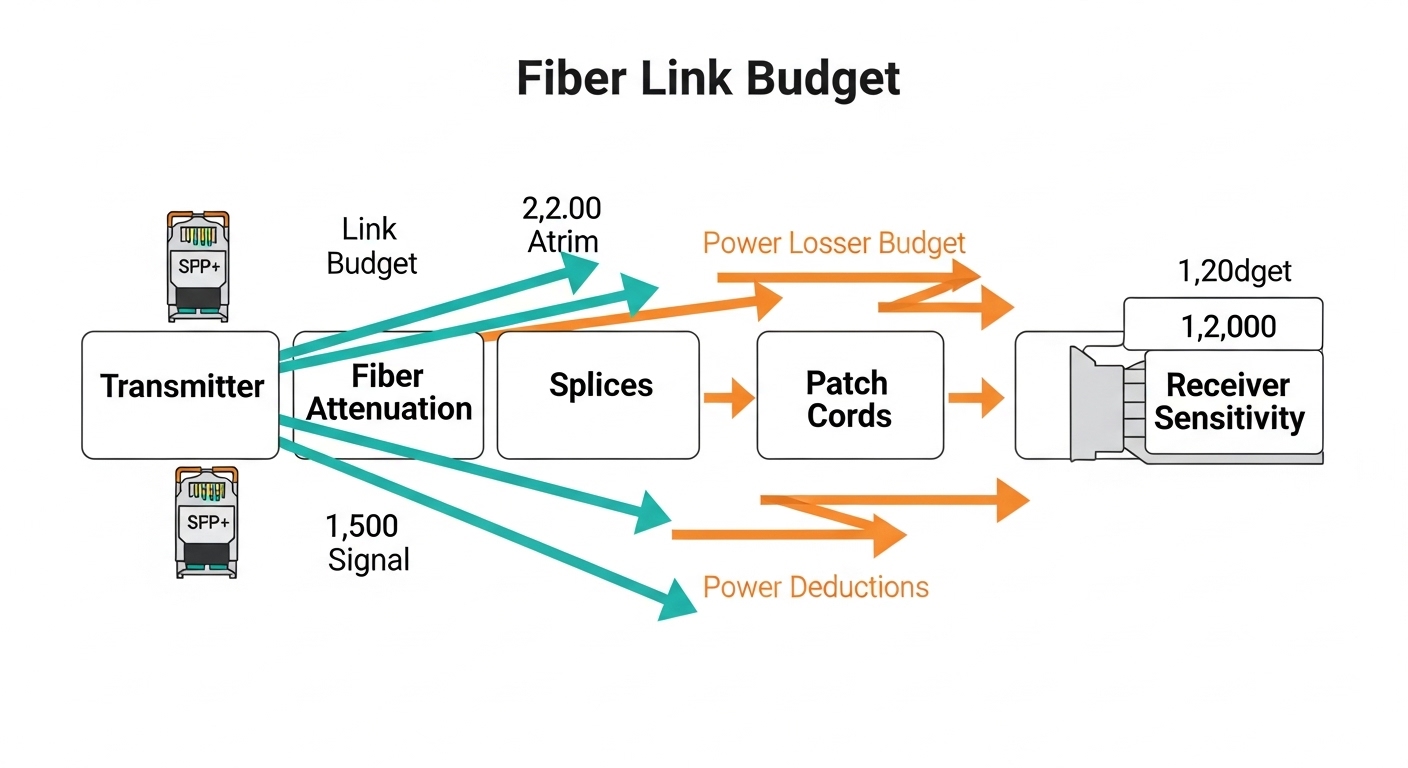
- Optical budget margin: calculate worst-case link budget including splice loss, connector loss, and aging margin; keep RX power away from sensitivity edge.
- Vibration and mechanical fit: ensure the SFP form factor and vendor retention spring work with the host cage and industrial vibration profile.
- Vendor lock-in risk: if you use OEM-only optics, price volatility and lead-time delays can spike TCO during spares replacement.
Pro Tip: In TSN deployments, engineers often discover that the “real failure” is not link negotiation but DOM alarm behavior under temperature ramps. If your NMS treats a transient DOM warning as a hard fault, you can trigger maintenance workflows that disrupt scheduled traffic. Validate alarm thresholds and how your control plane reacts during controlled thermal cycling before rollout.
Distance budget example you can reuse
Assume a 10G SR multimode link between a TSN edge switch and a line controller cabinet. You have 220 m of 50/125 MMF, 4 m of patch cords on each end, 3 connectors, and 2 splices. If your vendor budget allows roughly 2.5 dB to 3.0 dB of margin beyond typical SR loss, you still need to compute worst-case: connector loss (often ~0.3 dB each if clean) plus splice loss (often ~0.2 dB each) plus aging margin. The key is leaving RX optical power comfortably above sensitivity after worst-case losses.
Deployment scenario: TSN ring in an industrial plant with 10G fiber
Consider a factory with a 2 km perimeter ring of industrial fiber connecting 6 line cells to a central TSN aggregation switch. Each line cell uses a pair of 10G uplinks for redundancy, with an expected scheduled traffic window of 250 microseconds per cycle. During commissioning, a field team measured enclosure ambient temperatures ranging from -10 C to +55 C and found that one cabinet had poor airflow, raising module temperature by about 8 C above the cabinet sensor reading. They installed industrial-grade time sensitive networking SFP modules with DOM and configured alerting for RX power low thresholds 3 dB above the vendor alarm point. After cleaning all LC connectors and verifying RX power margin at the far end, the scheduled traffic remained stable during thermal soak and vibration tests.
Common pitfalls and troubleshooting for time sensitive optics
TSN failures can look like application issues, but the root cause is often physical layer behavior, optics mismatch, or telemetry misconfiguration. Below are the most frequent mistakes and how to fix them.
Pitfall 1: Using the wrong reach class for the actual budget
Root cause: engineers select an SR module based on nominal reach, but the real link includes higher-than-expected splice and connector losses, plus patch cord length. The link can come up but becomes unstable under temperature or aging. Solution: recompute a worst-case link budget, verify RX power using DOM at commissioning, and re-clean or re-terminate connectors if margin is tight.
Pitfall 2: DOM alarm thresholds cause control-plane churn
Root cause: NMS or switch software may interpret vendor-specific DOM thresholds differently across OEM and third-party modules, generating frequent warnings. In TSN environments, repeated events can trigger maintenance actions that pause scheduled operations. Solution: confirm DOM alarm mapping, set stable alert thresholds, and test during thermal ramps so alarms are meaningful rather than noisy.
Pitfall 3: SFP compatibility mismatch despite “link up” behavior
Root cause: some hosts support only certain vendors or require specific EEPROM compliance behavior; certain modules can negotiate but exhibit reduced diagnostics detail or intermittent resets. Solution: validate against the host switch optics compatibility list, run a soak test (hours to days) under expected ambient, and confirm that link resets do not correlate with temperature changes.
Pitfall 4: Connector contamination and micro-reflections
Root cause: even small contamination on LC ferrules can reduce RX power and increase error rates. TSN amplifies the impact because scheduled traffic assumes stable forwarding performance. Solution: use approved fiber inspection tools, clean with correct consumables, replace damaged patch cords, and re-measure RX power after cleaning.
Cost and ROI note: budgeting optics for deterministic uptime
Optics are not just a line-item; in TSN networks, they affect availability and maintenance effort. In many industrial markets, OEM time sensitive networking SFP modules can cost roughly 1.5x to 3x the price of comparable third-party industrial modules, depending on lead time and host brand restrictions. TCO should include: cost of spares, downtime during replacement, labor for connector cleaning and testing, and the risk of non-OEM compatibility delays. A practical ROI approach is to keep a verified spare set per critical link (for example, one spare per cabinet for each transceiver type), then compare total installed cost rather than unit price alone.
Reality check: third-party modules can be cost-effective, but only when the host switch supports them cleanly and you have a documented DOM/diagnostics path. If your operations team relies on consistent telemetry, validate that before you scale purchases.
FAQ: buying and deploying TSN fiber SFP modules
What does “time sensitive networking SFP” mean in practice?
It usually means an SFP module intended for deterministic Ethernet transport in a TSN environment, with industrial grade temperature performance and full DOM/DDM telemetry so you can monitor stability. The TSN determinism is primarily a higher-layer behavior, but optics stability is still essential.
Should I use OEM optics or third-party SFPs for TSN?
OEM optics reduce compatibility risk because vendors validate with specific host platforms. Third-party optics can lower unit cost, but only choose models with verified host support and DOM behavior, then run a soak test in your cabinet conditions.
How do I confirm optical budget margin before commissioning?
Calculate worst-case link loss including connectors and splices, then measure RX power using DOM after installation. If RX power is within a narrow margin of sensitivity, re-clean connectors, shorten patch cords, or select a longer reach class if your design allows.
What temperature range should I plan for in industrial TSN cabinets?
Use the module datasheet operating range and add enclosure-specific thermal rise. If your cabinet can exceed the ambient reading by several degrees, validate with a thermal soak while monitoring DOM temperature and optical power.
Why do scheduled traffic issues correlate with SFP alarms?
Frequent DOM warnings can cause operational workflows, link resets, or log-driven automation that disrupts scheduled operations. Confirm how your switch and NMS treat warnings versus alarms, and test during thermal ramps.
Can I mix different SFP vendors on the same switch?
It can work, but only if the host supports them and you validate consistent DOM/diagnostics and alarm behavior. For TSN-critical links, standardize on a small set of qualified part numbers to reduce operational variability.
For your next step, take your existing TSN fiber plan and run a “compatibility plus optical margin plus thermal soak” validation on the exact host and SFP part numbers you intend to deploy; this is the fastest path to predictable uptime. If you are also planning the switching side, review TSN switch configuration for deterministic Ethernet to align port settings, scheduling, and monitoring with your optics telemetry.
Author bio: I have deployed deterministic Ethernet networks in industrial plants, validating optics with DOM telemetry and thermal soak tests before cutover. I advise on ROI-based spares strategy and compatibility planning across OEM and third-party transceivers.
