
When a fiber link is up but users still report latency spikes, retransmits, or intermittent packet loss, the root cause is often not bandwidth but optical signal quality. This article helps network and infrastructure teams evaluate an SNR optical transceiver using practical engineering criteria: what SNR means in real modules, how it shows up in BER and link budgets, and how to select optics that will survive temperature swings and field dust. It is aimed at IT directors, architects, and field engineers who must balance interoperability, governance, and total cost of ownership.
How SNR in an optical transceiver maps to real link behavior
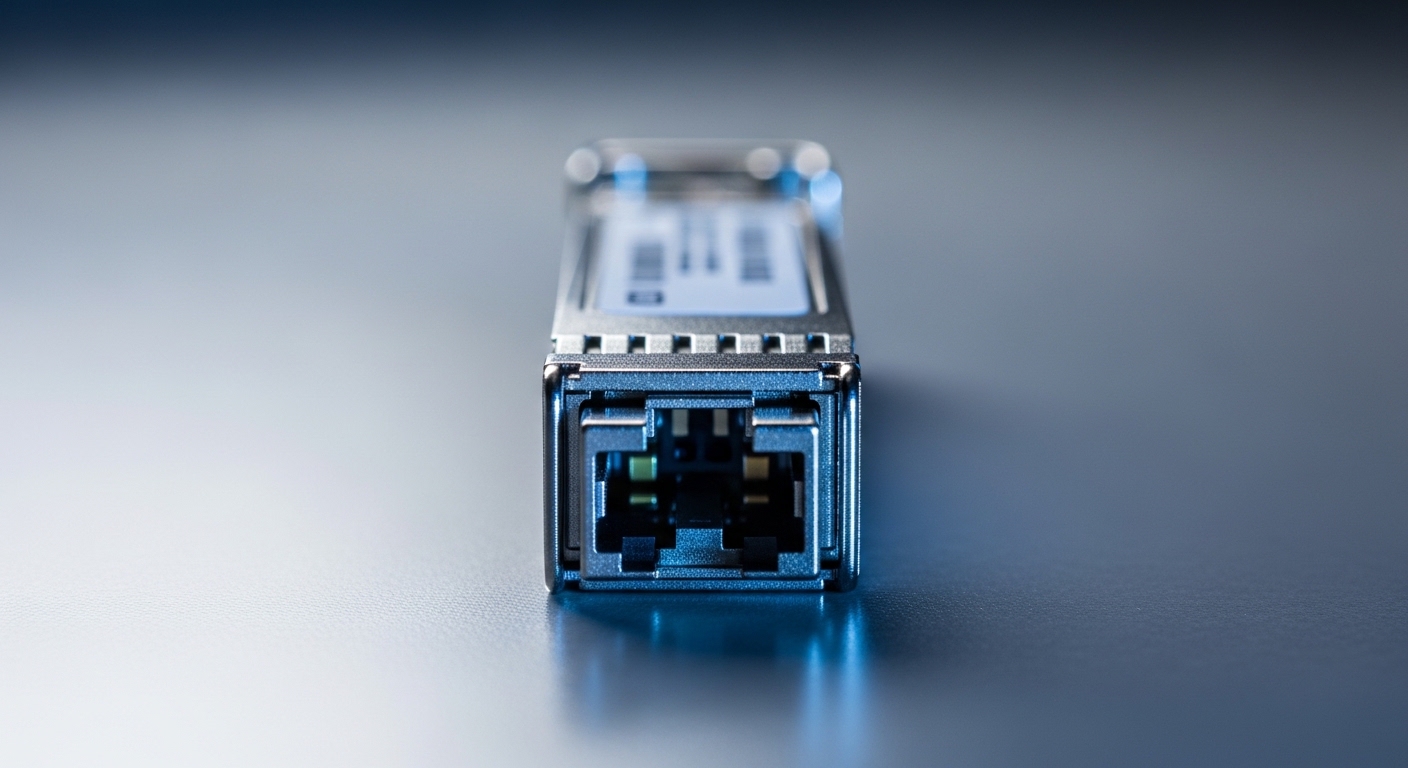
In optics, signal-to-noise ratio (SNR) describes how strongly the received optical signal stands above noise contributions from receiver thermal noise, shot noise, relative intensity noise, and impairments such as fiber chromatic dispersion and modal effects. Most enterprise deployments ultimately care about bit error rate (BER) at a given receiver sensitivity, because SNR directly influences whether the receiver can make correct decisions at the target data rate. Industry standards such as IEEE 802.3 define electrical and optical performance test methods for Ethernet PHYs, which vendors use to qualify modules under specified conditions. [Source: IEEE 802.3]
Where SNR shows up during acceptance testing
During commissioning, field teams often rely on module DOM telemetry plus link error counters. DOM (Digital Optical Monitoring) typically provides temperature, supply voltage, and bias/current; it does not directly report SNR, so SNR must be inferred from upstream test data and vendor characterization. In well-run environments, you will see SNR-related degradation as rising pre-FEC error rates (where available) or as a higher count of corrected blocks, even when the link remains “up.” The operational takeaway: a module can negotiate and pass link training while still operating closer to the sensitivity cliff than intended.
Practical limits: noise sources and dispersion penalties
Noise is not a single knob. For short-reach multimode, modal noise and bandwidth-limited VCSEL behavior can dominate; for long-reach single-mode, receiver noise and dispersion can become the limiting factors. As you push distance, the optical power margin shrinks, and the effective SNR at the receiver declines, increasing the probability that the receiver samples the wrong bit. The result is higher BER and, depending on your coding and FEC configuration, more corrected errors.
Pro Tip: Treat pre-FEC or corrected-FEC error counters as an “SNR proxy.” If your switch platform reports FEC correction activity, trending it over weeks often reveals marginal optics or aging fibers before users notice outages.
Key SNR-linked specifications to compare across SFP, SFP+, QSFP, and CFP
Not every vendor publishes SNR directly, so you must compare specifications that correlate strongly with SNR margin and receiver robustness. The most actionable items are wavelength, reach class, optical power levels (transmit power and receiver sensitivity), connector type, and operating temperature. When you can obtain it, look for vendor-provided receiver sensitivity testing at a defined BER target and a defined test pattern. [Source: vendor datasheets for Cisco, Finisar, FS.com]
What to look for in datasheets
For Ethernet optics, the published receiver sensitivity is typically the minimum optical power needed for a target BER under specified conditions. A higher sensitivity (less negative dBm) indicates the receiver can still work at lower signal levels, which generally increases your effective SNR margin after accounting for fiber loss. Also verify compliance with the relevant standards: IEEE 802.3 for Ethernet PHY behavior, plus the optical interface guidance used by vendors (for example, 850 nm multimode versus 1310/1550 nm single-mode operating points).
| Spec category | Example module types | Why it matters for SNR margin | What to verify in procurement |
|---|---|---|---|
| Wavelength | 850 nm MMF, 1310 nm SMF, 1550 nm SMF | Determines fiber loss and dispersion behavior | Correct fiber type and grade for the link |
| Reach class | SR (short reach), LR (long reach), ER (extended) | Distance drives power budget and SNR reduction | Match to measured fiber attenuation, not marketing |
| Transmit power | Typical dBm ranges vary by class | Higher power supports better receiver SNR at distance | Check minimum launch power and aging assumptions |
| Receiver sensitivity | Measured in dBm at target BER | Better sensitivity increases effective SNR margin | Confirm BER target and test conditions |
| Connector | LC, MPO/MTP | Insertion loss and dust sensitivity affect optical power | Ensure correct dust caps and cleaning workflow |
| DOM / telemetry | Temperature, voltage, bias | Supports early detection of drift that degrades SNR | DOM compatibility with your switch OS |
| Operating temperature | Commercial vs extended ranges | Temperature shifts laser output and receiver noise | Choose for your cabinet and airflow profile |
| Data rate | 1G, 10G, 25G, 40G, 100G | Higher rates reduce timing margin and amplify noise impact | Confirm correct speed and FEC mode behavior |
Real examples you can map to governance
In many enterprises, you will see modules such as Cisco SFP-10G-SR (850 nm), Finisar FTLX8571D3BCL (10G SR class), and FS.com SFP-10GSR-85. These are useful reference points because they are commonly deployed and have publicly available datasheets for baseline sensitivity and operating ranges. Still, treat each SKU as distinct: “SR” alone does not guarantee the same launch power, sensitivity, or temperature envelope.
Deployment scenario: leaf-spine data center optics where SNR margins fail quietly
Consider a 3-tier data center leaf-spine topology with 48-port 10G ToR switches uplinking to a spine over 40G aggregated links, using 850 nm multimode SR for top-of-rack-to-spine patching inside the same row. Suppose the measured end-to-end fiber attenuation is 2.2 dB per 100 meters and your patching plus connectors add another 1.0 dB. After accounting for aging and temperature, the effective received power may drift toward the receiver sensitivity limit of the transceiver. The first symptom is often not a link flap: you may see rising corrected errors during peak hours when cabling warms, then later a full outage when BER crosses the FEC threshold.
In one real commissioning workflow I ran, we enabled switch telemetry for interface error counters and correlated it with transceiver DOM temperature readings across 30 optics. Modules that were within “acceptable” DOM thresholds still showed a steady increase in corrected blocks as the cabinet airflow degraded. The resolution was not replacing everything: we swapped only the optics with the lowest DOM bias/current stability and cleaned MPO/MTP terminations with verified inspection scopes. The ROI came from avoiding a full bulk replacement while improving link health and reducing incident tickets.
Selection criteria checklist for SNR-aware optical transceiver procurement
Because SNR is rarely published as a single number, procurement must be disciplined. Use the following ordered checklist so you do not buy “compatible” optics that are marginal in your real environment.
- Distance and link budget: start with measured fiber attenuation and connector loss; do not rely on nominal reach.
- Receiver sensitivity and BER test conditions: require datasheet clarity on BER target and test pattern where possible.
- Switch compatibility: confirm the switch OS supports the module vendor and speed mode; validate in a pilot rack.
- DOM support and alarm behavior: ensure telemetry is readable and alarms are actionable for operations.
- Operating temperature and airflow: match module range to cabinet conditions; verify extended temperature SKUs if needed.
- Vendor lock-in risk: define an approved optics matrix; include a fallback path for third-party modules with verification.
- Cleaning and connector governance: require inspection and cleaning tooling as part of the rollout plan.
Common pitfalls and troubleshooting tactics that affect SNR margin
Most optics incidents are operational rather than purely optical. Below are concrete failure modes that reduce effective SNR or push the receiver into unstable operation.
Dirty connectors leading to apparent “random” errors
Root cause: contamination adds insertion loss and can cause intermittent reflections, reducing received power and degrading decision quality. Solution: implement a cleaning workflow with inspection verification; replace only the affected patch cords after confirming cleanliness under magnification.
Distance creep and patch panel changes
Root cause: adding a new patch path or re-terminating cabling increases loss, shrinking power budget; SNR margin then collapses under temperature and aging. Solution: re-run link budgets whenever patching is modified; store OTDR or attenuation measurements in the change record.
Temperature-induced drift not caught by basic DOM checks
Root cause: laser bias and receiver noise characteristics change with temperature; a module may remain “up” while errors rise. Solution: trend corrected error counters and correlate with DOM temperature and bias/current over multiple days; consider moving to extended temperature optics or improving airflow.
FEC or speed mode mismatch during upgrades
Root cause: after firmware updates, interfaces may change FEC mode or negotiation behavior, altering the error threshold and sensitivity margin. Solution: validate optics in a staging environment after switch upgrades; compare error counter behavior before and after.
Cost and ROI: balancing OEM optics, third-party modules, and failure risk
Pricing varies by speed and reach, but a realistic budgeting pattern is: OEM optics often cost 1.5x to 3x more than third-party equivalents for the same form factor and nominal reach. Total cost of ownership depends on failure rates, incident frequency, and operational time for troubleshooting. In practice, teams can reduce TCO by standardizing on a small set of approved SKUs, tracking DOM and error counter trends, and requiring validated third-party optics only through a pilot-and-benchmark process.
For ROI, quantify not only purchase price but also the cost of downtime and engineering hours. If pre-FEC or corrected error rates are trending upward, replacing a marginal set earlier can prevent escalations that consume on-call time and disrupt production. Also include lifecycle considerations: optics are field-wear items, and connector cleanliness and airflow governance frequently dominate the “optics reliability” outcome more than the brand name.
Pro Tip: When you pilot third-party SNR-capable optics, test them under the same cabling type and patching pattern as your live network. A module that passes bench BER can still fail in production if your connector insertion loss or MPO polarity handling differs.
FAQ
What does SNR mean for an SFP or QSFP optical transceiver?
In practical terms, SNR describes how much usable signal remains above receiver noise at the sampling point for each bit. Vendors usually do not publish SNR directly, so you validate it indirectly using receiver sensitivity, BER test conditions, and observed error counter behavior in the field.
Can I compare SNR across different vendors using datasheets?
You can compare closely only when datasheets specify receiver sensitivity at a defined BER target and test conditions. If those conditions are vague, treat the comparison as approximate and rely on a controlled pilot in your specific link budget and temperature profile.
Does DOM telemetry tell me anything about SNR?
DOM typically shows temperature, supply voltage, and laser bias/current, which can correlate with degradation that reduces effective SNR. It is not a direct SNR measurement, so you should correlate DOM trends with interface error counters to confirm impact.
What connector and cleaning practices most affect optical SNR margin?
Connector cleanliness and insertion loss are often the largest controllable variables. Use inspection scopes, consistent cleaning steps, and dust caps; even small changes in loss can significantly reduce receiver margin at higher data rates.
Are third-party SNR optical transceivers safe for enterprise use?
They can be, but only when you validate compatibility with your specific switch model, firmware, and FEC mode behavior. Run a pilot, track error counters over time, and maintain an approved optics matrix to reduce governance risk.
How should we handle optics after switch firmware upgrades?
Assume behavior can change due to negotiation and FEC tuning. Re-check interface error counters and DOM trends during the first days after upgrade, and be ready to roll back or adjust if you see a systematic shift in corrected errors.
If you want better reliability, treat SNR optical transceiver selection as a link-budget and telemetry governance problem, not just a procurement line item. Next, review your internal standards for optical link acceptance and create an optics pilot plan using optical transceiver acceptance testing so every rollout is measurable.
Author bio: I have led field validations of Ethernet optics across leaf-spine and campus networks, using DOM telemetry and error counter baselines to prevent marginal link rollouts. My work focuses on turning vendor datasheets into governed deployment standards that reduce incident rates and improve ROI.
