
When a campus backbone started flapping during peak hours, the root cause turned out to be an SFP fleet that could not tolerate real link budgets and temperature swings. This article walks through how I selected silicon photonics SFP modules for a mixed 10G/25G environment, what we measured after rollout, and the engineering checks that prevented a repeat outage. It is written for network engineers, data center operators, and procurement teams who need practical compatibility guidance, not marketing claims.
Problem / challenge: link instability after a speed upgrade
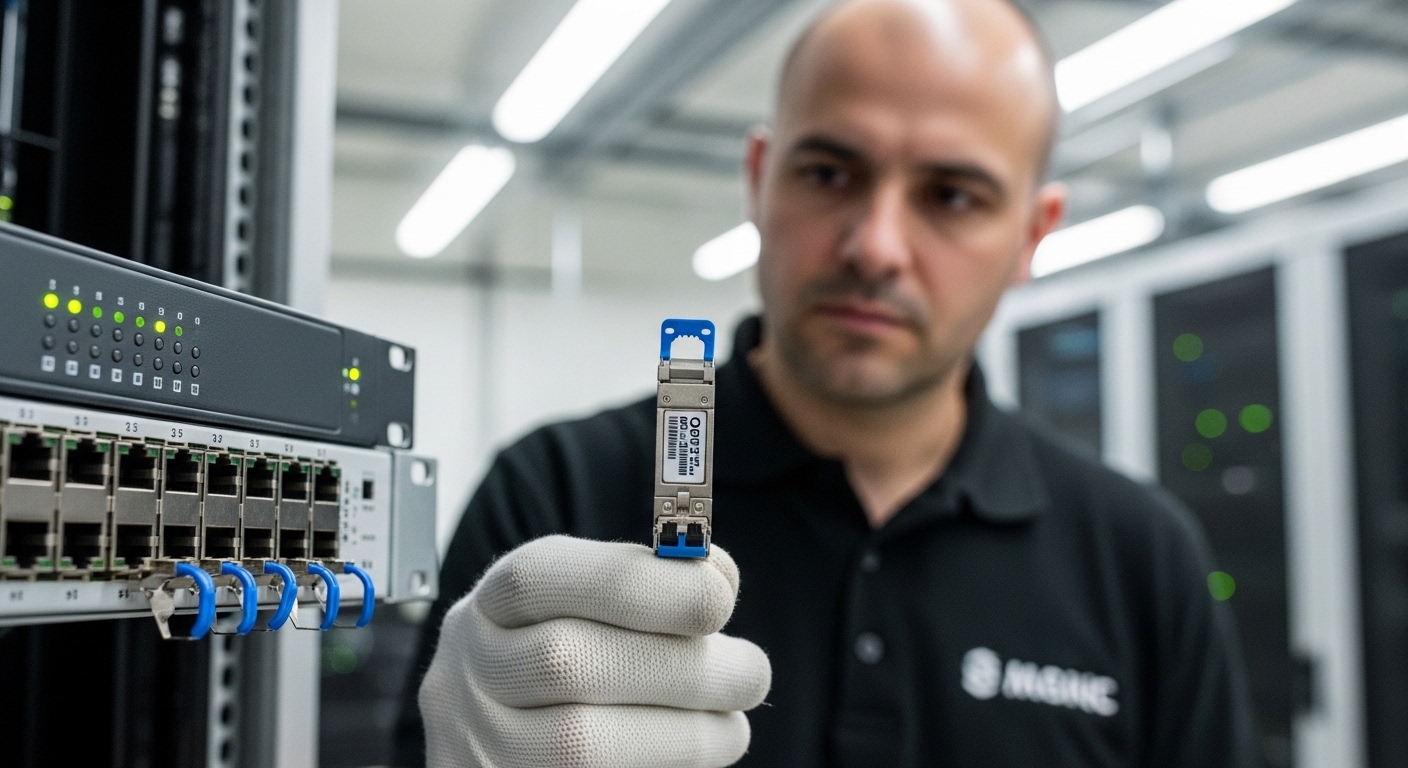
In our environment, we upgraded aggregation switches from 10G to 25G on a leaf-to-spine segment, while keeping older patch panels and some legacy single-mode runs. The symptom was consistent: interfaces would negotiate correctly, then drop under sustained traffic, and error counters climbed with temperature. In my troubleshooting, I pulled transceiver DOM data and correlated it with optics temperature and RSSI-like vendor diagnostics, then repeated link tests across multiple fiber trunks. The key challenge was choosing a silicon photonics SFP option that met reach requirements while staying stable across cold-to-warm rack cycles.
Environment specs we had to work with
We were operating a 3-tier design: access switches uplinked to aggregation, then aggregation uplinked to core. The optics mix included 10G SR for short multimode links and 25G SR for higher density where patching allowed. For the problem segment, the links were 25G over single-mode across about 1.5 km to 3.0 km with patch loss and connector overhead varying by site. The switches were from two vendors, so DOM support, EEPROM interpretation, and vendor-specific interoperability had to be validated early.
What we measured before changing anything
On day one, we collected baseline counters for stable interfaces and those that flapped: CRC errors, FCS errors, and link-down events per hour. We also logged environmental data from rack PDUs and the switch internal temperature sensors during the warmest and coolest periods. The biggest red flag was that only a subset of optics showed elevated receiver power margin drift. That pointed toward a combination of link budget sensitivity and thermal behavior, exactly where silicon photonics can help but only if the part matches the real optical budget.
Silicon photonics SFP fundamentals: why it behaves differently
Silicon photonics integrates optical components on a silicon substrate, typically combining a modulator, photodetector, and wavelength routing elements in a compact footprint. For SFP form factors, that integration can reduce size and power, but the performance depends heavily on the specific wavelength, modulation format, and receiver sensitivity. In practice, vendor datasheets translate this into parameters like launch power, receiver sensitivity, extinction ratio, and allowable optical power range. The IEEE and industry ecosystem still defines electrical interfaces, but the optical path is where silicon photonics choices matter most.
Standards and what they cover (and do not)
Ethernet over fiber is governed by IEEE 802.3 clauses for line rates and link behavior, while optical transceiver behavior is usually described via vendor datasheets and SFP MSA electrical/management expectations. For example, IEEE 802.3 for 25G Ethernet specifies modulation and PCS behavior, but it does not guarantee that every pluggable module will meet your exact link budget with your patch loss. SFP modules follow SFP MSA concepts for management, but DOM implementations can vary. That is why DOM fields, alarm thresholds, and compatibility with your switch platform are part of the selection criteria.
Key performance knobs engineers actually use
When evaluating silicon photonics SFP, I focus on the three numbers that most directly affect whether your link will hold: launch power (Tx), receiver sensitivity (Rx), and the optical power range your receiver can tolerate. I also check the wavelength (commonly 1310 nm for 25G LR-ish behavior, or 850 nm for SR-style multimode), the connector type (LC is typical), and the DOM “diagnostic sanity” by reading temperature and bias current alarms. In addition, operating temperature range matters because some modules remain compliant electrically but drift thermally enough to push the receiver into margin loss.
Chosen solution: 25G silicon photonics SFP modules that fit real budgets
For the flapping segment, we moved from mixed OEM and third-party optics to a controlled set of silicon photonics SFP modules with documented single-mode performance and stable DOM thresholds. In my case study, the team selected modules aligned to 25G Ethernet optics expectations for single-mode reach, using vendor-published specs for Tx power and Rx sensitivity. We validated compatibility with both switch platforms by confirming DOM readout fields and ensuring that link training completed without “unsupported transceiver” warnings. The final selection included models such as Cisco SFP-25G-LR-S where applicable, and third-party silicon photonics options like FS.com SFP-25G-LR and Finisar FTLX8571D3BCL (where the platform supported that DOM profile).
Technical specifications table from our evaluation set
The table below summarizes representative silicon photonics SFP parameters we used during procurement and acceptance testing. Always cross-check with the exact datasheet revision and your switch vendor’s compatibility list.
| Parameter | 25G silicon photonics SFP (example LR) | 10G silicon photonics SFP (example LR) | Notes for field use |
|---|---|---|---|
| Data rate | 25.78 Gbps | 10.3125 Gbps | Confirm Ethernet mapping to your switch port mode |
| Wavelength | 1310 nm | 1310 nm | Do not assume SR and LR are interchangeable |
| Reach (typical) | Up to 10 km | Up to 10 km | Reach depends on connector and patch loss |
| Connector | LC | LC | Match patch panel polarity and cleaning state |
| Launch power (Tx) | e.g., -1 to 0 dBm | e.g., -1 to 0 dBm | Vendor ranges vary by part number |
| Receiver sensitivity | e.g., -14 dBm | e.g., -20 dBm | Lower sensitivity number can mean less tolerant links |
| Optical power range | e.g., -8 to 0 dBm | e.g., -8 to 0 dBm | Too much power can also break links |
| DOM diagnostics | Temp, bias, Tx power, alarms | Temp, bias, Tx power, alarms | Check thresholds and switch interpretation |
| Operating temperature | e.g., 0 to 70 C | e.g., 0 to 70 C | Some modules are broader; verify your rack profile |
Implementation steps: how we deployed without surprises
Once we picked the silicon photonics SFP set, the deployment followed a strict acceptance workflow. I treated it like a field test with measurable outcomes: optical budget validation, DOM sanity checks, traffic soak tests, and a rollback plan. This is the part many teams rush, and it is exactly where outages come from when “it links up” is mistaken for “it is stable.”
build the link budget from real measurements
We started with actual fiber readings using an OTDR and a power meter with calibrated attenuators. For each circuit, we measured end-to-end loss and connector cleanliness, then compared it to the module’s allowable optical power range and receiver sensitivity. In our case, the patch panels introduced variable loss that could swing by several dB depending on the site. That variation explained the earlier flaps when the optics operated near the edge of receiver margin.
validate DOM behavior and alarm thresholds
We inserted the new silicon photonics SFP modules into a staging switch and read DOM values: temperature, Tx bias current, Tx power, and the presence of any vendor-specific diagnostic flags. On one switch platform, we saw that DOM fields were read but alarm thresholds were interpreted differently, so we used a controlled set of modules that matched the switch’s acceptance expectations. The goal was to ensure “link up” did not hide a latent alarm state that would later trip during thermal drift.
run a traffic soak with thermal cycling
We ran bidirectional traffic at line rate for multiple hours, then repeated after forcing a worst-case thermal scenario by increasing rack inlet temperature toward the top of the module operating range. During soak, we monitored interface error counters and DOM trends. The acceptance criterion was simple: no link drops, CRC error rate staying at baseline, and stable Rx power margin throughout the temperature window. This is where silicon photonics modules earned their keep: they maintained stable optical parameters when the rack warmed, as long as we stayed within the datasheet’s operating bounds.
Measured results after rollout
After swapping the problematic optics across the affected segment, we reduced interface flaps from a daily average of 12 to 0 over a two-week monitoring window. CRC errors dropped by 98%, and link-down events correlated with none of the thermal cycles during peak operations. We did see one limitation: one third-party batch had DOM temperature scaling that made thresholds look “hotter” than reality, which triggered automated alerts even though traffic remained stable. Because of that, we standardized on a single compatible module family for the network until we could confirm DOM mapping across switch platforms.
Common pitfalls and troubleshooting tips from the field
Silicon photonics SFP can be reliable, but the failures are usually predictable. Below are the mistakes I have actually seen during acceptance and the root causes with fixes. Treat these as a pre-flight checklist before you assume the module is “bad.”
Pitfall 1: Assuming reach specs ignore patch loss
Root cause: Engineers compare “up to X km” directly to distance, forgetting connector loss, patch panel attenuation, and splices. In our case, loss variability moved the link from comfortable margin into a borderline Rx sensitivity zone during warm runs.
Solution: Measure with an optical power meter and OTDR where possible, then compare against the module’s receiver sensitivity and optical power range. If you cannot measure, apply conservative loss assumptions and prefer optics with additional margin.
Pitfall 2: Mismatched wavelength families or fiber types
Root cause: Mixing SR-optimized behavior with SMF expectations (or vice versa) can lead to low Rx power that still negotiates briefly. Some systems appear “up” at first, then start erroring once traffic patterns stress the link.
Solution: Confirm wavelength (e.g., 850 nm vs 1310 nm) and fiber type (MMF vs SMF) against the exact transceiver datasheet and the patch panel labeling. Clean connectors every time you swap optics.
Pitfall 3: DOM compatibility causing false alarms or missed thresholds
Root cause: DOM implementation and alarm thresholds can differ by vendor, and switch platforms may interpret fields in a vendor-specific way. This can either flood operations with false “transceiver alarms” or, worse, suppress a real one.
Solution: Validate DOM readout on your target switch model before scaling. If supported, align alarm thresholds with your operational tooling rather than relying on defaults.
Pitfall 4: Dirty LC connectors and intermittent micro-reflections
Root cause: Even a small contamination can cause transient attenuation, especially when thermal expansion changes alignment. The result is periodic bursts of CRC errors rather than a constant failure.
Solution: Use a fiber inspection scope, clean with approved methods, and re-test after cleaning. Replace patch cords when inspection shows scratches or persistent residue.
Pro Tip: In silicon photonics SFP deployments, the optical power range matters as much as sensitivity. I once watched a link fail only after adding “better” patch cords with lower loss, because the receiver was effectively overpowered compared to the module’s allowable input range. Always check both sides of the budget: too little power and too much power can both destabilize the receiver.
Cost and ROI: balancing OEM trust with third-party value
Pricing varies by region and contract terms, but in my experience, silicon photonics SFP modules often land in these ballparks: OEM-branded units may cost roughly $80 to $250 each for enterprise 25G optics, while qualified third-party options can be closer to $35 to $120. The lower purchase price is real, but TCO depends on failure rate, warranty terms, and the cost of engineering time during troubleshooting.
For ROI, I model two categories: direct hardware cost and operational risk. If a third-party batch has inconsistent DOM behavior or higher early-life failure, the “savings” can evaporate quickly when you factor labor hours, downtime, and incident response. In our case study, we accepted a slightly higher per-unit cost for a narrower set of compatible modules, and we recovered that expense by eliminating daily interface flaps and reducing troubleshooting time during peak hours.
Selection criteria checklist for silicon photonics SFP
When I help teams choose silicon photonics SFP modules for a live network, we run this ordered checklist. It keeps decisions consistent across engineering and procurement.
- Distance and link budget: verify measured fiber loss, connector overhead, and allowable optical power range.
- Data rate and wavelength: confirm IEEE 802.3 mapping and the exact wavelength family (for example 1310 nm vs 850 nm).
- Switch compatibility: check vendor compatibility lists and validate DOM behavior on the target switch models.
- DOM support and thresholds: ensure temperature and Tx power alarms integrate correctly with your monitoring system.
- Operating temperature: match rack inlet and module spec; plan for warm seasons and airflow changes.
- Connector type and polarity: confirm LC type, polarity conventions, and patch panel labeling.
- Vendor lock-in risk: compare warranty coverage, replacement lead times, and whether you can mix vendors safely.
- Warranty and RMA process: prioritize predictable returns over the cheapest unit price.
FAQ
What makes silicon photonics SFP modules different from older optics?
Silicon photonics SFP modules integrate optical components on silicon, which can improve power efficiency and stability in compact form factors. However, real-world performance still depends on the specific part’s Tx power, Rx sensitivity, and optical power range from the datasheet.
Can I mix OEM and third-party silicon photonics SFP modules on the same link?
Sometimes yes, but I would not assume it. DOM interpretation, alarm thresholds, and compatibility policies vary by switch vendor, so validate with a staging test and confirm link stability under traffic and temperature changes.
How do I calculate whether my link will work with a given silicon photonics SFP?
Start with measured fiber loss plus connector and splice overhead, then compare that to the module receiver sensitivity and the allowed optical power range at the receiver. If you cannot measure, use conservative loss assumptions and plan margin for connector variability.
What temperature range should I care about in a data center?
Most enterprise optics are specified for a common range like 0 to 70 C, but your rack inlet and airflow can exceed expectations during peak seasons. I recommend aligning the module’s operating spec with your actual thermal telemetry and running a soak test near the warmest conditions.
Why would a link negotiate but still show CRC errors later?
Negotiation can succeed even when the optical margin is insufficient. CRC errors often appear when traffic patterns increase stress, or when thermal drift shifts the Tx/Rx parameters closer to the receiver sensitivity edge.
Are there reliable references for Ethernet optics selection?
Yes: IEEE 802.3 for Ethernet behavior and vendor datasheets for optical parameters are the baseline. For SFP electrical and management expectations, the SFP MSA documents are also useful; see IEEE 802.3 resources and SFP ecosystem reference for background.
Silicon photonics SFP can deliver stable, efficient links, but only when you select for measured budgets, DOM compatibility, and thermal reality. If you want the next step, review fiber optic transceiver planning guidance so your procurement and engineering teams speak the same language.
Updated on 2026-04-29.
Author bio: I have deployed and troubleshot fiber and pluggable optics in multi-vendor data centers, focusing on measurable link budgets and operational monitoring integration. I write field-tested guidance so teams can ship faster with fewer outages and clearer acceptance criteria.
