
In oil and gas facilities, a single failed link can halt commissioning, delay maintenance, or create unsafe network gaps. This article helps network and instrumentation engineers select oil gas fiber optic SFP transceivers that work reliably around vibration, temperature swings, and hazardous classification requirements. You will get practical selection criteria, a specs comparison table, and troubleshooting tips drawn from field deployments.
Where SFP fiber links fit in oil gas fiber optic architectures
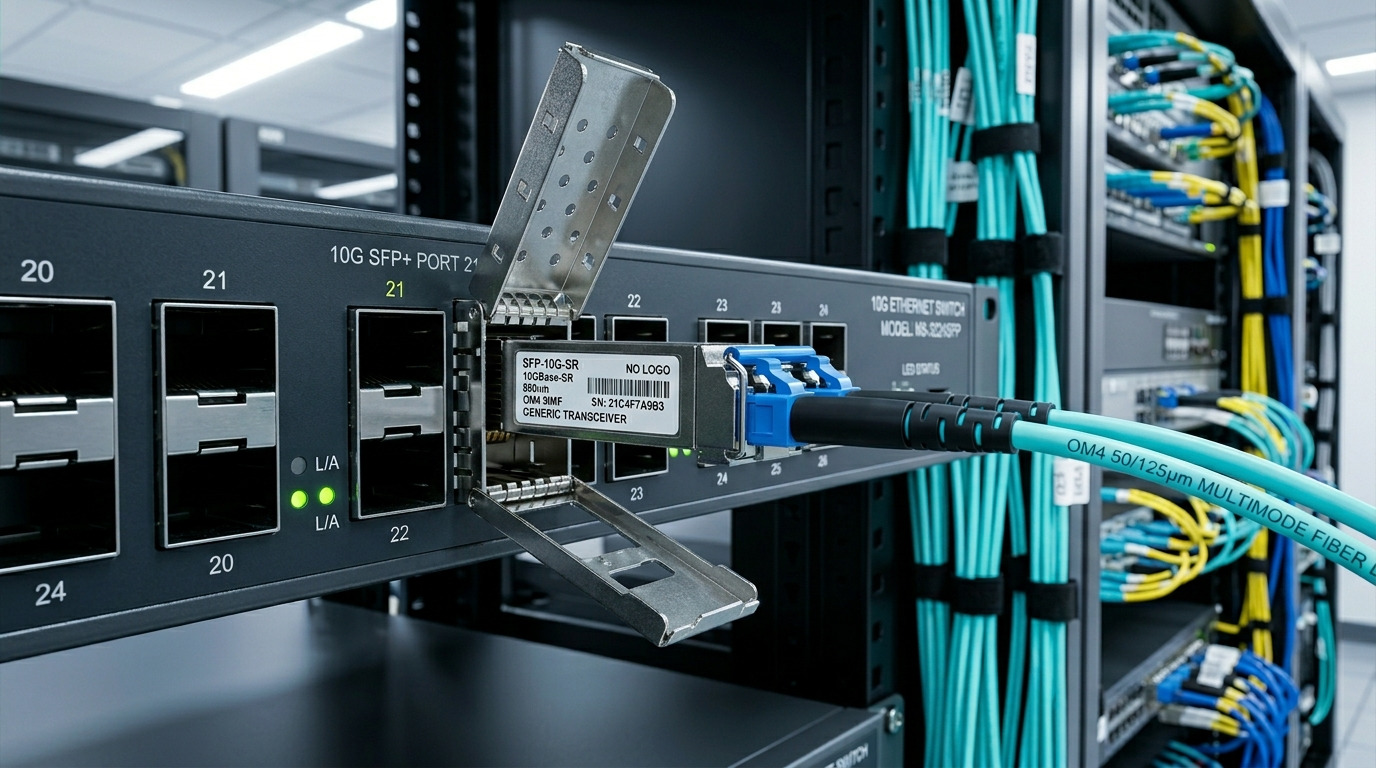
Most oil and gas sites run Ethernet for SCADA, historians, OT monitoring, and remote assets, then aggregate traffic toward control rooms and data centers. SFP-based designs are common because they support modularity: you can standardize switch hardware and swap transceivers per run length and fiber type. In hazardous zones, the key is not just the optical performance, but also the transceiver’s qualification and the overall installation method used to meet area requirements.
Practically, we often see SFPs in ruggedized managed switches at substations, pump skids, or tank farm perimeter cabinets. Typical runs are 500 m to 2 km for multimode in shorter cabinet-to-cabinet segments, and up to 10 km when using single-mode for remote control building backhauls. When these links are paired with fiber patch panels, splice trays, and proper grounding, the network becomes easier to maintain than copper in electrically noisy environments.
Hazardous environment constraints that affect SFP choice
Hazardous locations are governed by electrical classification schemes such as IEC 60079 (ATEX) and NEC Article 500 (Class/Division). The transceiver itself may not be the final “approved apparatus” for every zone; rather, the complete assembly (switch, enclosure, cabling, and installation) must meet the certification intent. Before purchasing, confirm documentation from the switch vendor and the transceiver manufacturer about compliance and operating limits.
Engineers also need to consider power dissipation and heat sinking. Many SFPs specify optical class and temperature range, but in the field the enclosure ambient can exceed lab assumptions due to sun load and restricted airflow. If you deploy in cabinets without forced cooling, derate expectations and verify the switch’s rated ambient temperature and SFP vendor temperature window.
Technical specifications that matter most
For oil gas fiber optic links, the “right” SFP is usually determined by wavelength, fiber type, reach, optical power budget, and connector standard. Below is a practical comparison of common 10G and 1G SFP families used on industrial networks. Always validate compatibility with your switch model and confirm DOM (Digital Optical Monitoring) support if your operations team needs real-time optics health.
| Transceiver (example part) | Data rate | Wavelength | Reach (typical) | Fiber type / connector | DOM | Operating temperature | Notes for oil gas installs |
|---|---|---|---|---|---|---|---|
| Cisco SFP-10G-SR | 10G | 850 nm | 300 m on OM3 | Multimode / LC | Supported | 0 to 70 C | Best for short cabinet-to-cabinet runs |
| Finisar FTLX8571D3BCL | 10G | 850 nm | 300 m (OM3) | Multimode / LC | Supported | -5 to 70 C (varies by revision) | Verify switch compatibility and DOM behavior |
| FS.com SFP-10GSR-85 | 10G | 850 nm | 400-500 m (OM4, depends on link) | Multimode / LC | Varies | -10 to 70 C (check datasheet) | Budget option when validated in your switch |
| 10GBASE-LR SFP (SM, 1310 nm) | 10G | 1310 nm | 10 km typical | Single-mode / LC | Often supported | Varies by vendor | Common for remote backhauls |
Source guidance: Ethernet optical parameters align with IEEE 802.3 optics definitions and vendor datasheets. For foundational requirements, review IEEE 802.3. For transceiver electrical and optical monitoring behavior, rely on the specific vendor SFP datasheet and your switch hardware compatibility list.
Pro Tip: In brownfield oil gas fiber optic retrofits, the biggest “surprise” is not reach—it is fiber plant attenuation variation caused by aging connectors and microbends. If you have OTDR data, use it to compute a real power budget before assuming OM3/OM4 reach.
Selection checklist for SFPs in harsh OT networks
- Distance and fiber type: confirm OM3 vs OM4 vs single-mode and measure actual patch/splice loss.
- Switch compatibility: verify the exact switch model’s SFP/QSFP compatibility and whether it enforces vendor part numbers.
- DOM requirements: if you need alarm thresholds for optical power and temperature, ensure DOM is enabled and supported by your NMS.
- Operating temperature and enclosure reality: compare SFP rated range with worst-case cabinet ambient (sun exposure plus restricted airflow).
- Hazardous-area documentation: confirm certification scope for the installed assembly and installation method (enclosure, wiring practices, and bonding).
- Budget and vendor lock-in risk: weigh OEM transceivers versus third-party validated options, and plan spares strategy to reduce downtime.
Common mistakes and troubleshooting tips
Even experienced field teams run into predictable failure modes. Here are the ones I see most in oil gas fiber optic deployments, along with root causes and fixes.
“Link up but no throughput” after swapping SFPs
Root cause: DOM mismatch, unsupported optics, or switch-side configuration (speed/auto-negotiation expectations). Some industrial switches treat non-approved optics differently.
Solution: confirm the switch’s transceiver compatibility list, check interface counters, and verify negotiated speed on the port. If your platform supports it, validate DOM readings via CLI or NMS.
Frequent receiver alarms in hot weather
Root cause: SFP temperature outside spec due to enclosure heat buildup; also possible due to high insertion loss from connector contamination.
Solution: measure cabinet ambient during peak sun; clean and inspect LC connectors with approved fiber inspection tools; replace suspect patch cords. Recalculate the power budget using measured attenuation.
“Works on bench, fails in the field” due to fiber plant loss
Root cause: OTDR blind spots and underestimated splice/patch loss, plus microbends from conduit bends.
Solution: validate the entire end-to-end link with OTDR and end-face inspection. Re-route fiber to reduce bend radius and verify splice quality.
Cost and ROI: OEM vs third-party SFPs for oil gas fiber optic links
OEM SFP pricing is typically higher, but it can reduce integration risk and shorten troubleshooting time. In many sites, OEM 10G SR modules land in the mid-to-high price tier, while validated third-party optics can be materially cheaper; however, the true TCO depends on failure rates, compatibility friction, and how quickly spares restore service.
For ROI, factor downtime cost during maintenance windows, the labor hours spent validating optics, and spare stocking. A common pattern: third-party modules are acceptable once you have proven them across your exact switch models and firmware versions, then you standardize procurement with batch testing. If you are operating in hazardous areas, avoid “trial-and-error” with unverified assemblies because the safety and commissioning overhead can dominate the savings.
FAQ
What SFP types are most common for oil gas fiber optic networks?
Most teams start with 10GBASE-SR (850 nm) for short multimode runs and 10GBASE-LR (1310 nm) for longer single-mode backhauls. Choose based on measured fiber plant loss rather than catalog reach alone.
Do I need DOM for hazardous-area operations?
DOM is not mandatory for link establishment, but it is valuable for proactive maintenance. If your NMS can monitor DOM thresholds, you can catch degradation early and schedule cleaning or replacement before a full outage.
Can third-party SFPs be used with industrial switches?
Often yes, but only after you confirm compatibility with the exact switch model and firmware. Some platforms enforce optic vendor checks or exhibit different DOM behavior with non-OEM modules.
How do I validate fiber reach in the real plant?
Use OTDR for end-to-end visibility and confirm connector/splice loss with inspection and loss measurements. Then compare the measured link budget to the SFP power budget stated in the datasheet.
What is the biggest cause of intermittent link drops?
In my experience, the top causes are connector contamination, microbends in cable routing, and enclosure thermal stress. Start with cleaning and inspection, then check bend radius and cabinet ambient during peak conditions.
Where should hazardous-area documentation come from?
From the system vendor and the certified assembly documentation for your enclosure and installation method. Do not assume the transceiver alone is “approved” for every zone without verifying the complete installed setup.
Choosing the right SFP for oil gas fiber optic links is a systems problem: optical budget, switch compatibility, and installation safety all matter together. Next, review your current topology and planned run lengths, then validate options against your switch’s compatibility list and measured link budget using fiber optic transceiver selection for harsh environments.
Author bio: I have 10+ years of hands-on experience deploying fiber and Ethernet in industrial OT environments, including remote sites with strict uptime requirements. I focus on field-validated optics, power budgeting, and compatibility testing to minimize downtime and rework.
