
You can buy the right wavelength and reach on paper, yet still lose ports to “unsupported module” errors or unstable optics. This article helps network engineers and field operations teams validate an MSA compliance optical transceiver using the real standards behind it: SFF-8472 and SFF-8436. You will get a head-to-head comparison, a deployment scenario with measurable numbers, and a practical checklist you can run during procurement and installation.
What MSA compliance means in daily operations: SFF-8472 vs SFF-8436
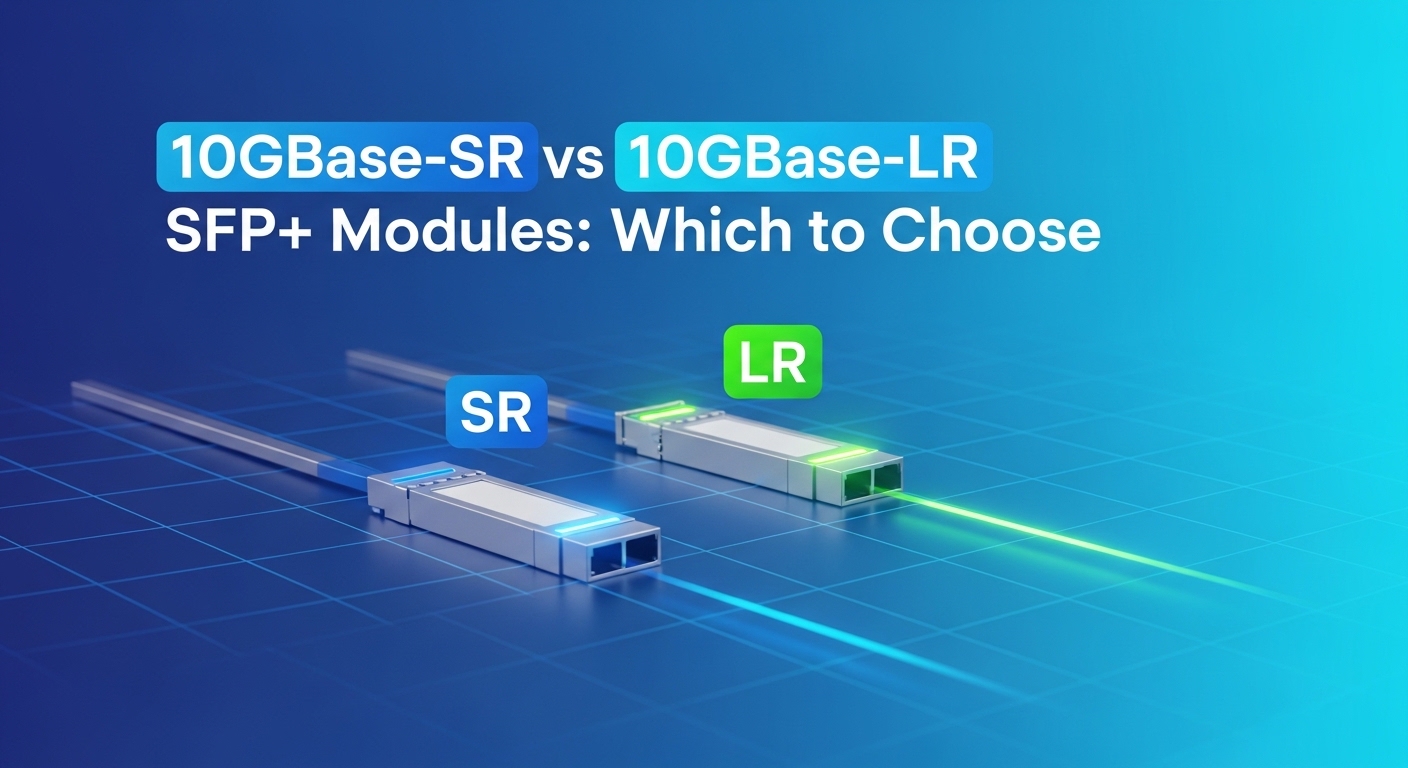
In SFF ecosystems, “MSA compliance” usually means the transceiver meets the mechanical and electrical expectations so a host switch can safely read diagnostics and drive the optical link. The most common practical split is: SFF-8472 covers the digital diagnostic interface details (for example, how optical module telemetry is represented), while SFF-8436 refines the way digital diagnostic data is accessed and interpreted for many SFP-class implementations. Both matter, but they show up differently when you troubleshoot.
Where SFF-8472 shows up
When you plug in an SFP/SFP+ style module, the host typically reads module identification and diagnostics over the defined digital interface. SFF-8472 defines key aspects of the diagnostic and control behavior so the host can interpret temperature, supply voltage, laser bias, transmit power, and receive power consistently. If a module is “mostly compatible” but diagnostic reporting is off-spec, you may see alarms, inaccurate thresholds, or missing telemetry.
Where SFF-8436 shows up
SFF-8436 is often referenced for digital diagnostic and related management behaviors across common small form-factor optics. In field terms, this tends to influence how the host expects certain fields to be formatted and how the module’s diagnostic registers behave. Engineers notice it most when a vendor’s optics are not fully aligned with the host’s diagnostic parsing logic, causing “module type mismatch” or unstable monitoring.
Authority note: These standards are defined by SFF committees and reflected in vendor host compatibility matrices; for the Ethernet PHY side, IEEE 802.3 governs link behavior over optical media. For standards context, see [Source: IEEE 802.3] and vendor documentation that explicitly references SFF-8472 and SFF-8436.
External references: anchor-text: IEEE 802.3 overview of optical link behavior and anchor-text: Storage Networking Industry Association resources on transceiver ecosystems
Head-to-head specs: how reach, wavelength, and DOM support affect “compliance”
“Compliance” is not only about the standards text; it is about what your host does with the module’s data. Below is a practical comparison for common 10G SR modules, since they are frequently swapped across switches and routers and therefore expose interoperability gaps.
| Aspect | SFF-8472-aligned behavior | SFF-8436-aligned behavior | What engineers observe |
|---|---|---|---|
| Digital diagnostics (DOM) | Consistent telemetry mapping (temp, Vcc, bias, Tx/Rx power) | Expected register formatting and diagnostic access semantics | Accurate monitoring vs “N/A” fields or threshold misfires |
| Host compatibility | Improves baseline ID and telemetry interpretation | Reduces parsing mismatches in host firmware | Fewer “unsupported module” events |
| Wavelength | Typically 850 nm for SR | Typically 850 nm for SR | Same physical optics, different management reliability |
| Example 10G SR module | 850 nm MMF, nominal 300 m at OM3 | 850 nm MMF, nominal 300 m at OM3 | Reach depends on fiber plant and budget, not only compliance |
| Connector | LC duplex typical | LC duplex typical | Wrong connector = immediate failure regardless of compliance |
| Temperature range | Often 0 to 70 C for standard | Often 0 to 70 C for standard | Out-of-range modules cause link flaps |
Concrete product examples you may see in the field
Compatibility varies by host vendor firmware, but the following examples illustrate common 10G SR optics engineers compare: Cisco SFP-10G-SR, Finisar FTLX8571D3BCL, and FS.com optics such as SFP-10GSR-85 (model naming varies by catalog). Always verify the specific datasheet and the vendor’s stated SFF support; do not assume every “850 nm SR” part behaves identically in diagnostics.
Deployment scenario: validating MSA compliance optical transceiver across a leaf-spine fabric
Consider a 3-tier data center leaf-spine topology with 48-port 10G ToR switches connecting to a spine layer via 10G uplinks. A team standardizes on 10G SR optics over OM3 multimode fiber. During a refresh, they replace 96 uplink transceivers over a weekend window and monitor for three signals in the first 24 hours: link up/down events, DOM telemetry completeness, and optical power drift trend.
In one real-world pattern, a batch of third-party optics physically seated correctly but reported Tx power as “out of range” in the switch UI. Root cause was a diagnostic mapping mismatch: the host firmware expected fields consistent with SFF-8472/SFF-8436 semantics, but the module’s register behavior differed. After swapping to modules explicitly documented as supporting the relevant digital diagnostic expectations, telemetry stabilized within the next polling cycle and alarms dropped to zero for the following week.
Operational detail to copy: During installation, capture DOM values (Tx bias, Tx power, Rx power, temperature) at link-up and again after 30 minutes. If the delta is extreme or fields are missing, treat it as a compatibility issue before traffic ramps.
Pro Tip: Many teams validate “link up” only. Instead, validate DOM field presence and threshold behavior right after insertion—host alarms often key off diagnostic scaling, not just optical signal presence. A module can pass basic link training yet still create noisy monitoring or early false fails.
Selection criteria and decision checklist for MSA compliance
Use this ordered checklist during procurement, staging, and pre-rack testing. It is designed to reduce tech debt from “mostly compatible” optics.
- Distance and fiber type: confirm OM3/OM4/OS2 match and calculate link budget (not just “300 m” marketing reach).
- Data rate and form factor: ensure SFP vs SFP+ vs QSFP class matches your switch ports.
- Host compatibility matrix: verify the switch vendor explicitly supports the module family.
- MSA compliance claim quality: require documentation stating behavior aligned with SFF-8472 and/or SFF-8436, not vague “MSA compliant.”
- DOM support and telemetry mapping: confirm the host can read temperature and optical power without “N/A.”
- Operating temperature: match your rack airflow profile; many standard modules are rated 0 to 70 C.
- Vendor lock-in risk: assess how quickly you can source replacements and whether firmware updates change compatibility.
- ESD and handling constraints: require proper packaging and cleaning guidance for fiber endfaces.
Common pitfalls and troubleshooting tips (root cause + fix)
These are the failure modes that show up when teams assume “MSA compliant” guarantees interchangeability.
“Unsupported module” or ports disabled after insertion
Root cause: Host firmware rejects the module’s identification fields or expected diagnostic semantics. This is commonly triggered by partial standard support or non-standard register formatting.
Solution: Swap in a module explicitly documented for the host generation, and confirm DOM fields populate in the CLI or UI. If you must use third-party optics, test one module per switch model before scaling.
DOM shows “N/A” or extreme Tx/Rx power values
Root cause: Digital diagnostic telemetry mapping differs from what the host expects from SFF-8472/SFF-8436 behaviors. The optics may still transmit correctly, but monitoring becomes unreliable.
Solution: Validate telemetry at insertion and after 30 minutes. If values are missing or saturating, replace the batch and request a datasheet section that describes diagnostic field behavior and scaling.
Link flaps under thermal load
Root cause: The module’s temperature rating is exceeded or airflow is insufficient, causing laser bias drift and unstable optical output. This often correlates with high rack inlet temperatures.
Solution: Measure inlet and module-adjacent temperatures. Ensure airflow direction is correct, reduce cable congestion near optics, and consider temperature-rated parts if your environment regularly exceeds 25 to 35 C inlet.
Fiber polarity or cleaning issues masked by “works sometimes” behavior
Root cause: Dirty connectors or wrong duplex polarity can create marginal receive power that looks like a compliance problem.
Solution: Clean with approved methods, verify polarity with a known-good link, and measure Rx power against the module’s recommended operating range.
Cost and ROI: OEM vs third-party MSA compliance optics
Pricing depends on speed, reach, and licensing, but typical street ranges for 10G SR optics are often $30 to $80 per unit for common parts, with OEM options sometimes higher. The ROI question is not only purchase price; it is total cost of ownership from failure rates, troubleshooting time, and downtime risk.
Third-party optics can reduce capex, but you may pay back the savings in engineering hours if diagnostics are unreliable or hosts reject modules after firmware changes. A practical approach is to pilot one batch across representative switch models, log DOM behavior for a week, and only then standardize. If the host fleet is large, the time cost of “one bad batch” can exceed the unit price delta quickly.
Decision matrix: which option best fits your environment
| Reader profile | Primary priority | Best choice | Why |
|---|---|---|---|
| Enterprise ops team with mixed switch vendors | Interoperability and stable DOM | Documented SFF-8472/SFF-8436 aligned third-party with tested host matrix | Lower cost without losing monitoring reliability |
| Data center with strict change-control | Predictable support path | OEM optics where the vendor explicitly supports the exact module family | Minimizes escalation friction during outages |
| Field team staging new racks quickly | Fast validation | From a pre-approved compatibility list; test DOM field presence before scaling | Reduces weekend rollback risk |
| Budget-constrained network refresh | Capex reduction | Third-party with strong documentation and a short pilot | Controls risk while capturing savings |
Which Option Should You Choose?
If you need the lowest operational risk and a clean support boundary, choose OEM optics that explicitly match your switch model and document digital diagnostic expectations. If you are optimizing cost but still want reliability, choose a third-party MSA compliance optical transceiver that is explicitly aligned with SFF-8472 and SFF-8436 and has passed a pilot across your switch fleet.
Next step: use this article as your validation rubric, then apply it to your current inventory by mapping each transceiver SKU to your switch compatibility list via related topic: transceiver compatibility matrix and DOM validation workflow.
FAQ
What does “MSA compliance optical transceiver” actually guarantee?
It primarily guarantees mechanical fit and a baseline electrical and digital diagnostic interface behavior so the host can safely communicate with the module. It does not guarantee reach, fiber compatibility, or identical DOM scaling unless the module is also aligned with the relevant diagnostic expectations.
How do SFF-8472 and SFF-8436 relate to DOM telemetry?
They define how diagnostic fields are represented and accessed so the host can interpret temperature, voltage, bias, and optical power. If your switch reads telemetry as missing or saturated, you often have a diagnostic mapping mismatch rather than a physical optics failure.
Can a transceiver link up even if it is not fully SFF-8472/SFF-8436 aligned?
