
When a link “works” but intermittently drops, the root cause is often physical layer margin: connector cleanliness, fiber geometry, and optical reflection behavior. This article explains how to perform return loss transceiver measurement using practical test methods that field and lab teams can repeat. It helps network engineers, optical technicians, and QA leads verify transceiver reflectance and catch early failures before they become outages.
Why return loss transceiver measurement matters in real links
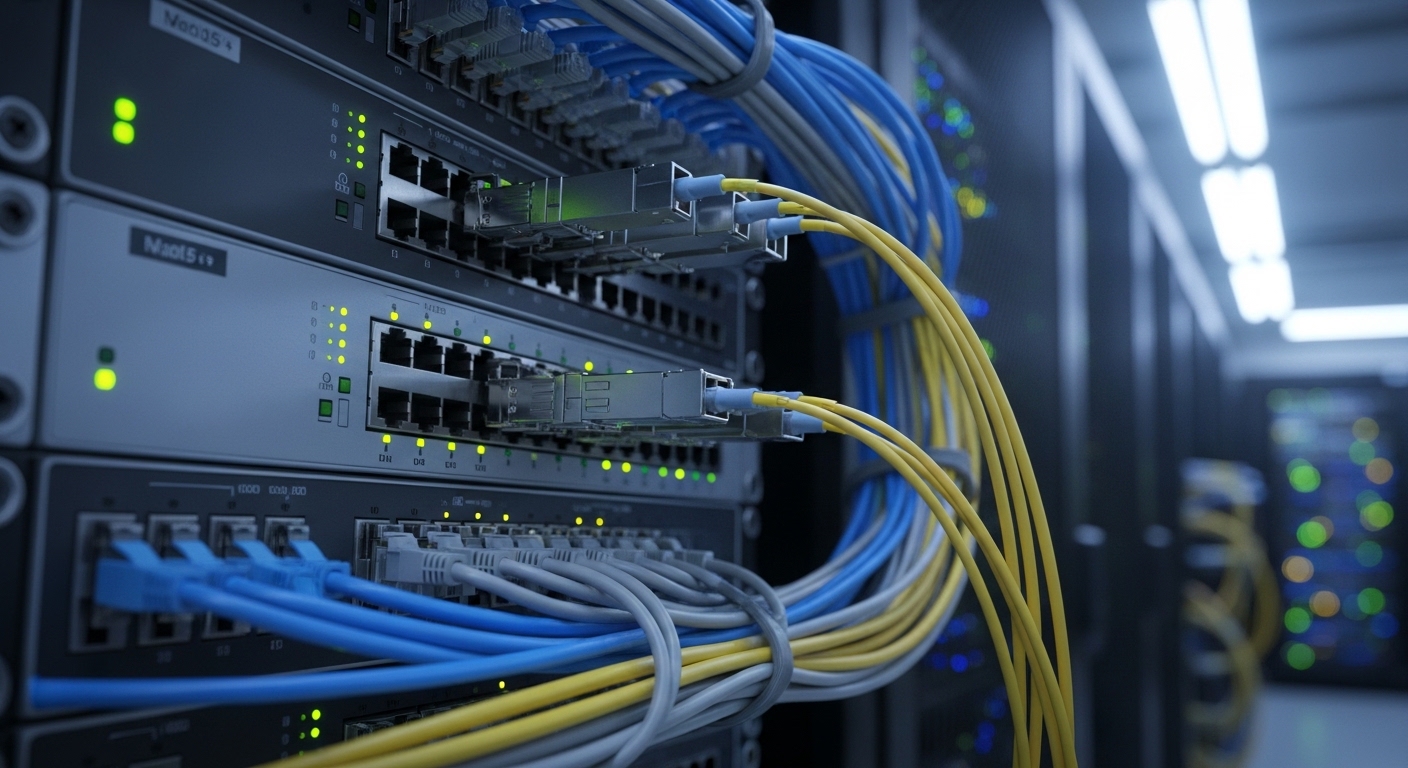
In optics, return loss quantifies how much light is reflected back toward the transmitter due to impedance mismatches. High reflections can degrade receiver sensitivity, increase bit error rate (BER), and worsen eye diagram closure, especially at higher symbol rates. In practice, vendors specify optical compliance and safety, but operators still need verification on installed cabling, patch panels, and transceiver cleanliness. The key is linking measurement results to standards-based expectations and to the specific transceiver and connector interfaces you deploy.
What is being measured: return loss vs reflectance
Return loss is typically expressed in decibels (dB) and relates to the power ratio between incident and reflected optical signals. Reflectance is the fraction of optical power reflected from an interface, often reported as a percentage or converted to dB. Many teams treat these as two views of the same phenomenon: the higher the return loss (more positive dB), the lower the reflected power. For testing, the setup often uses an optical source and a receiver (or an optical time-domain reflectometry instrument), then applies calibration to infer the interface behavior.
Standards and references you should align to
Optical transceivers in Ethernet and other transport systems are governed by IEEE physical layer specifications, while connector and fiber test practices follow ANSI/TIA guidance. For measurement methodology and optical performance concepts, IEEE 802.3 links optical requirements to BER and receiver sensitivity, and ANSI/TIA documents reflectometry and cabling practices for structured cabling. For test instrumentation usage and general optical measurement principles, refer to vendor application notes and instrument manuals. anchor-text: IEEE 802.3 standard anchor-text: ANSI/TIA standards portal
Pro Tip: In many facilities, the dominant contributor to reflection-related instability is not the transceiver chip itself but the installed interface stack: dust on the ferrule, micro-scratches in the connector, and patch cords with inconsistent endface geometry. A return loss transceiver measurement that “barely meets” limits in the lab can look dramatically worse after 20 to 50 insertions if endfaces are not cleaned and inspected with a microscope.
Test methods: from reflectometry to calibrated optical return loss
There are multiple ways to measure optical reflections, but the most actionable results come from methods that separate transceiver reflectance from the rest of the channel. The goal is repeatability: fixed launch conditions, known patch cord characteristics, and calibration steps that account for the test harness. In field QA, engineers typically choose between an OTDR/OTDR-like approach and an optical return loss meter approach, then validate with a controlled loopback or reference link.
Method A: Optical return loss meter with calibrated reference harness
An optical return loss instrument measures reflected power versus wavelength or at selected wavelengths. To use it for transceiver verification, you connect the transceiver to a known reference harness—typically a short, characterized patch cord and coupler arrangement—then run calibration to remove connector and harness effects. After calibration, you measure the transceiver interface and compare the result to the vendor’s optical interface expectations or your internal acceptance thresholds. This method is best when you need repeatable pass/fail screening across many units.
Method B: OTDR or OBR-style reflectometry for locating problematic reflections
OTDR (optical time-domain reflectometry) can show where reflections occur along the fiber path, which helps isolate whether the reflection is at the transceiver, a splice, or a connector. While OTDR resolution depends on pulse width and wavelength, it is valuable when intermittent link issues correlate with movement or reconnection events. In a transceiver-focused workflow, you still want to control the test harness so the OTDR trace can be interpreted confidently.
Method C: Loopback-based verification with controlled optics
Some teams validate return-loss-related performance indirectly by combining reflectance results with BER and eye diagram checks in a controlled loopback. For example, you can run PRBS tests while varying patch cord types and cleaning states, then correlate BER degradation with measured reflection changes. This does not replace direct return loss transceiver measurement, but it strengthens root-cause confidence. It is especially useful when your acceptance criteria are tied to link stability rather than a single reflection number.
Key specifications and what “good” looks like
There is no single universal threshold for all transceivers because return loss performance depends on wavelength, connector type, transceiver design (e.g., optical isolator presence), and fiber type. Still, you can structure your acceptance using a combination of vendor guidance and your own baseline measurements for each transceiver SKU and connector interface. When you report results, include wavelength, test direction, connector type, and calibration method.
| Parameter | Typical Values to Track | Why It Matters |
|---|---|---|
| Test wavelength | 850 nm (MMF), 1310/1550 nm (SMF) | Reflectance can vary by wavelength and optical filter behavior |
| Return loss result | Measured in dB (higher is better) | Indicates how strongly the interface reflects light back |
| Connector type | LC/APC or UPC, SC, MPO | Angle-polished connectors change reflection characteristics |
| Data rate class | 10G, 25G, 40G, 100G | Higher speeds are more sensitive to optical impairments |
| Operating temperature | Module datasheet range (e.g., commercial vs industrial) | Optical alignment and output power can shift with temperature |
| Power and safety | Follow transceiver class labeling and test instrument limits | Prevents damage to optics and protects personnel |
For concrete reference transceiver models, many data center teams use short-reach optics such as Cisco SFP-10G-SR, Finisar FTLX8571D3BCL, or FS.com SFP-10GSR-85. These operate at 850 nm for multimode links, and their interface behavior is influenced by the internal optical design and the external connector stack. Always confirm the exact wavelength and connector type from the module datasheet and your installed patch panel configuration.
Selection criteria: how to choose the right measurement approach
Engineers rarely buy a measurement tool once and forget it; the method must match the network topology, connectors, and acceptance workflows. Use the checklist below to decide whether you need direct return loss transceiver measurement, reflectometry for localization, or a hybrid verification approach.
- Distance and topology: Short patch-cord links favor direct return loss screening; longer channels may require OTDR to locate reflection hotspots.
- Connector standardization: If you use APC connectors or mixed UPC/APC pools, ensure the test harness and reference calibration reflect the same geometry.
- Budget and throughput: Return loss meters can be fast for batch testing; OTDR traces take longer but provide location context.
- Switch and transceiver compatibility: Validate that the transceiver type (SFP, SFP+, QSFP28, etc.) is supported by the switch optics settings and media type.
- DOM support and diagnostics: If your workflow uses digital optical monitoring, confirm DOM support (e.g., I2C accessibility, vendor-specific pages) and log readings alongside optical tests.
- Operating temperature and environmental stress: Test whether reflection behavior drifts with temperature by running measurements in the module’s intended range.
- Vendor lock-in risk: Prefer measurement workflows that produce vendor-agnostic outputs (wavelength, connector geometry, dB results) so you can compare across SKUs.
Deployment scenario: validating a leaf-spine cluster before cutover
Consider a 3-tier data center leaf-spine topology with 48-port 10G ToR switches feeding a spine using 10G SR uplinks over OM4 multimode fiber. Each rack uses pre-terminated MPO trunks for the spine uplinks, and LC connectors at the ToR patch panels. During a cutover window, the team replaces 200 optics modules from a single batch and sees two links that flap under load after cable moves. The field engineer performs return loss transceiver measurement at 850 nm on all replacement modules using a calibrated harness with the same connector adapters as the live patch panels, then re-cleans and re-tests only the failing pairs. The results show that the problematic links correlate with measurably worse reflection at the connector interface, and after endface inspection and cleaning with lint-free wipes and an approved cleaner, the flaps disappear without any firmware changes.
Common mistakes and troubleshooting tips
Return loss measurements can be misleading if the test harness or procedure is inconsistent. Below are frequent failure modes that cause false positives, missed defects, or misattribution of the issue to the transceiver itself.
Pitfall 1: Skipping calibration and leaving harness effects in the result
Root cause: The measurement includes reflections from patch cords, adapters, and bulkheads, not just the transceiver interface. This can make a good module look bad or hide a weak connector. Solution: Use a calibrated reference harness and repeat calibration whenever you change adapters, patch cord types, or connector geometry.
Pitfall 2: Measuring with the wrong connector geometry (APC vs UPC)
Root cause: Angle-polished connectors shift reflection behavior significantly compared to straight-polished connectors. If the test setup assumes the wrong geometry, the return loss transceiver measurement becomes non-comparable. Solution: Confirm connector polish type on both sides, and standardize adapters so the test reflects the installed interface.
Pitfall 3: Dirty endfaces despite “passing” visual checks
Root cause: Microscopic dust and film residues can create reflection spikes without obvious visual residue. Under microscope inspection, contamination is often subtle, but reflections can still degrade receiver performance at higher rates. Solution: Enforce microscope inspection before every measurement session, clean with validated procedures, and re-measure after cleaning.
Pitfall 4: Confusing transceiver power level issues with reflection-induced BER
Root cause: Low transmit power or receiver sensitivity drift can mimic the symptoms of reflection problems. If you only look at return loss without correlating DOM telemetry and BER, you may misdiagnose. Solution: Pair return loss transceiver measurement with DOM readings (TX power, RX power, temperature) and run PRBS or traffic-based BER tests.
Cost and ROI considerations for optical return loss testing
In typical enterprise and colocation environments, return loss test equipment ranges from a few thousand dollars for entry-level screening tools to tens of thousands for fully featured instruments with calibration accessories. Third-party modules may reduce purchase cost, but they can increase variability: you may need tighter incoming QC and more measurement time per batch. TCO should include labor hours, calibration consumables (cleaning kits, inspection microscopes), and failure rate handling. A practical ROI model is to compare avoided truck rolls and cutover delays against the amortized cost of testing equipment and the incremental throughput cost of measurement.
For example, if a team prevents even a single outage caused by a bad interface stack during a quarterly migration, the labor and SLA impact can quickly outweigh the measurement tooling. However, if your connectors are already standardized and your cleaning discipline is mature, direct measurement frequency can be reduced to acceptance sampling rather than 100 percent testing.
FAQ
What instruments are commonly used for return loss transceiver measurement?
Teams typically use an optical return loss meter with a calibrated reference harness, or they use reflectometry tools such as OTDR/OBR for localization. The best choice depends on whether you need a fast pass/fail screen or a trace that identifies where reflections occur along the fiber path. For transceiver-focused QA, calibrated return loss meters are often the most direct.
How do I interpret return loss results in dB for different connector types?
Return loss values are only comparable when test conditions and connector geometry match. APC versus UPC can shift expected reflection behavior, so you must standardize adapters and calibration. Always report wavelength and connector type in your measurement records.
Can return loss measurement detect a failing transceiver even if the link is up?
It can, but it is not guaranteed. A transceiver can fail due to power drift, laser aging, or receiver sensitivity degradation that does not necessarily manifest as high reflection. That is why pairing return loss transceiver measurement with DOM telemetry and BER or traffic tests is the most reliable workflow.
Is DOM data enough, or do I still need return loss transceiver measurement?
DOM is useful for diagnosing optical power and temperature trends, but it does not directly measure reflections at the interface. If you suspect connector or interface-related instability, return loss measurement provides direct evidence of reflection behavior. In mature environments, you can reduce measurement frequency to sampling, but you should not eliminate it when reflection-related flapping occurs.
What is the fastest workflow for incoming QC of many optics modules?
A practical approach is to run a batch screening procedure: clean and inspect endfaces, measure return loss transceiver measurement at the relevant wavelength using a fixed harness, and log results by SKU and serial number. Then, reserve more time-consuming OTDR localization for only the subset that fails thresholds or shows instability under short traffic tests.
Where should measurement records be stored for auditability?
Store results in a system that links transceiver serial number, test wavelength, connector geometry, calibration version, and instrument settings. This supports traceability during RMA and helps correlate specific batches with field issues. If you operate under a QA framework, align the data fields to your internal nonconformance and corrective action process.
If you want to move from measurements to stable operations, the next step is to formalize your optical QA workflow around repeatable cleaning, connector standardization, and correlated telemetry. Start with optical fiber cleaning and inspection workflow to reduce reflection variability before you spend time on equipment-heavy testing.
Author bio: I have deployed and debugged fiber transceiver test workflows in data center and lab environments, including calibrated return loss screening and reflectometry-based fault isolation. I focus on measurement repeatability, standards alignment, and ROI-driven QA practices that hold up during migrations and high-speed link upgrades.
