
In leaf-spine data centers and metro rings, optics failures can cost more than the module itself. This article helps network engineers and procurement teams judge whether recertified transceiver modules are a smart buy or an operational risk. You will get a head-to-head comparison, a practical decision checklist, and troubleshooting patterns seen in real deployments.
Recertified vs new optics: performance and reach trade-offs
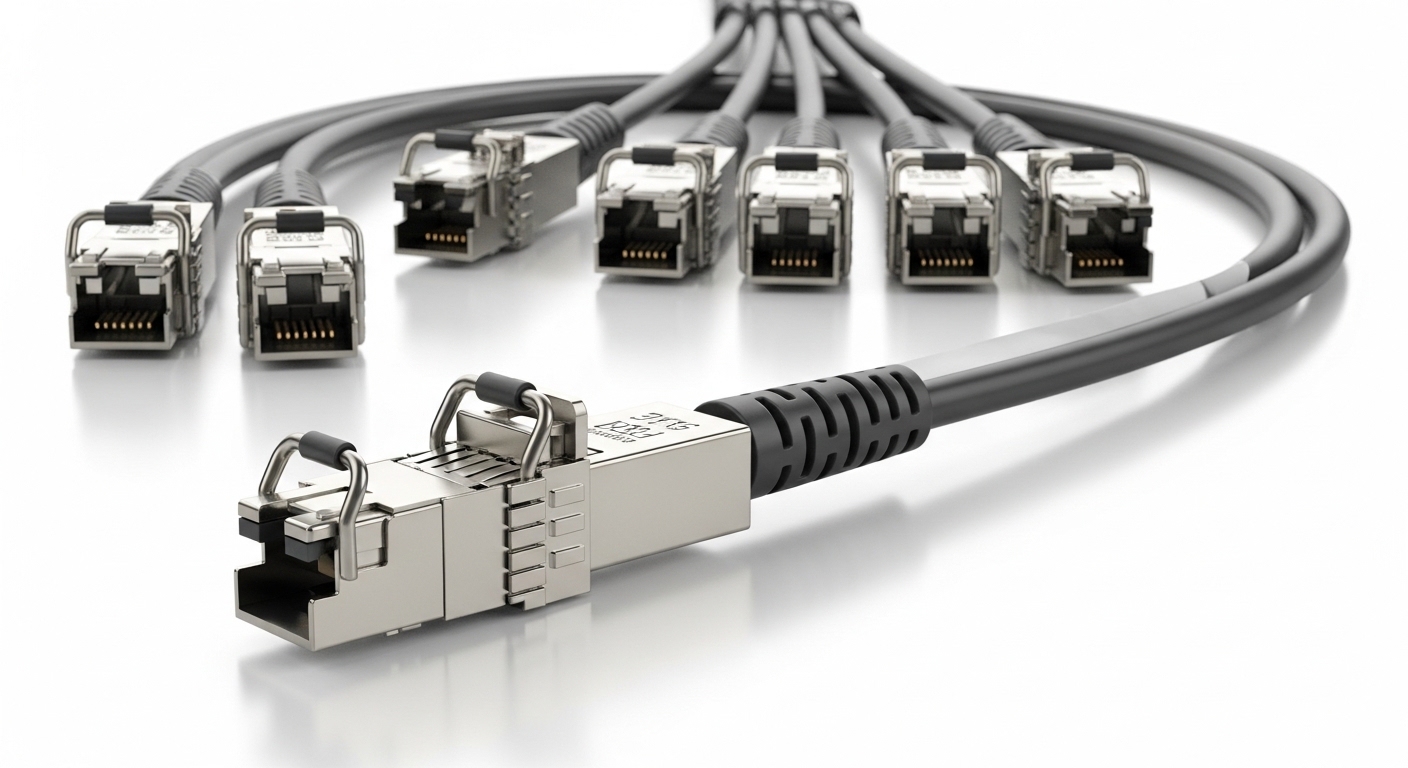
The core question is whether recertified transceiver modules meet the same functional targets as factory-new optics: link budget, signal integrity, and vendor-supported optics parameters. For short-reach Ethernet, the limiting factors are usually fiber attenuation, connector cleanliness, and transceiver optical power (not only the module). In practice, many recertified units are pulled from working systems, tested, and requalified to ensure they pass eye safety, DOM readings, and baseline transmit/receive thresholds.
However, recertified does not always mean identical behavior under every platform. Some switches and routers enforce strict vendor-specific interoperability settings, especially around DOM alarms and vendor OUI checks. So the “performance” comparison should include not only nominal reach, but also how reliably the module trains and stays stable over temperature cycles.
Example spec baseline for common 10G SR optics
Use this table as a quick reference when comparing optical families. Exact values vary by OEM, but the reach and wavelength band are typically consistent within a technology class.
| Parameter | 10G SR (Typical) | 10G LR (Typical) | What to verify on recertified |
|---|---|---|---|
| Data rate | 10.3125 Gb/s | 10.3125 Gb/s | Correct electrical interface and line coding |
| Wavelength | 850 nm | 1310 nm | Wavelength class matches your link budget |
| Reach (multimode) | Up to 300 m (MMF) | Up to 10 km (SMF) | Requalified power levels for your exact fiber plant |
| Connector | LC duplex | LC duplex | Connector geometry and dust protection |
| DOM support | Commonly yes | Commonly yes | DOM accuracy and alarm thresholds |
| Operating temperature | 0 to 70 C or wider | 0 to 70 C or wider | Temperature rating aligns with your chassis |
Cost reality: where recertified transceiver modules win and where they do not
Recertified transceiver modules often reduce upfront spend, especially when you are refreshing spares for thousands of ports. Typical street pricing varies widely by density and brand, but a realistic pattern is that recertified 10G optics can land around 30% to 60% below factory-new, depending on platform maturity and volume. The ROI hinges on failure handling: if you can swap modules within minutes, the operational risk is manageable.
Yet the TCO can flip in your favor for new optics when you have frequent field churn, strict compliance requirements, or long maintenance windows. If your team cannot reliably validate DOM alarms, optical power, and lane stability during acceptance, the “cheap” module can become an expensive troubleshooting event.
For vendors and standards, remember that Ethernet optics are governed by IEEE 802.3 link requirements, while specific module behavior is validated through vendor datasheets and interoperability guidance. For baseline expectations, consult [Source: IEEE 802.3] [[EXT:https://standards.ieee.org/standard/802_3]] and vendor interoperability notes from your switch OEM.
Compatibility and DOM behavior: the hidden risk factor
In many environments, compatibility is less about whether the module “works once” and more about whether it works predictably across reboots, link renegotiations, and temperature drift. Recertified transceiver modules are usually reprogrammed or tested to ensure they present correct EEPROM identity data and DOM readings, but edge cases exist. Some platforms enforce strict vendor OUI allowlists, and some will treat mismatched thresholds as alarming conditions.
Concrete field practice: when deploying in a mixed fleet, engineers often run a staged rollout—install in a non-critical aggregation block first, monitor interface flaps, and confirm consistent optical power and receive signal quality. If your platform logs “low RX power” or “DOM warning” events, you must confirm whether those are true optical issues or threshold interpretation differences.
Decision checklist: how engineers choose recertified vs new
Use this ordered list during procurement and acceptance testing. It is designed to reduce surprises after install.
- Distance and fiber class: confirm MMF type (OM3/OM4) or SMF budget, and match wavelength and reach.
- Switch and optics compatibility: verify the exact module form factor (SFP+, SFP28, QSFP+, QSFP28) and check OEM compatibility guidance.
- DOM support and alarm thresholds: ensure the recertified unit reports consistent values; validate against your platform’s expected ranges.
- Operating temperature: confirm your chassis airflow and module rating; do not assume “industrial” equals your thermal envelope.
- Testing methodology: require evidence of optical power measurements and link stability tests (not only visual inspection).
- Vendor lock-in risk: consider whether you will standardize on one OEM ecosystem or maintain a multi-vendor inventory strategy.
- Warranty and RMA terms: recertified should include a clear return window and documented failure handling.
Common pitfalls and troubleshooting tips
Even when the optics are technically compatible, field failures often come from predictable root causes. Here are recurring mistakes and fixes that teams learn the hard way.
Pitfall 1: “It linked up, so it is fine” during acceptance
Root cause: short burn-in and lack of temperature cycling can mask marginal bias currents or borderline optical power. Solution: validate link stability over at least a maintenance window and check DOM trends (TX power, RX power, temperature) after a warm-up period.
Pitfall 2: Fiber cleanliness overlooked with recertified spares
Root cause: dust or micro-scratches dominate error rates more than module provenance. Solution: inspect and clean connectors using proper swabs and end-face inspection; replace patch cords if you see persistent RX power drops.
Pitfall 3: Platform alarms caused by threshold interpretation
Root cause: the module may meet optical specs, but the switch interprets DOM values differently and triggers warnings or disables ports. Solution: compare DOM readings from a known-good factory-new module; if thresholds differ, adjust alerting policy or standardize module types per platform.
Pitfall 4: Wrong transceiver class in the same cage
Root cause: mixing SR vs LR, or mismatched optical wavelength, can still produce intermittent link behavior. Solution: enforce part-number controls and label inventory; verify wavelength and connector type before install.
Which option should you choose? (clear recommendations by buyer type)
If you need maximum predictability and have strict change-control windows, choose factory-new optics. If you operate at scale with strong acceptance testing, recertified transceiver modules can be a cost-effective way to build spares and reduce downtime risk.
- Enterprise data center teams with mature fiber hygiene and monitoring: lean recertified for non-critical blocks and spares, but keep a small pool of factory-new for emergency replacements.
- Service providers with metro rings and field tech rotations: recertified can work well when you require documented optical test results, DOM validation, and tight RMA coverage.
- Small businesses with limited lab capability: prefer factory-new to minimize troubleshooting time and reduce interoperability surprises.
- Procurement-driven refresh programs: negotiate for testing evidence, warranty, and consistent part numbering to avoid “mix and match” risk.
Decision matrix for head-to-head selection
| Criteria | Recertified transceiver modules | Factory-new optics |
|---|---|---|
| Upfront cost | Lower | Higher |
| Interoperability certainty | Medium (depends on testing and platform) | High |
| DOM reliability | Variable; verify readings | Consistent |
| Acceptance effort | Higher (needs validation) | Lower |
| Failure recovery | Good with strong RMA and quick swap process | Best (predictable spare behavior) |
FAQ
Are rec
