
Quantum Key Distribution (QKD) deployments fail for practical reasons: wrong fiber type, incompatible optics, unstable connector cleaning, or power budgets that ignore real insertion loss. This guide helps network and field teams evaluate a quantum transceiver role in fiber optics—so you can size reach, verify compatibility, and plan TCO without surprises.
Where a quantum transceiver sits in QKD over fiber optics
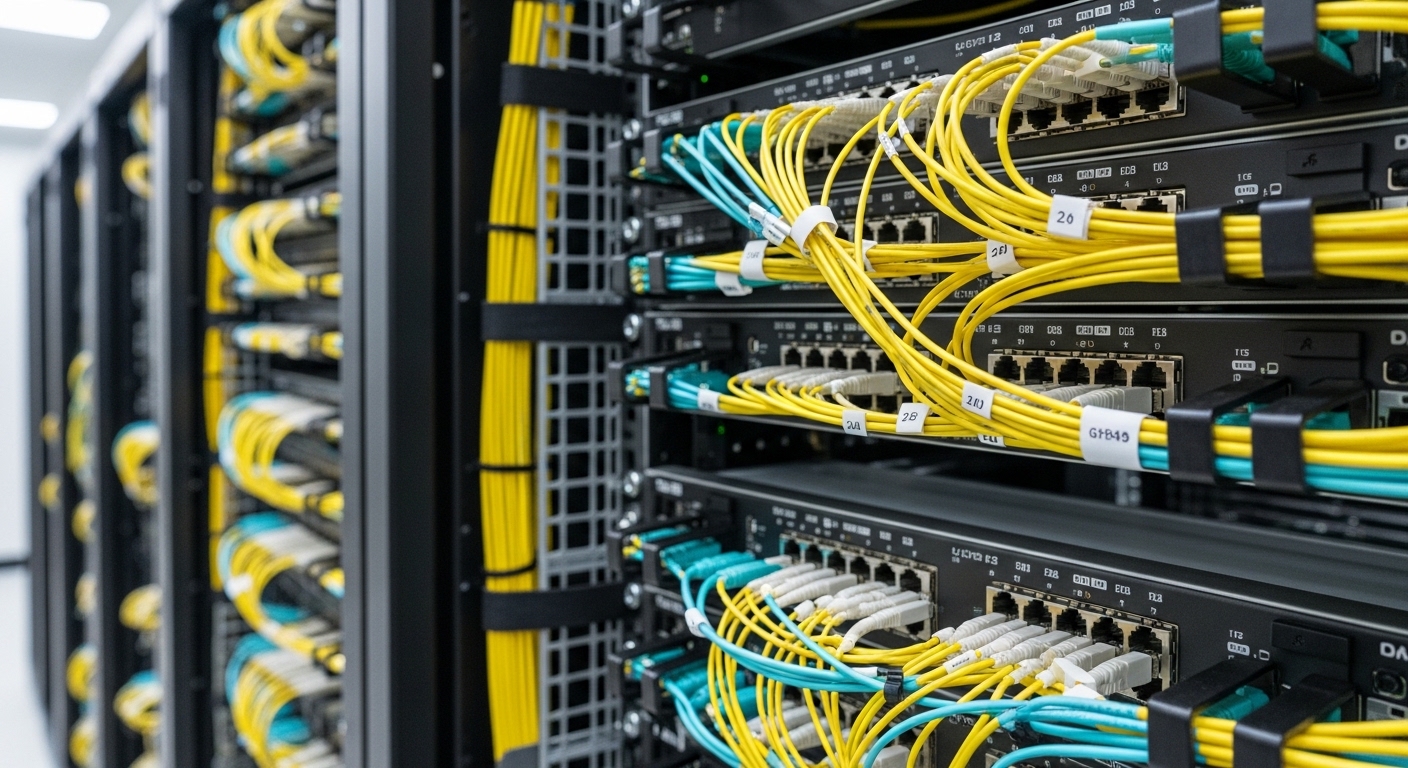
A quantum transceiver is the optical and electronics interface that launches and receives the quantum signals used by QKD protocols, then works with classical control channels for synchronization and key distillation. In most fiber QKD architectures, the transceiver couples into the same cabling plant as classical data, either via wavelength division multiplexing (WDM) or via separate fibers, depending on the vendor design and isolation requirements. Practitioners typically deploy it in a controlled “optics room” or at the edge of an access network where patch panels, splices, and connectors are managed under strict loss and contamination standards.
Operationally, you will validate three things end-to-end: optical reach under worst-case loss, timing and polarization behavior, and serviceability (DOM reporting, alarms, and remote diagnostics). Because QKD is sensitive to backscatter, reflections, and noise, the transceiver’s optical budget is not just “fiber attenuation”; it includes connector reflectance, splice quality, and any active components in the path. For standards context on Ethernet optics and fiber link behavior, engineers often cross-check cabling and optical interface assumptions against IEEE 802.3 when integrating with existing transport, even though QKD itself is governed by vendor implementation details and QKD-specific literature.
Key technical specifications you must verify before buying
QKD is vendor-specific, but the selection criteria are remarkably consistent across deployments. You should demand a spec sheet that states wavelength band, reach (under defined loss and noise), connector type, operating temperature, and optical power limits for the receiver. You also need to confirm whether the unit supports standard diagnostics and whether it can report optical parameters similar to DOM (Digital Optical Monitoring) used by typical pluggable transceivers.
| Spec category | What to look for on the quantum transceiver | Why it matters for QKD |
|---|---|---|
| Wavelength / band | Defined quantum channel wavelength and any classical channel wavelength plan | Determines WDM filtering, isolation, and spectral overlap with classical traffic |
| Reach | Specified fiber length with assumptions (loss, dispersion, noise) and whether includes patches/splices | Prevents “it worked in the lab” failures in the field |
| Connector / interface | Common options include SC/APC or FC/APC style connectors; confirm required polish type | Reflections can raise noise and reduce secure key rate |
| Optical power limits | Max input power to receiver and max launched power into the fiber | Protects sensitive detectors and avoids saturation |
| Operating temperature | Ambient range at the transceiver location and any derating guidance | Detector performance and laser stability drift over temperature |
| Diagnostics | Alarms, remote telemetry, and whether DOM-like optical monitoring is available | Reduces MTTR by pinpointing power, temperature, and link health |
To ground expectations for pluggable optical modules and interface diagnostics, many teams compare vendor DOM behaviors to widely deployed industry interfaces. For example, typical 10G optics use SFP/SFP+ class electrical and optical monitoring patterns, and the industry reference points include SFP/SFP+ specifications from vendors and module ecosystems; see SNI A for general media and monitoring context, and consult each transceiver vendor’s datasheet for QKD-specific diagnostics.
Pro Tip: In field trials, the secure key rate often correlates more strongly with reflectance control (APC vs UPC polish, connector cleanliness, and patch cord aging) than with raw attenuation. Treat connector handling as a first-class system requirement, not a “cabling task,” and you will usually improve stability within days, not weeks.
Real-world deployment scenario: QKD over a leaf-spine metro fiber ring
Consider a metro deployment connecting two sites in a leaf-spine topology that also carries classical 10G/25G traffic. Site A hosts a ToR aggregation switch with patch panels feeding a fiber ring; you provision a dedicated quantum fiber pair between Site A and Site B with 12.5 dB total worst-case insertion loss including patch cords, splices, and measured connector loss. The quantum transceiver is installed at both ends in an equipment rack with controlled airflow, and a WDM combiner routes the quantum wavelength alongside classical wavelengths without exceeding the transceiver receiver’s max input power.
In practice, the field engineer measures the link using an OTDR and a calibrated optical power meter at commissioning. They verify that each patch cord is below a defined loss threshold and that the connector type matches the transceiver requirement (for example, APC with the correct polish angle). If the measured loss is higher than the vendor’s “includes patch cords” assumption, you adjust by shortening the fiber run, reducing the number of additional patch points, or re-splicing to lower-loss fusion joints. The goal is stable operation where alarms remain quiet for at least 30 consecutive hours before you enable the production key distribution schedule.
Image notes: This photography-style shot emphasizes physical integration, labeling, and connector discipline in a real rack environment.
Selection criteria and decision checklist for engineers
Use this ordered checklist to reduce procurement cycles and prevent late-stage interoperability issues. If a vendor cannot provide the items below in writing, assume you will need extra engineering time for characterization.
- Distance and loss budget: Confirm reach under explicit assumptions (fiber type, insertion loss, splice and connector counts). Ask whether the quoted reach includes patch cords and adapters.
- Fiber type and plant constraints: Verify single-mode fiber compliance and whether dispersion or polarization effects are relevant for the vendor implementation.
- Connector and polish requirement: Confirm required connector family (and polish, such as angled polish) and whether adapters are supported.
- Switch compatibility and multiplexing plan: If you share fiber with classical traffic, confirm WDM filter characteristics and whether you need an external combiner/demux.
- Diagnostics and remote monitoring: Ensure the quantum transceiver exposes alarms and telemetry for optical power, temperature, and fault states; confirm integration with your NMS/telemetry tooling.
- Operating temperature and airflow: Validate allowable ambient range at the transceiver location and required cooling constraints.
- Vendor lock-in risk: Determine whether you can replace the transceiver with alternates or if the optics are tightly coupled to a specific QKD endpoint firmware image.
- Commissioning support and acceptance tests: Require a written test plan (OTDR thresholds, power measurement steps, and secure key rate validation procedure).
Image notes: This illustration-style diagram clarifies where the quantum transceiver couples into the optical architecture and how multiplexing affects noise.
Common mistakes and troubleshooting patterns
Most QKD failures are not “mysterious quantum effects”; they are engineering hygiene and mismatch issues. Below are frequent pitfalls with root causes and field fixes.
Secure key rate collapses after patching or re-termination
Root cause: Connector polish mismatch (APC vs UPC), dirty endfaces, or micro-scratches that increase back-reflections and detector noise. In many cases, the secure key rate drops while the classical link remains healthy.
Solution: Re-clean with lint-free wipes and approved solvent, verify with an inspection scope, and standardize on the vendor-required connector and adapter type. Replace aged patch cords and reduce the number of field adapters in the quantum path.
Link works at commissioning but becomes unstable under temperature swings
Root cause: The transceiver’s operating temperature margin is exceeded due to blocked airflow, rack hot spots, or seasonal ambient changes. Laser stability and detector thresholds drift, causing synchronization loss or noise spikes.
Solution: Measure inlet and outlet temperatures at the rack, adjust fan modules, and add directed airflow where needed. Confirm vendor derating guidance and schedule a re-validation test after HVAC changes.
Vendor reach spec is met on paper but not in the field
Root cause: The quoted reach may assume a specific connector count and measured loss method. Field plants often include additional patch points, aging patch cords, and unaccounted insertion loss from splitters or legacy couplers.
Solution: Build a loss budget using measured values for each segment: patch cords, adapters, splices, and any passive optics. Use OTDR to locate high-loss events and replace the worst offenders; then re-test secure key rate at the acceptance threshold.
Classical traffic sharing causes intermittent QKD degradation
Root cause: Spectral leakage or insufficient isolation between quantum and classical channels. Even if the quantum wavelength is “separate,” filter roll-off and imperfect multiplexers can raise detector noise.
Solution: Confirm filter specifications in the WDM path, measure received optical power at the quantum channel, and ensure max input power constraints are not exceeded. If needed, move to a dedicated fiber pair or increase isolation via higher-grade filters.
Image notes: This concept-art visual helps communicate how backscatter and reflections translate into operational instability.
Cost, monetization, and ROI: what buyers should budget
Pricing for a quantum transceiver is highly vendor-dependent because it is often sold as part of an endpoint system with proprietary calibration and firmware coupling. In practice, buyers should model costs in three layers: the endpoint hardware, any required WDM multiplexers/demultiplexers or isolators, and installation plus commissioning labor. For early deployments, integration and acceptance testing frequently dominate first-year cost.
Realistic budgeting ranges vary widely by reach and feature set, but teams commonly see endpoint-level hardware costs that can run from tens of thousands to well beyond that per site pair, with transceiver components representing a meaningful portion of the total. TCO should include: spares strategy (how many transceiver units you keep on hand), maintenance contracts, connector replacement cycles, and the operational overhead of clean-room grade handling. ROI is typically measured as compliance readiness and risk reduction rather than direct revenue per key bit; however, you can quantify value via reduced incident exposure, audit facilitation, and enabling secure channels for high-value assets.
For comparison, conventional pluggable optics like SFP or QSFP modules are commodity-priced, but they are not substitutes for QKD-grade components. Still, using standard optics economics can help you structure your spares and MTTR model. For example, engineers familiar with SFP+ optics such as Cisco SFP-10G-SR or Finisar FTLX8571D3BCL can estimate failure rates and swap time patterns, then apply those operational assumptions to the QKD endpoint maintenance plan; see vendor datasheets for specific monitoring and environmental limits. Representative module references: [Source: Cisco SFP-10G-SR datasheet], [Source: Finisar FTLX8571D3BCL datasheet], [Source: FS.com SFP-10GSR-85 product page].
Image notes: This lifestyle photo emphasizes the human process that directly affects QKD performance.
FAQ
Q1: Is a quantum transceiver interchangeable across QKD vendors?
Usually not. Many systems tightly couple optics, calibration, and firmware to a specific endpoint design. Treat “transceiver compatibility” as an integration project, not a plug-and-play promise, and request a formal interoperability statement.
Q2: Do I need a dedicated fiber for QKD or can I share with classical traffic?
Both are possible, but sharing requires careful WDM filtering and isolation so quantum channel noise stays within the transceiver’s tolerance. If you cannot meet optical power and isolation requirements, move to a dedicated quantum fiber pair.
Q3: What field test proves the link is healthy beyond “it connects”?
Commissioning should include measured optical power levels, OTDR-based loss verification, connector reflection checks via inspection, and a secure key rate acceptance test over a defined observation window. Require the vendor’s acceptance criteria in writing.
Q4: How do I handle connector cleanliness and reflections during maintenance?
Adopt a standard cleaning workflow, inspect endfaces before insertion, and minimize adapters in the quantum path. Keep spare patch cords with the correct polish and replace any cord that shows wear or contamination.
Q5: What temperature range matters most for reliable operation?
Use the transceiver’s specified ambient and any derating guidance. In practice, rack hot spots and seasonal HVAC changes can exceed the “room average” temperature, so measure at the transceiver intake and outlet.
Q6: How should I plan spares and maintenance to protect availability?
Build a spares strategy based on swap time, connector hygiene tooling, and your vendor lead times. For ROI, model downtime cost during key distribution outages and include maintenance contract scope for firmware and calibration updates.
If you are mapping QKD into an existing fiber plant, start by validating your loss and connector assumptions, then align the quantum transceiver selection to your WDM and monitoring requirements. Next step: review fiber optic link budget to turn field measurements into an actionable optical budget and acceptance test plan.
Author bio: I have deployed optical security systems and supervised field acceptance tests where connector reflectance and power margins determined secure key stability. I write from hands-on network operations experience, focusing on measurable criteria, integration constraints, and TCO-driven decisions.
