
Hotels run fiber networks that must stay online while guest-facing services scale from check-in kiosks to IPTV and Wi-Fi controllers. This article helps hotel engineering teams and managed service providers choose the right property management transceiver for SFP-based guest services, focusing on compatibility, optical reach, power, and operational reliability.
Why hotel guest services fail without the right transceiver
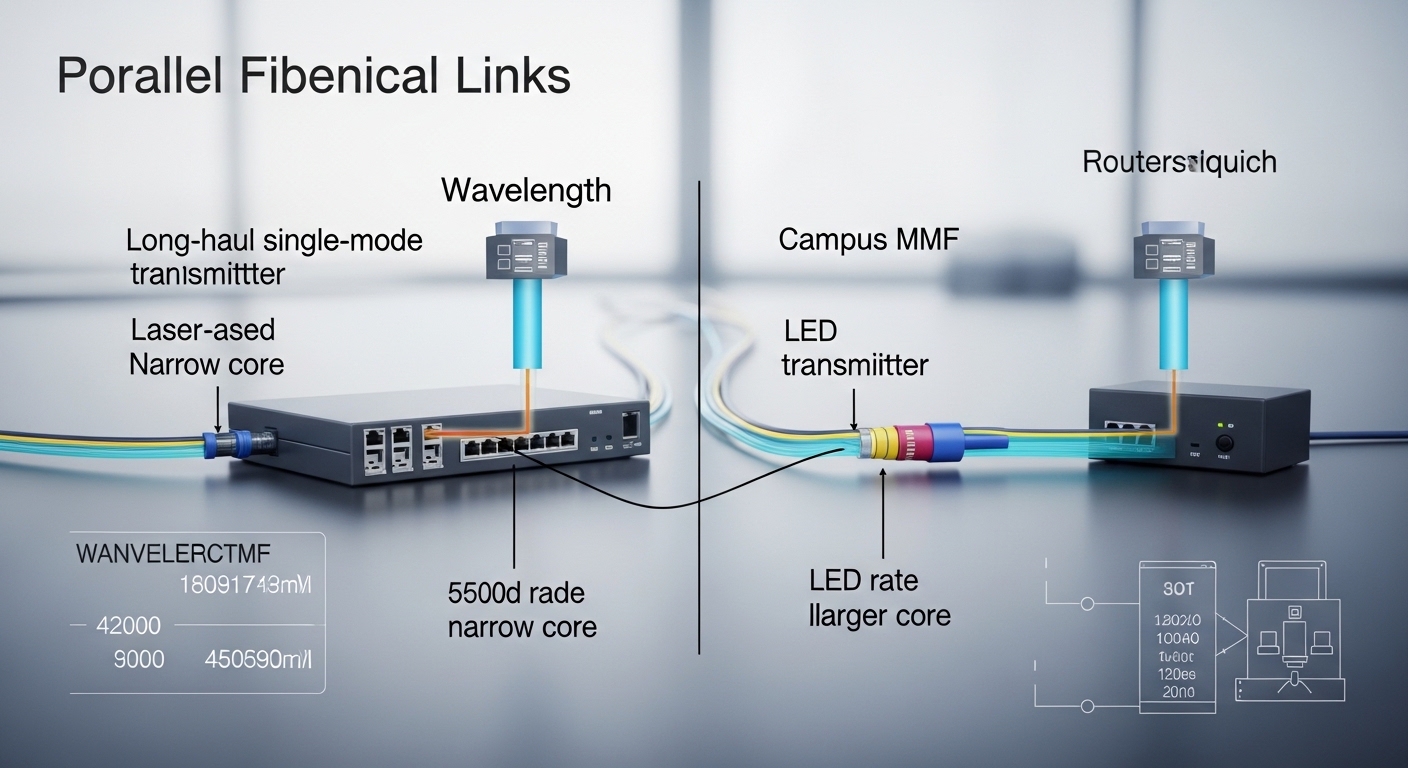
In a hospitality environment, the network is not just “data transport”; it is the dependency layer for property management systems, room controls, and high-availability guest services. A mismatched transceiver (wrong wavelength, incompatible link budget, or unsupported DOM behavior) can create intermittent packet loss that is hard to correlate with root cause. Field engineers typically see symptoms as link flaps, CRC errors, or “up but no traffic” conditions after maintenance windows. Choosing the correct optical profile and verifying switch support are therefore as critical as cable cleanliness and patch panel labeling.
Operational reality: SFP links near guest aggregation
Most hotel designs place access switches on floors or in wiring closets, then aggregate to a core/distribution layer. In many deployments, SFP is used for uplinks between aggregation and core, or to connect to media converters when pulling fiber through older conduits. A property management transceiver here must match the switch transceiver acceptance list, the fiber type (OM3/OM4/OS2), and the expected distance including patch cords and splices.
Standards you should anchor to
For Ethernet over fiber, engineers commonly align to IEEE 802.3 PHY specifications for 1G, 10G, and higher rates, and to SFP electrical/optical behavior defined by vendor datasheets. For management and diagnostics, pay attention to Digital Optical Monitoring (DOM) implementation details in the transceiver and how the host switch reads thresholds. When troubleshooting, treat DOM values as telemetry with vendor-specific scaling rather than universal units.
Transceiver spec tradeoffs for hotel SFP guest-service links
Hotel networks are constrained by mixed fiber plant quality, frequent moves/adds/changes, and strict downtime windows. Engineers typically select between multimode short-reach optics and single-mode long-reach optics, then validate that the link budget supports the installed fiber plus connectors and splices. The most common selection error is assuming “same data rate equals same reach” while ignoring wavelength, launch power, and receiver sensitivity.
Quick comparison table: common SFP optical profiles
Below is a practical comparison for property management transceiver choices in hotel guest-service uplinks. Always confirm the exact part number against your switch vendor compatibility list and the optic’s datasheet.
| Profile (example) | Data rate | Wavelength | Typical reach* | Fiber type | Connector | DOM | Operating temp | Example part numbers |
|---|---|---|---|---|---|---|---|---|
| SFP SR (multimode) | 1G or 10G | 850 nm | ~300 m (1G on OM3), ~400 m (10G on OM3) | OM3/OM4 | LC | Common (vendor-dependent) | 0 to 70 C (or wider) | Cisco SFP-10G-SR, Finisar FTLX8571D3BCL, FS.com SFP-10GSR-85 |
| SFP LR (single-mode) | 1G | 1310 nm | ~10 km | OS2 | LC | Common | -5 to 70 C (varies) | Generic 1G LR SFP modules (verify exact vendor spec) |
| SFP BiDi (single fiber) | 1G or 10G (model dependent) | Tx/Rx pairs (e.g., 1310/1490) | ~10 km (varies) | OS2 | LC | Common | -5 to 70 C (varies) | BiDi SFP options (verify wavelength pair and directionality) |
*Reach values are typical; confirm against the optic’s datasheet and your installed link loss (fiber attenuation, patch cords, connectors, splices).
Pro Tip: In hotel patch panels, the hidden reach killer is not the fiber run length; it is the cumulative loss of aging patch cords and repeated re-termination. Before finalizing a property management transceiver, measure end-to-end optical loss with an OTDR or calibrated power meter and verify against the transceiver’s published link budget.
Selection criteria checklist for hotel engineering teams
Use this ordered checklist when selecting a property management transceiver for SFP guest-service links. It is designed to prevent the “it came up in the lab but fails in the rack” scenario.
- Distance and fiber type: Determine OM3/OM4/OS2 and measure total run length including patch cords and splices.
- Wavelength and optics class: Match SR at 850 nm to multimode; match LR/BiDi to 1310/1490 nm profiles on single-mode.
- Data rate and duplex behavior: Confirm the exact Ethernet rate (1G/10G) and that the switch supports that SFP PHY mode.
- Switch compatibility and vendor lock-in risk: Check the switch vendor’s supported optics list for your model; validate whether third-party optics are accepted without alarm states.
- DOM support and threshold handling: Confirm whether DOM values are read and whether alarms are triggered for non-standard scaling or missing sensors.
- Operating temperature and airflow: Hotel equipment rooms can exceed rated limits during peak summer. Verify the transceiver temperature range and ensure rack airflow paths are not blocked.
- Connector cleanliness and handling: LC connectors must be inspected with a fiber scope. Plan for cleaning kits and replacement of damaged jumpers.
- Operational lifecycle: Prefer optics with stable firmware behavior (where applicable) and predictable failure modes; keep spares by profile.
Common mistakes and troubleshooting in guest-service fiber
Below are field-tested failure modes specific to hospitality deployments using SFP optics. Each includes root cause and a concrete remediation path.
Link comes up then flaps during guest traffic
Root cause: marginal optical power margin due to excessive patch cord loss or dirty connectors; under load, retransmissions increase and link stability degrades. Solution: clean both ends of LC connectors using a scope-verified process, replace patch cords, then re-measure received power. If DOM is available, compare “Rx power” to the vendor’s safe operating range.
“Up/Up” interface but IPTV or Wi-Fi controller traffic fails
Root cause: wavelength mismatch (e.g., LR optics on the wrong fiber type) or swapped BiDi directionality causing no usable optical path despite link negotiation. Another cause is wrong VLAN tagging in the access stack, but optical symptoms often masquerade as application failures. Solution: verify the optic type on both ends, confirm correct fiber pairing in the patch panel, and run a simple Layer 1/2 test (interface counters, ping with specified source, and packet captures at the aggregation switch).
High CRC errors and intermittent disconnects after maintenance
Root cause: connector micro-damage from repeated insertions/removals or contamination introduced during rack work. Solution: inspect with a fiber microscope, replace any connector that shows scratches or haze, and enforce a cleaning SOP. Also check that the transceiver is fully seated and that the latch is intact.
DOM alarms or “unsupported optics” warnings after swapping modules
Root cause: transceiver DOM implementation differences; some switches enforce strict vendor telemetry formats and may mark third-party optics as “not supported,” even if the link is technically functional. Solution: confirm DOM compliance mode in the switch documentation; if needed, use optics explicitly listed by the switch vendor or configure alarm suppression if supported.
Cost and ROI note: OEM vs third-party optics in hotels
For property management transceiver planning, total cost of ownership (TCO) matters more than per-unit price because downtime and troubleshooting labor are expensive. Typical street pricing depends on rate and reach, but a realistic budgeting range for common SFP optics is roughly $50 to $150 per module for widely available SR class optics, and $120 to $250+ for longer-reach or specialty profiles (exact pricing varies by vendor and volume). OEM modules may cost more but can reduce compatibility incidents, especially when DOM alarms and optics acceptance lists are strict.
Operationally, third-party optics can be cost-effective when procurement is standardized and you maintain a tested spare inventory per switch model. However, failure rates and RMAs vary; a practical ROI model should include estimated mean time to repair, field labor hours, and the probability of a compatibility-related rollback. If your hotel chain has multiple switch vendors, the “cheapest optic” can become the most expensive after you account for support time.
FAQ
What makes a transceiver a good fit for property management transceiver use in hotels?
A good fit matches your switch’s SFP support matrix, the correct wavelength and fiber type, and provides stable DOM behavior. In practice, teams validate optics by measuring received power and checking interface error counters under real guest traffic patterns.
Should guest-service links prefer multimode SR or single-mode LR optics?
Prefer multimode SR (typically 850 nm) when your run length and OM3/OM4 plant support the reach with margin. Use single-mode LR on longer runs, when the fiber plant is OS2, or when you need more predictable performance across patching changes.
Will third-party property management transceiver modules work with enterprise switches?
Often yes, but success depends on the specific switch model and its optics acceptance behavior, including DOM telemetry parsing. Always test in a non-production closet first and confirm alarm behavior and link stability.
How do I verify compatibility before ordering spares for multiple hotel floors?
Collect exact switch model numbers, SFP port speed capabilities, and existing optic part numbers. Then compare against vendor compatibility lists and validate DOM support requirements; finally, run a controlled link test using the same patch cords and splices used in production.
What are the fastest troubleshooting steps when SFP links misbehave?
Start with connector inspection and cleaning, then check DOM Rx power (if available) and interface counters for CRC/FCS errors. Next, verify fiber pairing at the patch panel and confirm the optic type and wavelength on both ends.
How many spare property management transceiver modules should a hotel keep?
A common operational approach is to keep at least one spare per optics profile per critical switch block and one additional spare for high-risk sites (older wiring closets with frequent re-patching). Size the count using historical fault frequency, not only the number of ports.
Choosing the correct property management transceiver for hotel guest fiber networks is an engineering exercise in compatibility, link budget margin, and operational discipline around optics handling. Next, review your existing SFP inventory and planned distances, then apply the checklist above to standardize spares using related topic.
Author bio: Field engineer turned network architect, with hands-on deployments of Ethernet over fiber in enterprise and hospitality environments. Deep experience validating DOM telemetry, link budgets, and connector hygiene workflows against vendor datasheets and IEEE PHY behavior.
