
Your studio can sound like a dream while your network sounds like a blender. This article helps audio engineers and IT techs choose the right professional audio network SFP for low-latency, reliable transport of media and control traffic. You will get practical specs, real deployment numbers, troubleshooting fixes, and an engineer-style checklist that prevents the “why is it crackling” phone call.
Top 8 professional audio network SFP choices by use case
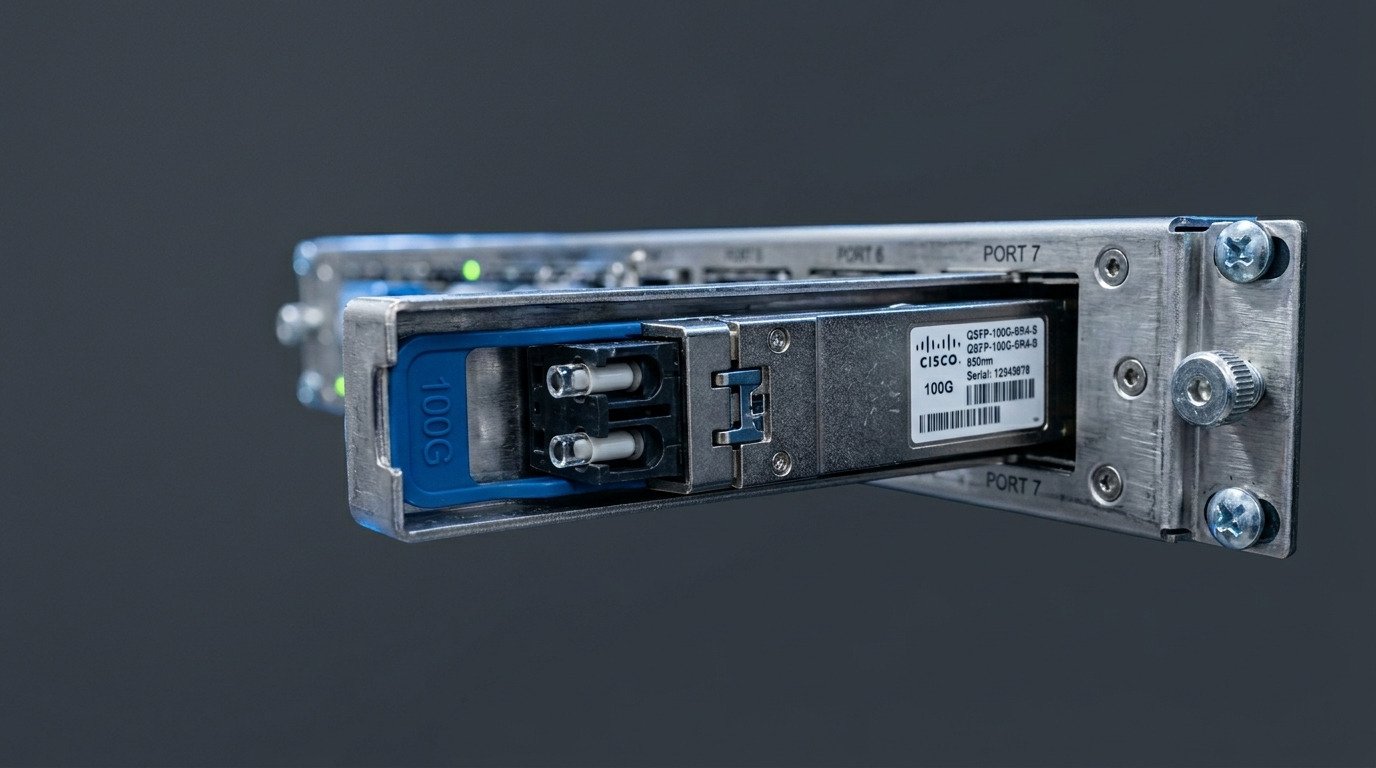
Think of SFPs as tiny optical translators: they decide whether your audio network behaves like a calm rehearsal room or like an improv night. Below are eight common, field-proven SFP options by scenario, with key specs, best-fit environments, and quick pros and cons. If you are carrying Dante, AES67, Ravenna, SMPTE ST 2110, or similar IP audio, you still live and die by Ethernet link quality and optics discipline.
10G SR multimode SFP for short runs
Best-fit scenario: A production venue using a 3-tier leaf-spine fabric where media switches sit near patch panels. Example: 48-port 10G ToR switches connect to a nearby distribution rack with fiber runs of less than 300 m on OM3 or less than 400 m on OM4, depending on the exact transceiver and fiber plant.
Key specs/details: Typical parts: Cisco SFP-10G-SR, Finisar FTLX8571D3BCL (varies by vendor), or FS.com SFP-10GSR-85. Wavelength is commonly 850 nm with duplex LC connectors. Power draw is usually a few watts at most, making them friendly to managed switch PSU budgets.
Pros: Lowest cost per port for short reach; easy to install in existing multimode plants. Cons: Multimode distance limits; wrong fiber grade can cause link flaps.
10G LR singlemode SFP for longer venue backbones
Best-fit scenario: A campus audio network where the stage rack and control room are separated by 1 to 10 km of singlemode fiber. Example: one building wing to another, with dark fiber already provisioned.
Key specs/details: Typical wavelength 1310 nm with LC duplex. Common compatibility targets include IEEE-compliant 10GBASE-LR optics. Vendor examples include LR variants from mainstream optical vendors; always match the switch vendor’s transceiver matrix if your environment is strict.
Pros: Long reach; stable for backbone runs. Cons: Higher cost than SR; requires singlemode fiber correctness.
25G SR multimode SFP for higher channel density
Best-fit scenario: A broadcast truck or post-production lab where you consolidate more audio streams per rack and need more headroom without changing every switch. You might upgrade uplinks first while keeping multimode fiber.
Key specs/details: Usually 25GBASE-SR at 850 nm with LC duplex. Reach depends heavily on OM3 vs OM4 and the exact link budget. In practice, engineers often plan around ~70 m on OM3 and ~100 m on OM4, then verify with vendor datasheets and actual fiber measurements.
Pros: More bandwidth for deterministic audio packet bursts. Cons: Distance surprises if the fiber plant is “sort of” multimode.
25G LR singlemode SFP for clean long-haul media
Best-fit scenario: A remote studio-to-master-control link where you want predictable optics and can use singlemode. Example: 2 to 10 km with proper splice quality and low connector loss.
Key specs/details: 25GBASE-LR at 1310 nm. Match the switch’s supported optic type; some platforms are picky about DOM and coding.
Pros: Long reach with strong link margin. Cons: Singlemode optics and fiber are pricier than multimode.
10G ER singlemode SFP for extreme distance with margin
Best-fit scenario: A large venue with a fiber backbone crossing parking lots and service corridors, pushing beyond typical LR comfort. You might target ~40 km class links depending on the transceiver.
Key specs/details: 1550 nm optics for 10G ER class modules. These are less common in small studios but show up in long-distance infrastructure.
Pros: Distance and resilience. Cons: Higher cost; more variables in power budget and dispersion.
Copper SFP+ (for last-meter sanity)
Best-fit scenario: Short patching inside a rack where you want simplicity. Example: connecting a network switch to an audio-over-IP interface chassis with a 1 m to 10 m copper SFP+ link.
Key specs/details: Often SFP+ copper with RJ-45. This is not optical, but it is frequently the fastest way to remove fiber variables while troubleshooting.
Pros: Quick swaps; no cleaning optics. Cons: Cable quality matters; EMI can bite in noisy venues.
SFP with DOM support for operational visibility
Best-fit scenario: Any environment where you want early warning before audio glitches: monitoring optical power, laser bias, and temperature. Example: a control room with centralized monitoring and alerting for transceiver thresholds.
Key specs/details: DOM typically follows vendor implementations compatible with SFF-8472 and I2C-readable diagnostics. You will see values like received power (dBm) and Tx power. Ensure your switch actually polls DOM and exposes it via telemetry.
Pros: Predict failures; schedule preventive maintenance. Cons: Some third-party optics may show partial DOM fields or fail strict compatibility checks.
Vendor-verified optics vs third-party: the “choose your battles” pick
Best-fit scenario: Enterprises with change-control policies, or audio integrators who must meet uptime SLAs. You decide between OEM optics and third-party modules based on risk tolerance and budget.
Key specs/details: OEM modules often have tighter alignment with the specific switch transceiver requirements. Third-party optics can be cheaper, but you must confirm support for the exact switch model and firmware, including DOM expectations and link training behavior.
Pros: OEM reduces “mystery incompatibility.” Third-party can reduce cost. Cons: OEM can inflate TCO; third-party can trigger intermittent link issues if parameters drift.
Image note: This is what “good optics hygiene” looks like when someone actually cleaned the connector before closing the rack door.
Specs that actually matter for audio packet transport
Audio networks care about more than raw bandwidth; they care about link stability, optical margin, and deterministic behavior under load. IEEE 802.3 defines physical layer Ethernet behaviors, while switch vendors add platform-specific constraints. When you pick a professional audio network SFP, you are really picking a link budget and a compatibility contract.
Reference standards and what to trust
For Ethernet physical layer behavior, use IEEE 802.3 for the relevant link types (for example 10GBASE-SR/LR/ER). For module diagnostics and electrical interfaces, look at SFF-8472 and vendor datasheets. For fiber cabling and performance, also reference TIA-568 and the actual OM4/OM3 specs used in your plant. Authority checks: [Source: IEEE 802.3], [Source: SFF-8472], [Source: ANSI/TIA-568].
| Optic type | Data rate | Wavelength | Typical reach | Connector | DOM | Operating temperature |
|---|---|---|---|---|---|---|
| 10GBASE-SR | 10G | 850 nm | OM3: ~300 m, OM4: ~400 m (verify) | LC duplex | Often supported | Commonly -5 C to 70 C (varies) |
| 10GBASE-LR | 10G | 1310 nm | ~10 km class | LC duplex | Often supported | Commonly -5 C to 70 C |
| 25GBASE-SR | 25G | 850 nm | OM3: ~70 m, OM4: ~100 m (verify) | LC duplex | Often supported | Commonly -5 C to 70 C |
| 25GBASE-LR | 25G | 1310 nm | ~10 km class | LC duplex | Often supported | Commonly -5 C to 70 C |
Pro Tip: In audio networks, “crackle” is often not the audio codec; it is microbursts caused by link renegotiation or CRC errors. DOM lets you catch drifting Rx power before errors spike, so you can fix optics while the band is still on stage.
Image note: A link budget is the real recipe card; wavelength is just the ingredient name.
Switch compatibility and DOM behavior: the hidden seasoning
Even if the SFP is “standard,” your switch might be pickier than a Michelin inspector. Many enterprise switches enforce optic type constraints, lane coding expectations, and DOM polling. In real deployments, we often validate optics in a staging rack by cycling links under load, then checking interface counters for CRC and FCS errors.
What field engineers verify during rollout
Confirm the exact switch model (for example, a specific Cisco or Juniper platform) and firmware version. Check the vendor transceiver compatibility list, then verify DOM telemetry fields are exposed through your management plane. If your system uses SNMP or telemetry, confirm thresholds are sane so you get actionable alerts rather than “everything is on fire” noise.
Limitations to be honest about: Third-party optics can work perfectly, or they can behave like a diva under temperature swings. If your audio gear sits in an environment with HVAC cycling, ensure the optic temperature range matches the actual cabinet conditions.
Selection checklist: choose a professional audio network SFP without regrets
Use this ordered checklist like you are timing espresso shots: precise, repeatable, and unforgiving to shortcuts.
- Distance and fiber type: Measure with a launch-and-receive test, not vibes. Confirm OM3 vs OM4 and singlemode grade.
- Data rate and traffic profile: Match 10G vs 25G to your stream count and headroom. Audio transport can burst.
- Switch compatibility: Verify the optic type in the vendor matrix for your exact model and firmware.
- DOM support: Ensure the switch reads DOM and your monitoring stack can alert on Rx power and temperature.
- Operating temperature and airflow: Confirm the cabinet ambient is within module spec; check for blocked vents behind patch panels.
- Vendor lock-in risk: Decide whether OEM is worth it for uptime, or whether third-party is acceptable with a validation plan.
