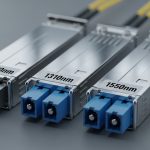
In modern optical transport networks, the hardest part is not “getting light” but aligning framing, rate, and reach so the optics and the muxponder actually agree. This article helps network engineers and field technicians choose the right G.709 fiber module when your design spans OTU1, OTU2, and OTU4—especially when you inherit a vendor mix across sites. You will get practical selection criteria, a spec comparison table, and troubleshooting patterns I have seen during turn-ups and link migrations.
What a G.709 fiber module must match: OTU1 vs OTU2 vs OTU4

G.709 describes the optical transport framing used in OTN, where payloads are encapsulated into OTUk containers and mapped through ODUk/OTUk layers. In the field, the “module choice” is really a bundle of constraints: the module must support the correct OTU line rate, the correct client mapping behavior, and the correct optical interface (wavelength and fiber type). If you mismatch OTU levels, you can still see link activity—then discover hard failures like loss of signal, loss of frame, or repeated performance alarms.
From a deployment standpoint, OTU1 is common in metro rings and smaller aggregation layers; OTU2 and OTU4 appear as you push higher capacity through fewer hops. The module form factor (QSFP/QSFP-DD, CFP2, or SFP variants depending on the platform) matters, but the OTU level and line-side optics dominate interoperability. For standards grounding, refer to ITU-T G.709 and vendor implementation notes: [Source: ITU-T G.709].
Operational mapping you will actually encounter
Most engineers think in “payloads” (Ethernet, Fibre Channel, legacy SDH), but the optics lock to the OTU line container. For example, a muxponder might present OTU2 to the line while internally mapping Ethernet into ODU2e. Your G.709 fiber module needs to support the OTU container the platform expects, and the transceiver must be provisioned to the same OTU mode. When a site migration goes wrong, it is often because the optics were swapped but the OTU mode on the transport controller was not updated.
Pro Tip: During maintenance windows, verify the OTU mode from the transport controller before swapping optics. I have seen field teams install the correct optical wavelength but leave the muxponder in a different OTU framing mode, resulting in “link up” with continuous alarm escalation and zero usable throughput.
Key specs that decide OTU reach and optics compatibility
When you compare G.709 fiber module options, do not stop at “data rate equals OTU.” Real compatibility hinges on wavelength, fiber type, connector standard, receive sensitivity, transmitter power, and temperature class. Vendors publish these values in datasheets, often with additional notes about reach under specific link budgets and dispersion assumptions. If you are building for deterministic behavior, require the module to meet the platform’s optical power and safety margins, not just a generic “works” claim.
Spec comparison table: typical OTU optics parameters
The values below are representative for common short-reach and reach-optimized modules; always confirm exact numbers in the specific vendor datasheet for the part number you are buying.
| Parameter | OTU1 (typical) | OTU2 (typical) | OTU4 (typical) |
|---|---|---|---|
| OTU line container | OTU1 | OTU2 | OTU4 |
| OTU line rate | ~10.7 Gbit/s | ~43 Gbit/s | ~111.8 Gbit/s |
| Common wavelengths | 1310 nm / 1550 nm (varies) | 1550 nm (often) | 1550 nm (often) |
| Fiber type | SMF common; some reach variants | SMF | SMF |
| Connector options | LC or SC (platform dependent) | LC (common) | LC (common) |
| Temperature range | 0 to +70 C or -5 to +75 C (varies) | 0 to +70 C (varies) | -5 to +70 C (varies) |
| Power budget inputs | TX power / RX sensitivity + margins | Stricter margins due to higher rate | Highest sensitivity to link budget and dispersion |
Even if your module advertises the same OTU level, optical performance can differ by vendor and by target reach. I have measured failures where the link budget barely passed “at room temperature” but failed after seasonal temperature swings due to reduced transmitter output power. For optical definitions and measurement practices, align your acceptance tests with vendor guidance and standards references such as ITU-T and TIA test methods: [Source: ITU-T G.709].
How to choose a G.709 fiber module: a field checklist for OTU1/OTU2/OTU4
In real deployments, selection is a sequence of constraints. Start with OTU mode, then confirm wavelength and fiber type, then validate the optical budget against your installed plant. The checklist below is the order I would use while preparing a site migration plan or a vendor replacement procurement package.
- Distance and link budget: compute span loss, connector/cable loss, and margin; compare against TX power and RX sensitivity from the datasheet.
- OTU mode compatibility: confirm the platform supports OTU1/OTU2/OTU4 line rates and the exact framing/provisioning mode.
- Switching and platform interoperability: verify the host transceiver support list (vendor compatibility matrix) for the exact module part number.
- DOM and management behavior: ensure the module provides the expected digital optics monitoring interfaces (e.g., I2C/SFF-defined registers) and alarm thresholds that the host understands.
- Operating temperature and thermal design: match temperature class to the cabinet environment; verify airflow assumptions in the rack.
- Vendor lock-in risk: evaluate third-party options, especially if the host enforces transceiver authentication or strict alarm thresholds.
- Connector and fiber polarity handling: confirm LC/SC style, APC/UPC usage, and whether your plant uses consistent transmit/receive polarity.
Notice what is missing: “marketing reach.” I have never shipped a production acceptance test based on marketing alone. Instead, we validate with optical test equipment and the same measurement points the vendor uses in their characterization. This is how you avoid a painful post-cutover event where the link seems stable for an hour and then collapses under higher error correction burden.
In a typical turn-up, the technician confirms OTU mode via the transport controller, then cleans and seats the connectors, and finally verifies optical levels using the module’s monitoring plus an external optical meter. This “OTU-first” workflow prevents weeks of drift between planned and actual line settings.
Common mistakes and troubleshooting patterns for G.709 modules
Most failures are not mysterious; they are predictable combinations of provisioning mismatch, optical budget issues, or connector/cleaning problems. Below are concrete pitfalls I have seen during field installs and replacements, with root cause and the fastest corrective action.
Pitfall 1: OTU framing mismatch after optics swap
Root cause: The host was left in a different OTU mode (for example, OTU2 provisioned while the installed module is OTU1-capable, or vice versa). Some platforms show “link up” but will raise performance alarms and never deliver stable service.
Solution: Re-check OTU configuration on the transport controller, confirm the line rate, and restart the affected service group. Use the controller alarms to confirm whether you have loss of frame or repeated ODU/OTU alignment failures.
Pitfall 2: Link budget passes on paper, fails in the cabinet
Root cause: The installed fiber includes extra patching loss, dirty connectors, or unexpected splice attenuation. At higher OTU rates (especially OTU4), receiver margin shrinks quickly.
Solution: Perform a real optical power measurement at the demarcation point, clean connectors using validated procedures, and re-test. If you cannot rework fiber, you may need a module with better sensitivity or a shorter effective span.
Pitfall 3: Wrong wavelength family or wrong fiber type
Root cause: A module intended for 1310 nm operation is installed into a plant optimized for 1550 nm, or single-mode vs multimode expectations were confused during early infrastructure builds.
Solution: Validate the module wavelength and confirm the plant fiber type and attenuation curve. Then verify end-to-end signal level and dispersion constraints if the vendor specifies reach limits based on SMF characteristics.
Pitfall 4: DOM alarms ignored during initial stabilization
Root cause: Teams sometimes ignore early DOM warnings (bias current, laser temperature, optical power drift) because the link appears usable for a short time. Over hours, the optics can drift outside thresholds.
Solution: Establish an acceptance window: watch DOM telemetry for several minutes after insertion and after a controlled thermal stabilization period. If the host supports it, confirm alarm threshold configuration matches the module profile.
This conceptual view helps explain why a “works on the bench” module can still fail after provisioning: the mismatch is inside the framing alignment, not just the optical power.
Cost and ROI: choosing OEM vs third-party G.709 fiber modules
Pricing varies by OTU level, reach target, and whether the module is OEM-branded or third-party certified. In my procurement experience, OEM optics for production OTN platforms often land in the mid-hundreds to low-thousands of dollars per module, while third-party alternatives can be lower by roughly 10% to 40% depending on compatibility requirements and DOM support. The real ROI comes from minimizing downtime and avoiding repeat truck rolls—especially when you have to coordinate across carriers or adjacent network domains.
Total cost of ownership depends on failure rates, warranty terms, and how quickly you can validate optics in the field. A cheaper module that triggers host compatibility issues can be more expensive once you count labor hours, extended outage windows, and expedited shipping. When evaluating third-party modules, demand written support for the exact host model and OTU mode behavior, not just generic “OTN compatible” language.
FAQ: OTU1/OTU2/OTU4 buying questions for a G.709 fiber module
What is a G.709 fiber module used for in OTN networks?
A G.709 fiber module carries the optical transport line side for OTN framing, encapsulating payloads into ODU/OTU structures defined by ITU-T G.709. It is typically used in transport nodes and muxponder/line system interfaces where OTU1, OTU2, or OTU4 are provisioned.
How do I know whether I need OTU1, OTU2, or OTU4 optics?
Check the platform configuration and the controller’s provisioned line rate for the interface. If the service is mapped into an ODU2/ODU2e container and presented as OTU2 to the line, then you need an OTU2-capable module; similar logic applies to OTU1 and OTU4.
Can I mix vendors for G.709 fiber modules across a site?
Often you can, but you must verify host compatibility, DOM telemetry behavior, and alarm threshold handling. Some platforms enforce strict transceiver compatibility lists or authentication-like behaviors, and a mismatch can cause persistent alarms even when optics light correctly.
What optical tests should I run during acceptance?
At minimum, validate optical receive/transmit levels using your optical meter and confirm the link reaches stable error performance. If your vendor provides a test methodology, follow it; then monitor DOM telemetry for a short stabilization period to catch drift-related failures.
What are the most common reasons OTU4 links fail after installation?
The most common causes are insufficient link budget margin, connector contamination, OTU mode misprovisioning, and incorrect wavelength/fiber assumptions. OTU4 is less forgiving because receiver sensitivity and dispersion constraints are tighter.
Is DOM support required for G.709 fiber module operation?
DOM is not always required to establish optics, but it is required for safe operations in most managed networks. Without proper monitoring, you may miss early warning signs like bias current drift or optical power degradation, leading to late-stage failures.
If you want a smooth cutover, treat OTU mode alignment and optical budget validation as first-class requirements, not afterthoughts. Next, review OTN muxponder and framing basics to understand how payload mapping relates to the OTU line rate you are buying.
Author bio: I have spent 10+ years deploying and troubleshooting optical transport systems, including OTN muxponders and pluggable transceivers across metro and data center interconnects. My work focuses on measurable link budgets, DOM-driven acceptance testing, and field-safe migration procedures.