
In a particle accelerator, a missed or noisy timing pulse can ripple into beam control instability. This article helps lab network engineers and field techs select the right physics lab SFP for high-speed fiber timing links, from wavelength and DOM behavior to temperature and power budgets. You will get a practical checklist, real deployment numbers, common failure modes, and a final ranked comparison.
Top 7 physics lab SFP choices by timing-link role
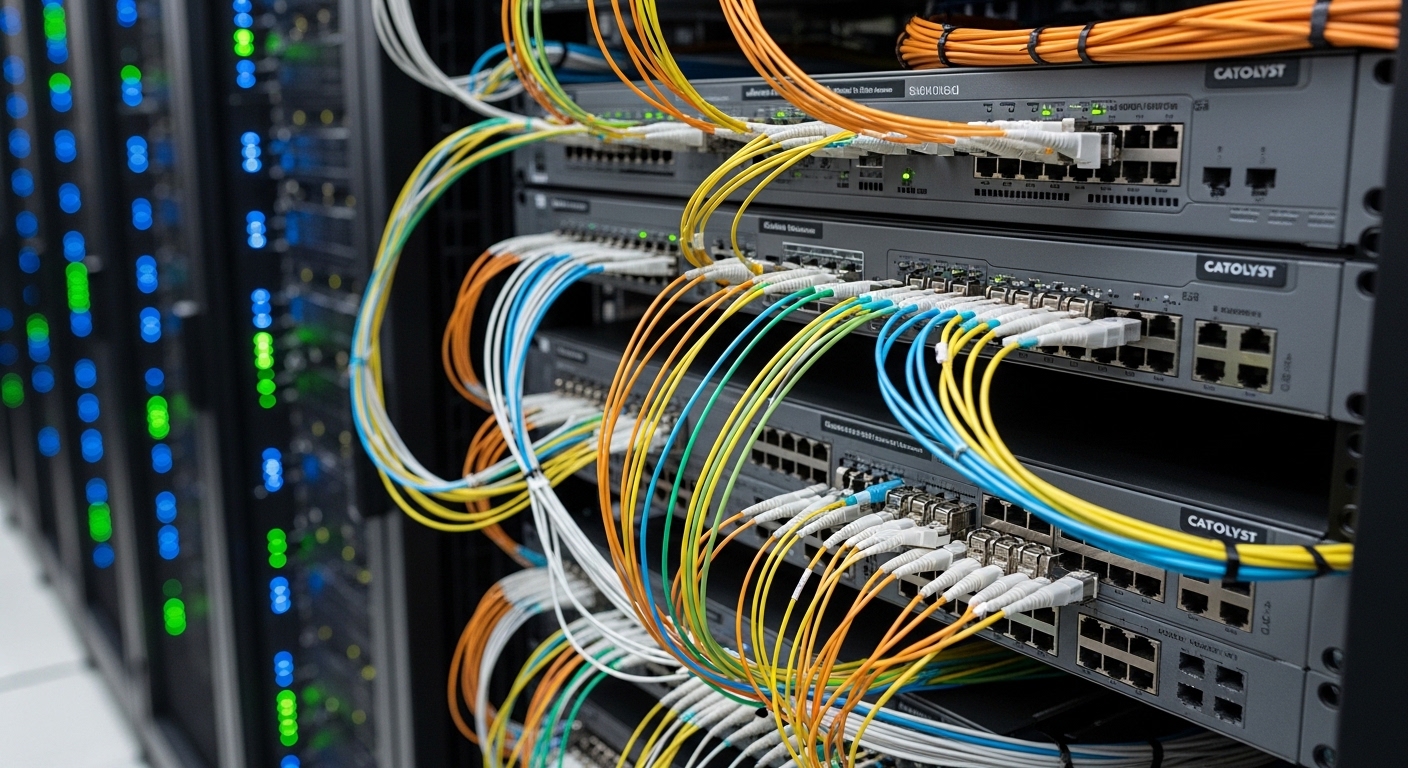
Think of an accelerator timing link like a metronome shared across many musicians: the network optics must deliver the same “beat” over distance with minimal jitter. For lab use, the most common SFP categories are governed by IEEE 802.3 electrical/optical requirements plus vendor optics behavior (receiver sensitivity, transmitter drift, and timing jitter). Below are the top SFP types engineers typically deploy for timing distribution and interlock signaling, plus where each tends to fit.
- 10GBASE-SR (850 nm multimode) for short timing runs inside controlled areas
- 10GBASE-LR (1310 nm single-mode) for longer timing spans with lower dispersion sensitivity
- 10GBASE-ER (1550 nm) for longest runs when single-mode infrastructure is mature
- 1GBASE-SX (850 nm multimode) for legacy timing fan-out or low-rate status channels
- 2.5G/5G SFP-class optics (when your switch supports SFP and the lab tolerates optics vendor variance)
- Industrial-temperature optics variants when racks see wide ambient swing
- Custom-tested optics when the lab requires tighter jitter characterization than typical data-center defaults
Pros: better matching to distance and fiber type, clearer compatibility with switch optics; Cons: timing performance still depends on link design (CD/PMD, launch conditions, and switch retiming).
10GBASE-SR SFP at 850 nm: best for short in-building timing
When the timing links stay inside a building and the multimode plant is well maintained, 10GBASE-SR SFPs are often the fastest path to stable bring-up. Typical wavelength is 850 nm, and reach is commonly 300 m over OM3 or 400 m over OM4, depending on the SFP and link budget. In practice, accelerator facilities may use SR for short timing fan-out between a timing cabinet and nearby fiber distribution units.
Key specs to verify before you mount it
- Fiber type support: OM3 vs OM4, and whether the facility uses graded-index multimode
- Receiver sensitivity and transmit power class from the vendor datasheet
- Connector cleanliness: LC duplex, with repeatable insertion loss
- DOM support: presence of digital diagnostics (temperature, bias, Tx/Rx power)
| Spec | 10GBASE-SR (850 nm MM) | 10GBASE-LR (1310 nm SM) | 10GBASE-ER (1550 nm SM) |
|---|---|---|---|
| Nominal wavelength | 850 nm | 1310 nm | 1550 nm |
| Typical reach | 300 m OM3 / 400 m OM4 | 10 km | 40 km |
| Fiber type | Multimode (graded-index) | Single-mode (G.652D commonly) | Single-mode |
| Connector | LC duplex (typical) | LC duplex (typical) | LC duplex (typical) |
| DOM | Often available; confirm per module | Often available; confirm per module | Often available; confirm per module |
| Operating temperature | Commonly 0 to 70 C or -40 to 85 C industrial variants | Commonly 0 to 70 C or -40 to 85 C | Commonly 0 to 70 C or -40 to 85 C |
For a lab timing cabinet to a nearby patch panel, SR can reduce optical complexity. But timing links behave like precision instruments: multimode launch conditions and patch cord variability can increase mode-dependent effects, so you should validate jitter and eye margins with your specific fibers.
- Pros: lower cost optics, short-run simplicity
- Cons: sensitivity to multimode plant quality, more variance across patch cords
10GBASE-LR SFP at 1310 nm: the accelerator “workhorse”
For most accelerator buildings where single-mode runs exist, 10GBASE-LR becomes the default timing-link choice. At 1310 nm, chromatic dispersion is manageable, and reach around 10 km gives you headroom for long corridors, service tunnels, and equipment rooms. This is where physics lab SFP selection typically becomes about link budget discipline rather than brute force distance.
How to think about timing stability
Even when the SFP meets IEEE 802.3 link parameters, timing performance depends on the entire chain: optical path, switch retiming mode, and any intermediate clock recovery behavior. In field deployments, engineers often confirm link health via DOM readings and correlate them with jitter measurements from the receiving system.
Concrete module examples you can compare
- Cisco SFP-10G-LR (vendor naming varies by platform) for known compatibility behavior
- Finisar FTLX8571D3BCL (example 10G LR class optics in many labs; verify exact part for your interface)
- FS.com SFP-10GLR-10 (example 10G LR class; confirm temperature and DOM support)
Note: Always match the exact data rate and electrical interface your switch expects; “LR” alone does not guarantee compatibility if the platform uses vendor-specific calibration or DOM policy.
Pro Tip: In timing-link troubleshooting, treat DOM logs like an oscilloscope-lite. Track Tx bias current and temperature over 24 to 72 hours; gradual bias drift often predicts intermittent receiver drops long before the switch reports link flaps.
- Pros: robust for mixed indoor distances, predictable dispersion behavior
- Cons: higher cost than SR, requires single-mode fiber plant
10GBASE-ER SFP at 1550 nm: when you need long reach with discipline
When the optical path stretches across multiple zones—think remote pump houses, long service corridors, or separate buildings—10GBASE-ER at 1550 nm can preserve link availability. Typical reach targets are around 40 km, but the practical limit in a lab comes from splice loss, connector cleanliness, and the quality of the single-mode plant. For timing links, this category is best when you can control the fiber routes and reduce uncontrolled patching.
Best-fit scenario
If your facility already has low-loss single-mode backbone with controlled splicing, ER can simplify architecture by reducing the number of intermediate optical conversion points.
- Pros: long reach, fewer repeaters
- Cons: more sensitive to end-to-end loss and optical reflection events; typically more expensive
1GBASE-SX SFP for legacy timing fan-out and status channels
Not every timing-adjacent signal requires 10G bandwidth. In many particle accelerator networks, engineers carry legacy timing fan-out, monitoring telemetry, and interlock status over 1GBASE-SX at 850 nm to keep costs down and avoid re-cabling. While SX is not the headline for high-speed timing distribution, it can be a practical companion link when the timing pulse itself uses a higher-grade channel.
Where it fits best
- Non-critical telemetry and diagnostics channels
- Switch management and out-of-band monitoring
- Temporary commissioning links during fiber turn-up
Pros: widespread support, lower power; Cons: lower data rate, and the same multimode pitfalls as SR if you push distance.
- Pros: easy compatibility, inexpensive optics
- Cons: not ideal for tight timing distribution requirements
Industrial-temperature physics lab SFP: survive wide ambient swings
Accelerator rooms can swing more than typical office data centers due to HVAC zoning, cryogenic equipment proximity, and seasonal changes. Industrial-temperature optics—often rated -40 to 85 C—reduce the risk of marginal performance under cold starts or hot spots. This matters for timing links because temperature-driven changes can affect transmitter bias and receiver sensitivity.
What to check in the datasheet
- Temperature range and any derating notes
- DOM update rate and whether values are calibrated across the range
- Recommended host cage airflow and maximum module case temperature
- Pros: better reliability across seasons, fewer unexpected link drops
- Cons: higher unit cost; still not a substitute for good fiber hygiene
DOM-aware selection: use diagnostics to control timing-link risk
For timing links, you want early warning, not just link-up/link-down status. Many SFPs implement Digital Optical Monitoring (DOM), exposing Tx power, Rx power, laser bias current, and module temperature. The trick is that switch platforms differ: some accept third-party DOM values cleanly, while others gate behavior or log alarms differently.
How engineers operationalize DOM
- Baseline readings at install day and label the fiber pair
- Set thresholds aligned with vendor specs (for example, a conservative margin before receiver sensitivity limits)
- Correlate alarms with maintenance events: cleaning, reseating, or splice work
- Record trends weekly; replace optics showing monotonic drift
Pro Tip: If your timing system uses clock recovery, watch for receiver power oscillations at connector interfaces. A “clean” link can still have intermittent micro-gaps that DOM averages out, while the timing path jitters.
- Pros: faster root-cause analysis, proactive maintenance
- Cons: platform-dependent alarm behavior; DOM can be absent on some budget optics
Choosing by switch compatibility and jitter tolerance
Not all SFPs are equal in the way they behave within a specific switch’s physical layer. IEEE 802.3 defines electrical and optical characteristics, but host platform implementation details influence retiming, clock recovery, and how link errors are handled. For physics lab SFP timing links, you should confirm both compatibility (module ID acceptance, DOM parsing) and system-level jitter tolerance with test vectors from your timing application.
Selection criteria / decision checklist
- Distance and fiber type: SR for short OM3/OM4, LR/ER for single-mode; compute link budget including connectors and splices
- Switch compatibility: confirm the exact SFP form factor and data rate; check vendor compatibility lists and DOM handling
- DOM support and monitoring: ensure Tx/Rx power and temperature are available and readable in your management plane
- Operating temperature: prefer industrial range if racks experience wide ambient swings; verify host cage airflow
- Power and optical margin: compare transmitter power vs receiver sensitivity; include worst-case temperature drift
- Vendor lock-in risk: weigh OEM optics against third-party; test spares before scaling
- Timing-link validation: verify jitter/BER under realistic traffic and link utilization patterns
Pros: fewer surprises during commissioning, better long-term stability; Cons: requires up-front testing time and careful documentation.
- Pros: aligns optics choice with real timing behavior
- Cons: more engineering effort than a simple “buy the right reach” approach
Common mistakes / troubleshooting for physics lab SFP timing links
Most failures are avoidable when you treat optics like precision hardware, not replaceable accessories. Below are common pitfalls field teams see, with root causes and fixes.
-
Mistake: Installing SR optics on the wrong multimode fiber type or mixed OM3/OM4 plant.
Root cause: modal bandwidth and differential mode delay mismatch increases bit errors and timing jitter.
Solution: verify fiber grade end-to-end (OTDR or vendor fiber maps) and keep patch cords consistent; consider LR if the plant is heterogeneous. -
Mistake: Ignoring DOM drift until the switch logs link events.
Root cause: transmitter bias and Rx power can degrade gradually with temperature and aging.
Solution: set DOM thresholds and review trends weekly; schedule replacements based on monotonic drift, not just link flaps. -
Mistake: Using unclean connectors after repeated reseating.
Root cause: micro-dust increases insertion loss and can cause intermittent reflections that degrade the recovered clock.
Solution: use a fiber microscope and approved cleaning method; replace patch cords rather than repeatedly cleaning the same scratched ends. -
Mistake: Overlooking switch retiming mode differences.
Root cause: some platforms handle PCS/physical-layer errors differently, changing how jitter manifests at the timing consumer.
Solution: test with the same switch firmware and configuration as production; validate jitter/BER during commissioning.
Cost and ROI note: what you typically pay and where TCO hides
Pricing varies by OEM vs third-party, temperature grade, and DOM features. In many deployments, an SR 10G SFP can fall in a broad range such as $30 to $150 per module, while LR modules often cost more (often $60 to $250 depending on temperature and brand). Industrial-temperature and ER optics can be higher, and the real TCO usually includes labor, downtime risk, and rework from incompatible optics.
OEM optics may reduce compatibility surprises and simplify RMA workflows, but third-party optics can be cost-effective if you validate them in your exact switch cages and monitor DOM behavior. The ROI is strongest when you standardize on a small set of optics types, keep spares, and use DOM-based predictive replacement to avoid unplanned outage windows during experiments.
FAQ: physics lab SFP timing-link buying questions
What does “physics lab SFP timing link” selection change versus normal data traffic?
Timing links care about stability and error behavior under realistic operating conditions, not just “link up.” Engineers validate jitter and monitor DOM trends, then confirm switch retiming behavior so the timing consumer sees consistent edges.
Can I use 10GBASE-SR for accelerator timing across multiple racks?
Yes if the fiber plant is homogeneous, within the SR reach budget, and cleaned with disciplined patching. If you have mixed multimode grades, long corridors, or frequent connector changes, LR or ER is often safer.
How do I estimate whether a fiber run fits an SFP reach spec?
Use the vendor datasheet link budget: transmitter power minus receiver sensitivity, then subtract estimated connector loss and splice loss plus a margin for aging. For timing links, keep additional margin because intermittent loss spikes can translate into clock recovery instability.
Do I need DOM-enabled SFPs for timing stability?
DOM is not strictly required for link establishment, but it is highly valuable for root-cause analysis and predictive maintenance. If your management plane can alert on Tx/Rx power drift and temperature, you can replace optics before they cause timing disruptions.
Are third-party SFPs always incompatible with lab switches?
No, but compatibility is platform-specific. Some hosts enforce stricter module ID checks or interpret DOM fields differently, so field validation in your exact cages and firmware version is the safest approach.
What are the fastest troubleshooting steps when a timing link degrades?
First, check connector cleanliness and reseat with microscope inspection. Then review DOM for Tx/Rx power and temperature trends, and compare with recent maintenance events; finally, confirm switch configuration and retiming mode matches your test baseline.
Ranked below is a practical starting point for physics lab SFP timing-link selection based on typical accelerator constraints: distance, fiber plant maturity, monitoring needs, and operational reliability. Next, validate your top two choices in a controlled commissioning window using the same switch firmware and fiber patching you will use in production.
| Rank | physics lab SFP choice | Best fit | Main risk |
|---|---|---|---|
| 1 | 10GBASE-LR (1310 nm) | Most single-mode accelerator runs | Inadequate link budget or incompatible host behavior |
| 2 | Industrial-temperature LR or SR | Facilities with wide ambient swings | Higher cost; still requires clean fiber and correct budget |
| 3 | 10GBASE-SR (850 nm) on OM4 | Short in-building timing fan-out | Multimode plant variability and patch-cord inconsistency |
| 4 | 10GBASE-ER (1550 nm) | Long backbone spans | Loss/reflection sensitivity and higher unit cost |
| 5 | 1GBASE-SX companion links | Telemetry and legacy status | Not suitable for tight high-speed timing needs |
Sources: IEEE 802.3 Ethernet physical layer requirements and optical interface definitions [Source: IEEE 802.3]; vendor transceiver datasheets for DOM, sensitivity, and temperature specs [Source: Cisco and Finisar datasheets]; fiber optic cabling and test practices [Source: ANSI/TIA-568 and TIA-526 series].
Author bio: I have deployed optical links in field environments where timing jitter and connector hygiene mattered as much as reach. I write selection and troubleshooting guidance grounded in switch compatibility testing and DOM-based maintenance workflows.
