
In 10G data center monitoring, the fastest way to break visibility is to mis-match optics, reach, or power levels—then you lose traffic, not just packets. This article helps network engineers and monitoring owners design passive tap fiber links using SFP+ optics in a DAG-style capture path. You will get concrete compatibility guidance, real-world deployment math, and failure-mode troubleshooting you can apply during rollout.
Passive tap fiber architecture for 10G SFP+ monitoring
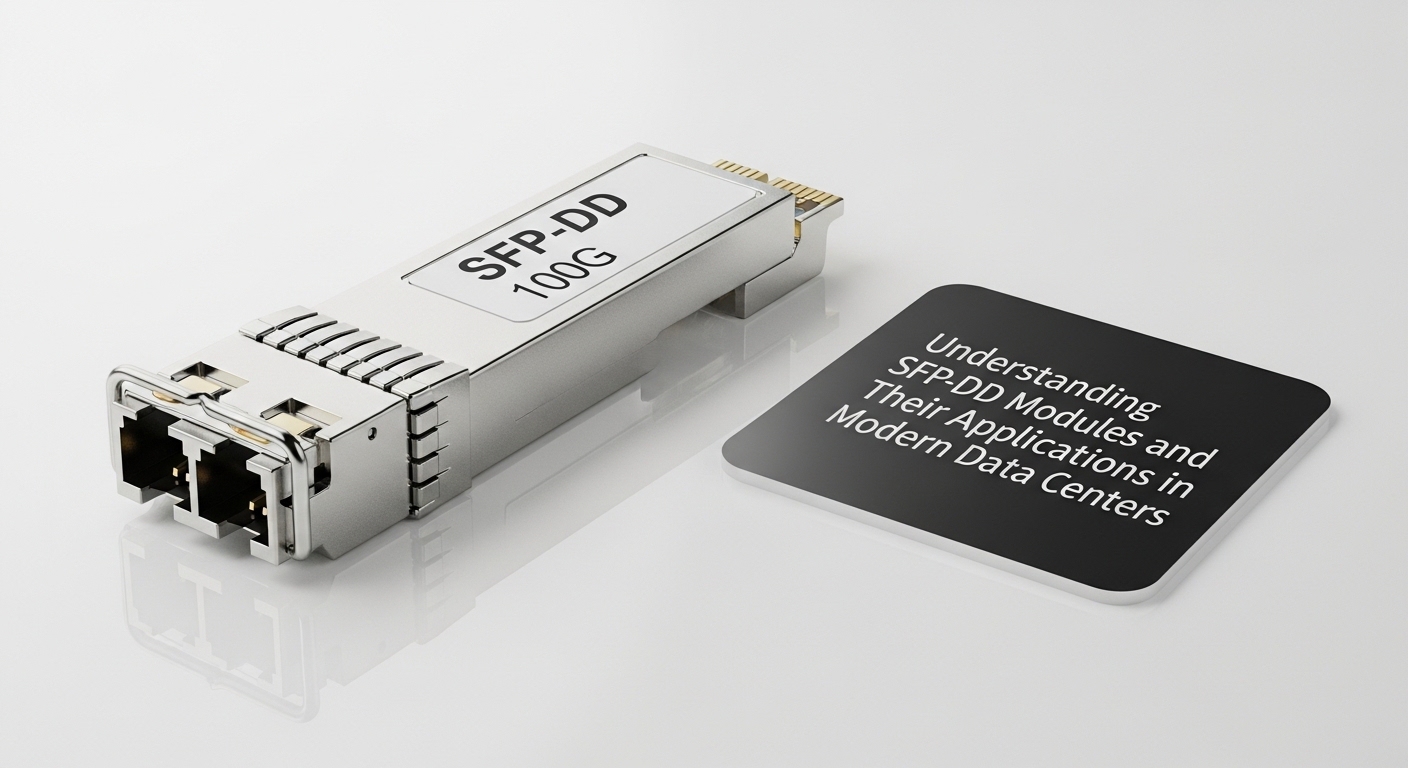
Passive taps split optical power without active electronics, so the monitoring path inherits the physical layer behavior of the plant. In a typical 10G monitoring design, you run a tap between a switch port and an uplink, then feed the replicated optical stream into an SFP+ receiver on a monitoring host. DAG monitoring designs often include multiple capture nodes; passive taps keep the optical budget predictable because there is no tap-powered optical regeneration.
Key specs to understand are tap type (fiber-only passive vs integrated splitter), insertion loss, split ratio, and whether the tap is specified for 10G Ethernet wavelengths (commonly 850 nm for SR). Passive taps for multimode fiber typically assume OM3/OM4 optics and budget accounting aligned to IEEE 802.3.
- Pros: No power dependency at the tap, lower failure points, simple change control.
- Cons: Less flexibility on split ratio, potential reach reduction due to insertion loss.
SFP+ optical selection: wavelength, reach, and power budget
For 10G SFP+ monitoring, most deployments use 10GBASE-SR over multimode at 850 nm (OM3/OM4), or 10GBASE-LR at 1310 nm (single-mode). Passive tap fiber links must be budgeted end-to-end: transmitter launch power, fiber attenuation, splitter/tap insertion loss, and receiver sensitivity. If you undershoot receiver power, the monitoring host will show link flap or CRC spikes.
IEEE alignment matters: the Ethernet PHY requirements are defined in IEEE 802.3 for 10GBASE-SR/LR, and module vendors publish compliance and electrical/optical parameters in datasheets. For field verification, measure optical receive power at the monitoring port with an optical power meter and confirm it is within the SFP+ receiver’s specified range.
| Spec | 10GBASE-SR (MMF) | 10GBASE-LR (SMF) | Passive tap fiber impact |
|---|---|---|---|
| Wavelength | 850 nm | 1310 nm | Tap must be rated for the same band |
| Typical reach | Up to 300 m (OM3) / 400 m (OM4) | Up to 10 km | Insertion loss reduces effective reach |
| Connector | LC (common) | LC (common) | Cleanliness critical at both ends |
| Receiver sensitivity (order of magnitude) | Typically around -11 dBm to -14 dBm for SR | Typically around -14 dBm to -18 dBm for LR | Must exceed sensitivity after tap loss |
| Operating temp | Usually 0 to 70 C (commercial) or wider options | Same | Hot aisle environments stress optics |
| DOM / monitoring | Often available (vendor dependent) | Same | Helps validate power drift over time |
[[EXT:https://standards.ieee.org/standard/802_3 IEEE 802.3]]
[[EXT:https://www.cisco.com/c/en/us/support/docs/optical-and-electrical-transceiver-modules/sfp-and-sfp-modules/214480-understanding-sfp-modules.html Cisco SFP module overview]]
DAG-style monitoring patterns: where passive tap fiber fits best
DAG monitoring is about capturing multiple traffic perspectives—often from leaf-to-spine links, east-west flows, or aggregated uplinks—while keeping the capture path stable during changes. In practice, you might place passive tap fiber inline between a ToR switch and an aggregation switch, then route the replicated stream to a capture cluster. Because passive taps do not require synchronization or active control, they work well when you need consistent capture during routing updates or maintenance windows.
Best-fit scenario: a 3-tier data center with 48-port 10G ToR switches feeding 12-port 10G aggregation uplinks. If you mirror only a subset of uplinks for deep packet inspection, passive tap fiber reduces reliance on switch oversubscription and avoids continuous SPAN load. Each monitored uplink consumes one SFP+ interface on the monitoring host, so plan NIC and switch port availability up front.
- Pros: Predictable optics behavior, minimal operational overhead at the tap.
- Cons: You still need enough capture bandwidth and storage; passive tap does not solve ingestion bottlenecks.
Tap split ratio and insertion loss: the math that prevents “link up but no data”
The most common optical failure mode in passive tap fiber deployments is not a dead link; it is marginal power that passes link training but yields high error rates under load. Tap specifications typically include insertion loss on the through path and split ratio loss (how much optical power goes to each output). For example, a 90/10 split means only a small fraction reaches the monitoring output, so your monitoring receiver must still see enough power after fiber attenuation and connector loss.
Quick budget workflow
- Identify the SFP+ type at the monitoring host (e.g., 10GBASE-SR for 850 nm).
- Calculate fiber attenuation for the actual length and fiber type (OM3 vs OM4).
- Add tap insertion loss and split ratio loss in dB.
- Add connector and patch cord losses (dirty connectors can add multiple dB).
- Confirm the receiver sees power within its specified range under worst-case temperature drift.
Pro Tip: In the field, “link present” is not proof of clean optics. Always validate by checking interface error counters (CRC/align) and, when available, DOM laser bias and received power. Marginal power often shows up as rising CRCs long before the link fully drops.
Engineering selection checklist for passive tap fiber in SFP+ monitoring
Choosing the right passive tap fiber and SFP+ optics is a risk management exercise. Engineers weigh distance and loss first, then compatibility, then operational observability (DOM). Use this ordered checklist during design reviews and pre-install validation.
- Distance vs reach: Confirm fiber length and patch cord count; include worst-case extra slack loops.
- Wavelength match: Passive tap rated for 850 nm (SR) vs 1310 nm (LR) is mandatory.
- Switch and host compatibility: Some hosts enforce vendor-qualified optics; test with your exact SFP+ models.
- DOM support: Prefer SFP+ with digital optical monitoring so you can track drift and alert on thresholds.
- Operating temperature: Hot aisle and airflow constraints can push laser output aging and receiver sensitivity variation.
- Vendor lock-in risk: Decide whether you can standardize on a third-party optics SKU without surprises.
Real-world module examples engineers often test include Cisco-compatible SR optics such as Cisco SFP-10G-SR, Finisar FTLX8571D3BCL, and FS.com SFP-10GSR-85 (exact compatibility depends on host firmware and qualification policies). Always verify with the specific switch and monitoring NIC models you will deploy.
[[EXT:https://www.ietf.org/rfc/rfc2544.txt IETF RFC 2544]]
Common mistakes and troubleshooting in passive tap fiber SFP+ DAG deployments
Passive tap fiber projects fail for predictable reasons. Below are frequent pitfalls with root causes and corrective actions based on typical field behavior.
-
Mistake: Mixing OM3 and OM4 assumptions or using a cable plant with unknown graded index quality.
Root cause: SR reach depends on modal bandwidth; older or mismatched multimode cabling reduces effective reach.
Solution: Validate fiber type and measure end-to-end attenuation; if uncertain, shorten patch distances or switch to single-mode LR with 1310 nm optics. -
Mistake: Using a tap split ratio that violates the optical budget for the monitoring output.
Root cause: Split ratio loss plus insertion loss pushes receive power below sensitivity.
Solution: Recalculate budget, then either select a tap with higher monitoring output percentage, reduce fiber length, or use optics with better receiver sensitivity (within spec). -
Mistake: Dirty connectors or oxidized LC ferrules after repeated moves.
Root cause: Contamination adds insertion loss and increases reflection noise, showing up as CRC or FCS errors.
Solution: Use lint-free wipes and approved cleaning tools; inspect with a fiber scope; re-terminate if necessary. -
Mistake: Assuming all SFP+ optics behave identically across vendors.
Root cause: DOM thresholds, transmitter power classes, and host qualification policies differ.
Solution: Standardize optics SKUs per platform and test in staging; monitor DOM and error counters after cutover.
Cost and ROI: what you pay for observability and what you save
Passive tap fiber hardware typically ranges from low hundreds to mid-thousands of dollars per monitored link depending on split ratio, connectorization (LC/SC), and housing quality. SFP+ optics pricing varies by reach and vendor; in bulk, SR optics are often cheaper than LR single-mode, but LR can reduce reach constraints and simplify long-run monitoring. TCO must include installation labor, downtime risk, and the ongoing cost of cleaning and spares.
ROI lens: If a monitoring platform prevents one major incident (misconfiguration, security breach, or performance outage) per year, the optics and tap cost is usually justified. However, if your capture pipeline cannot ingest the tapped traffic, you will pay for optics without realizing monitoring value; budget for NIC capacity, capture storage, and retention policy.
- Pros: Lower operational complexity at the tap, fewer active components, potentially higher capture reliability.
- Cons: Optical budget constraints can force more expensive optics or shorter cabling runs.
Summary ranking: best passive tap fiber choices for 10G SFP+ monitoring
Use this quick ranking table to guide initial shortlisting. The “best fit” assumes 10G SFP+ monitoring on a DAG-style capture path with inline taps.
| Option | Best for | Strength | Main limitation |
|---|---|---|---|
| MMF passive tap + 10GBASE-SR SFP+ | Short ToR-to-agg monitoring runs | Lower optics cost, simple 850 nm ecosystem | Reach sensitive to insertion loss and fiber quality |
| SMF passive tap + 10GBASE-LR SFP+ | Longer runs or uncertain multimode plants | More deterministic reach over distance | Higher optics cost and requires single-mode plant |
| DOM-capable SFP+ + budget-audited tap | Operations teams needing proactive monitoring | Early warning via received power and laser bias | May require optics standardization per platform |
Next, map your environment constraints (fiber type, run length, and monitoring host interfaces) to a specific optics and tap BOM using the passive tap fiber related topic on design validation and acceptance testing.
FAQ
Q: What does passive tap fiber change compared to SPAN?
Passive tap fiber provides an optical split that does not depend on switch mirroring behavior or oversubscription. In practice, it often yields more consistent capture across maintenance windows, but you must still budget optical loss and ingestion capacity.
Q: Can I use 10GBASE-SR optics with any passive tap fiber?
No. The tap must be rated for the same wavelength band (commonly 850 nm for SR) and the split ratio must fit your optical budget. Always verify receive power at the monitoring SFP+ after installation.
Q: How do I confirm the link is healthy beyond “link up”?
Check interface error counters for CRC/FCS and look for rising error rates under traffic. If your SFP+ supports DOM, confirm received power and laser bias are within documented ranges.
Q: Are third-party SFP+ optics safe for monitoring hosts?
They can be, but compatibility depends on the host platform and qualification policy. Test in staging with your exact switch and monitoring
