
When an MPLS-TP packet transport network starts dropping frames or flapping sessions after a transceiver swap, the root cause is often the optics, not the routing. This article helps network engineers and field technicians choose the right packet transport SFP for MPLS-TP deployments by mapping real compatibility constraints to measurable optical parameters. You will get a Top 8 item checklist, a spec comparison table, and troubleshooting patterns tied to common failure modes. Updated: 2026-04-29.
Top 8 packet transport SFP options for MPLS-TP
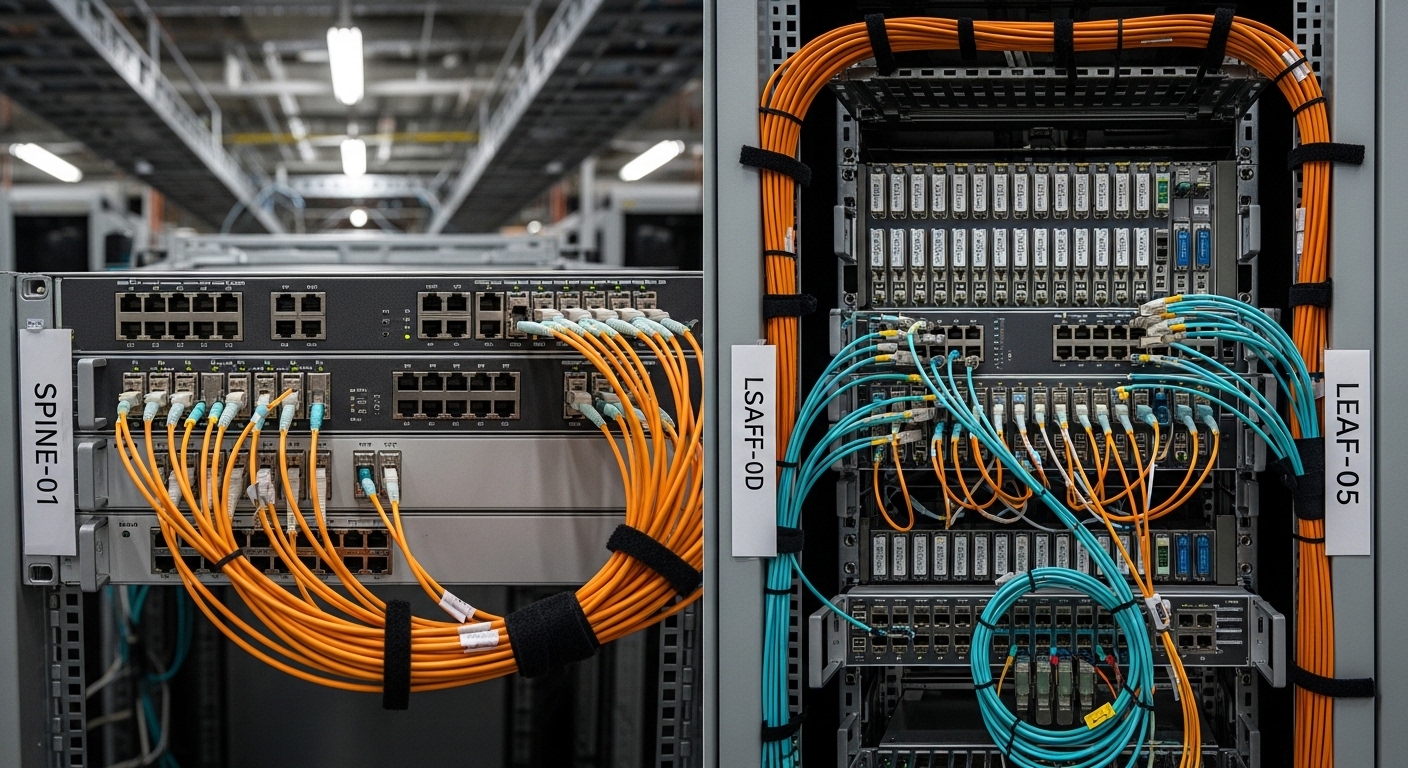
MPLS-TP depends on stable Layer 2/Layer 2.5 transport behavior, so your transceiver choice must match both link budget and switch optics expectations. In practice, engineers select SFPs by fiber type (single-mode vs multimode), wavelength band, reach, and whether the switch supports digital diagnostics (DOM). For MPLS-TP, you also need predictable optical power levels to avoid undetected margin erosion that can later trigger packet loss and OAM alarms. Below are eight field-relevant SFP categories engineers commonly deploy for packet transport.
10GBASE-SR packet transport SFP (multimode, short reach)
Key specs to verify: 850 nm nominal wavelength, typical reach up to 300 m on OM3 and up to 400 m on OM4 (exact depends on link budget and fiber quality), LC connector, and DOM support if your platform expects it. Examples in the field include Cisco-compatible optics such as Cisco SFP-10G-SR and third-party units like Finisar FTLX8571D3BCL and FS.com SFP-10GSR-85. Best-fit scenario: leaf-spine access links or patch-panel runs where fiber is already multimode and within short reach limits.
Pros: Lowest-cost optics for short distances; widely supported in enterprise and metro gear; easy to source. Cons: Distance limited by multimode modal noise and patch cord cleanliness; higher sensitivity to fiber plant changes.
10GBASE-LR packet transport SFP (single-mode, metro reach)
Key specs: 1310 nm wavelength, typical reach around 10 km on single-mode fiber, LC connector, and DOM support. This option is common when the MPLS-TP packet transport boundary crosses buildings or runs through dark fiber with moderate span lengths. Examples include Finisar-style 10GBASE-LR optics (exact part numbers vary by vendor) and Cisco SFP-10G-LR variants. Best-fit scenario: metro rings where you want a conservative, mature 1310 nm solution.
Pros: Longer reach than SR; mature interoperability; fewer multimode issues. Cons: Higher per-port cost than SR; requires correct single-mode fiber type and connector hygiene.
10GBASE-ER packet transport SFP (single-mode, extended reach)
Key specs: 1550 nm wavelength, typical reach around 40 km (implementation dependent), LC connector, and DOM. ER optics are used when the MPLS-TP transport segment spans long distances without frequent regeneration. Best-fit scenario: provider edge-to-aggregation links or remote site backhaul where the link budget is tight but you want to avoid line amplification.
Pros: Extended reach; good for long-haul within metro constraints. Cons: Narrower margin to fiber aging and connector loss; typically more expensive; can be less forgiving if you misconfigure patch cords.
1GBASE-SX packet transport SFP (legacy MPLS-TP grooming)
Key specs: 850 nm (SX), LC connector, and DOM optional depending on switch model. Engineers use 1GBASE-SX for slower grooming links or when the MPLS-TP network interfaces include older aggregation gear. Best-fit scenario: mixed-generation aggregation where you must keep backward compatibility without redesigning the transport layer.
Pros: Cheapest optics; broad compatibility. Cons: Limited bandwidth; not ideal for high-throughput MPLS-TP services; may complicate latency if you oversubscribe.
1GBASE-LX packet transport SFP (single-mode, moderate reach)
Key specs: 1310 nm nominal, LC connector, typical reach up to 10 km depending on vendor and fiber. LX is a pragmatic choice when you have single-mode plant but need moderate distance at gigabit speeds. Best-fit scenario: service demarcation points where you consolidate multiple low-rate flows into MPLS-TP trunks.
Pros: Stable single-mode behavior; good for 1310 nm plant. Cons: Not suitable for 10G requirements; ensure your link budget matches the real fiber attenuation and patch loss.
Vendor-DOM compatible packet transport SFP with strict management
Key specs: DOM support over the SFP management interface, with thresholds aligned to your switch’s monitoring expectations. Many MPLS-TP deployments rely on telemetry and alarms for early warning, so a DOM-capable SFP helps detect drift in transmit power or receive power before packet loss occurs. Best-fit scenario: networks with proactive maintenance windows and automated alerting tied to optical diagnostics.
Pros: Better visibility for OAM-adjacent operations; faster troubleshooting; early detection of margin loss. Cons: Some switches enforce vendor-specific DOM calibration; incompatible optics can be detected but not fully managed.
Low-power / temperature-qualified packet transport SFP for harsh sites
Key specs: extended operating temperature range (for example, industrial or extended commercial), stable optical output power across temperature, and reliable thermal design for the switch cage. Best-fit scenario: outdoor cabinets, remote huts, or sites with airflow constraints where the switch and transceiver temperature can swing. In field operations, you should validate that the SFP’s temperature rating matches the enclosure conditions and that the switch supports the module class.
Pros: Reduced failure probability under thermal stress; fewer unplanned outages. Cons: Higher unit cost; verify compatibility and avoid mixing temperature classes without manufacturer guidance.
Bi-directional and connector-optimized packet transport SFP for plant constraints
Key specs: correct connector type (LC vs SC depending on your patch panels), correct fiber type, and matching transmit/receive wavelengths (for bidirectional systems where applicable). Best-fit scenario: brownfield fiber plants where you cannot re-terminate quickly, and you need optics that match existing patch cords and polarity conventions. In practice, this category is less about “faster” and more about reducing operational downtime during cutovers.
Pros: Shorter maintenance windows; fewer polarity mistakes when you standardize patching. Cons: Requires careful documentation of polarity and wavelength mapping; some systems are less interchangeable across vendors.
packet transport SFP spec comparison for MPLS-TP planning
Before you purchase, translate MPLS-TP service requirements into link budget and operational constraints. Use this table as a starting point, then confirm exact values in the datasheets for your switch and transceiver. MPLS-TP is sensitive to packet loss and unstable optical margins because it relies on consistent transport behavior for OAM and service continuity.
| Packet transport SFP category | Wavelength | Typical reach | Fiber type | Connector | DOM | Temperature range (verify) |
|---|---|---|---|---|---|---|
| 10GBASE-SR | 850 nm | 300 m (OM3) / 400 m (OM4) | Multimode | LC | Common | Commercial or extended |
| 10GBASE-LR | 1310 nm | ~10 km | Single-mode | LC | Common | Commercial or extended |
| 10GBASE-ER | 1550 nm | ~40 km | Single-mode | LC | Common | Commercial or extended |
| 1GBASE-SX | 850 nm | ~550 m (varies) | Multimode | LC | Optional | Commercial |
| 1GBASE-LX | 1310 nm | ~10 km (varies) | Single-mode | LC | Optional | Commercial |
Reference standards and guidance: Ethernet SFP transceiver electrical and optical behavior is aligned to IEEE 802.3 optical interfaces and SFP hardware definitions, while MPLS-TP operational expectations depend on stable forwarding and continuity. For baseline Ethernet optics, see IEEE 802.3. For transceiver form factor and management, consult vendor documentation for the specific SFP generation.
Pro Tip: In MPLS-TP packet transport, optical drift can surface as intermittent OAM anomalies hours or days after installation. Treat DOM readings as a time series: if received power trends toward the lower threshold after a patch panel cleaning outage, plan proactive re-cleaning and re-verification rather than waiting for a hard link-down event.
Selection criteria checklist for packet transport SFP
Field teams often lose time by selecting optics purely by “reach.” The correct process ties distance to link budget, then validates switch optics compatibility, then checks diagnostics and temperature behavior. Use this ordered checklist so procurement and operations remain aligned.
- Distance and link budget: convert span length to expected attenuation plus connector and splice losses; keep operational margin for aging and future re-termination.
- Fiber type and polarity: confirm OM3 vs OM4, single-mode core, and polarity/connector mapping; verify with a fiber test report when possible.
- Switch compatibility: verify that your specific switch model accepts that SFP type and speed; check vendor compatibility and supported DOM behavior.
- Data rate and interface mode: ensure the transceiver matches the port configuration (for example, 10G full-rate vs downshift scenarios).
- DOM support and thresholds: confirm that the DOM fields and alarm thresholds are usable by your monitoring stack; avoid “read-only” surprises.
- Operating temperature and thermal clearance: match the module’s qualified temperature range to the enclosure environment and airflow path.
- Vendor lock-in risk: weigh OEM-approved optics against third-party compatibility; test in a staging rack before mass replacement.
- Maintenance workflow: standardize connector type and cleaning tooling; reduce truck-roll time by matching plant conventions.
Common mistakes and troubleshooting for packet transport SFP
Below are failure modes that repeatedly appear in MPLS-TP packet transport incidents. Each includes a root cause and a practical solution you can execute during maintenance windows.
Wrong fiber type or underestimated patch loss
Root cause: Installing a 10GBASE-SR optics on a link with OM1 or excessive patch cord loss reduces received optical power below sensitivity. The link may come up initially, then fail under temperature variation. Solution: Validate fiber type against the test report; measure end-to-end loss and re-terminate or replace patch cords if margin is insufficient.
Transmit/receive polarity reversed
Root cause: Swapping LC polarity or using an incompatible patch cord pairing causes receive power to drop sharply. Symptoms include link flaps and OAM alarms without consistent error counters. Solution: Re-check polarity mapping at both ends; label patch panels and standardize polarity jumpers for each service.
DOM incompatibility causing monitoring blind spots
Root cause: Some switches accept third-party SFPs but either do not interpret DOM fields correctly or block DOM-based alarms. You then miss early warning and only detect failure after traffic impact. Solution: Perform a staging validation with your exact switch model; confirm DOM readout in the management interface and verify alarm thresholds.
Cleaning neglected after a “works now” installation
Root cause: Contaminated LC endfaces can pass a weak signal at low load but fail under higher modulation conditions or after micro-movements. This is especially common when technicians do not use endface inspection tools. Solution: Use fiber endface inspection and approved cleaning kits; re-check optical readings after cleaning and document before/after values.
Cost and ROI note for MPLS-TP packet transport SFP
In many networks, the per-module price difference matters less than avoiding downtime and truck-rolls. As a realistic planning baseline, OEM-branded 10GBASE-SR and 10GBASE-LR optics often cost more than third-party equivalents, with street pricing frequently differing by a meaningful margin across vendors; exact numbers vary by region, lead time, and supply chain conditions. TCO should include: expected failure rate, compatibility testing effort, spares inventory holding, and the labor cost of repeated maintenance cycles due to poor margin or DOM surprises. For MPLS-TP packet transport, ROI improves when you standardize optics types per service class and enforce DOM-based monitoring so you can schedule maintenance before hard outages.
Real-world MPLS-TP deployment scenario using packet transport SFP
Consider a 3-tier data center leaf-spine topology where 48-port 10G ToR switches uplink to aggregation using 10GBASE-LR over single-mode fiber. Each ToR has eight uplinks, totaling 384 active 10G links, and the MPLS-TP transport domain spans two buildings with an average fiber span of 6.5 km plus patch loss. Engineers select 10GBASE-LR packet transport SFPs with LC connectors and DOM-capable modules, then set monitoring thresholds so that if received power drifts more than a defined step toward the low end, an inspection ticket triggers. After a patch panel rework at month 7, DOM time-series shows a consistent downward trend on a subset of links; technicians clean LC endfaces and restore margin, preventing OAM-visible packet loss during the next maintenance cycle.
Summary ranking table (best-fit first)
The following ranking assumes typical MPLS-TP packet transport constraints: stable optics, manageable reach, and operational simplicity. Final selection still depends on your switch compatibility list and your verified fiber test report.
| Rank | Packet transport SFP option | Best-fit scenario | Main limitation |
|---|---|---|---|
| 1 | 10GBASE-LR (1310 nm, single-mode) | Metro spans around 10 km with broad maturity | Requires correct single-mode plant |
| 2 | 10GBASE-SR (850 nm, multimode) | Short runs in controlled data center environments | Distance and multimode plant quality sensitivity |
| 3 | 10GBASE-ER (1550 nm, single-mode) | Extended reach without regeneration | Tighter margin to loss and aging |
| 4 | Vendor-DOM compatible packet transport SFP | Networks relying on optical telemetry and alarms | Compatibility and threshold interpretation risk |
| 5 | 1GBASE-LX (1310 nm, single-mode) | Legacy grooming with moderate distance | Bandwidth constraints for new services |
