
In dense fiber networks, a link can pass its initial validation yet degrade months later as launch power, temperature, and fiber aging push signals into nonlinear regimes. This article explains how optical nonlinearity impacts an SPM transceiver—and what to measure, configure, and validate so the link stays stable. It helps network engineers, field technicians, and optical designers who must translate fiber physics into real switch port performance, alarm thresholds, and acceptance tests.
Why optical nonlinearity changes how an SPM transceiver behaves
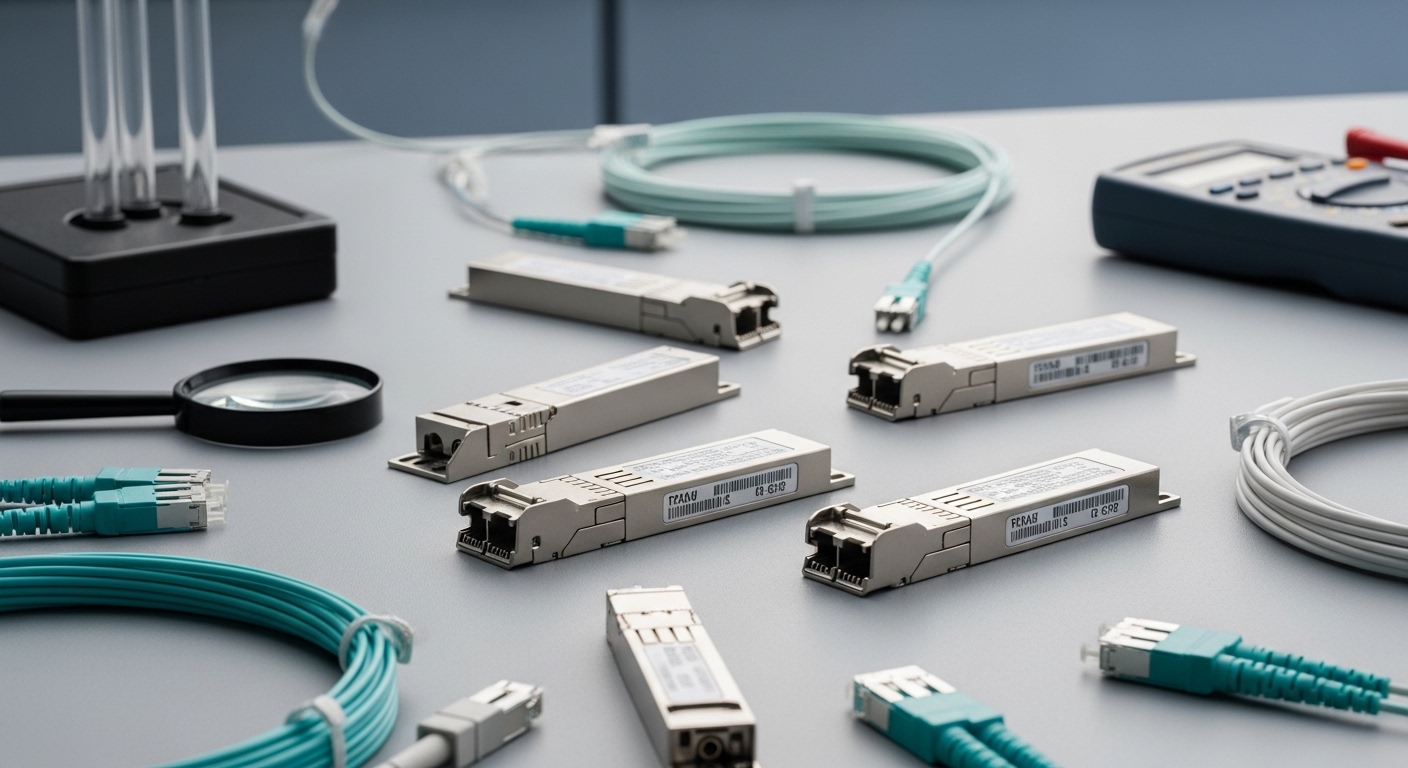
Optical nonlinearity is not just a theoretical concern; it changes the effective spectrum and temporal shape of your transmitted signal, which directly affects receiver sensitivity and bit error performance. In many real systems, nonlinear effects become noticeable when the combination of launch power, fiber dispersion, and modulation format drives the signal away from the “linear propagation” assumption. For an SPM transceiver, this means design choices such as laser linewidth, modulation bandwidth, and output power control must align with the fiber’s nonlinear thresholds.
Two effects often discussed in optical engineering are self-phase modulation (SPM) and cross-phase modulation (XPM). SPM causes phase changes proportional to instantaneous optical intensity, which broadens the spectrum and can increase inter-symbol interference after dispersion. Even when your system is not “about SPM,” the practical outcome is similar: spectral broadening and power-dependent penalty that appears as rising BER, degraded OSNR, or higher error bursts during temperature cycles.
From a standards and implementation standpoint, transceiver vendors typically specify link budgets and compliance to optical interface standards (for example, IEEE 802.3 for Ethernet PHY behavior). However, those specs usually assume a controlled environment; real deployment adds variable patch cords, connector loss, and fiber spans with different dispersion maps. That gap is where optical nonlinearity becomes a design driver rather than a post-mortem surprise. IEEE 802.3 standard
SPM transceiver design factors: power, wavelength, modulation, and fiber
An SPM transceiver is constrained by how safely it can deliver optical power while staying inside the nonlinear and receiver linearity boundaries. Field engineers typically start with the vendor datasheet for laser center wavelength, output power range, and recommended launch power into the fiber plant. Then they map those to actual span loss, connector/patch attenuation, and expected OSNR margin. If your link uses active optics or external amplification, the launch power strategy may need to be revisited during commissioning.
Launch power control and its nonlinear penalty
Nonlinearity scales strongly with intensity, so small changes in launch power can create disproportionate penalties. Many pluggable modules use automatic power control (APC) and provide per-module diagnostics via I2C or similar management channels. Practically, technicians should confirm that the transceiver’s configured transmit power setpoint matches the target link budget, not just the “maximum allowed” value. In high-count deployments, a few outlier ports can dominate error rates if they consistently operate near the top of the power range.
Wavelength choice, dispersion, and effective reach
Wavelength selection affects dispersion coefficient and how much spectral broadening converts into timing distortion at the receiver. In general, single-mode fiber (SMF) around the 1310 nm and 1550 nm bands has different dispersion characteristics, and the fiber type (including dispersion slope) changes how SPM-induced broadening impacts the eye. For short-reach multimode links, nonlinear effects are usually less dominant, but they can still emerge in certain high-power or long-reach configurations.
Modulation format and DSP limits
For higher data rates, the receiver may rely on DSP equalization and decision feedback. Nonlinear penalties can appear as increased noise-like distortion that equalizers cannot fully remove, especially when the signal spectrum is broadened beyond the assumptions used in the receiver’s adaptation. This is one reason OSNR and margin are more actionable than only checking “optical power in dBm.” If the transceiver supports digital diagnostics, you can correlate error counts with temperature and bias current trends to identify nonlinear stress.
Key specifications to compare when buying an SPM transceiver
When optical nonlinearity is a concern, you need more than reach and wavelength. Compare how the module specifies output power, receiver sensitivity, and operating temperature range, and verify that the DOM features you need are supported. Below is a comparison table using representative 10G-class pluggables as examples of what to look for; always confirm exact values in the specific datasheet for your module revision and vendor.
| Spec category | What to check for SPM risk | Example values to compare |
|---|---|---|
| Data rate | Higher rates reduce tolerance to nonlinear distortion | 10G (example), or higher |
| Center wavelength | Impacts dispersion and OSNR behavior | 850 nm or 1310/1550 nm depending on platform |
| Reach (typical) | Nonlinearity becomes a function of span length and launched power | ~300 m to 10 km class depending on fiber and optics |
| Transmit power range | Nonlinear penalty scales with intensity | Often a range like 0 to +3 dBm (varies by module) |
| Receiver sensitivity | Lower sensitivity margins amplify nonlinear penalties | Often around -14 to -20 dBm class for 10G (varies) |
| Connector type | Connector cleanliness affects launch stability | LC or MPO (platform-dependent) |
| Operating temperature | Temperature shifts bias and can change effective power | Commonly 0 to 70 C or -40 to 85 C for industrial ranges |
| DOM / diagnostics | Needed to correlate drift with bias and power | Digital monitoring via I2C (vendor-specific feature set) |
For concrete reference points, many engineers compare common parts such as Cisco SFP-10G-SR, Finisar FTLX8571D3BCL, or FS.com SFP-10GSR-85 to validate baseline reach and diagnostic behavior before addressing nonlinear effects. Verify the exact optical parameters (center wavelength tolerance, power levels, and DOM alarms) in the vendor datasheet for your transceiver SKU. Source: Cisco SFP module datasheet
Field validation workflow to keep an SPM transceiver inside safe limits
To prevent link drift caused by optical nonlinearity, apply a repeatable validation workflow that ties fiber plant measurements to module diagnostics. The goal is to ensure your transceiver operates with enough OSNR margin and enough launch power headroom to avoid nonlinear penalties during temperature and aging changes.
Step-by-step commissioning checks
- Measure actual link loss using an OTDR or calibrated optical power meter across the full path, including patch cords and connectors. Record per-span loss and connector inspection results.
- Set launch power intentionally to a target that preserves margin (often leaving multiple dB of headroom versus the module’s max output). Do not assume “max rated” is safe for long-term stability.
- Log DOM telemetry over at least 24 to 72 hours: transmit power, laser bias current, module temperature, and any vendor-provided alarm thresholds.
- Run BER or error-count validation using the platform’s native counters (for Ethernet, correlate with PHY/PCS error metrics where available). Capture error bursts during planned thermal cycling if the deployment is in a variable environment.
- Confirm fiber type and dispersion assumptions (SMF vs dispersion-shifted variants, and whether the span includes mismatched segments). Nonlinearity outcomes depend on the dispersion map, not only total reach.
Pro Tip: In the field, engineers often find that “mystery” error bursts correlate more strongly with transceiver temperature and bias current drift than with link power alone. Use DOM logs to detect bias excursions that push the module into a higher effective output intensity region, then re-balance the launch power setpoint and clean/replace any suspect connectors.
Selection criteria checklist for optical nonlinearity-aware SPM transceiver choices
Engineers typically evaluate transceivers using a distance-first approach, then refine based on diagnostics and thermal behavior. When optical nonlinearity is part of the risk model, treat launch power control and fiber compatibility as first-class selection criteria.
- Distance and span loss reality: Use measured attenuation, not spec-sheet reach. Include patch cords and aging margin.
- Budget and launch power strategy: Choose modules where you can operate below the “high power edge” while still meeting receiver sensitivity.
- Switch and PHY compatibility: Confirm the switch supports the module type and DOM thresholds you rely on (especially for alarm handling and auto-negotiation behavior).
- DOM support and telemetry granularity: Prefer modules that expose transmit power, temperature, and bias current with stable calibration.
- Operating temperature range: Match the deployment environment; temperature-driven bias changes can alter effective launch intensity.
- Vendor lock-in risk: OEM modules may have tighter calibration and consistent DOM behavior, but third-party modules can work if validated. Plan acceptance tests to avoid silent incompatibilities.
- Connector and cleaning compatibility: MPO and LC cleanliness practices can dominate effective launch power stability, which in turn influences nonlinear penalty.
Common mistakes and troubleshooting tips for SPM-related link issues
Nonlinearity problems can look like generic instability: intermittent CRC errors, rising BER, or sudden link flaps. The key is to distinguish optical nonlinear penalty from simple loss, contamination, or configuration mismatch.
Running near maximum transmit power without margin
Root cause: The system is configured for the highest allowed output to compensate for optimistic link budgets, leaving little headroom for temperature drift or connector aging. Higher intensity increases nonlinear phase effects and spectral broadening, which can degrade BER over time.
Solution: Recompute the link budget using measured loss, then reduce the transmit power setpoint to restore margin. Validate with long-duration error counters and review DOM telemetry trends.
Ignoring fiber dispersion differences across mixed spans
Root cause: Patch panels, splices, or replacement segments may use slightly different fiber types or dispersion properties than assumed. Even with the same total length, nonlinear penalty changes because dispersion conversion differs.
Solution: Verify fiber type labels and perform OTDR-based span mapping. If dispersion mismatch is suspected, isolate spans and test with temporary “known-good” patching to identify the offending segment.
Dirty connectors causing power fluctuations that trigger nonlinear stress
Root cause: Contamination increases insertion loss and can alter effective launch conditions port-to-port. The transceiver may respond with APC behavior that changes output intensity, pushing the link into a nonlinear regime when it tries to “correct” the loss.
Solution: Inspect and clean connectors with proper end-face tools, then re-measure optical power at both ends. Replace any connector that fails inspection. Repeat the test while logging DOM power to confirm stability.
Temperature-driven bias drift masked by short test windows
Root cause: A 10 to 30 minute acceptance test may not capture thermal equilibrium or long-term laser bias drift. Nonlinear penalties often worsen as the transceiver warms, and as the fiber plant changes slightly with HVAC cycles.
Solution: Run at least 24 to 72 hours of error monitoring across typical ambient cycles. Correlate error bursts with DOM temperature and bias current to confirm the mechanism.
Cost and ROI considerations for an SPM transceiver under nonlinear constraints
Pricing varies widely by data rate, wavelength band, and whether the module is OEM or third-party. As a practical range, many 10G pluggables commonly cost roughly $50 to $250 depending on brand, reach, and temperature grade; higher-rate coherent or specialized optics can be significantly more. The ROI comes from reduced downtime and fewer field replacements: nonlinear-induced instability often causes repeated truck rolls if the root cause is not addressed during commissioning.
From a TCO view, OEM modules may cost more but can provide tighter calibration and more predictable DOM alarm behavior, reducing time spent on diagnostics. Third-party modules can be cost-effective if you enforce an acceptance test plan that includes power setpoint validation and long-duration BER or error counter monitoring. Also factor power and cooling impacts: marginally higher transmit power may increase thermal load in the module, which can shorten operational stability if you are running near temperature limits.
FAQ about SPM transceiver selection and optical nonlinearity
How do I know optical nonlinearity is the real cause, not just loss?
Look for error growth correlated with transmit power setpoint and module temperature in DOM logs. If the link fails only when power is high or during warm periods, and improves when you reduce launch power while keeping loss constant, nonlinearity becomes a strong suspect.
Should I always choose the lowest power SPM transceiver option?
Not always. You must still meet receiver sensitivity with margin after measured span loss. The best practice is to choose a module and configure a target launch power that preserves sensitivity margin while avoiding high-intensity nonlinear stress.
Do DOM diagnostics help with nonlinear issues?
Yes, especially if the module exposes transmit power, bias current, and temperature with stable calibration. DOM telemetry lets you correlate error bursts with physical parameters, which is faster than repeatedly swapping optics without evidence.
Are third-party SPM transceivers safe to deploy in production?
They can be, but only after validation against your switch and your link plant. Run compatibility tests that confirm DOM behavior, alarm thresholds, and stable transmit power control over at least a full day.
What fiber types are most sensitive to SPM effects?
Sensitivity depends on dispersion characteristics and effective nonlinear thresholds, which vary across SMF variants and dispersion maps. If you use mixed fiber segments or uncertain patching, treat the link as potentially more nonlinear than the spec-sheet assumes.
What is the fastest field troubleshooting sequence?
Start with connector inspection and measured optical power at both ends, then check DOM telemetry for power and temperature drift. Finally, adjust the transmit power setpoint to restore margin and observe whether error counters stabilize over several hours.
Optical nonlinearity turns an SPM transceiver from a “plug and forget” component into a system that must be tuned against measured fiber conditions and real thermal behavior. Next, review your transceiver compatibility and diagnostics strategy using optical transceiver diagnostics and DOM telemetry best practices.
Author bio: I design and validate optical and network interfaces with a focus on field diagnostics, link-budget realism, and user-facing operational clarity. I have hands-on experience deploying pluggable transceivers in data centers and access networks where stability depends on launch power discipline and measurable telemetry.
