
Co-Packaged Optics (CPO) promises higher throughput per watt and tighter latency budgets, but the real operational shift comes from on-board optics: optical engines placed directly onto the line card or switch substrate instead of using conventional pluggable transceivers. This article helps network and infrastructure leaders decide when on-board optics is the right path, how to budget for it, and how to govern optics lifecycle risk across vendors. If you are planning a leaf-spine refresh, building a high-density AI cluster, or standardizing transceiver policies, you will get decision-ready criteria and troubleshooting patterns.
Top 1: Understand what “on-board optics” changes in CPO
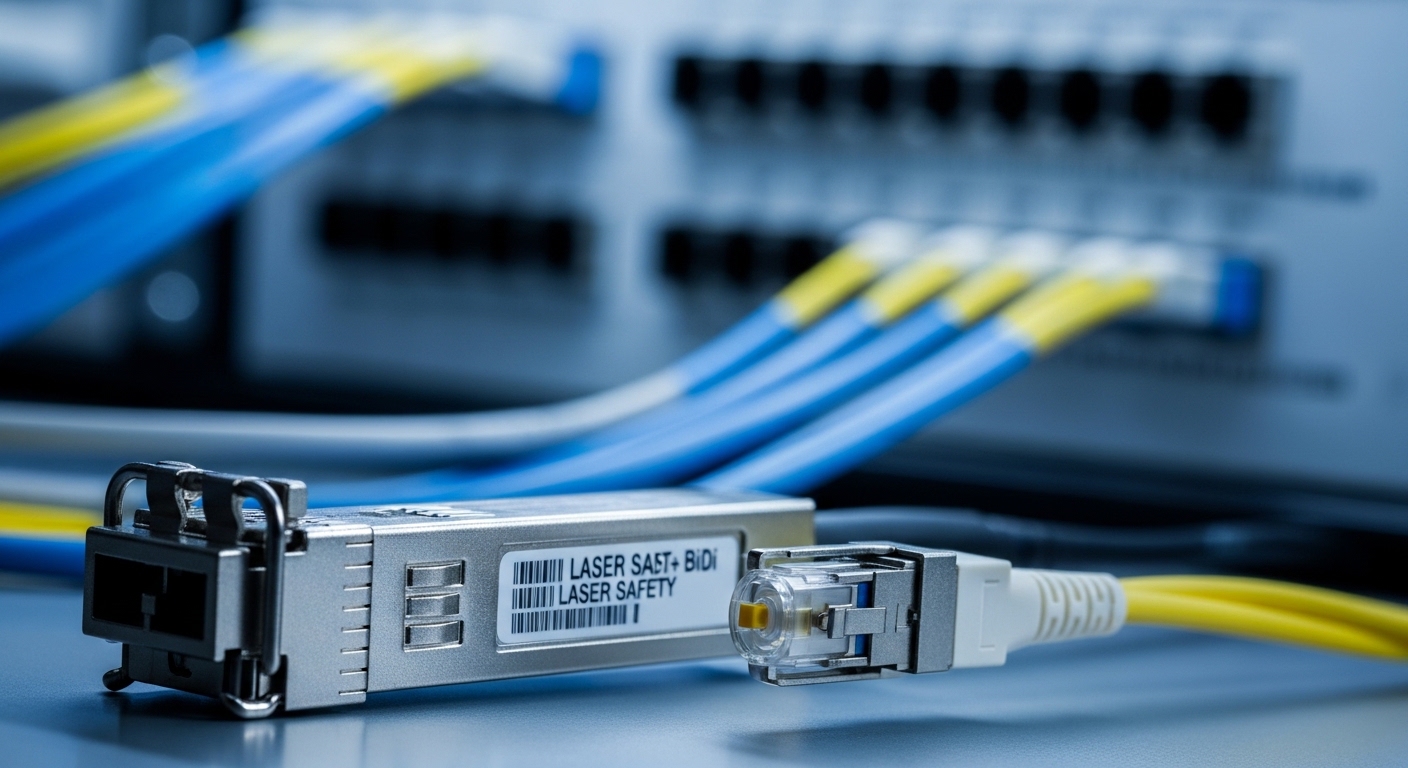
With traditional pluggable optics, the optical transmitter and receiver live in a module that mates to a host connector. In CPO, the optics are integrated so the optical components sit on the host assembly, reducing electrical serialization distance and enabling shorter, cleaner high-speed routing. Practically, this can reduce power and improve signal integrity margins, but it also shifts calibration, thermal behavior, and failure domains closer to the switching ASIC.
Key technical implication: you are trading connector-based modularity for assembly-level integration. That affects spares strategy, RMA procedures, and how you validate optics during burn-in and acceptance testing. For governance, it also changes how you enforce standards: IEEE Ethernet PHY requirements remain, but the optical interface implementation is tied to the CPO platform.
- Best-fit scenario: new switch generations where the vendor controls the CPO optical stack and you can standardize across racks.
- Pros: improved power/latency potential, better high-speed path discipline.
- Cons: less plug-and-play, higher platform dependency.
Top 2: Compare typical CPO vs pluggable reach, power, and interfaces
When leaders ask “Can we standardize optics?” the answer depends on reach class, data rate, and the specific optical interface. CPO commonly targets short-reach data center fabrics (often around 100 m class for single-mode or 70 m class for multimode depending on wavelength and link budget), while pluggables cover a wider menu of vendor-supported distances. Your selection must be anchored to IEEE Ethernet PHY optics expectations and the vendor’s optical budget documentation.
The table below uses representative link parameters you will see in enterprise and hyperscale deployments. Always validate exact values against the switch vendor’s optics compatibility matrix.
| Parameter | On-board optics (CPO typical) | Pluggable optics (SFP/QSFP typical) |
|---|---|---|
| Target use | High-density leaf-spine, AI clusters | General-purpose Ethernet, broader reach |
| Data rate | 25G to 800G class per port group (platform dependent) | 10G/25G/40G/100G/200G/400G (module dependent) |
| Reach class | Usually short-reach (tens to ~100 m) | Short to long-reach options (multimode and single-mode) |
| Connectorization | Integrated optical engine; no pluggable module | LC/MT ferrules or MPO/MTP on modules |
| Power profile | Potentially lower per-bit due to reduced electrical path | Higher variability; depends on module generation |
| Temperature range | Host-assembly thermal design critical | Module specified operating range (often industrial/extended options) |
| DOM / telemetry | Vendor-specific telemetry model; may be host-mediated | DOM via standard interfaces (commonly I2C) varies by module |
| Governance impact | Platform-centric validation and spares | Inventory and policy can be module-centric |
Reference baselines: Ethernet PHY operation and link behavior follow IEEE Ethernet specifications, while the physical optical layer depends on vendor implementations. For a governance lens, treat CPO as a platform feature, not a generic optics component. [Source: IEEE 802.3 Ethernet Working Group publications]
- Best-fit scenario: when your fabric is tightly bounded to short reach and you can enforce a single switch platform across sites.
- Pros: consistent optical path, potential energy savings at scale.
- Cons: fewer fallback options if optics drift or if a vendor pauses a supply lot.
Top 3: Budget for integration: licensing, spares, and acceptance testing
On-board optics in CPO can lower power and reduce cabling complexity, but the budget line items shift. You may pay a platform premium, and you will likely need more rigorous acceptance testing because failures are less likely to be isolated to a field-replaceable module. In practice, teams budget for additional burn-in hours, optical power measurement time, and thermal stress qualification during staging.
Cost reality check: CPO-capable switches typically cost more per port than comparable pluggable platforms, and the “optics” cost is embedded in the line card BOM. Third-party pluggables can be cheaper in some ecosystems, but that advantage disappears when optics are not pluggable. Your ROI model should therefore include uptime risk and spares positioning, not just list price.
- Best-fit scenario: 5+ year refresh where you expect stable supply and can negotiate service-level spares.
- Pros: potentially lower power at scale, fewer cable management failures if fiber routing is simplified.
- Cons: spares are platform-level; field swaps may require full subassembly replacement.
Top 4: Governance checklist for on-board optics lifecycle control
To govern on-board optics, you need controls that cover not just optics but the host assembly, firmware, and telemetry model. Many failures look like “optics problems” but originate in host calibration, firmware optics management, or thermal throttling. Use a policy framework that maps optics health to actionable thresholds.
Selection criteria / decision checklist (ordered):
- Distance and link budget: verify the vendor’s supported reach for your fiber type (OM3/OM4 or single-mode) and connector style (MPO/MTP or LC) before committing.
- Budget and TCO: include platform premium, spares strategy, and power estimates over 5 years, not only module price.
- Switch compatibility: confirm the exact line card generation and firmware release supports the required optical configuration.
- Telemetry and monitoring: ensure you can read optical power, error counters, and temperature indicators; define alert thresholds.
- Operating temperature and airflow: verify host thermal design margin; confirm your rack airflow meets the switch’s inlet spec.
- Vendor lock-in risk: evaluate whether you have alternate vendor options for the same platform generation or if optics are fully proprietary.
[Source: Vendor switch platform datasheets and optics compatibility matrices, plus IEEE 802.3 physical layer guidance for link behavior]
Pro Tip: In on-board optics deployments, the most common “mystery” link instability is thermal coupling between the optical engine and the line card. Treat inlet temperature and local hotspots as first-class variables in your monitoring, not just generic rack temperature. Engineers often fix erratic error bursts by correcting airflow obstructions and re-tuning host cooling profiles, even when optical power looks nominal.
Top 5: Decide based on your deployment scenario: leaf-spine and AI clusters
Consider a concrete environment: a 3-tier data center leaf-spine topology with 48-port 10G ToR switches upgraded to a mixed 25G/100G fabric. In a new AI cluster build, the team deploys 32 spine pairs with 32-port 100G class uplinks and targets short-reach fiber runs under 70 m between leaf and spine. They standardize on a single CPO-capable switch platform so that optical calibration and telemetry behave consistently across hundreds of ports.
Operationally, they reduce power and simplify rack cabling, but they also revise their change-control plan: instead of swapping a failed pluggable transceiver, they replace a line-card optical assembly under vendor RMA procedures. That change is why governance and spares modeling become central to ROI.
- Pros: consistent performance across racks, simplified fiber management, better energy profile.
- Cons: field replacement workflow changes; RMA lead time can dominate outages.
Top 6: DOM, telemetry, and automation: what you must validate
Pluggable optics often expose DOM via a standardized management path (commonly an I2C-backed interface mediated by the host). With on-board optics, telemetry can be host-mediated and vendor-specific. That matters for automation: your NMS and monitoring pipelines must map optical health to the right counters and alerts.
Before rollout, validate that your controller can ingest port-level optical metrics such as received power, transmit bias/temperature indicators, and error counters aligned with your platform’s telemetry schema. Also confirm that firmware upgrades do not reset thresholds or rename telemetry fields, which can silently break alerting.
- Best-fit scenario: environments with mature telemetry pipelines and change management discipline.
- Pros: tighter feedback loops for automated remediation.
- Cons: integration effort; mis-mapped telemetry can hide early degradation.
Top 7: Common mistakes and troubleshooting patterns
On-board optics failures can be harder to isolate than pluggables, so you need disciplined troubleshooting. Here are frequent pitfalls field teams encounter, with root causes and fixes.
-
Mistake 1: Assuming “normal” rack temperature is enough.
Root cause: local hotspot near the optical engine exceeds thermal margin during heavy traffic, causing transient degradation and bursty errors.
Solution: measure inlet and exhaust, add temporary thermal probes, remove obstructions, and validate airflow against the switch’s inlet spec during full-load tests. -
Mistake 2: Treating link errors as fiber-only.
Root cause: host calibration drift or firmware optics management mismatch after an upgrade.
Solution: roll back optics-related firmware to the last known good release, compare optical telemetry before/after, and re-run link qualification. -
Mistake 3: Overlooking connector cleanliness at the MPO/MTP interface.
Root cause: dust or micro-scratches increase insertion loss, especially on short-reach links where margins are tight.
Solution: enforce a connector inspection and cleaning process with a microscope workflow; replace suspect fiber jumpers and document pre/post link metrics. -
Mistake 4: Relying on generic alert thresholds.
Root cause: telemetry scaling differs between platforms; using module-era thresholds creates false positives or, worse, missed alarms.
Solution: define platform-specific thresholds using baseline burn-in data and validate alerts through controlled degradation tests where safe.
Top 8: Cost and ROI: power, failure domains, and spares math
ROI for on-board optics must be computed as a systems outcome. Power savings can be meaningful in large deployments, but they depend on utilization patterns and the platform’s actual measured power draw under your traffic mix. Failure domains also matter: with pluggables, you often swap a module; with on-board optics, you may swap a line-card assembly, which can increase downtime cost if spares are not staged correctly.
Realistic price ranges (planning-level): CPO-capable high-speed switch platforms frequently carry a significant premium versus earlier pluggable generations, and the “optics” cost is embedded in the line card. In many procurement models, you will not be able to compare per-module pricing directly; instead, estimate total cost per port across the platform BOM and include service contracts. For spares, budget for vendor RMA lead times and consider stocking a limited number of line-card spares if your uptime requirements justify it.
- Pros: potential energy reduction and improved performance consistency.
- Cons: higher embedded cost, more complex spares and recovery workflow.
FAQ
What is the main functional difference between on-board optics and pluggable transceivers?
On-board optics integrate the optical engine into the host line card or switch assembly, reducing electrical distance and improving integration. Pluggable transceivers separate optics into a field-replaceable module, which simplifies swaps but can add electrical path length and power overhead.
Are on-board optics compatible with existing fiber and connector types?
Often yes at the fiber connector level, but the connector style and polarity expectations must match the vendor’s CPO platform. Validate whether you are using MPO/MTP or LC interfaces and confirm the vendor’s cleaning and polarity guidance for short-reach operation.
How do I validate on-board optics before production?
Run burn-in and link qualification with your exact traffic patterns and environmental conditions, including inlet temperature and airflow. Capture baseline telemetry (optical power, error counters) and verify that monitoring alerts work after firmware updates.
Do I get DOM-like telemetry with on-board optics?
You may receive equivalent health metrics, but the interface is typically host-mediated and vendor-specific. Confirm which metrics your NMS can ingest and ensure telemetry field names and scaling remain stable across firmware revisions.
What is the biggest governance risk with CPO and on-board optics?
Vendor lock-in and operational coupling: optics behavior depends on the host assembly, firmware, and calibration routines. Your governance should therefore include platform-level lifecycle management, not just optics inventory policies.
When should I avoid on-board optics?
If your network requires frequent field swaps with minimal downtime tolerance, or if you cannot standardize on a single CPO platform generation, pluggable optics may offer better operational agility. Also avoid if you cannot meet the host thermal and airflow requirements during full-load operation.
On-board optics in CPO can deliver strong performance and power advantages, but the enterprise win comes from governance: thermal validation, telemetry mapping, and spares strategy aligned to the integrated failure domain. If you are planning the migration, start with fiber optic transceiver governance and telemetry standards to build a policy baseline that carries across pluggable and integrated optics.
Author bio: I am an IT director who has led data center network refreshes, including optics lifecycle programs and firmware/telemetry governance for high-speed fabrics. I focus on measurable ROI, operational recovery workflows, and architecture decisions that hold up under real maintenance events.
