
Offshore oil rig optics are often the hidden backbone of platform connectivity, carrying telemetry, control traffic, and crew network services through corrosive, vibration-heavy environments. This article helps operations, field engineering, and network teams choose the right SFP transceivers for extreme offshore conditions, with practical selection steps and failure-mode troubleshooting. You will get a spec comparison table, a deployment scenario with real link targets, and an engineer-style checklist to reduce downtime.
Why offshore oil rig optics demand different SFP engineering
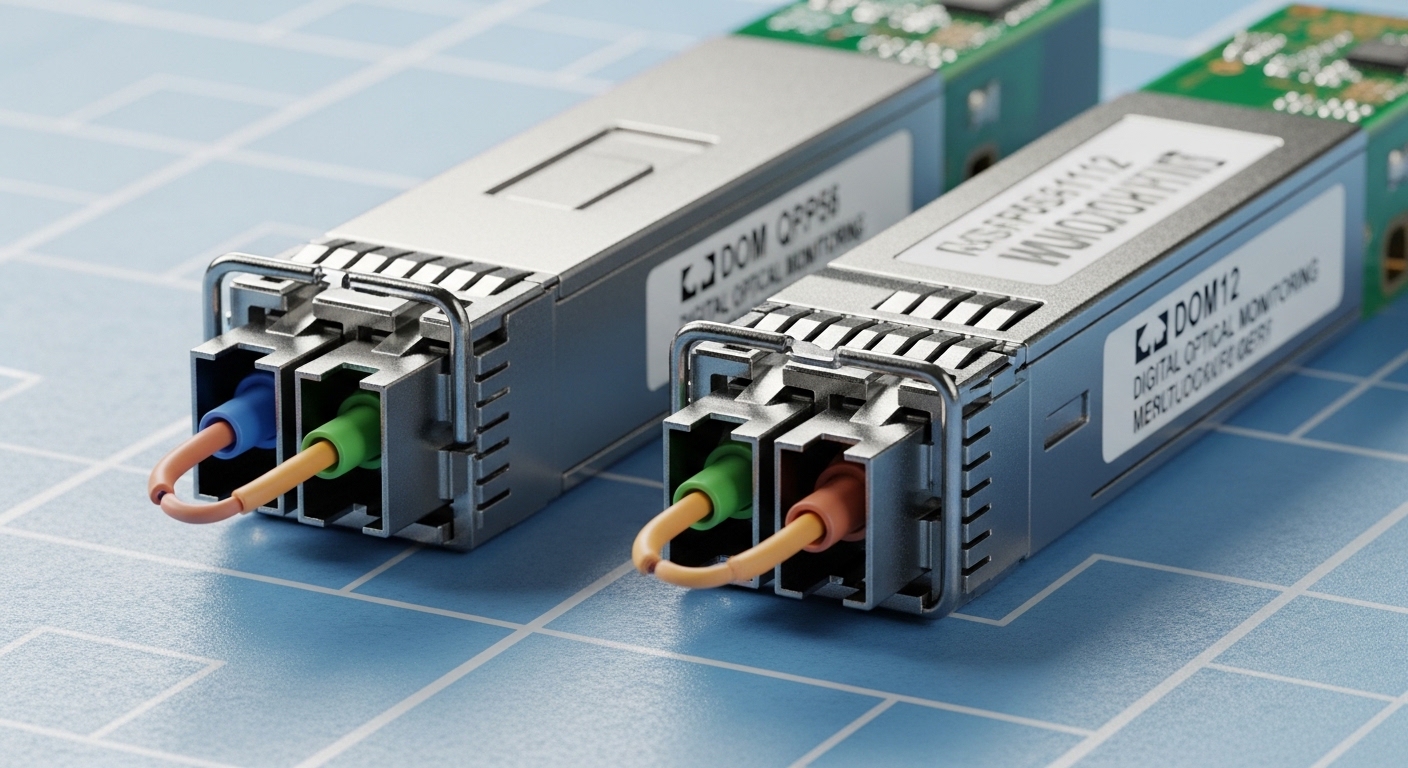
Onshore data centers can treat optics as “swap-and-go,” but offshore platform fiber networks face salt fog, temperature swings, constant vibration, and frequent maintenance windows that are short and safety constrained. SFP modules used as offshore oil rig optics must maintain optical power stability, receiver sensitivity, and link uptime while tolerating mechanical stress and condensation cycles. In practice, that means prioritizing modules with industrial or extended temperature ratings, robust connectorization, and clear DOM (Digital Optical Monitoring) support for remote diagnostics. It also means aligning the transceiver type to the fiber plant: single-mode versus multimode, expected span loss, and end-to-end dispersion limits.
Environmental and operational realities that affect optical links
Field failures commonly start as “marginal link budgets” that only show up after months of marine exposure. Salt contamination can increase connector insertion loss, while vibration can loosen patch leads or stress fiber terminations. Temperature swings can shift laser output and receiver thresholds; even if the nominal link budget fits on paper, real-world penalties from aging splices and cleaning gaps can push the system into intermittent error states. For offshore oil rig optics, engineers typically design with additional margin and enforce strict fiber hygiene procedures.
Standards alignment: IEEE 802.3 and optical reach classes
Most SFP optics operate within Ethernet PHY definitions in IEEE 802.3, including 1GBASE-X, 10GBASE-SR, and other common families depending on the switch. The key point is that “SFP form factor” alone does not guarantee interoperability; the switch’s PHY expectations, supported wavelength, and signal format matter. When you match the transceiver to the correct Ethernet class and reach, you reduce the probability of link training failures and rising BER (bit error rate) over time. For reach and optical power assumptions, treat vendor datasheets as the authoritative reference and validate against your actual measured link loss.
External authority: IEEE standards portal and ANSI/TIA fiber cabling guidance support the broader cabling and link-budget discipline used in industrial environments.
Key SFP spec tradeoffs for extreme offshore fiber networks
The most effective offshore oil rig optics decisions start with the link class and then work backward from environmental constraints. Below is a practical comparison of commonly deployed SFP families used in harsh industrial networks. Values are representative of typical vendor datasheet ranges; always confirm the exact part number and DOM behavior for your switch model.
| Spec | 10GBASE-SR SFP+ | 10GBASE-LR SFP+ | 10GBASE-ER SFP+ | 1GBASE-LX SFP |
|---|---|---|---|---|
| Typical wavelength | 850 nm | 1310 nm | 1550 nm | 1310 nm |
| Fiber type | MMF (often OM3/OM4) | SMF | SMF | SMF |
| Typical reach | ~300 m on OM3 | ~10 km | ~40 km | ~10 km |
| Connector commonality | LC duplex | LC duplex | LC duplex | LC duplex |
| Optical power behavior | Short-reach LED/VCSEL class | Laser class | Laser class, higher budget | Laser class |
| DOM support | Often yes (vendor dependent) | Often yes (vendor dependent) | Often yes (vendor dependent) | Often yes (vendor dependent) |
| Industrial temperature options | Often -40 to +85 C variants | Often -40 to +85 C variants | Often -40 to +85 C variants | Often -40 to +85 C variants |
| Typical use on platforms | Intra-deck links, short runs | Control rooms to risers | Long SMF backbone spans | Legacy or mixed-speed segments |
Laser safety and power budget discipline
Offshore oil rig optics frequently use Class 1 laser products, but you still need disciplined handling during maintenance. Ensure your transceivers align with IEC and IEC 60825-1 expectations and that your site procedures include connector cleaning and inspection. From a budgeting standpoint, treat each connector, splice, and patch panel as a measurable loss element, not a rounding error. If you are designing for vibration and future fouling, build additional margin rather than assuming the nominal datasheet reach will remain stable for years.
DOM and remote visibility: avoiding blind swaps
DOM (Digital Optical Monitoring) is often the difference between planned maintenance and emergency troubleshooting. With DOM, you can read transmit power, receive power, and sometimes temperature and bias current, depending on the module and switch. For offshore operations, that means you can trend degradation before it causes errors, which reduces the number of times technicians must open enclosures in hazardous conditions. When DOM is not available or not supported by the switch, you lose early warning and increase operational risk.
Pro Tip: In field troubleshooting on marine platforms, the most actionable DOM metric is the delta between transmit power and receive power over time. If receive power drops faster than expected relative to temperature changes, suspect connector contamination or a partially degraded splice rather than a failing laser.
Real deployment scenario: SFP choices in a leaf-spine platform network
Consider a 3-tier offshore platform network with 48-port 10G top-of-rack switches in two process modules and a central aggregation room. You need: (1) 18 short 10G links between ToR switches across cable trays with about 70 m average multimode fiber runs, (2) 6 10G uplinks from aggregation to the riser cabinet over single-mode spans averaging 4.5 km, and (3) a small number of legacy 1G segments to legacy PLC gateways over 2 km single-mode. In this case, engineers commonly select 10GBASE-SR SFP+ for the short multimode runs, 10GBASE-LR SFP+ (or LR variants with strong budgets) for the 4.5 km uplinks, and 1GBASE-LX SFP for the legacy 1G links. The operational win comes from matching reach class to fiber type, then using DOM-capable modules so the operations team can trend optical power and schedule cleaning before intermittent alarms escalate.
Measured link budget example used during acceptance testing
During commissioning, teams usually measure end-to-end fiber attenuation with an OTDR and confirm insertion loss with a light source and power meter workflow. If a 10GBASE-LR link has measured SMF loss of 0.35 dB/km, plus an allowance for connectors and splices, you can compute a realistic budget. For example, a 4.5 km span contributes about 1.6 dB in fiber loss, and then you add connector and splice penalties. The key is to confirm that the vendor’s optical budget and receiver sensitivity remain within limits under expected aging and harsh environment derating.
External authority for general fiber measurement practices: IEC guidance and cabling discipline references via ANSI/TIA.
Selection criteria checklist for offshore oil rig optics SFP modules
Use this ordered decision list when selecting offshore oil rig optics for an offshore platform fiber network. Each step reduces a specific risk: link instability, switch incompatibility, or unplanned downtime.
- Distance and fiber type: Confirm MMF versus SMF, then select SR, LR, or ER class optics to match reach and dispersion constraints.
- Switch compatibility and PHY support: Verify the exact switch model’s transceiver compatibility list where available, including supported wavelengths and data rates.
- Optical budget fit: Use measured OTDR and insertion loss, then validate against the vendor datasheet transmit power, sensitivity, and minimum/maximum receiver thresholds.
- DOM and management integration: Ensure DOM is supported by the switch and that your monitoring stack can poll and alert on thresholds.
- Operating temperature range: Prioritize industrial or extended temperature variants, commonly -40 to +85 C, and consider heat sources near the rack.
- Connectorization and cleaning strategy: LC duplex is common, but confirm dust caps, cleaning tools, and inspection processes are standardized offshore.
- Vibration and mechanical robustness: Validate that the module latch and housing are suitable for repeated maintenance cycles and that patch leads are strain-relieved.
- Vendor lock-in and spares strategy: Evaluate OEM-only constraints versus third-party compatibility, and plan a spares kit for the module types that dominate traffic.
- Environmental qualification evidence: Prefer modules with clear datasheet claims for humidity/thermal stability and consistent optical performance over temperature.
Compatibility caveats that matter offshore
Even if an SFP “should work,” some switches enforce strict compliance checks using diagnostic registers. If the vendor’s module reports DOM values differently than expected, the switch may still bring up the link but generate frequent log warnings. For offshore oil rig optics, those warnings can become alert fatigue, masking real degradation. Confirm behavior during a staged pilot run and record alarm patterns before scaling.
Common pitfalls and troubleshooting tips on offshore fiber links
When offshore oil rig optics fail, the root cause is often not the transceiver alone. Here are concrete failure modes field teams commonly see, along with practical solutions.
Intermittent link flaps after maintenance
Root cause: Connector contamination or micro-bending introduced when reseating patch leads, especially after vessel movement and enclosure access. Salt residue can accelerate contamination, increasing insertion loss and causing receiver margin to collapse.
Solution: Clean connectors with validated procedures, inspect with an optical microscope or connector inspection tool, and then re-test received optical power using DOM. If you see a step change in receive power after maintenance, treat it as a cleaning/connection issue before replacing optics.
“Link up” but rising CRC or FEC-like symptoms
Root cause: Marginal optical power budget due to underestimated loss from aging splices, additional patch panels, or temperature-related laser output shifts. In multimode systems, differential modal effects can also appear when fiber grades are mismatched (for example, OM3 versus OM2).
Solution: Re-run a link audit using measured loss and compare to the vendor optical budget. If you are using 10GBASE-SR, verify the MMF grade and confirm that the transceiver wavelength class matches the fiber plan. Use DOM to track transmit and receive power trends and correlate with temperature readings.
Switch rejects optics or logs unsupported diagnostics
Root cause: DOM reporting differences, EEPROM identification mismatch, or strict compatibility filtering on the switch. Some third-party modules can be electrically compatible but fail the vendor’s diagnostic expectations.
Solution: Validate with the exact switch model and firmware version before deployment. Keep a small pilot batch and confirm that the module passes both link establishment and management polling without errors. If needed, standardize on OEM or a third-party supplier that explicitly documents compatibility for your switch family.
Persistent errors near high heat or condensation zones
Root cause: Temperature extremes and condensation affecting connector interfaces and module performance over time. Condensation can drive corrosion at the connector and increase contact resistance, leading to intermittent optical coupling.
Solution: Improve enclosure sealing, route patch cords to reduce condensation exposure, and ensure cable glands and strain relief prevent movement. Favor extended temperature optics and add a preventive cleaning schedule where humidity cycles are severe.
For general fiber troubleshooting discipline, reference ANSI/TIA fiber testing and inspection concepts.
Cost and ROI considerations for offshore oil rig optics
Pricing varies widely by OEM versus third-party and by temperature grade. As a practical planning range, OEM 10G SFP+ optics often cost roughly $200 to $600 per module, while third-party industrial-compatible options may land around $80 to $250 depending on brand and DOM support. Extended temperature variants and modules with stronger optical budgets typically cost more, but they can reduce failure rates and unplanned trips. Over a multi-year lifecycle, the biggest ROI driver is not purchase price; it is reduced downtime and faster diagnostics via DOM.
TCO model an operator can actually use
When teams estimate total cost of ownership, they include: (1) spares inventory cost, (2) maintenance labor and vessel time, (3) connector cleaning consumables, and (4) risk of safety-critical interventions. A single unplanned optics swap offshore can cost far more than the module itself when you account for access, permits, and waiting for safe weather windows. Therefore, if third-party modules reduce purchase cost but create compatibility or monitoring gaps, they may increase operational risk.
FAQ
What type of SFP optics are most common for offshore oil rig optics?
For offshore oil rig optics, 10GBASE-SR SFP+ is common for short intra-deck links over multimode fiber, while 10GBASE-LR SFP+ is common for single-mode uplinks over kilometers. For longer backbone spans, ER variants may be selected if the measured link loss and budget justify it. The “most common” choice also depends on whether the platform fiber plant is primarily MMF or SMF.
How do I verify compatibility with my offshore switch model?
Start with the switch vendor’s documented optics compatibility list when available, then validate during a pilot using the exact switch firmware version. Confirm both link establishment and DOM polling with your monitoring system. If you see repeated diagnostics warnings, treat it as a compatibility risk even if the link stays up.
Do I need DOM for offshore monitoring?
DOM is strongly recommended because it enables trend-based maintenance and reduces blind swaps. Without DOM, you often discover problems only after CRC errors or link flaps occur, which can be costly offshore. If your switch does not support DOM for a given module type, you should reconsider the module selection.
What operating temperature range should I plan for?
Plan for the real ambient conditions at the rack and consider heat from adjacent equipment. Many teams target industrial or extended temperature optics commonly specified around -40 to +85 C. If your enclosures run hotter than expected, you may need thermal redesign in addition to selecting higher-grade optics.
Are third-party SFP modules safe for mission-critical offshore links?
They can be safe if they are explicitly compatible with your switch model and if DOM behavior matches what your monitoring expects. The risk is not only link establishment; it is also how the module behaves under temperature cycling and how it reports diagnostics. Run a pilot batch test, track DOM trends, and standardize once performance is proven.
What is the first thing to check when a link goes down?
First verify connector cleanliness and fiber path integrity, especially after any maintenance activity. Then use DOM or optical power measurements to determine whether the transmitter or receiver side is failing the budget. Finally, validate that the correct fiber type and patching are used for the selected SFP class.
Author bio: I have deployed and troubleshot Ethernet optical links using SFP and SFP+ transceivers in industrial and marine environments, focusing on link budgets, DOM monitoring, and maintenance workflows. My work emphasizes practical verification: OTDR measurements, connector inspection discipline, and compatibility testing across switch firmware versions.
Next step: If you are updating your platform optics spares and monitoring, review fiber optic link budgeting for industrial networks to standardize how you calculate loss margin and plan preventive maintenance.
