
Defense deployments rarely fail in the lab, but they fail fast in the field: vibration, temperature swings, dirty connectors, and mismatched optics. This article helps network engineers and field technicians choose military fiber optic SFP solutions that survive harsh conditions while meeting IEEE 802.3 link requirements. You will get practical selection criteria, a spec comparison table, and troubleshooting steps drawn from real operations.
Why ruggedized SFPs matter in military fiber optic networks
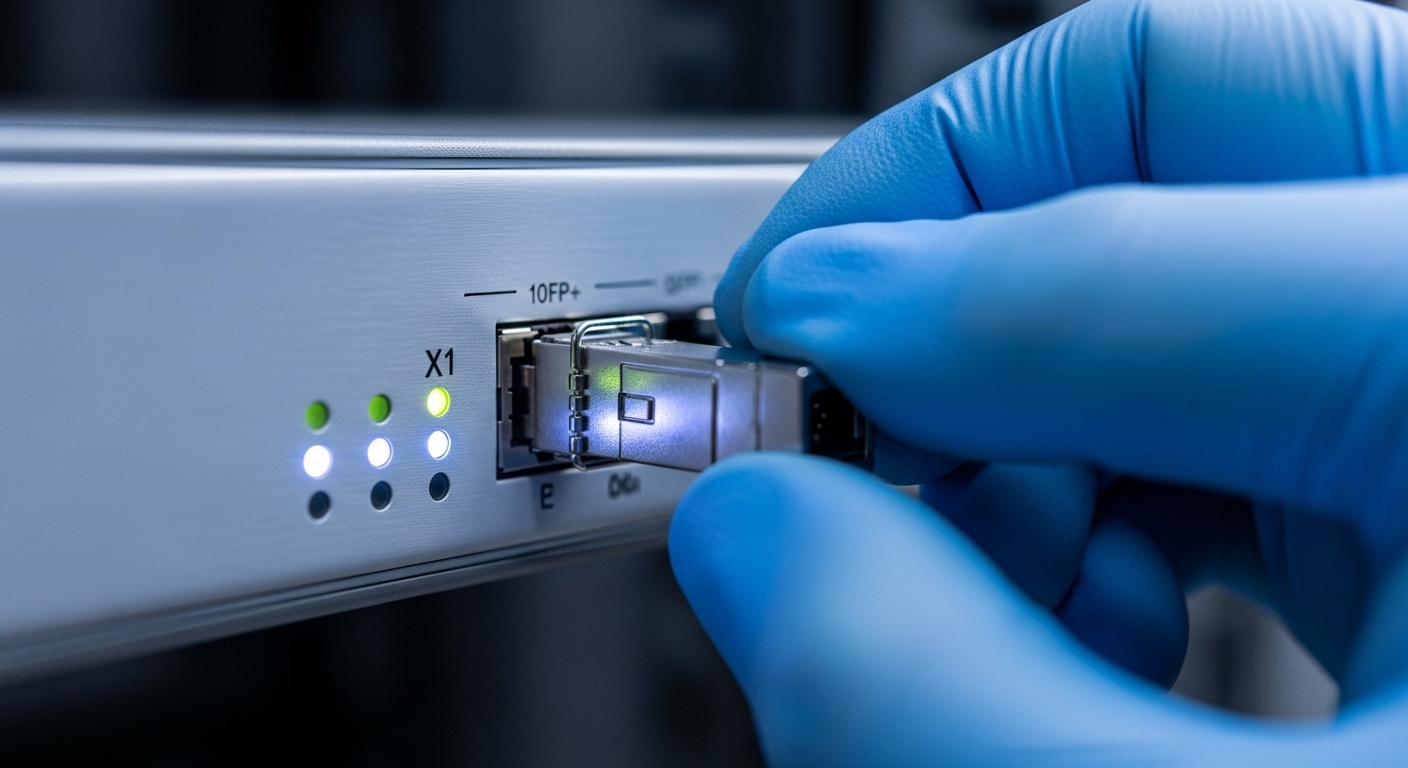
In ruggedized optical networks, the transceiver is not just a “plug and play” component; it is part of the environmental survival chain. Typical failure drivers include optical power drift over temperature, connector micro-cracking, and receiver sensitivity degradation when fiber quality is poor. Ruggedized defense SFPs often add tighter optical power tolerances, better thermal design, and enhanced mechanical robustness for shock and vibration.
Most defense optical links still follow standard electrical and optical behaviors defined by IEEE 802.3, but the packaging and qualification differ. For example, 10GBASE-SR modules are commonly specified for multimode fiber and short reach, while long-haul options use single-mode wavelengths such as 1310 nm or 1550 nm. When you specify DOM (Digital Optical Monitoring), you also gain telemetry for optical power and temperature, which is critical for predictive maintenance.
Key military fiber optic SFP specifications to compare
Before you compare vendors, decide your target data rate, fiber type, and expected environmental envelope. Then verify that the SFP meets the correct standards mapping (for example, 10GBASE-SR for short-reach multimode) and that the operating temperature range matches the mission profile. Ruggedized units may be rated to extended temperatures, but you still need to validate platform airflow and enclosure thermal limits.
| Spec | Example Class | Typical Values (Engineer Reference) | What to Verify in Datasheet |
|---|---|---|---|
| Data rate | 10G SFP+ | 10.3125 Gb/s | IEEE 802.3 clause support and electrical interface |
| Wavelength | SR / LR options | 850 nm (MM), 1310 nm (SM) | Exact wavelength band and optical budget assumptions |
| Reach (typical) | SR multimode | ~300 m on OM3; up to ~400 m on OM4 | Budget with connector losses, splices, and patch cords |
| Connector | Optical interface | LC (common), ST in legacy | Connector type compatibility with your harness |
| Optical monitoring | DOM | Digital telemetry | DOM registers, alarm thresholds, and polling behavior |
| Operating temperature | Ruggedized | -40 C to +85 C common extended class | Confirm rating and derating curves at high temp |
| Power consumption | SFP+ class | Often ~1–2 W | Budget for fanless or low-airflow enclosures |
| Mechanical robustness | Ruggedized housing | Shock/vibration tested | Qualification method and failure criteria |
When choosing a real module, engineers often start with known ecosystem parts for compatibility. Examples used in industry validation include Cisco SFP-10G-SR and Finisar FTLX8571D3BCL, plus third-party equivalents such as FS.com SFP-10GSR-85. Still, defense platforms can enforce stricter verification, so treat compatibility as a test plan item, not a guarantee.
Deployment scenario: field-ready 10G ring with harsh thermal swings
Consider a 3-tier defense network in a temporary tactical operations center. You have 48-port 10G ToR switches feeding aggregation switches over a fiber ring, with eight 10GBASE-SR links between racks. The environment cycles from +40 C day to -15 C night, while diesel generators introduce vibration and dust. Each link uses OM4 patching with pre-terminated LC harnesses, and every SFP is monitored via DOM to track transmit power and receiver alarms.
In this scenario, a ruggedized SFP reduces risk in two ways: it tolerates thermal stress without optical margin collapse, and DOM alerts you before a link becomes intermittent. Engineers typically set alarm thresholds so that a gradual power drift triggers maintenance while the BER is still stable. If you do not have DOM visibility, you often discover problems only after packet loss appears during peak traffic.
Selection checklist for military fiber optic SFP ruggedization
Use this ordered checklist to reduce integration churn and unexpected field behavior:
- Distance and fiber type: confirm OM3 vs OM4 vs single-mode, patch cord lengths, and connector/splice loss.
- Standards alignment: verify the module matches the switch port mode (for example, 10GBASE-SR vs 10GBASE-LR) consistent with IEEE 802.3 behavior [Source: IEEE 802.3].
- Switch compatibility and optics EEPROM expectations: confirm DOM support, vendor-specific thresholds, and any locking behavior.
- DOM and alarm telemetry: ensure you can read temperature and optical power registers and integrate them into your monitoring system.
- Operating temperature and derating: match the mission profile, not just the “rated” range; validate enclosure airflow and hot spots.
- Connector and harness interface: LC vs other connector types, keying, latch design, and strain relief for vibration.
- Vendor lock-in risk: confirm at least two qualified sources and run acceptance tests to compare optical power and alarm behavior.
Pro Tip: In vibration-heavy enclosures, optical margin loss often looks like “random” link flaps. The fastest root-cause approach is to correlate DOM transmit power and temperature slope with link-down timestamps, then inspect connector polish and micro-movement at the latch points.
Common mistakes and troubleshooting in rugged defense links
Mistake 1: Overestimating multimode reach — Root cause: patch cords, dirty connectors, and aging splices consume the optical budget. Solution: measure end-to-end loss with a light source and power meter, then add a margin for future cleaning and re-termination.
Mistake 2: Ignoring DOM alarm mapping — Root cause: the switch may interpret DOM fields differently across vendors, so alarms never trigger when they should. Solution: during acceptance testing, force known conditions (temperature stabilization and monitored optical power) and verify the management system raises the expected events.
Mistake 3: Thermal mismatch inside the enclosure — Root cause: the SFP temperature rating assumes airflow; a fanless box can exceed module limits even when ambient looks acceptable. Solution: log transceiver temperature via DOM under worst-case traffic and confirm it stays below the datasheet guidance.
Mistake 4: Connector contamination after field handling — Root cause: dust introduced during harness swaps causes intermittent receiver overload or high error bursts. Solution: use end-face inspection before reconnecting, and standardize cleaning kits and procedures for LC ferrules.
Cost and ROI: what “ruggedized” really changes
Ruggedized military fiber optic SFPs typically cost more than standard enterprise modules. In many procurement cycles, third-party ruggedized SFP+ units can land roughly in the $80 to $200 range per module, while OEM-branded options may be higher depending on qualification and documentation. TCO is often driven less by purchase price and more by reduced field dispatches, faster fault isolation via DOM, and lower incident rates from connector and thermal robustness.
Expect lower failure rates only when installation and handling are disciplined. If connectors are not inspected and cleaned, even the best optics can fail early. ROI improves when you can reduce mean time to repair by correlating DOM telemetry with maintenance workflows and when you stock a qualified spares strategy with at least two compatible sources.
FAQ
What makes an SFP “military” rather than standard enterprise?
Military-oriented optics typically add extended temperature ratings, enhanced mechanical qualification, and tighter operational tolerances, plus documentation aligned to defense procurement needs. Always confirm the exact operating envelope and tested vibration/shock profile in the vendor datasheet.
Can I use third-party military fiber optic SFPs in OEM switches?
Often yes, but compatibility is not automatic. Validate DOM behavior, EEPROM expectations, and link stability during acceptance testing, because some switches enforce strict optical or alarm thresholds.
How do I choose between 850 nm multimode and 1310/1550 nm single-mode?
.wpacs-related{margin:2.5em 0 1em;padding:0;border-top:2px solid #e5e7eb} .wpacs-related h3{margin:.8em 0 .6em;font-size:1em;font-weight:700;color:#374151;text-transform:uppercase;letter-spacing:.06em} .wpacs-related-grid{display:grid;grid-template-columns:repeat(auto-fill,minmax(200px,1fr));gap:1rem;margin:0} .wpacs-related-card{display:flex;flex-direction:column;background:#f9fafb;border:1px solid #e5e7eb;border-radius:6px;overflow:hidden;text-decoration:none;color:inherit;transition:box-shadow .15s} .wpacs-related-card:hover{box-shadow:0 2px 12px rgba(0,0,0,.1);text-decoration:none} .wpacs-related-card-img{width:100%;height:110px;object-fit:cover;background:#e5e7eb} .wpacs-related-card-img-placeholder{width:100%;height:110px;background:linear-gradient(135deg,#e5e7eb 0%,#d1d5db 100%);display:flex;align-items:center;justify-content:center;color:#9ca3af;font-size:2em} .wpacs-related-card-title{padding:.6em .75em .75em;font-size:.82em;font-weight:600;line-height:1.35;color:#1f2937} @media(max-width:480px){.wpacs-related-grid{grid-template-columns:1fr 1fr}}
