
If you are choosing optics for a production network, the hard part is not the datasheet number it is the field behavior: link stability, DOM accuracy, thermal margin, and how often you get “mystery” link flaps after deployment. This article helps network engineers and procurement teams compare an II-VI fiber module against Finisar and Lumentum transceivers using practical OEM-quality criteria. You will get spec-level comparison, a concrete deployment scenario, a decision checklist, troubleshooting pitfalls, and a short FAQ to speed up purchasing and acceptance testing.
What “OEM quality” means for an II-VI fiber module
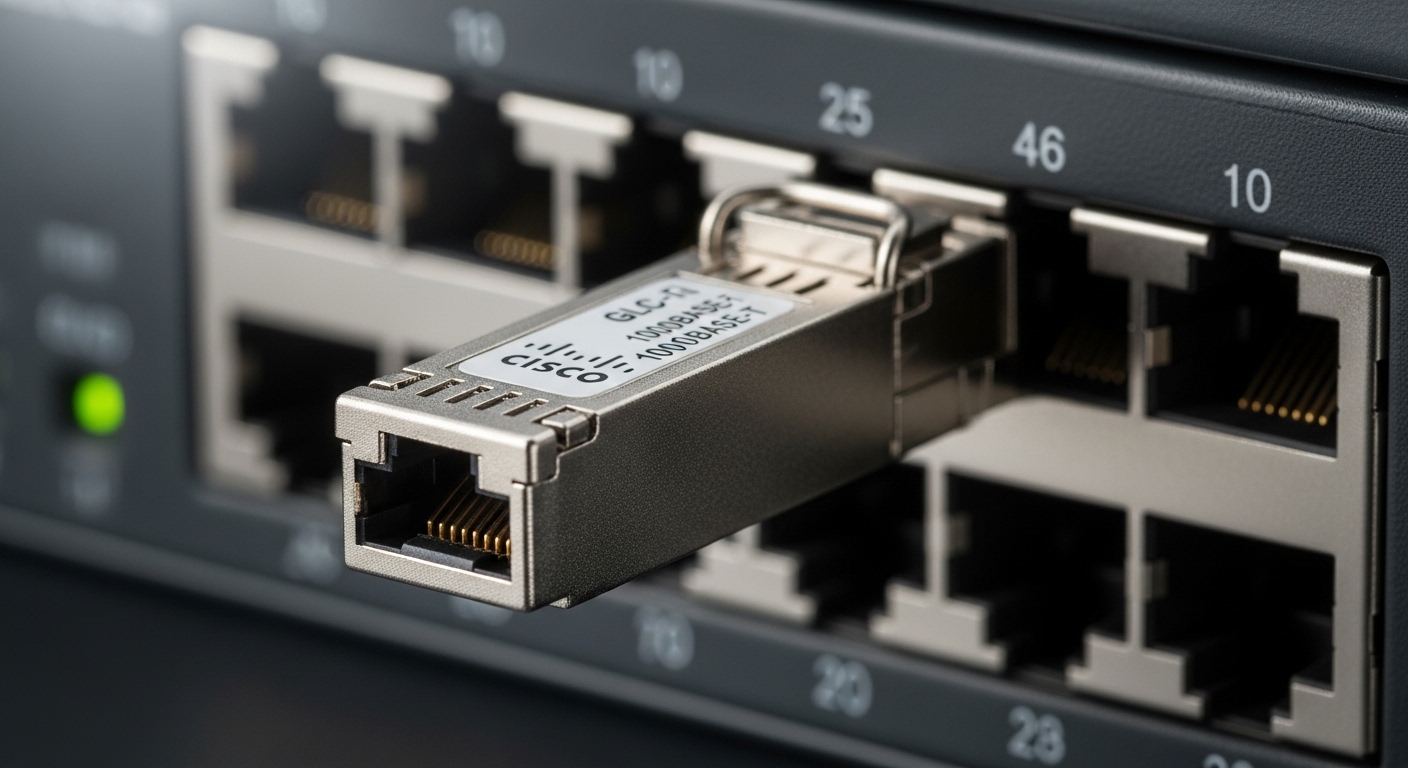
In optics, “OEM quality” is less about marketing and more about measurable manufacturing consistency across lots: optical output power, extinction ratio, receiver sensitivity, and how tightly the module stays within temperature and aging limits. For an II-VI fiber module, OEM-grade expectations usually show up as stable laser characteristics, consistent eye-diagram performance, and predictable behavior when the host switch warms up the cage. Vendors also differ in how faithfully they implement Digital Optical Monitoring (DOM) over I2C/SFF specifications, which affects how quickly you can detect drift or failing components.
IEEE 802.3 defines the Ethernet physical-layer requirements (for example, 10GBASE-SR, 25GBASE-SR, 40GBASE-SR4), but it does not guarantee equal manufacturing quality across brands. The practical differentiator is whether the vendor consistently meets the standard’s receiver/transmitter budgets over temperature and time, and whether DOM values correlate with actual optical performance. For authority on optical Ethernet behavior and standards, see [Source: IEEE 802.3]. For transceiver mechanical and electrical interfaces, see [Source: SFF Committee].
Finisar vs II-VI vs Lumentum: spec and interoperability comparison
To compare vendors fairly, start with the same form factor, data rate, wavelength, and reach class, then examine power, connector type, and temperature range. Most real deployments use SR optics (multimode) in data centers and LR optics (single-mode) for longer runs, but the decision process is similar: you want consistent optical budgets and predictable DOM behavior. Below is an engineering-style comparison you can use as a baseline when evaluating an II-VI fiber module versus Finisar and Lumentum.
| Parameter | II-VI fiber module (example class) | Finisar transceiver (example class) | Lumentum transceiver (example class) |
|---|---|---|---|
| Typical data rate | 10G / 25G / 40G / 100G families | 10G / 25G / 40G / 100G families | 10G / 25G / 40G / 100G families |
| Wavelength / optics type | 850 nm SR (MMF) and 1310/1550 nm LR/ER (SMF) | 850 nm SR and 1310/1550 nm LR/ER | 850 nm SR and 1310/1550 nm LR/ER |
| Reach class | SR: 300 m to 400 m on OM3; depends on speed | SR: similar reach classes by datasheet | SR: similar reach classes by datasheet |
| Connector | LC (common for SFP+/QSFP) | LC (common) | LC (common) |
| Power consumption | Class-dependent; verify against host budget | Class-dependent; verify against host budget | Class-dependent; verify against host budget |
| Temperature range | Commercial or extended; confirm per SKU | Commercial or extended; confirm per SKU | Commercial or extended; confirm per SKU |
| DOM support | Commonly supports vendor-specific thresholds | Commonly supports DOM with standardized alarms | Commonly supports DOM with standardized alarms |
| Quality signals to request | Lot traceability, burn-in data, calibrated optical output | Lot traceability, burn-in data, calibrated optical output | Lot traceability, burn-in data, calibrated optical output |
Because each company sells many SKUs, you should validate with exact part numbers rather than assuming “brand = performance.” For example, you may encounter Finisar models such as Cisco-branded or Finisar-labeled SFP-10G-SR equivalents (Cisco often lists compatible optics), while Lumentum and II-VI also supply OEM optics used by multiple switch vendors. For concrete model references, consult vendor datasheets and host vendor optics compatibility lists, such as [Source: Finisar/Fiber Optic vendor datasheets] and [Source: Lumentum transceiver datasheets] and [Source: II-VI optical module datasheets].
Pro Tip: During acceptance testing, do not rely only on “link up.” For SR modules, capture DOM values (Tx power, Rx power, temperature) and correlate them with optical power readings from a handheld meter after warm-up. Many “brand differences” in the field are actually DOM calibration differences or thermal settling time, not raw optical spec compliance.
Deployment reality: where differences show up after 6 to 18 months
In a 3-tier data center leaf-spine topology, a typical pattern is 48-port 10G ToR switches feeding aggregation and core with 10G uplinks. Imagine 12 racks with 48 servers each using 10GBASE-SR to a ToR, while uplinks use 10GBASE-SR across short MMF runs. If you deploy 300 to 500 transceivers over a quarter and keep optics in place for 12 months, the failure modes that matter are thermal cycling, dust contamination, and aging-induced optical power drift. Engineers often notice that some modules trigger DOM alarms earlier, while others maintain margin longer under the same cage airflow profile.
Operationally, you might standardize on 850 nm SR optics for OM4 links up to 100 m, with patching that includes LC connectors and standardized cleaning procedures. After 6 to 18 months, you can compare average port error counters and DOM trends across brands: the “OEM-quality” advantage often shows up as fewer marginal links and fewer cases where a replacement module is required because the original module’s Tx or Rx power drifted outside the host’s thresholds. This is exactly the kind of behavior procurement teams should evaluate with a pilot batch rather than purchasing thousands immediately.
For standards grounding, the physical-layer behavior and link requirements align with IEEE 802.3 transceiver specifications, while the electrical interface and DOM handling depend on SFF transceiver interface conventions. See [Source: IEEE 802.3] and [Source: SFF Committee transceiver interface documents].
How to choose: a decision checklist for II-VI fiber module sourcing
Use this ordered checklist to avoid expensive compatibility surprises and to reduce the risk of “it works in the lab but not in the rack.” Each item is something field teams can verify with measurements or vendor documentation.
- Distance and fiber plant type: Confirm MMF grade (OM3 vs OM4) or SMF type and the actual link loss budget including patch panels and connectors.
- Data rate and Ethernet PHY class: Match the transceiver to the exact IEEE 802.3 mode used by the switch (for example, 10GBASE-SR vs 25GBASE-SR).
- Host switch compatibility: Check the optics compatibility list for your switch model and firmware revision. Some platforms are strict about DOM threshold behavior.
- DOM and alarm thresholds: Request whether the module supports standardized DOM registers and whether thresholds match common host monitoring expectations.
- Operating temperature and airflow: Validate commercial vs extended temperature rating and ensure cage airflow meets the vendor’s guidance.
- Vendor lock-in risk and sourcing stability: Consider whether you can swap vendors without changing operational procedures, spares strategy, or monitoring dashboards.
- Lot traceability and burn-in evidence: Ask for lot-level test reports and burn-in duration where available.
Practical pilot plan (what to do before scaling)
For a new optics brand or a new II-VI fiber module SKU, run a pilot in one row first. Put at least 20 to 30 modules across representative switch ports and different airflow conditions, then monitor DOM trends and interface counters for 30 to 60 days. If you have a BER/PCS monitoring workflow, compare error counters and link renegotiation events against baseline modules from your current vendor.
Common mistakes and troubleshooting tips when swapping brands
Even when three brands meet the same headline spec, the field can still fail due to process issues. Below are concrete mistakes engineers commonly make, with root causes and fixes.
-
Mistake 1: Assuming “same part number family” means identical optics profile
Root cause: Different sub-SKUs can exist under similar naming, especially with DOM threshold variants.
Solution: Match the exact manufacturer part number and confirm it appears on the host switch compatibility list for your firmware. Validate DOM alarm registers after insertion. -
Mistake 2: Skipping fiber cleaning and assuming brand quality compensates
Root cause: Contamination increases insertion loss and can push receivers near sensitivity limits.
Solution: Use approved LC cleaning tools, inspect with a fiber microscope, then remeasure optical power budget. Clean both ends before declaring an optics issue. -
Mistake 3: Ignoring thermal settling and airflow differences
Root cause: Modules can take time to reach stable laser temperature, causing transient DOM readings and occasional link hiccups during warm-up.
Solution: After swapping, allow a warm-up period, then compare DOM temperature and Tx/Rx power trend lines. Ensure the cage airflow is consistent with the vendor’s recommended operating conditions. -
Mistake 4: Misinterpreting DOM values as absolute optical truth
Root cause: DOM calibration can differ and thresholds may be host-specific.
Solution: Cross-check DOM readings with an optical power meter for a few known-good links. Use DOM trends over time rather than single-point values.
Cost and ROI: what you should budget for OEM optics
Pricing varies heavily by data rate and reach, but you can still plan realistically. In many markets, a 10G SR SFP+ class module often lands in the range of $30 to $120 depending on vendor, temperature grade, and volume purchasing. Higher-speed modules like 25G and 100G typically cost more, and extended temperature or high-reliability options can push totals upward. The ROI comes from reduced downtime and lower replacement frequency, not just purchase price.
For total cost of ownership, include labor for insertion checks, cleaning, and acceptance testing. Also account for “hidden costs” like monitoring dashboard updates if DOM interpretation differs across optics types. OEM-grade modules from established suppliers can reduce failed-link incidents, but you should still expect some variance and plan spares accordingly. For OEM vs third-party risk, consult vendor warranty terms and host compatibility guidance, and do a small pilot before broad rollout.
As a purchasing rule of thumb: if the price gap is small, prioritize compatibility and traceability. If the gap is large, validate with measurable pilot outcomes (DOM trend stability, error counter stability, and warm-up behavior) rather than assuming equivalent performance.
FAQ
Q1: What exactly is an II-VI fiber module?
An II-VI fiber module is an optical transceiver product manufactured and tested by the II-VI supply chain for a specific form factor and Ethernet PHY mode. The key is to match the module SKU to the host’s optics compatibility list and the exact wavelength and reach requirements.
Q2: Are Finisar and Lumentum always better than II-VI?
Not automatically. Field outcomes depend on the exact SKU, DOM behavior, temperature rating, and how the host firmware reacts to alarm thresholds. A controlled pilot with DOM and error-counter monitoring is the most reliable way to compare.
Q3: How do I verify compatibility beyond “it fits”?
Check the host vendor’s optics compatibility list for your switch model and firmware version, then confirm DOM support and alarm register behavior. After insertion, validate link stability and compare DOM readings with optical meter measurements on a few representative ports.
Q4: What troubleshooting steps should I take if links flap after swapping brands?
First clean and inspect connectors, then verify fiber loss budget and ensure you are within the specified reach for your speed and fiber grade. Next, check thermal airflow and allow warm-up time before concluding the optics are defective; finally, review DOM alarm events and correlate them with error counter spikes.
Q5: Should I standardize on one brand for all racks?
Standardization simplifies monitoring and spares management, but it can increase lock-in risk. A balanced approach is to standardize within a site using a small approved set of SKUs, then keep a pilot-and-acceptance process for any new brand.
Q6: What ROI metrics matter most for optics purchases?
Track link stability events, time-to-recover after failures, and replacement rates over time. Also measure whether DOM trends predict issues earlier, because that can reduce mean time to repair and prevent outages.
If you are evaluating an II-VI fiber module (or comparing it to Finisar and Lumentum), the fastest path to confidence is a spec-matched pilot with DOM and error-counter validation. Next, review how-to-validate-optics-dom-trends to set up a repeatable acceptance checklist for your environment.
Author bio: I am a field-minded network engineer who has deployed and validated high-density Ethernet optics in production data centers. I write with an operator’s focus on measurements, compatibility constraints, and failure-mode thinking.
Update date: 2026-04-29
