
When an ISP access network is being refreshed, the transceiver decision is rarely just about “which standard is faster.” Engineers must align optics, provisioning, and environmental reliability so the access layer stays stable through temperature swings, fiber aging, and field maintenance. This article helps network planners and field reliability teams compare GPON vs EPON SFP for deployment choices, including practical compatibility checks, test expectations, and troubleshooting patterns.
Why the GPON vs EPON SFP choice matters in real ISP access
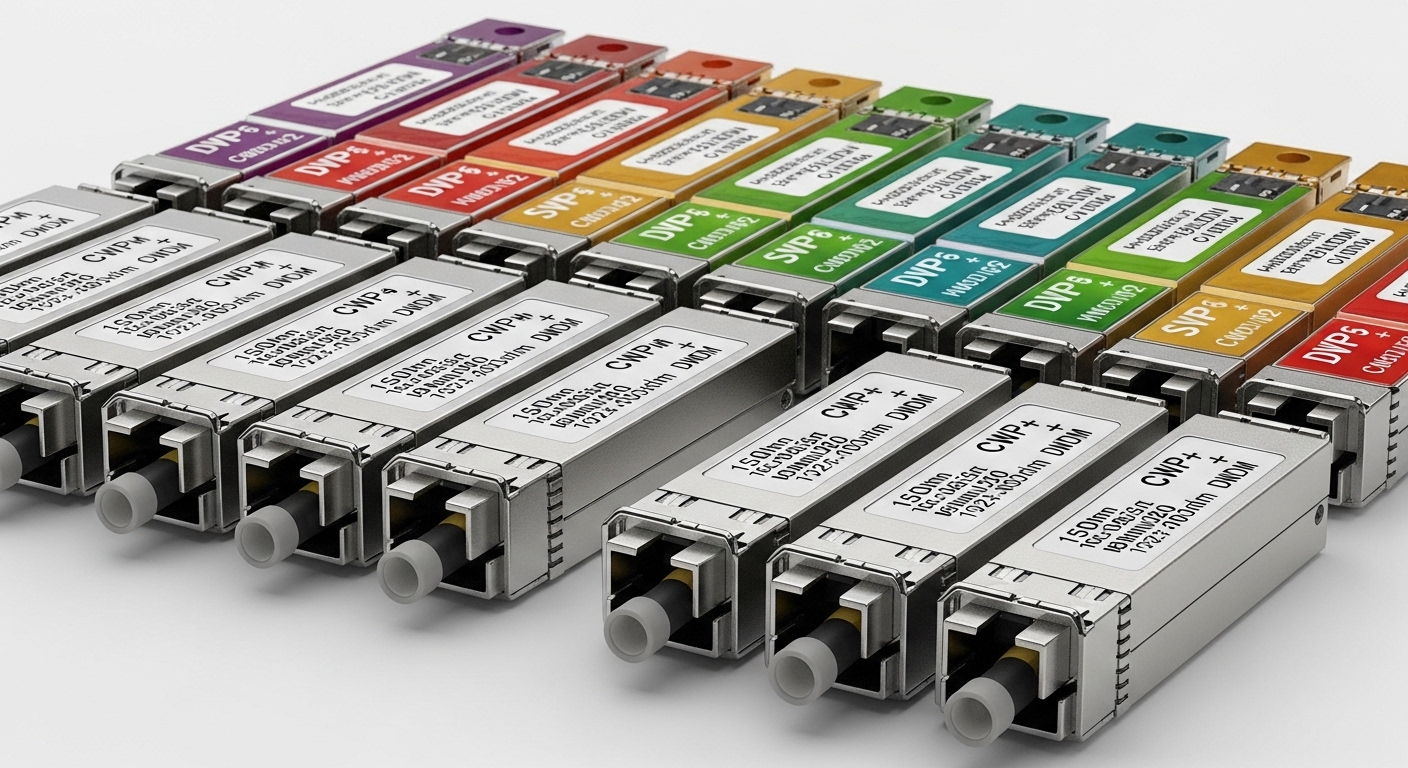
In an ISP deployment, the SFP decision ties directly to how the OLT communicates with ONUs, how bandwidth is scheduled, and how the plant reacts to operational stress. While both GPON and EPON are common in access networks, their framing, timing behavior, and OAM features differ, which can affect reach planning and how quickly faults are detected. From a reliability standpoint, you also need to consider optics power budgets, connector cleanliness, and the transceiver’s operating temperature range because access cabinets often see wider swings than the data center.
Most field issues I see are not “bad transceivers” in isolation; they are incompatibilities between optics class and plant assumptions, or installation problems that only become visible under higher utilization. For example, a marginal optical budget that passes in the lab can fail intermittently in the field when splice loss rises due to micro-bending during cabinet closure. A reliability-first approach means you validate both the optical link budget and the management and provisioning workflow for the standard you choose.
GPON vs EPON SFP basics: what changes at the optics and protocol layers
At a high level, both GPON and EPON are used for fiber-to-the-home and fiber-to-the-premises access. The key difference is that GPON (commonly ITU-T G.984) uses a different framing and overhead structure than EPON (commonly IEEE 802.3ah). Those differences influence how bandwidth is allocated, how upstream transmission is timed, and how operational messages are handled.
For SFP modules, optics are typically similar in wavelength and physical form factor, but the electronics and signal processing are not guaranteed to be interchangeable. In practice, you should treat the transceiver as tied to the OLT vendor and the PON standard, not just to “10 km reach” or “1310/1490 nm” marketing claims. Always verify the OLT’s optics compatibility list and the transceiver’s DOM behavior (Digital Optical Monitoring) so you can monitor bias current and received power during faults.
Typical wavelength, reach, and power budget expectations
Most PON SFPs in the field are designed around downstream and upstream wavelengths that minimize fiber attenuation. Common implementations use downstream at 1490 nm and upstream at 1310 nm, with a typical passive split ratio such as 1:16 or 1:32. Your achievable reach depends on total loss including fiber attenuation, split loss, and connector/splice contributions, plus aging margin.
| Key Spec | GPON SFP (typical) | EPON SFP (typical) |
|---|---|---|
| Primary standard | ITU-T G.984 family | IEEE 802.3ah (EPON) |
| Wavelengths | Downstream 1490 nm; Upstream 1310 nm | Downstream 1490 nm; Upstream 1310 nm |
| Nominal data rate | 2.5 Gbps downstream / 1.25 Gbps upstream | 1.25 Gbps downstream / 1.25 Gbps upstream |
| Connector interface | LC (common) or MPO depending on platform | LC (common) or MPO depending on platform |
| Optical monitoring | DOM supported in many models (vendor-dependent) | DOM supported in many models (vendor-dependent) |
| Operating temperature | Often industrial range; verify exact module grade | Often industrial range; verify exact module grade |
| Compatibility risk | High if OLT expects GPON-specific optics behavior | High if OLT expects EPON-specific optics behavior |
Note: exact reach and optical budget depend on the module class and OLT implementation. Always use the vendor datasheet and the OLT optics compatibility guidance. For protocol behavior, rely on the standards references such as IEEE 802.3ah and ITU-T G.984.
Optics and module selection for ISP OLT compatibility
In the field, the biggest selection driver is not theoretical capability; it is whether the module will successfully register with the specific OLT and sustain stable links under real power and temperature. Many OLTs enforce strict requirements for PON type, line coding behavior, and DOM thresholds. Even when wavelengths and reach match, a transceiver that is “compatible on paper” can fail to come up if the OLT expects GPON-specific framing or EPON-specific initialization.
Decision checklist engineers actually use
- Distance and split ratio: Confirm maximum plant loss for your target split (for example, fiber attenuation plus split loss for 1:32) and ensure the module’s optical budget supports it with aging margin.
- OLT and optics compatibility: Use the OLT vendor’s supported optics list. If you are using third-party modules, verify the exact part number is validated for your OLT model.
- DOM support and alert thresholds: Confirm whether the OLT reads DOM and what alarms trigger. This is crucial for proactive maintenance.
- Operating temperature and enclosure conditions: Match module temperature grade to cabinet realities. Outdoor enclosures can exceed indoor expectations during summer sun exposure.
- Power budget margin: Ensure transmit power and receiver sensitivity align with the expected worst-case loss (including connectors, splices, and patch cords).
- Vendor lock-in risk: Evaluate availability, warranty terms, and return process for spares. A lower purchase price can become expensive if replacements are delayed.
Examples of commonly referenced module families
Field teams often standardize on specific transceiver families to reduce variance. For example, some deployments use widely sold 10G PON optics such as Cisco-compatible GPON/EPON SFP models and third-party equivalents. When selecting, still verify the exact OLT model and the module part number. As an illustration of how specific vendor optics lists can be, Cisco transceiver part numbers and Finisar or FS.com offerings often require careful mapping to the PON standard and OLT generation. If you are comparing options, check vendor datasheets for part numbers like Cisco SFP-10G-SR only as an example of how strict compatibility can be in general optics ecosystems; for true PON SFPs, use PON-specific product datasheets from the transceiver vendor and confirm GPON or EPON designation. (Do not assume a generic “10G SFP” label implies PON support.)
Pro Tip: In many access networks, the first sign of a problematic PON transceiver is not a hard link failure. Instead, you see drifting DOM readings (bias current rising or received power slowly trending down) before alarms escalate. Set acceptance thresholds during commissioning and re-check them after any cabinet work that touches fiber routing or patch cords.
Real-world deployment scenario: GPON vs EPON in a leaf-spine access refresh
Consider a regional ISP refreshing an access layer in a 3-tier architecture with a leaf-spine core and multiple aggregation sites. In one rollout, the team replaced aging OLT optics in 12 street-side cabinets serving about 8,000 subscribers. Each cabinet used 1:32 split ratios, with an average feeder fiber length of 12 km and typical patching loss of 0.5 dB per end-to-end path (connectors and splices included). During acceptance testing, they validated link budgets under worst-case loss and then monitored DOM for 30 days.
When they compared GPON vs EPON SFP for the same OLT platform, the deciding factor was not just that both were “PON SFPs.” The GPON-oriented modules registered reliably and produced consistent DOM telemetry during hot and cold cabinet cycles, while the EPON-oriented modules either failed initial ranging or produced unstable upstream behavior under higher utilization. The field lesson was clear: standard mismatch or borderline optics behavior can manifest as intermittent faults that look like traffic issues, but root cause sits in transceiver initialization and timing expectations.
Common mistakes and troubleshooting tips for GPON vs EPON SFP
Below are failure modes I have seen repeatedly in ISP environments. Each includes a root cause and a practical fix. Treat these as a starting point for a structured diagnostic process aligned with ISO 9001 style corrective action thinking: define the problem, identify causes, implement containment, and verify effectiveness.
Module comes up intermittently after a cabinet closure
Root cause: Micro-bending or fiber stress increases loss after re-lacing or tightening fiber management hardware. A transceiver that is near the edge of optical budget can pass in the lab but fail after mechanical stress. Solution: Re-clean and re-seat connectors, verify splice loss with OTDR on the relevant fiber range, and confirm the link budget includes an installation margin. If DOM shows received power trending downward, schedule proactive replacement before hard failures.
“Looks compatible” transceiver fails to register with the OLT
Root cause: The SFP is not truly aligned to the expected PON standard behavior (GPON vs EPON) or the OLT enforces stricter initialization. Even with the same wavelengths, the protocol and optics control logic can differ. Solution: Use the OLT vendor optics compatibility list. If deploying third-party modules, validate the exact part numbers with your OLT model and firmware. During commissioning, capture logs from OLT and ONU ranging events.
DOM alarms trigger but the link appears “mostly up”
Root cause: DOM thresholds may not match your operational baseline, or a cleaning issue causes higher loss that pushes the receiver near sensitivity limits. In some cases, aging increases transmit bias current. Solution: Establish a baseline during stable operation, then define alarm thresholds that reflect your plant. Re-check connector cleanliness using approved fiber cleaning tools; replace patch cords with verified low-loss parts if DOM indicates persistent drift.
Temperature-related instability in outdoor enclosures
Root cause: Using modules with insufficient temperature grade for the enclosure profile. Passive cooling and sun exposure can drive optics behavior outside assumed ranges, increasing error rates. Solution: Confirm module temperature rating against worst-case enclosure conditions. Add shielding or airflow where feasible, and validate stability by running traffic profiles while logging DOM and error counters.
Cost and ROI: choosing between GPON and EPON optics without surprises
Pricing varies widely by vendor, lead time, and whether you buy OEM versus third-party. In many markets, a PON SFP can cost roughly in the range of $40 to $120 per module for third-party options, with OEM modules sometimes higher depending on platform and warranty terms. The real ROI is often determined by failure rates, spares logistics, and downtime cost rather than purchase price alone.
From a reliability perspective, consider total cost of ownership: module unit price, warranty handling, shipping time for replacements, and engineering time spent troubleshooting intermittent faults. If a GPON vs EPON selection reduces registration failures and stabilizes DOM behavior, the savings show up in fewer truck rolls and faster restoration. Also consider power: while SFP power differences are usually modest, stable operation reduces retransmissions and avoids higher maintenance overhead.
FAQ: GPON vs EPON SFP buying and deployment questions
Will GPON vs EPON SFP modules work interchangeably on the same OLT?
No. Even if the wavelengths and form factor are similar, the OLT expects standard-specific initialization and framing behavior. Always confirm the exact PON type is supported on your OLT model and firmware. Use the optics compatibility list and validate part numbers during commissioning.
How do I confirm reach and power budget before ordering?
Start with your worst-case plant loss: fiber attenuation, split ratio loss, connector and splice losses, and any patch cord contributions. Then compare against the transceiver’s specified transmit power and receiver sensitivity, including an aging margin. If you can, verify with OTDR and in-service optical power measurements after installation.
What DOM readings should I monitor for reliability?
Typically you track received optical power, transmit bias current, transmit power, and temperature. The exact DOM fields and units depend on the module and OLT integration. Establish baseline values during stable operation, then use trend-based thresholds rather than only absolute alarms.
Why do EPON optics sometimes show upstream instability in high utilization?
Upstream behavior depends on timing and ranging processes that are standard-specific. If the transceiver is borderline for your plant loss or if it is not truly aligned to EPON expectations, ranging and scheduling can become unstable under load. Validate with OLT logs, confirm optical budget margin, and ensure correct PON mode configuration.
Are third-party SFP modules safe for ISP deployments?
They can be, but only if validated for your exact OLT model, firmware version, and PON standard. OEM modules often have more predictable integration, while third-party modules require stricter acceptance testing. Focus on verified part numbers, warranty terms, and a fast return path.
What is the fastest way to troubleshoot a “link up but customers are unhappy” issue?
First check optical power levels and DOM trends, then verify connector cleanliness and fiber routing stress. Next review OLT counters and ONU ranging events to identify silent impairment. Finally, reproduce with a controlled subset of ONUs to isolate whether the issue correlates with a specific cabinet, splitter, or transceiver batch.
If you want a dependable access layer, choose GPON vs EPON SFP based on verified OLT compatibility, a realistic link budget with installation margin, and temperature-aware reliability testing. Next, review fiber-optic-transceiver-compatibility-checklist|a fiber optic transceiver compatibility checklist to standardize acceptance tests across sites.
Author bio: I am a field reliability engineer who builds access-layer test plans, including optical budget validation and DOM trend monitoring, for ISP deployments. I focus on ISO 9001 style corrective actions, environmental stress screening, and practical MTBF improvements grounded in vendor datasheets and standards.
