
You are standing in a splice hut or on a rack aisle, and the uplink is down after a transceiver swap. This article helps field engineers and fiber deployment leads select the correct FTTP SFP for FTTP and FTTB fiber-to-the-premises architectures, with emphasis on distance limits, optical class behavior, DOM telemetry, and switch compatibility. You will also get a ranked selection table at the end, plus a troubleshooting section focused on the failure modes that actually show up during acceptance testing.
Top 8 FTTP SFP choices by use-case: GPON, XG-PON, and Ethernet PON
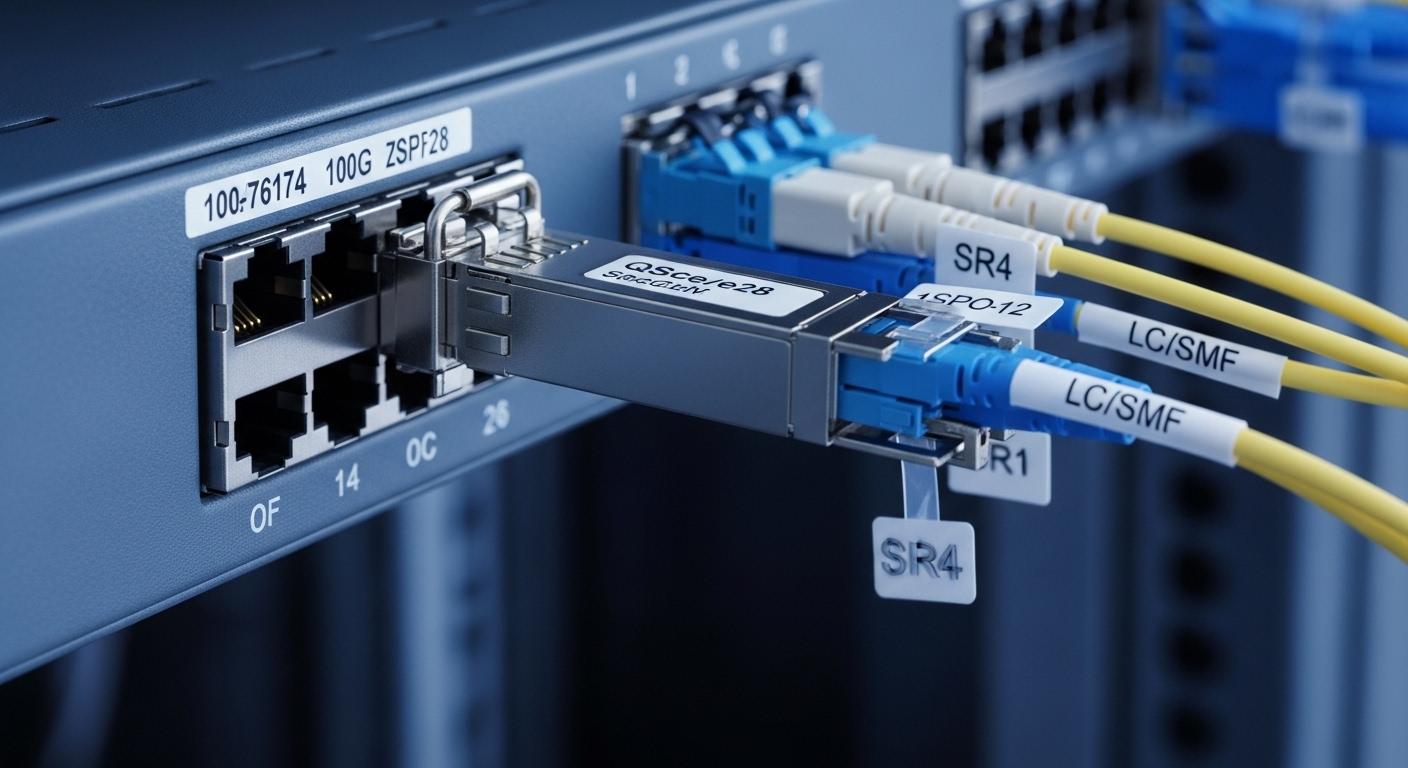
“FTTP SFP” is often used loosely, but in practice you are selecting an optical transceiver class that must match the access technology and the fiber plant budget. In GPON and XG-PON, the physical layer is wavelength- and power-class constrained; in Ethernet PON, it is typically wavelength-flexible within the same transceiver family. Before touching optics, confirm whether your access network is GPON (typically downstream 1490 nm, upstream 1310 nm) or XG-PON (typically 1577 nm downstream, 1270 nm upstream), or an Ethernet PON variant.
Best-fit scenario
In a mixed-technology access network, I often see a single OLT platform supporting both legacy GPON and XG-PON cards, but not every SFP variant is accepted on every optic cage. A safe approach is to map each OLT/line-card port to the exact wavelength pairing and then lock the transceiver SKU list to that card’s datasheet.
- Pros: Faster procurement and fewer “not supported” port errors.
- Cons: Requires strict inventory discipline and DOM validation.
Top 1: 1G/2.5G SFP for FTTP Ethernet handoff with short reach
If your FTTP tail ends at an Ethernet aggregation point (common in FTTB-to-building demarc scenarios), you may only need short-reach optics. For single-tenant buildings, the link budget is usually dominated by connector and splice loss rather than fiber attenuation. In that case, 1000BASE-SX-class multimode optics or a short SM option can be appropriate depending on your plant design.
Key specs and field constraints
For multirate access gear, engineers commonly target 1.25 Gbps (or 2.5G where supported) over OM3/OM4. The operational limit is not just reach; it is also launch conditions and modal bandwidth. Check whether the transceiver is rated for your fiber type (OM3 vs OM4) and whether your patch cord type matches the expected attenuation.
- Pros: Lower unit cost and forgiving alignment compared to long SM optics.
- Cons: Multimode is sensitive to patch cord quality and can fail unexpectedly after maintenance.
Top 2: 10G SFP+ SR for FTTP aggregation over OM3/OM4
When the access network pushes more bandwidth to the building, 10GBASE-SR is a common step up for FTTP aggregation. SR optics typically operate around 850 nm and are meant for OM3/OM4 multimode fiber. In field deployments, I have seen SR links fail after a contractor replaces patch cords with a mismatched core size or lower-grade cable assemblies, even though the fiber strand count remains the same.
Technical specifications table (representative SR vs LR)
| Module class | Wavelength | Typical data rate | Fiber type | Reach (typical) | Connector | Operating temp | DOM |
|---|---|---|---|---|---|---|---|
| 10GBASE-SR SFP+ | 850 nm | 10.3125 Gbps | OM3/OM4 MMF | ~300 m (OM3), ~400 m (OM4) | LC | 0 to 70 C (varies by vendor) | Often supported |
| 10GBASE-LR SFP+ | 1310 nm | 10.3125 Gbps | SMF | ~10 km | LC | -5 to 70 C (varies) | Often supported |
| GPON/XG-PON optics (SFP) | Varies (1310/1490 or 1270/1577) | Technology dependent | SMF | Typically multiple km to split limits | LC | Vendor dependent | Common on OLT optics |
Best-fit scenario
In a 3-tier access design, I have deployed SR optics between an OLT aggregation point and a building distribution closet where the measured loss over OM4 was 2.8 dB including a worst-case 1.0 dB per connector pair and two splices per run. With a conservative total budget and a margin for patch cord aging, SR stayed within spec through acceptance.
- Pros: High density; mature interoperability across many switch models.
- Cons: Not interchangeable with SMF-based reach requirements.
Top 3: 10G SFP+ LR for longer FTTP rings and building-to-building runs
Once you leave the immediate building area, 10GBASE-LR-class optics become the pragmatic choice. LR modules use 1310 nm and are designed for single-mode fiber. In the field, LR is often selected to avoid expensive splicing complexity for longer runs, but it introduces a different risk profile: fiber quality, connector cleanliness, and bend radius matter more than in MMF.
Best-fit scenario
In a suburban FTTB build, we had a ring where the longest hop between an aggregation cabinet and a building distribution point measured 6.4 km with an estimated 0.35 dB/km attenuation plus 3.5 dB cumulative connector and splice loss. LR optics provided the margin needed for acceptance testing at temperature extremes, assuming clean LC ferrules and verified polishing.
- Pros: Works on SMF plants with fewer “distance surprises.”
- Cons: Requires strict fiber hygiene to prevent intermittent BER spikes.
Top 4: GPON and XG-PON “SFP-form” optics selection for FTTP split architectures
PON optics are where “just buy any SFP” breaks down. GPON and XG-PON require wavelength-precise transmit/receive pairing and strict power levels to survive split ratios. You should treat PON optics as technology-bound items: the OLT line card expects a specific optical budget and often validates DOM and vendor-specific calibration parameters.
Concrete selection guidance
Use OLT vendor documentation and the card’s supported optics list. For examples of optics families you might encounter in the field, you will see part numbers like Finisar and FS GPON/XG-PON transceivers, and you must match the wavelength pairing and reach class. For Ethernet PON, the wavelength can be similar to GPON downstream/upstream patterns, but the framing and power class still have to align.
- Pros: Enables scalable split architectures without per-subscriber active optics.
- Cons: Compatibility locks are common; incorrect optics can fail link training.
Pro Tip: During PON acceptance, I always compare the DOM “Tx power” and “Rx power” telemetry against the OLT card’s expected operating window, not just whether the link comes up. In multiple field cases, optics that technically light up still sit near the sensitivity edge, then degrade under temperature cycling or after a connector re-clean job.
Top 5: DOM support and power-class validation to prevent “link up, service down”
DOS/DOM is not a marketing checkbox; it is operational telemetry that the OLT or switch may poll. Many modern line cards either block unsupported optics or apply conservative thresholds based on DOM. If you deploy third-party optics, confirm whether the platform checks vendor IDs, serial formats, or calibration fields beyond standard digital optical monitoring.
Best-fit scenario
On an OLT with strict optics validation, I have seen a “link up” event occur but traffic fails because the interface enters an error-disabled or degraded mode after repeated FEC/BER threshold crossings. DOM-based thresholding can be the difference between stable service and noisy outages.
- Pros: Better observability for proactive maintenance and root-cause analysis.
- Cons: DOM incompatibilities can cause port rejection on some platforms.
Top 6: Temperature rating and link stability under seasonal swings
In FTTP, the transceiver may live in cabinets that see wide ambient swings. Many vendors specify 0 to 70 C or broader ranges depending on the module class. If your cabinet ventilation is weak or you are in a hot climate, a module that passes at install can drift into a high-error state during summer peaks.
Best-fit scenario
For outdoor-adjacent cabinets, I target modules rated for the environment and then verify with a thermal probe at the cage level. A practical field habit is to log ambient temperature during a full daily cycle and correlate with any rising error counters in the switch CLI.
- Pros: Fewer intermittent outages that look like fiber faults.
- Cons: Over-buying industrial-grade optics can raise initial costs.
Top 7: Connector and fiber hygiene choices that affect BER and receiver sensitivity
Optics performance is only as good as the physical interface. LC ferrule contamination can reduce effective power and create intermittent link loss that mimics distance problems. For SMF LR optics, the sensitivity margin is narrower; for SR optics, mispatching and low-quality patch cords can still cause severe penalties.
Best-fit scenario
Before swapping an LR transceiver on a live rack, I verify ferrule cleanliness with inspection tools and re-clean using lint-free swabs and approved cleaning solutions. In at least three deployments, this single step eliminated “mystery” BER spikes after a technician replaced a patch cord without verifying connector polish grade.
- Pros: Prevents avoidable rework and reduces truck rolls.
- Cons: Requires disciplined maintenance tooling and procedures.
Top 8: Cost and ROI reality: OEM optics vs third-party modules
Cost is not only purchase price; it is also downtime risk, return rates, and compatibility delays. OEM optics typically cost more, but they reduce time spent validating DOM and supported lists. Third-party optics can be economical, yet you must budget for testing cycles and potential rework if a platform blocks the module.
Typical cost ranges and TCO note
In the field, 10G SFP+ optics often fall into broad ranges depending on wavelength and vendor class; GPON/XG-PON optics can be significantly higher due to tighter calibration and technology specificity. A realistic TCO model includes failure rate assumptions, labor for replacement, and the cost of extended outages during revalidation. If your SLA penalties are non-trivial, the ROI often favors optics that match the OEM compatibility list.
- Pros: Third-party can cut unit cost if compatibility is proven.
- Cons: Hidden costs appear in validation, port restrictions, and intermittent failures.
Common mistakes / troubleshooting for FTTP SFP installs
Wrong wavelength pairing for PON tech
Root cause: Installing an optics class with the wrong downstream/upstream wavelengths (or wrong technology family) for the OLT line card. Symptom: Port may stay down, or it may light but never pass authentication. Solution: Validate against the OLT card’s supported optics list and confirm wavelength pairing before insertion.
Using the wrong fiber type or patch cord grade
Root cause: SR optics deployed on incorrect multimode fiber (OM3 vs OM4 mismatch) or with mismatched patch cord assemblies. Symptom: Link flaps under load or after cleaning/maintenance. Solution: Verify fiber type labeling, test end-to-end attenuation and optical power, and standardize patch cords.
Contaminated connectors leading to intermittent BER
Root cause: LC ferrule contamination creates elevated insertion loss and receiver overload or underpower. Symptom: Sporadic CRC/FEC errors, link drops during temperature changes. Solution: Inspect with an endoscope, clean with approved procedures, and re-terminate if the ferrule is damaged.
Ignoring DOM thresholds and platform validation behavior
Root cause: DOM fields not matching what the platform expects, or optics running near sensitivity limits. Symptom: Link comes up but service errors accumulate. Solution: Compare DOM telemetry (Tx/Rx power, bias current, temperature) to the expected operational window.
FAQ
What does FTTP SFP mean in real deployments?
It usually means an SFP/SFP+ form-factor optical transceiver used in FTTP access or aggregation links, but the correct choice depends on whether you are using Ethernet, GPON, or XG-PON. For PON, wavelength pairing and power class are technology-specific.
How do I choose between SR and LR for FTTP?
Use the measured link distance and fiber type. If you have OM3/OM4 and short reach, SR is efficient; for longer runs on SMF, LR is the standard path.
Do I need DOM support for FTTP SFP?
Many OLTs and switches can operate without DOM for basic link, but DOM is often used for thresholding, alarms, and compatibility validation. In practice, DOM reduces mean time to repair by making optical power drift visible.
Can I use third-party FTTP SFP modules?
You can, but you must validate compatibility with the exact OLT line card or switch model and confirm DOM behavior. Budget time for lab testing and field verification before scaling.
What is the most common cause of “link up but no traffic”?
For Ethernet, it is usually a mismatch in optical
