
Flex-Grid Transceiver Specs for Colorless ROADM Nodes
In a colorless directionless contentionless (CDC ROADM) design, the transceiver choice can make or break spectral efficiency, provisioning speed, and field serviceability. This article helps optical engineers and transport architects specify a flex-grid transceiver that aligns with ROADM requirements, including wavelength planning, optics performance, and operational constraints. It also provides a practical step-by-step implementation workflow you can run during lab validation and deployment readiness.
Prerequisites for CDC ROADM readiness
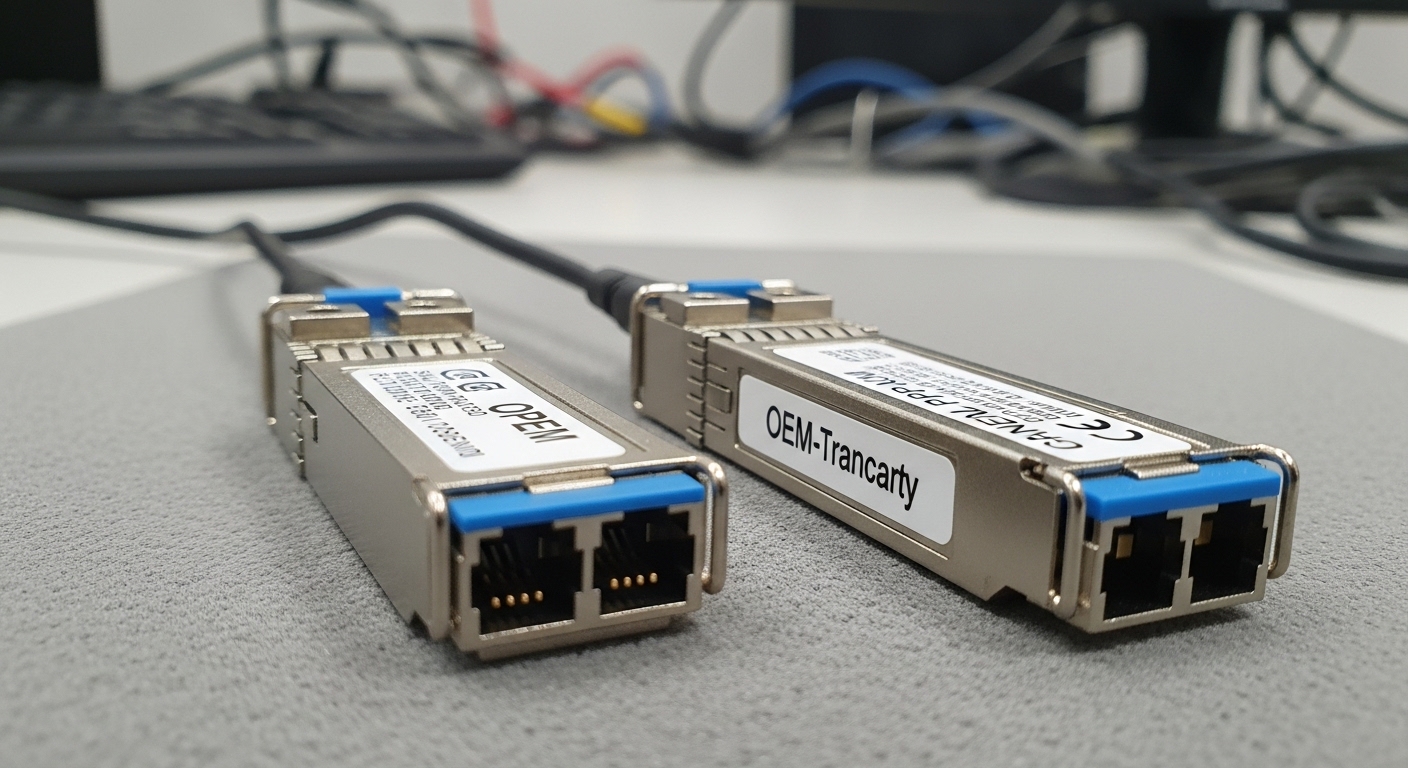
Before you select a flex-grid transceiver, confirm the ROADM architecture and the control-plane assumptions. CDC systems typically rely on a wavelength-granularity model (fixed grid or flex grid) and a management interface for inventory and diagnostics. From an operational standpoint, you need a repeatable method to verify optical performance across temperature and aging, not just a single bench measurement.
Prerequisite checklist:
- ROADM vendor model and software release (confirm flex-grid support, channel spacing, and supported transceiver families).
- Fiber plant details: span loss, dispersion profile, and expected OSNR or GSNR targets.
- Wavelength plan: center frequencies, slot widths, and guard bands for contentionless switching.
- Transceiver interface requirements: electrical lane rate, FEC mode, and control-plane mapping (vendor-specific).
- Management and compliance: DOM support, temperature reporting, and threshold behavior.
Expected outcome: you can translate the ROADM spectral plan into concrete transceiver parameters that procurement and lab teams can verify.
Step-by-step implementation: specify a flex-grid transceiver
Map ROADM flex-grid channel plan to transceiver parameters
Flex-grid ROADM nodes often define channels by slot width (for example, 12.5 GHz or 25 GHz grids) and require a transceiver that can tune or select wavelengths without violating spectral boundaries. Start by extracting the ROADM switching matrix constraints: supported slot widths, achievable tuning range, and whether the node expects center-frequency granularity that matches the transceiver’s internal laser grid. If the ROADM uses an ITU-T-aligned frequency raster, ensure the transceiver’s tuning accuracy and wavelength drift budget are compatible with the system’s guard band policy.
Expected outcome: a written mapping from “ROADM slot width and center frequency” to “transceiver tuning resolution, wavelength accuracy, and drift limits.”
Verify optical performance targets against ROADM OSNR needs
In CDC ROADM, a transceiver’s spectral purity and noise directly affect contentionless paths because traffic can be routed dynamically across shared optics. You should confirm parameters such as output power, side-mode suppression ratio (SMSR), relative intensity noise (RIN), phase noise, and spectral shape. Then validate whether the system’s OSNR/GSNR budget assumes a specific launch power range and whether the transceiver supports the required power leveling behavior.
Expected outcome: an OSNR/GSNR budget worksheet that includes transceiver output power tolerance and spectral penalties.
Confirm electrical interface and FEC alignment
Even when optics look correct, CDC ROADMs fail operationally when the electrical interface does not match the transceiver’s lane rate, modulation format, or FEC expectations. For example, if your ROADM expects a specific coherent format (common in modern flex-grid systems) you must verify the transceiver’s supported modulation modes and FEC type. Ensure the switch fabric and line cards can consume the transceiver’s framing and that any required baud rate is supported end-to-end.
Expected outcome: a compatibility matrix between ROADM line card settings and the flex-grid transceiver’s supported electrical/FEC modes.
Require DOM and threshold behavior for CDC operational control
Field operations depend on deterministic telemetry. Require digital optical monitoring (DOM) with wavelength, temperature, bias current, received power, and alarm thresholds that match your NOC tooling. In practice, you should test alarm trip points during controlled temperature sweeps and confirm whether the ROADM orchestration system reads DOM quickly enough to prevent stale inventory states during rapid route changes.
Expected outcome: confirmed DOM interoperability and stable alarm behavior during temperature cycling.
Validate thermal limits and power consumption for dense shelves
CDC ROADM shelves often run near the upper end of allowable airflow and power density. Select a flex-grid transceiver whose specified temperature range is compatible with your installed environment, and confirm the module’s internal power dissipation. If the transceiver includes active optics (common for coherent or advanced tunable designs), verify that it maintains performance over the worst-case ambient and airflow restrictions.
Expected outcome: a deployment-ready thermal envelope that matches the rack’s measured inlet temperature profile.
Deployment note: Many teams discover late that “bench temperature range” is not equal to “shelf inlet temperature plus self-heating.” Build a margin plan before you lock the BOM.
Key specifications to compare for flex-grid transceivers
Because flex-grid transceiver options vary widely by modulation, tuning mechanism, and optical design, comparisons must be anchored to system-relevant parameters. Use the table below as a starting template for what to capture during vendor side-by-side evaluation. For coherent and tunable designs, the exact values will come from the specific datasheet and the ROADM line card compatibility guide.
| Specification | What to verify | Why it matters in CDC ROADM |
|---|---|---|
| Center wavelength and tuning range | Supported tuning span and tuning resolution | Ensures channel placement fits slot plan and guard bands |
| Wavelength accuracy and drift | Accuracy at 25 C and drift over temperature | Prevents spectral overlap when routes change dynamically |
| Optical output power | Power range and leveling behavior | Impacts OSNR/GSNR and span budgeting |
| SMSR and spectral shape | Side-mode suppression and emission linewidth | Affects adjacent channel interference |
| Receiver sensitivity | Required OSNR for target BER/FER | Directly impacts contentionless path reach |
| Electrical interface | Lane rate, modulation format, FEC mode | Required for ROADM line card interoperability |
| DOM telemetry | Alarms, thresholds, update rate | Prevents NOC misclassification during fast switching |
| Operating temperature | Min/max ambient and margin for shelf inlet | Controls performance stability and failure risk |
| Optical connector/physical format | Pluggable form factor and optical interface | Ensures correct patching and service procedures |
Expected outcome: a vendor request-for-information (RFI) packet that forces measurable, ROADM-relevant answers.
Real-world deployment scenario: CDC ROADM in a regional hub
Consider a regional transport hub with a 3-stage leaf-spine switching fabric for client services, feeding a CDC ROADM shelf that provisions up to 96 wavelength channels per fiber. The network runs in a mixed environment where each coherent flex-grid channel is dynamically routed across add/drop sites. During acceptance testing, the field team verified shelf inlet temperatures of 38 C under peak load, with module self-heating adding roughly 5 C at the transceiver faceplate. In this scenario, selecting a flex-grid transceiver with insufficient temperature margin caused DOM alarms to oscillate near threshold, and the orchestration system temporarily marked channels as “degraded,” triggering automated re-provisioning.
Expected outcome: fewer false alarms, stable provisioning latency, and predictable spectral performance during high-change operations.
Selection criteria and decision checklist for field engineers
The following ordered checklist reflects what engineering teams actually weigh when selecting a flex-grid transceiver for a CDC ROADM node. It blends spectral requirements with operational realities like DOM integration and vendor support cadence.
- Distance and OSNR/GSNR budget: confirm required OSNR for your target BER/FER and whether the ROADM line card assumes a specific launch power.
- Flex-grid channel plan fit: validate tuning range, tuning resolution, and wavelength drift against slot width and guard bands.
- Switch compatibility: confirm the ROADM line card software release supports the transceiver’s modulation and FEC modes.
- DOM support and telemetry mapping: ensure alarms, thresholds, and telemetry fields match your NOC inventory and automation workflows.
- Operating temperature and airflow: compare datasheet operating limits to measured shelf inlet plus self-heating margin.
- Power consumption and thermal impact: check total module power and ensure the shelf’s thermal design tolerates peak conditions.
- Vendor lock-in risk: consider whether upgrades require only transceiver swaps or also line-card firmware changes.
- Service and warranty terms: confirm hot-swap behavior, RMA turnaround expectations, and compatibility notes for future revisions.
Expected outcome: a defensible selection decision that reduces integration risk during cutover.
Pro Tip: In CDC ROADM operations, the most disruptive failures are often “telemetry-correct, performance-wrong.” Validate DOM alarm thresholds and update rates under realistic temperature and optical power drift, because orchestration systems may react to alarms faster than they react to actual channel degradation.
Common mistakes and troubleshooting in flex-grid ROADM transceiver deployments
Even with correct datasheets, CDC ROADM systems can fail due to integration mismatches. Below are frequent failure modes, their likely root causes, and practical fixes.
Failure mode 1: Channel provisioning succeeds, but traffic intermittently fails
Root cause: modulation/FEC mismatch between transceiver and ROADM line card settings, sometimes triggered only after a route reconfiguration. Solution: confirm the ROADM line card configuration and the transceiver’s supported FEC mode match your system profile; run a controlled re-route test while capturing alarms and performance counters.
Failure mode 2: “Degraded” or “LOS-like” alarms appear during temperature swings
Root cause: DOM threshold settings or alarm scaling not aligned with shelf thermal behavior, leading to oscillation around warning levels. Solution: perform a temperature chamber test that replicates shelf inlet conditions; adjust thresholds or select a transceiver with tighter stability specs and verify alarm update timing.
Failure mode 3: Adjacent channel interference increases over time
Root cause: insufficient spectral purity margin (SMSR, linewidth, or spectral shape) relative to the ROADM guard band policy. Solution: re-check channel slot placement math, confirm tuning accuracy/drift budgets, and validate that the ROADM’s filter settings match the transceiver’s emission characteristics.
Failure mode 4: OSNR budget passes on the bench, but fails in the field
Root cause: real fiber plant loss, connector contamination, or incorrect launch power assumptions. Solution: clean and inspect fiber connectors with appropriate inspection tools; verify end-to-end optical power, re-measure span loss, and re-run the OSNR budget with measured values.
Expected outcome: faster fault isolation and fewer repeated truck rolls.
Cost and ROI considerations for flex-grid transceivers
Pricing varies by modulation type, tunability, and vendor support model, but for coherent flex-grid transceivers used in ROADM environments, typical street costs often fall in the broad range of several thousand to tens of thousands of currency units per module depending on features and volume. OEM modules may carry higher unit costs, yet can reduce integration effort and shorten acceptance cycles due to documented compatibility. Third-party modules can lower CapEx, but you must budget additional validation time, potential warranty disputes, and the risk of firmware compatibility constraints.
TCO lens: include field failure rates, RMA turnaround, and the engineering labor cost of requalification after software upgrades. In many CDC ROADM programs, the ROI comes less from unit price and more from predictable provisioning and reduced downtime during dynamic reconfiguration.
FAQ
What makes a flex-grid transceiver different from fixed-grid optics?
A flex-grid transceiver is designed to align with variable-frequency channel spacing and slot-width allocation rather than a rigid frequency raster. In CDC ROADM systems, that flexibility directly impacts spectral efficiency and how channels fit into guard bands during dynamic routing.
Do I need DOM support for CDC ROADM operations?
Yes, practically. DOM telemetry is used for inventory, alarm handling, and operational automation; without consistent telemetry mapping and thresholds, orchestration can misclassify channel health.
How do I validate wavelength drift and tuning accuracy before deployment?
Run lab validation with temperature cycling that matches your shelf inlet plus self-heating margin. Measure center frequency stability over time and compare against the ROADM’s guard-band and filter bandwidth assumptions.
Which specs usually cause the most integration failures?
Electrical interface compatibility (lane rate, modulation, and FEC), DOM alarm threshold behavior, and spectral purity margins are common culprits. These can pass initial bench checks but fail during route changes or temperature extremes.
Are third-party flex-grid transceivers viable in ROADM networks?
They can be, but only after documented compatibility testing with the specific ROADM line card software release. Plan for additional acceptance time and confirm warranty terms and DOM telemetry
