
5G midhaul links fail in the real world for predictable reasons: the wrong optical reach class, missing DOM support, marginal power draw, or a fiber plant that does not match the expected connector and polarity. This article helps network engineers and field technicians choose the right `midhaul transceiver` SFP for 5G backhaul and midhaul fiber transport. You will get practical selection checklists, a spec comparison table, and troubleshooting patterns that show up during acceptance testing.
Where SFP midhaul transceivers fit in 5G fiber transport
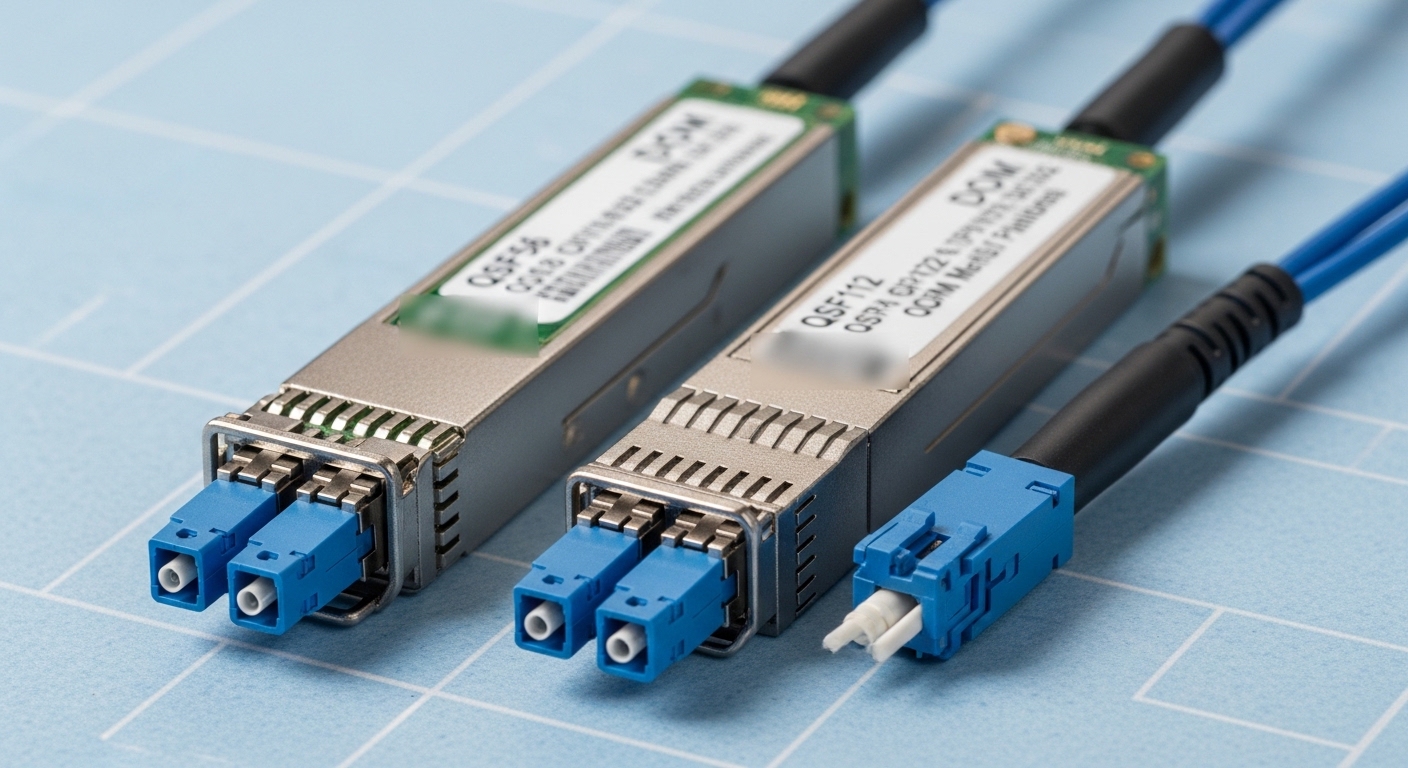
In many 5G transport designs, radios and baseband units terminate into an aggregation switch or microwave/transport gateway. The fiber segment that carries traffic between sites is often called midhaul, while the longer distance aggregation toward the core is labeled backhaul. SFP-based optics are common when you need 10G Ethernet or similar line rates on cost-controlled ports.
Practically, you will see two frequent SFP use patterns. First, short-to-medium reach links (for example, campus or metro segments) using 10G SR over multimode fiber. Second, longer links using 10G LR or 10G ER over single-mode fiber, depending on budget and attenuation targets. Your choice should be anchored to IEEE 802.3 interface expectations and the vendor datasheet’s electrical and thermal limits, not just marketing reach claims.
What “SFP requirements” usually means on 5G projects
When teams say “SFP requirements” for midhaul, they typically mean a bundle of acceptance criteria. Common items include: data rate (often 9.95–10.3125 Gbps for 10G Ethernet), optical wavelength, reach class, connector type (LC is most common), DOM availability, and operating temperature range matched to outdoor cabinets. If your site uses hardened enclosures, you also need to confirm the transceiver’s temperature and power consumption envelope.
Key specs to verify before you plug in a midhaul transceiver
To avoid “it links on the bench but not in the cabinet,” verify specs against the switch optics table and the fiber plant. For 5G midhaul, the fastest path is to confirm the switch supports the transceiver type and the transceiver supports the expected DOM and signaling behavior. Most modern transport switches use digital diagnostics via the SFP’s I2C/serial interface.
| Spec category | What to check | Typical values for 5G midhaul SFP optics | Why it matters |
|---|---|---|---|
| Data rate | 10G Ethernet compatibility | 10.3125 Gbps (10G line rate) | Prevents link flaps and FEC mismatch |
| Wavelength | Match fiber type and reach | 850 nm (SR) or 1310 nm (LR) | Determines attenuation and dispersion behavior |
| Reach class | Budgeted loss vs vendor reach | SR: commonly up to tens/hundreds of meters; LR/ER: kilometers-scale | Ensures margin after connectors and splices |
| Fiber type | MMF vs SMF | MMF (OM3/OM4) for SR; SMF for LR/ER | Prevents “low power” symptoms and receiver errors |
| Connector | Physical mating | LC duplex (common) | Avoids field rework and polarity confusion |
| DOM support | Vendor and switch DOM expectations | Temperature, bias, TX power, RX power | Enables alarms and acceptance reporting |
| Power | Budget vs switch port limits | Often ~1–2.5 W depending on class | Prevents thermal or PSU margin issues |
| Operating temperature | Indoor vs outdoor cabinet | Commercial often 0–70 C; extended often -20 to 85 C | Outdoor deployments need margin for solar load |
For grounding, use IEEE 802.3 for the Ethernet physical interface definitions and the SFP module form-factor requirements. For vendor-specific details, rely on the transceiver datasheet and the switch vendor’s optics compatibility list. External references you can audit include: [[EXT:https://standards.ieee.org/standard/802_3 IEEE 802.3]].
Midhaul transceiver selection: distance, fiber, and switch behavior
Engineers often start with “reach,” but for 5G midhaul you should treat reach as a consequence of a link budget. The real decision is whether the received optical power at the far end stays within the receiver sensitivity range across temperature, aging, and connector loss. If you do not budget for patch cords, splices, and cleaning quality, you will see intermittent link drops under load.
Decision checklist engineers use on acceptance day
- Distance and link budget: measure or estimate end-to-end loss (fiber attenuation + splices + patch cords + connectors). Compare to vendor “link budget” guidance.
- Fiber type and grade: confirm MMF grade (OM3/OM4) for SR, or SMF type for LR/ER. Verify the plant loss with an OTDR or certified test results.
- Switch compatibility: check the specific switch model’s SFP/SFP+ compatibility list. Some platforms enforce vendor-specific behavior.
- DOM support and alarms: confirm that the transceiver provides DOM readings and that the switch displays them. Validate expected thresholds for TX/RX power and temperature.
- Operating temperature range: match the transceiver class to the site environment (cabinet airflow, sun exposure, and heater usage). Confirm it exceeds worst-case ambient.
- Power and thermal constraints: ensure the transceiver’s typical and maximum power draw fits the port and switch thermal design.
- Vendor lock-in risk: evaluate OEM vs third-party transceivers. If your operations team depends on consistent DOM labeling and predictable behavior, plan for a controlled spares strategy.
Concrete example: 10G SR vs 10G LR in a metro midhaul ring
Imagine a metro aggregation ring connecting five cell sites. Each hop is about 350 m of OM4 cabling plus 6 splices and 2 patch cords. If the certified plant loss is 2.2 dB per 300 m plus patch/connector overhead totaling 1.0 dB, your total loss is roughly 3.6–4.0 dB. In that case, a 10G SR module class can be a cost-efficient midhaul transceiver choice, provided the switch supports it and the polarity is correct.
Now consider a longer hop of 6.5 km across SMF with 0.35 dB/km attenuation plus 1.5 dB for connectors and splices. Total loss is about 3.8 dB. A 10G LR option can work if the receiver sensitivity and budget margin remain within spec across temperature. If the project requires monitoring, select a module with DOM and confirm the switch reads it reliably.
Spec comparison: common 10G SFP options for midhaul fiber
Below is a practical comparison of widely used 10G SFP optic categories you will encounter in 5G midhaul fiber deployments. Exact reach and DOM behavior vary by vendor and module revision, so always validate against datasheets and the switch’s optics matrix.
| Module type (examples) | Wavelength | Fiber | Typical reach class | Connector | DOM | Use in 5G midhaul |
|---|---|---|---|---|---|---|
| 10G SR SFP | 850 nm | MMF (OM3/OM4) | Short to metro distances depending on MMF grade | LC duplex | Often supported | When sites are close and MMF plant exists |
| 10G LR SFP | 1310 nm | SMF | Km-scale | LC duplex | Often supported | When you need longer reach over SMF |
| 10G ER SFP | 1550 nm | SMF | Longer km-scale reach | LC duplex | Often supported | When budget and attenuation require extra headroom |
Examples of models you may see in the field include Cisco OEM-style optics such as Cisco SFP-10G-SR, Finisar/Viavi-style entries such as FTLX8571D3BCL, and third-party options from FS.com such as SFP-10GSR-85 (verify exact revision and temperature class before deployment). For authoritative behavior, check the exact datasheet for wavelength, output power, receiver sensitivity, and DOM compliance.
Pro Tip: During field acceptance, do not only test “link up.” Pull DOM readings (TX power, RX power, temperature) and compare them across both ends. A link that stays up can still be operating with thin margin, which later causes CRC spikes under higher traffic or after temperature swings.
Common mistakes and troubleshooting patterns in midhaul transceiver installs
Most midhaul transceiver failures are not mysterious; they are repeatable configuration or physical-layer issues. Below are common mistakes with root cause and the quickest fix engineers use on site.
Polarity and connector mismatch causing “no RX”
Symptom: Link never comes up, or comes up briefly then drops. Switch logs show RX power too low or “no signal.”
Root cause: Duplex LC polarity is reversed (A/B swapped), or a patch cord was plugged into the wrong side of the fiber cassette.
Solution: Verify polarity mapping end-to-end, clean connectors, then swap the transmit/receive fibers at one end. Re-check RX power via DOM after the swap.
Wrong fiber type or grade leading to marginal optical power
Symptom: Works in the lab but fails after deployment, especially during warm afternoons or high traffic.
Root cause: A 10G SR module was installed on a fiber run that is not the intended OM3/OM4 grade, or the plant loss is higher than expected due to unaccounted splices.
Solution: Use OTDR or certified test results to confirm end-to-end loss and fiber type. If the loss is too high, switch to a longer-reach SMF option (LR/ER) or replace patch cords and fix the splice quality.
DOM incompatibility and threshold mismatches
Symptom: Alarm storms, “DOM not supported,” or monitoring shows unrealistic values while the link otherwise runs.
Root cause: Some third-party transceivers expose DOM data differently, and certain switches apply stricter parsing or threshold assumptions.
Solution: Validate DOM readout during pre-commissioning: confirm the switch’s monitoring pages show temperature and optical power correctly. If needed, standardize on an approved transceiver vendor set and keep spares from the same revision family.
Thermal and enclosure airflow issues
Symptom: Link degrades over hours, then recovers after reboot or after cooling changes.
Root cause: Transceiver operates outside its specified temperature range due to restricted airflow, blocked vents, or high ambient from sun-heated cabinets.
Solution: Measure cabinet ambient and check transceiver temperature via DOM. Improve airflow (fan direction, baffles) or select an extended temperature module rated for the deployment environment.
Cost and ROI: OEM vs third-party midhaul transceivers
Pricing varies by speed, reach, and temperature class, but field budgets often follow a pattern. OEM optics are typically priced higher than third-party options, yet they reduce compatibility friction during commissioning. Third-party midhaul transceivers can be cost-effective, especially for large spares pools, but they can increase time spent on DOM validation and acceptance testing.
As a realistic planning range, 10G SFP optics for metro deployments are commonly priced from roughly USD 30 to 120 per module depending on reach and temperature grade; OEM units can be higher. Total cost of ownership (TCO) should include: installation labor, commissioning time, expected failure rate, and the operational cost of troubleshooting intermittent optical margin issues. If your network operations team relies on consistent DOM alarm behavior, standardizing on one vendor family can reduce mean time to repair.
FAQ: midhaul transceiver SFP decisions for 5G fiber
Which midhaul transceiver is best for 10G Ethernet over short distances?
For short to metro distances on existing multimode fiber, a 10G SR SFP at 850 nm is often the best match if the fiber plant is OM3 or OM4 and the switch is compatible. Confirm the certified link loss and validate RX power margins using DOM during acceptance.
How do I estimate reach when the vendor spec looks optimistic?
Use a link budget: fiber attenuation plus splice loss plus connector and patch cord overhead, then compare to the module’s receiver sensitivity and the vendor’s stated link budget guidance. Treat vendor reach as a starting point, not a guarantee, especially when field cleaning or connector quality varies.
Do I need DOM for 5G midhaul transport?
DOM is strongly recommended when you need operational visibility. It enables temperature and optical power monitoring, which helps detect aging, dirty connectors, or marginal links before they cause outages.
Will a third-party midhaul transceiver always work with enterprise switches?
No. Many switches support standard SFP behavior, but some enforce compatibility checks or interpret DOM thresholds differently. Always test in a controlled acceptance process and standardize on approved part numbers when possible.
What temperature rating should I choose for outdoor cabinets?
Choose a module rated for the expected worst-case ambient plus any enclosure heating effects. If your cabinet can reach beyond typical commercial ranges, select an extended temperature option and verify the transceiver temperature via DOM after installation.
Why does the link come up but traffic still fails?
That pattern often points to CRC errors from marginal optical power, duplex/polarity issues, or a mismatch between expected Ethernet behavior and the transceiver’s electrical characteristics. Check DOM RX power, review interface error counters, and re-clean or re-seat connectors if optical margin is thin.
If you want to reduce commissioning time, start by aligning fiber type, link budget, and DOM expectations with your switch model’s optics guidance. Next, build a small validation set of the exact midhaul transceiver part numbers you plan to deploy and run acceptance tests under real cabinet temperatures using DOM telemetry via related topic: 5G optics acceptance testing workflow.
Author bio: I am a field-focused network engineer who documents how SFP optics behave in real 5G transport cabinets, including link budget checks and DOM validation workflows. I write with an emphasis on measurable acceptance criteria, not lab-only assumptions.
