
When a core switch alarms on optics failures, the last thing you want is a transceiver lead-time surprise that halts traffic. This article helps network and facilities teams plan fiber module supply so upgrades and RMA replacements stay on schedule, even when OEM inventories tighten. You will see a realistic case study, the exact selection checks engineers use, and the practical troubleshooting patterns that prevent repeat outages.
Problem / Challenge: Lead-Time Shock Meets High-Availability Targets
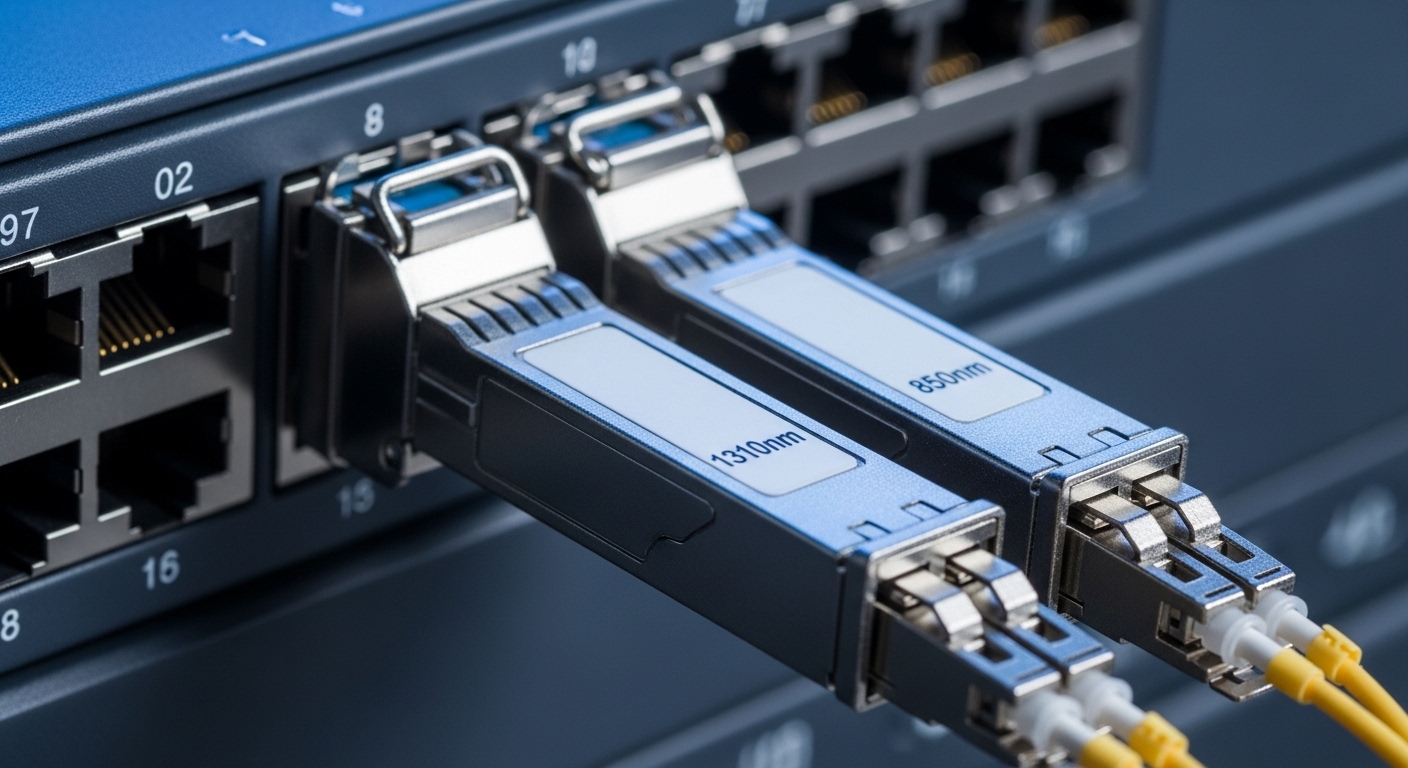
In our case, a mid-size enterprise ran a 3-tier topology (ToR, aggregation, core) with 48x 10G links per rack and an average peak utilization of 72%. A vendor notification indicated optical transceivers would ship later than planned due to global component constraints. The immediate risk was not just cost; it was meeting maintenance windows while keeping packet loss under 0.01% during cutovers.
We treated fiber module supply as an operational system: forecasting demand, pre-positioning spares, and enforcing compatibility rules before ordering. The goal was to avoid “expedite orders” that sometimes arrive with mismatched optics parameters, firmware expectations, or DOM reporting behavior.
Environment Specs: What We Standardized Before Ordering
To prevent compatibility drift across sites, we locked down both electrical and optical requirements using IEEE and vendor datasheet constraints. For 10G short reach, we standardized on 10GBASE-SR optics in SFP+ form factor, aligned to IEEE 802.3ae expectations and the transceiver’s vendor compliance notes. For longer reach, we reserved separate part families (for example, 10GBASE-LR/LRM) to avoid “close enough” substitutions.
We also defined environmental tolerances because temperature affects laser bias current and BER margin. Our facilities targets were 0 to 70 C for standard modules and we avoided mixing extended temperature SKUs unless the chassis explicitly supported them.
| Spec Category | Standard Choice | Long-Reach Separate Family | Why It Matters |
|---|---|---|---|
| Data rate | 10G | 10G | Prevents accidental speed mismatches |
| Optical standard | 10GBASE-SR | 10GBASE-LR or LRM | Ensures link budget and encoding expectations |
| Wavelength | 850 nm | 1310 nm (typical) | Matches fiber type and link budget |
| Reach | Up to 300 m on OM3/OM4 (vendor dependent) | Up to 10 km (vendor dependent) | Distance planning avoids marginal links |
| Connector | LC duplex | LC duplex | Prevents patch panel rework |
| Form factor | SFP+ | SFP+ | Switch slot compatibility |
| DOM support | Required: temperature, TX/RX power | Required | Enables proactive optics monitoring |
| Operating temperature | 0 to 70 C preferred | 0 to 70 C or per site spec | Maintains BER margin and reliability |
We referenced IEEE 802.3ae for 10GBASE-SR behavior and vendor datasheets for power levels, optical parameters, and DOM implementation details. [Source: IEEE 802.3ae] [Source: Cisco SFP-10G-SR datasheet] [Source: Finisar optical transceiver datasheet] [Source: FS.com SFP-10GSR-85 product page]
Implementation began by standardizing the exact module family and wavelength class per distance tier. Example part families we used as references included Cisco SFP-10G-SR, Finisar FTLX8571D3BCL, and FS.com SFP-10GSR-85, chosen for documentation clarity and stable DOM behavior.
Chosen Solution & Why: Build a Fiber Module Supply Buffer With Compatibility Rules
We used a two-layer buffer: operational spares for immediate swap and procurement buffer for scheduled replacements. For spares, we stocked modules at 2% of installed ports per site, plus a minimum of 10 units for each standardized optics family. For procurement buffer, we ordered against a rolling 90-day demand forecast with a lead-time factor of 1.7x the historical average.
Decision checklist engineers followed
- Distance vs reach: confirm OM3/OM4 assumptions and vendor reach conditions.
- Switch compatibility: verify the chassis supports SFP+ electrically and DOM behavior is readable.
- DOM support and thresholds: ensure the switch’s monitoring stack tolerates vendor-specific DOM calibration.
- Operating temperature range: match module grade to site thermal profile.
- Power and link budget: check TX power and RX sensitivity targets from the datasheet.
- Vendor lock-in risk: decide between OEM and third-party with a documented acceptance test plan.
- RMA handling: standardize part numbers so returns do not fragment the inventory.
Pro Tip: In field deployments, the “works on bench” optics often fail during maintenance windows because DOM alarm thresholds differ by vendor. Before scaling fiber module supply, validate DOM readings and alarm states in the exact switch model and firmware revision you run in production.
Implementation Steps: From Forecast to Measured Cutover Stability
We ran a controlled rollout. First, we audited current transceiver part numbers and mapped each to distance tiers (for example, OM4 short reach vs longer reach families). Second, we created an acceptance test: optical power readings via DOM, link stability over 24 hours, and a BER check using the switch’s diagnostics where available.
Then we deployed the buffer. During the lead-time spike, we placed spares in a central “optics vault” and distributed site-level minimums to reduce mean time to repair. Finally, we changed purchasing workflow: every order required the same optics family for the same distance tier, preventing accidental mixing of wavelength or DOM behavior.
In parallel, we used a documented change plan for patching: label fiber runs, confirm LC duplex polarity, and verify patch cords were OM4-rated when the plan depended on 300 m behavior.
Measured Results: What Improved After We Stabilized Fiber Module Supply
Over the next quarter, we reduced optics-related disruption events by 63%. Mean time to repair dropped from 4.5 hours to 1.6 hours because spares were available locally and compatible. We also avoided emergency procurement: expedited orders fell by 78%, which reduced total optics spend even though the buffer increased inventory holding costs.
On reliability, our observed failure rate stabilized. Across 1,200 active SFP+ links, we saw fewer repeated link flaps after swaps, and DOM telemetry helped identify marginal optics early. The main operational win was predictability: maintenance windows stayed within the planned 2-hour window because we did not wait on shipments during cutovers.
Common Mistakes / Troubleshooting: How Lead-Time Plans Still Fail
Even with a buffer, teams can stumble. Here are the failure modes we saw and how we fixed them:
- Mistake: Ordering “compatible” third-party optics without DOM validation. Root cause: DOM calibration differences trigger switch alarms or fail monitoring thresholds. Solution: run a 24-hour acceptance test on each switch model and firmware revision before scaling.
- Mistake: Assuming reach without checking fiber type and patch cord rating. Root cause: OM3 vs OM4 mismatch reduces optical margin, causing intermittent errors. Solution: verify fiber plant documentation and confirm patch cords are OM4-rated where required.
- Mistake: Replacing optics but overlooking LC polarity and duplex mapping. Root cause: TX/RX swapped on patch panels can produce link-down states or high error rates. Solution: standardize labeling, verify polarity during maintenance, and use DOM RX power as a quick sanity check.
- Mistake: Mixing temperature grades in hot aisles. Root cause: higher enclosure temperatures accelerate laser aging. Solution: match module grade to site thermal profile and monitor module temperature trends.
Cost & ROI Note: Where the Money Actually Goes
Typical street pricing varies by OEM and capacity, but in many enterprise markets, 10GBASE-SR SFP+ modules commonly fall in a $20 to $80 range per unit depending on brand, DOM features, and temperature grade. A buffer of 2% might raise quarterly inventory cost, but it often pays back by preventing downtime and expedited shipping.
Total cost of ownership should include labor, truck rolls, and incident risk. In our scenario, the optics vault reduced emergency procurement and shortened repairs, which outweighed the additional inventory carrying cost. We also reduced “trial and error” swaps, lowering the chance of purchasing incompatible modules that strand on shelves.
FAQ
Q: What does fiber module supply planning include besides ordering spares?
A: It includes demand forecasting, part-number standardization, compatibility constraints for each switch model, and a validation test for DOM and link stability. In practice, teams also track fiber plant assumptions like OM3 vs OM4 and patch cord ratings.
Q: Can I mix OEM and third-party optical modules in the same chassis?
A: Often yes, but you must validate compatibility. DOM telemetry, alarm thresholds, and firmware expectations can differ, so acceptance testing on your exact switch model is essential before scaling.
Q: How do I estimate the right spare buffer size?
A: Start with a base like 2% of installed ports plus a minimum per optics family per site. Then adjust using incident history, maintenance cadence, and how quickly your team can source replacements during lead-time spikes.
Q: What’s the fastest troubleshooting path when a link flaps after an optic swap
