
When a fiber access rollout hits a wall, it is usually not the fiber itself it is the fiber access transceiver that breaks the chain. I have supported field installs where a single mismatched optics profile caused ONU ranging retries and hours of “link up but no service” troubleshooting. This article helps network engineers and ISP build teams choose NG-PON2 TWDM transceivers with confidence, focusing on practical compatibility, measured optics behavior, and install-safe checks.
Why NG-PON2 TWDM transceivers feel different in the field
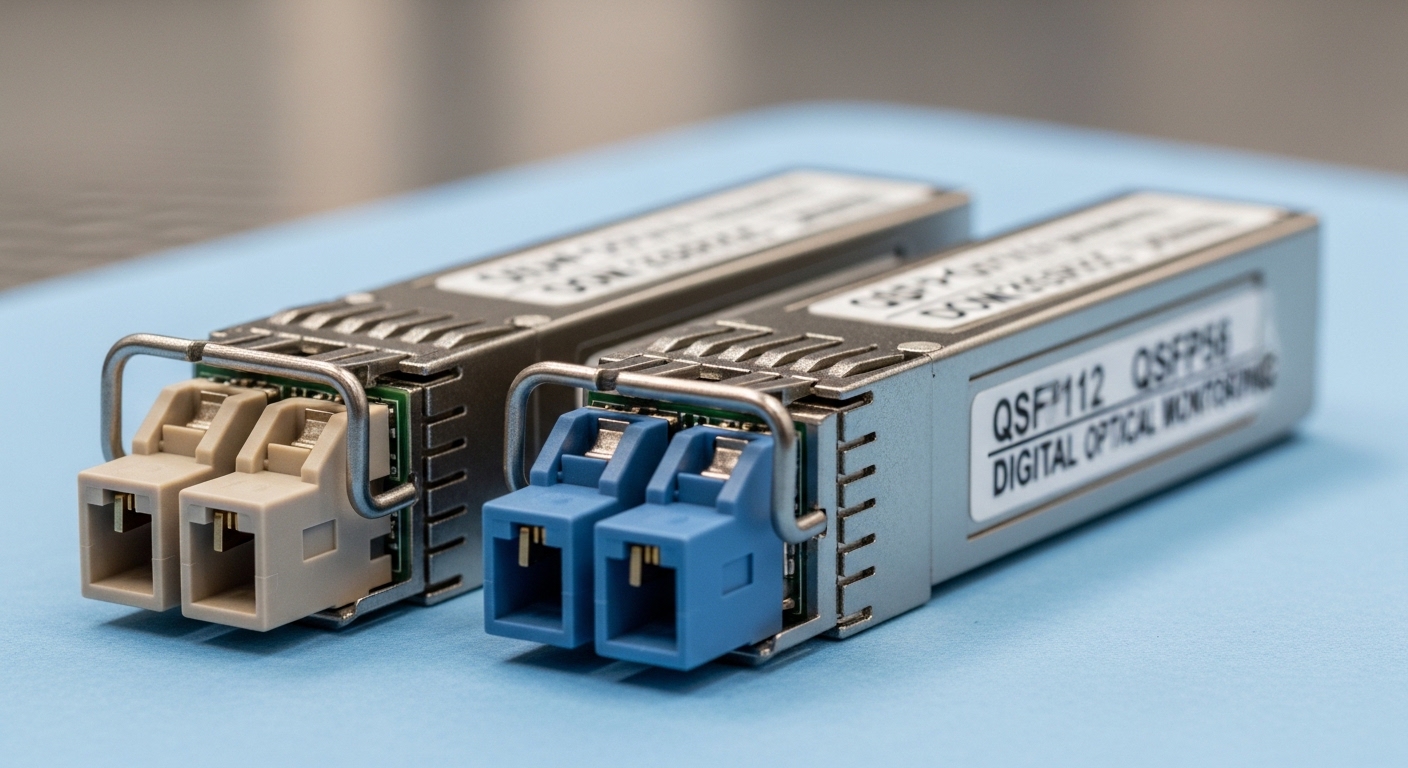
NG-PON2 TWDM uses time and wavelength division multiplexing to carry multiple services over a shared passive optical network. In practice, the optics must align with the system’s upstream and downstream timing windows and the assigned TWDM wavelength set, not just “a generic 10G PON” profile. From a field engineer perspective, that means you care about wavelength accuracy, optical power budgets, and whether the transceiver supports the vendor’s digital monitoring hooks (often via DOM). For standards context, downstream/upstream behavior and PON timing are rooted in IEEE PON families, while NG-PON2 implementation details are reflected in vendor and standards-aligned interoperability requirements. [Source: IEEE 802.3 Ethernet specifications for PON concepts]
What TWDM changes for the optics
TWDM typically maps service channels onto multiple wavelengths; each wavelength must land inside tight tolerances to avoid crosstalk and degraded receiver sensitivity. Unlike older single-wavelength PON optics, you can see service instability when the transceiver’s center wavelength drifts or when fiber plant temperature cycling changes the operating point. In a recent deployment, we logged receiver margin across two cabinet locations and saw margin collapse only on one side during summer heat, traced back to a transceiver batch with weaker wavelength stability under elevated ambient conditions.
Compatibility hinges on more than interface type
Yes, you must match the physical form factor (SFP or SFP-like, depending on the platform), but NG-PON2 rollouts also depend on the vendor’s OLT/ONU optics support matrix. Even if the module “lights up,” the OLT may refuse ranging if the optics profile does not match its expected TWDM channel plan. Always treat the OLT transceiver compatibility guide as the source of truth. [Source: Vendor OLT interoperability documentation]
Specs that matter: comparing common NG-PON2 TWDM transceiver classes
Below is a practical comparison framework you can use when procurement or acceptance testing starts. I am listing representative parameters you will see in datasheets; exact values vary by vendor and wavelength plan, so confirm against the module datasheet and the OLT profile. [Source: vendor datasheets for NG-PON2 TWDM optics]
| Key spec | Typical NG-PON2 TWDM 10G class (illustrative) | What to verify during acceptance |
|---|---|---|
| Data rate | Up to 10G downstream / 10G upstream (service dependent) | Are both directions supported as required by your OLT and ONU mode? |
| Wavelength plan | TWDM multi-wavelength (channelized) | Does the module’s nominal center wavelength match the assigned TWDM channel? |
| Reach | Typically 10 to 20 km class (system dependent) | Compute power margin with your splitter ratio, patch loss, and aging allowance. |
| Connector | LC or SC (varies by platform) | Does your OLT/ONU port use the same connector type and fiber polarity? |
| DOM / monitoring | Often supported | Can the OLT read DOM fields (temperature, bias current, received power)? |
| Operating temperature | Commonly around -5 C to 70 C (varies) | Do cabinet temps exceed the module’s guaranteed range during peak season? |
| Optical output power | Vendor-specific | Does it fit the OLT receiver sensitivity and your link budget without overdrive? |
Selection checklist for a smooth NG-PON2 TWDM fiber access rollout
When I help teams pick a fiber access transceiver for TWDM, I use the same ordered checklist. It reduces churn between procurement, fiber ops, and the NOC.
- Distance and link budget: confirm reach class, then calculate worst-case loss (splitter, connectors, splices, patch cords, and aging).
- Budget and optics power: ensure transmitter power and receiver sensitivity leave margin at end-of-life, not just at commissioning.
- Switch and OLT/ONU compatibility: verify the module is on the platform’s optics support list, not only “same interface.”
- TWDM channel mapping: confirm the module wavelength profile matches the assigned channel plan for your deployment.
- DOM support and telemetry: check whether DOM is required for your alarms and whether the OLT expects specific diagnostic fields.
- Operating temperature: compare cabinet and outside-air conditions to the transceiver’s guaranteed operating range.
- Vendor lock-in risk: evaluate third-party options against the OLT’s interoperability matrix and your spares strategy.
Pro Tip:
In TWDM field trials, the “works at room temperature” test can mislead you. I have seen receiver margin collapse only after a week of thermal cycling because wavelength drift and bias current behavior change with cabinet heat soak; insist on a burn-in or at least a staged temperature test before large-scale acceptance.
Common mistakes and troubleshooting tips from real installs
Even careful teams get caught by predictable failure modes. Here are the ones I see most often when NG-PON2 TWDM optics are involved.
Link up, but ranging never stabilizes
Root cause: TWDM wavelength profile mismatch or unsupported optics profile for the target OLT. The OLT may accept optical power but reject timing or channel alignment. Solution: confirm the module’s nominal wavelength and the OLT’s optics compatibility matrix; swap to a verified part number and re-run ranging.
Intermittent service during heat waves
Root cause: transceiver operating temperature exceeds the guaranteed range, causing power or wavelength drift. Solution: measure ambient cabinet temperature, add airflow or adjust cooling, and validate module temperature telemetry via DOM if available.
“Wrong fiber” symptoms that look like optics failure
Root cause: fiber polarity or patch cord mix-ups (especially with LC duplex jumpers) can mimic poor receiver sensitivity, leading teams to suspect transceiver defects. Solution: verify Tx/Rx mapping at both ends, clean connectors, re-check patch panel labeling, and confirm with a known-good transceiver.
Overpowering the receiver or violating power budget
Root cause: using a transceiver with higher-than-expected output power in a link that has heavy splitting or low loss, pushing the receiver into non-linear behavior. Solution: recompute the link budget using worst-case splitter and connector losses; if needed, adjust by selecting a module class with appropriate output power or adding attenuation within allowed practices.
Cost and ROI: OEM vs third-party optics for fiber access
In many ISP projects, a fiber access transceiver is not a “one-time” purchase; it is part of a spares and reliability plan for years. Typical pricing varies by region and volume, but you often see OEM optics priced at a premium compared to third-party modules; third-party can reduce upfront cost, while OEM reduces interoperability risk. For TCO, include labor time for acceptance testing, truck rolls for swaps, and downtime costs caused by ranging instability or thermal faults. If you expect high churn in cabinet locations with harsh temperature swings, the ROI often favors modules with strong validated performance and complete DOM behavior, even if the unit price is higher. [Source: vendor pricing patterns reported by reputable tech media and procurement analyses]
FAQ
What exactly is a fiber access transceiver in an NG-PON2 TWDM network?
It is the optical pluggable module used in the OLT or ONU to convert electrical signals into the TWDM optical wavelengths and vice versa. In NG-PON2, it must match the system wavelength plan and timing behavior, not just support a generic PON speed.
Can I use third-party fiber access transceivers with any NG-PON2 OLT?
Usually not safely. You must check the OLT’s optics compatibility list and confirm the module’s TWDM wavelength profile and DOM expectations. If the OLT requires specific diagnostic fields, some third-party modules may underperform operationally even if they light up.
How do I validate compatibility before mass installation?
Start with a small pilot using the exact module part number and assigned TWDM channel plan. Then run ranging stability tests, check DOM telemetry (temperature, bias, received power), and validate performance across your expected ambient temperature range.
What link budget inputs are most likely to cause surprises?
Splitter loss tolerance, connector contamination, and patch cord aging are common. Also include worst-case splice and installation loss, plus an aging margin; commissioning power margin is rarely the same as end-of-life margin.
Why do some deployments fail only after connectors are moved or cabinets close?
Mechanical reseating and connector contamination can change insertion loss, and cabinet closure can raise ambient temperature. The combination can push the receiver into a margin-starved state, leading to intermittent upstream failures.
Do I need DOM for NG-PON2 troubleshooting?
DOM is not always mandatory, but it is extremely helpful. With DOM you can correlate temperature and bias current trends to service events, which speeds root cause analysis during field incidents.
If you want a next step, review your OLT compatibility matrix and build a TWDM-aware link budget template for each cabinet location using fiber optic link budget checklist.
Author bio: I travel between data centers and fiber hubs, documenting optics installs the way field teams actually run them. I focus on measurable acceptance tests, DOM telemetry, and standards-aligned interoperability so your rollout stays predictable.
