
If you are planning long-haul or metro capacity upgrades, choosing the right coherent transceiver and DWDM optics is often what determines whether a link reaches the target BER without repeated truck rolls. This article helps network and transport engineers evaluate DWDM Ciena coherent optics in the context of Ciena 6500-style deployments, including practical compatibility checks, power budgets, and operational pitfalls. You will also get a decision checklist, troubleshooting patterns, and a quick ranking table for side-by-side selection.
Top 8 moves to pick DWDM Ciena coherent optics that actually lock
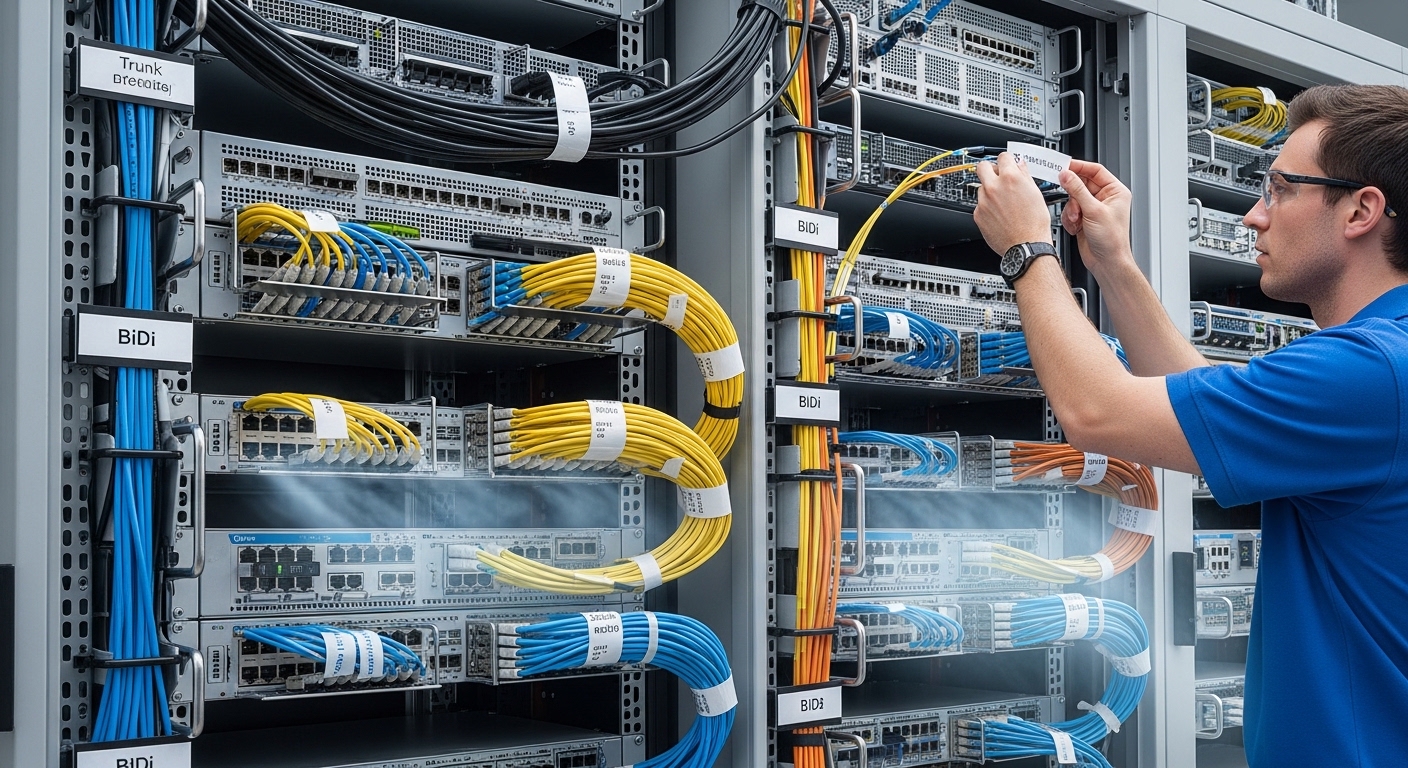
Coherent DWDM systems are sensitive to wavelength plan, fiber impairments, and transceiver configuration. The goal is to match the optical module’s electrical interface and optical performance to your platform and span design so the receiver can acquire carrier, estimate dispersion, and reach the required BER target. For Ciena 6500-class platforms, treat optics selection as a system problem, not just a part-number swap.
Confirm the platform optics compatibility, not just the connector
Start with platform-level compatibility for the coherent optics family and the transceiver form factor. Even when a physical connector matches, mismatched firmware profiles, optics types, or wavelength grids can prevent proper coherent setup. Validate against vendor compatibility matrices and ensure the optics are intended for the Ciena transport stack you run.
- Best fit: live migrations where you must preserve existing line cards and network management baselines.
- Pros: fewer lock-failure events during commissioning.
- Cons: delays if you discover “electrically compatible but not provisionable” optics.
Match wavelength, grid, and channel plan to the line system
Coherent optics must align with your DWDM channel plan: wavelength, ITU grid spacing, and any vendor-specific calibration expectations. A common failure mode is provisioning a channel outside the optics tuning range or with the wrong grid assumptions, which can lead to acquisition retries or unstable demodulation. Use your planned center frequencies and confirm tuning capability in the vendor datasheet.
- Best fit: greenfield builds and re-farming channels during spectrum upgrades.
- Pros: predictable commissioning outcomes.
- Cons: grid errors can waste an entire maintenance window.
Use an optics budget that includes coherent receiver sensitivity and OSNR
Unlike simple intensity-modulated links, coherent transport depends on OSNR (optical signal-to-noise ratio) and impairment tolerance. Your span loss, connector losses, fiber type, and amplification noise figure all affect OSNR at the receiver. For realistic planning, include measured or modeled span attenuation and amplifier noise, then compare to the coherent receiver requirements from the vendor technical documentation.
- Best fit: multi-span metro routes with variable weather-grade fiber and aging.
- Pros: fewer mid-life BER surprises.
- Cons: OSNR budgeting requires disciplined data collection.
Validate electrical interface rate, FEC mode, and management telemetry
Coherent modules often support multiple client rates and FEC configurations. If your transport card expects a specific FEC and you insert an optics module that reports different capabilities, throughput can drop or link stability can degrade. Confirm the client mapping (e.g., line rate vs payload), and ensure telemetry such as temperature, laser bias, and optical power is exposed through management for alarm correlation.
- Best fit: environments with mixed generations of optics and staged upgrades.
- Pros: faster root-cause analysis.
- Cons: misalignment can look like a “fiber problem” when it is actually a config mismatch.
Confirm temperature range and derating for enclosure realities
Field deployments rarely match lab conditions. Rack airflow, dust loading, and power dissipation can push module temperatures upward, affecting optical output and receiver margins. Use the module’s operating temperature range and any derating guidance; then verify your shelter HVAC and fan-speed profiles. For critical sites, log module temperature over a few weeks to establish a baseline.
- Best fit: outdoor huts, coastal sites, and high-density blade enclosures.
- Pros: longer mean time between failures.
- Cons: may require airflow or setpoint changes.
Prefer modules with strong DOM-like operational observability
Even when the platform uses its own management stack, the underlying optics monitoring behaviors matter. Ensure the module provides reliable digital diagnostics (temperature, laser bias current, received optical power, and vendor-defined alarms) so you can correlate events to optical physics. In practice, strong monitoring reduces downtime by letting you distinguish “bad fiber alignment” from “laser aging” and “amplifier noise spikes.”
- Best fit: networks with frequent maintenance and multiple teams.
- Pros: faster troubleshooting and safer change control.
- Cons: third-party optics may not expose the same alarm semantics.
Plan for fiber plant impairments: PMD, polarization, and aging
Coherent receivers can tolerate substantial impairments, but not unlimited ones. Polarization mode dispersion (PMD), polarization-dependent loss, and nonlinear effects across long spans can reduce demodulation margin. If you are upgrading channel counts or increasing launch power, re-check nonlinear and OSNR budgets, and confirm your dispersion compensation strategy matches the actual fiber plant.
- Best fit: incremental capacity expansions on existing fiber.
- Pros: avoids “it worked at commissioning but not after power changes.”
- Cons: requires careful modeling and conservative change windows.
Build a commissioning checklist that includes lock acquisition and alarm thresholds
During activation, verify carrier acquisition, signal quality metrics, and alarm thresholds in the first minutes after light goes up. Capture baseline values for received power, OSNR (or equivalent quality metric), and FEC counters. If the link fails to lock, check wavelength provisioning, grid alignment, and optical amplifier states before swapping hardware.
- Best fit: rapid turn-ups where you cannot afford repeated module replacements.
- Pros: reduces MTTR.
- Cons: requires disciplined runbooks and pre-staged spare optics.
Quick spec comparison: coherent DWDM optics you must align
The exact part numbers vary by wavelength plan and rate, but engineers should compare the same core parameters: wavelength/tuning, reach, power dissipation, connector, and operating temperature. The table below is a practical comparison template you can use when evaluating DWDM Ciena coherent optics versus alternates.
| Parameter | What to verify | Why it matters |
|---|---|---|
| Wavelength / tuning | Center wavelength range and ITU grid support | Prevents provisioning outside tuning capability |
| Data rate / line rate | Client mapping and supported FEC modes | Affects throughput and demodulation margin |
| Reach | Specified span length and impairment assumptions | Determines if OSNR budget is feasible |
| Optical interface | Connector type and transceiver physical interface | Avoids hardware mismatch during install |
| Power / heat | Typical and max power dissipation; temperature range | Reduces thermal derating risk |
| Diagnostics | Digital telemetry coverage and alarm semantics | Improves MTTR and change safety |
Real-world deployment scenario: metro ring with staged channel upgrades
Consider a metro transport ring connecting three sites with 80 km spans between nodes, using bidirectional fiber paths. The operator initially lights 8 channels and later increases to 16 channels by re-using the same fiber. During the second stage, the team provisions new wavelengths, then observes intermittent high FEC error counts on two channels at the far node. Root cause is traced to an OSNR drop from amplifier gain rebalancing plus a provisioning mistake where two channels were mapped to the wrong grid assumption. With corrected channel plan alignment and amplifier settings, lock stability returns and error counts normalize within hours.
Selection criteria decision checklist (engineer order of operations)
- Distance and span profile: confirm loss per span, fiber type, and expected OSNR at the receiver.
- Wavelength plan: verify tuning range and ITU grid alignment with your provisioning templates.
- Switch or line card compatibility: validate Ciena 6500 optics support and supported FEC/client mappings.
- DOM/telemetry support: ensure you can monitor temperature, optical power, and quality metrics needed for alarms.
- Operating temperature and derating: compare module limits to rack HVAC and measured enclosure temps.
- Vendor lock-in risk: assess warranty terms, lead times, and whether third-party optics are supported by your platform.
- Commissioning runbook readiness: confirm you
