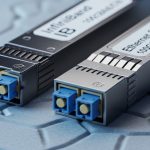
Direct Attach Copper vs SFP Optical Modules: A Comprehensive Guide for Network Upgrades
When designing and upgrading data center networks, choosing the right transceiver technology is critical for performance, cost, and scalability. Direct Attach Copper (DAC) cables and Small Form-factor Pluggable (SFP) optical modules represent two common approaches for Ethernet connectivity, especially at short to mid-range distances. This article compares DAC and SFP modules, exploring use cases, technical specifications, power and cooling considerations, deployment scenarios, and practical tips to help IT and network professionals make informed decisions.
What is Direct Attach Copper (DAC) and How Does It Work?
Direct Attach Copper cables are plug-and-play, fixed-length connection solutions that combine a copper cable with fixed transceivers at each end or modular connectors on both ends. DAC assemblies typically use copper twinax or twinaxial copper with integrated SFP+/QSFP+ style connectors. Key characteristics include:
- Short-distance reach, typically up to 7–15 meters for 10 GbE DACs and up to 3–5 meters for higher-speed variants.
- Low power consumption compared to optical transceivers at similar data rates.
- Very low latency and zero optical-electrical conversion losses on the link.
- Cost-effective for rack-to-rack or cabinet interconnects within data centers.
- Ease of deployment: no fiber management or optical alignment required; simply plug in the cable.
DAC is commonly used for intra-rack or inter-rack uplinks in servers, top-of-rack (ToR) and aggregation switches, providing reliable, high-bandwidth connectivity with minimal maintenance. However, DAC is distance-limited and less flexible than modular optical solutions.
What Are SFP Optical Modules and How Do They Differ?
SFP (Small Form-factor Pluggable) optical modules are hot-swappable transceivers that convert electrical signals to optical signals (and vice versa) to transmit data over fiber. They are paired with optical fiber cables and come in various speeds (1 GbE, 10 GbE, 25 GbE, 40 GbE, 100 GbE) and wavelengths. Key points include:
- Flexibility: use single-mode or multi-mode fiber with different wavelengths (e.g., 850 nm, 1310 nm, 1550 nm).
- Distance scalability: reach ranges from a few meters to tens of kilometers depending on the module type (SR, LR, ER, ZR, etc.).
- Modularity: hot-swappable; you can mix and match transceivers based on distance, fiber type, and budget.
- Higher initial cost for optics and fiber, but longer reach and future-proofing for growing networks.
Benchmarked transceiver families include SFP, SFP+, QSFP+, and QSFP28/56, enabling data center fabric designs that require flexible signaling, color-coded fiber, and standardized interfaces. The trade-off is the need for active optics and fiber management, which adds complexity and cost but yields far greater reach and adaptability than DAC.
Cost, Power, and Performance: Side-by-Side Considerations
Choosing between DAC and SFP optical modules involves evaluating several practical metrics that influence total cost of ownership and performance:
- Cost per link: DAC generally offers lower upfront material costs and minimal components, making it attractive for short links. However, as you scale beyond fixed lengths, fiber-based SFP/SFP+ solutions become more cost-efficient per meter and per connection.
- Power consumption: DAC typically consumes less power per link than optical transceivers, reducing heat and cooling requirements. Optical modules incur higher power, especially at higher speeds (e.g., 40G/100G) due to laser diodes and analog front ends.
- Latency and jitter: DAC provides near-zero added latency since there is no conversion between electrical and optical domains, whereas SFP modules introduce minor latency from laser modulation and photodetector processing, though usually within negligible ranges for most applications.
- Reach and fiber management: DAC is limited to fixed, short distances, ideal for rack-to-rack. SFP optics support metropolitan, campus, and data center interconnects, with options for single-mode or multi-mode fiber over long distances.
- Scalability and future-proofing: SFP modules offer flexible upgrades; you can swap transceivers for higher speeds or longer reach without changing cabling infrastructure. DAC lacks this modularity, which can lock you into specific paths and lengths.
Practical Deployment Scenarios: When to Choose DAC vs SFP
Strategic deployment decisions depend on your data center topology, growth expectations, and total cost of ownership. Here are common scenarios to guide selection:
- DAC is ideal for:
- Single-rack or adjacent-rack uplinks where cables can be run directly between devices without intermediate switches.
- High-density server-leaf to spine or ToR connections within a closed cabinet environment where simplicity and low latency matter.
- Proof-of-concept or rapid deployment where minimizing procurement steps and setup time is paramount.
- SFP optical modules are ideal for:
- Longer reach requirements between switches, between racks across aisles, or inter-building links.
- Growing networks where you anticipate higher speeds (25/40/100 GbE) and want to preserve flexibility for fiber upgrades.
- Heterogeneous environments where fiber types (single-mode vs multi-mode) or vendor interoperability drive modular transceivers.
Technical Details: Fiber, Copper, and Compatibility
Understanding the technical intricacies helps avoid common pitfalls during procurement and deployment:
- Cable types: DAC uses copper twinax with fixed length; SFP systems use fiber, typically multimode for short reach (SR) and single-mode for long reach (LR, ER, ZR). Fiber cleanliness and connector types (LC, SC) affect performance and reliability.
- Speed and standards: DAC commonly supports 10 GbE and 40 GbE within short distances; higher speeds may be available but are less common. SFP/SFP+ and QSFP/QSFP28 modules enable 1G to 400G with appropriate transceivers and fiber types.
- Wavelengths and reach: Optical modules rely on laser wavelengths (e.g., 850 nm for multimode, 1310/1550 nm for single-mode). Reach is defined by the transceiver type and fiber. Mis-matched wavelengths or fiber can lead to severe signal loss.
- Duplexing and cabling: Both DAC and SFP-based links demand careful duplex cabling: careful labeling, color-coded fiber, and adherence to MSA standards to avoid cross-connecting or mispatches.
- Compatibility and interoperability: Ensure transceivers and switches are compatible with vendor-specific optics. Some vendors enforce strict module compatibility, while others offer broader third-party support. Verify warranty implications and supported link budgets before purchase.
Practical Tips for a Seamless Upgrade
To maximize performance and minimize risk during a network refresh, consider these actionable recommendations:
- Plan a phased rollout: Start with a DAC-based solution for immediate, short-range upgrades, then transition to SFP optics for longer-term scalability.
- Evaluate total cost of ownership (TCO): Include not only unit costs but also fiber, transceiver failures, cooling, maintenance, and replacement cycles. A seemingly cheaper DAC may incur higher future ops costs if expansion requires fiber upgrades.
- Test interoperability: In lab or pilot deployments, verify module compatibility with existing switches and firmware versions. Run full link budgets, BER tests, and stress tests before production.
- Factor power and cooling: Optical transceivers can impact data center cooling loads. Ensure cooling capacity aligns with the anticipated optical uplinks, especially in dense spine-leaf architectures.
- Document cabling and inventory: Maintain an up-to-date map of cable lengths, link endpoints, and transceiver types. This reduces downtime during replacements and upgrades.
Conclusion: Making an Informed Choice for Your Network
Direct Attach Copper and SFP Optical Moduleseach have distinct strengths tailored to different network realities. DAC shines in ultra-short