
Hydroelectric plants increasingly rely on fiber to move SCADA telemetry, protection signals, and maintenance diagnostics between powerhouse, switchyard, and control rooms. The dam control transceiver you select determines whether those links stay stable under vibration, temperature swings, and strict latency expectations. This article helps operations, OT networking, and IT directors evaluate SFP-based options for dam control systems using measurable engineering criteria and governance-friendly selection rules.
Dam control transceiver performance: reach, optics, and signal budget
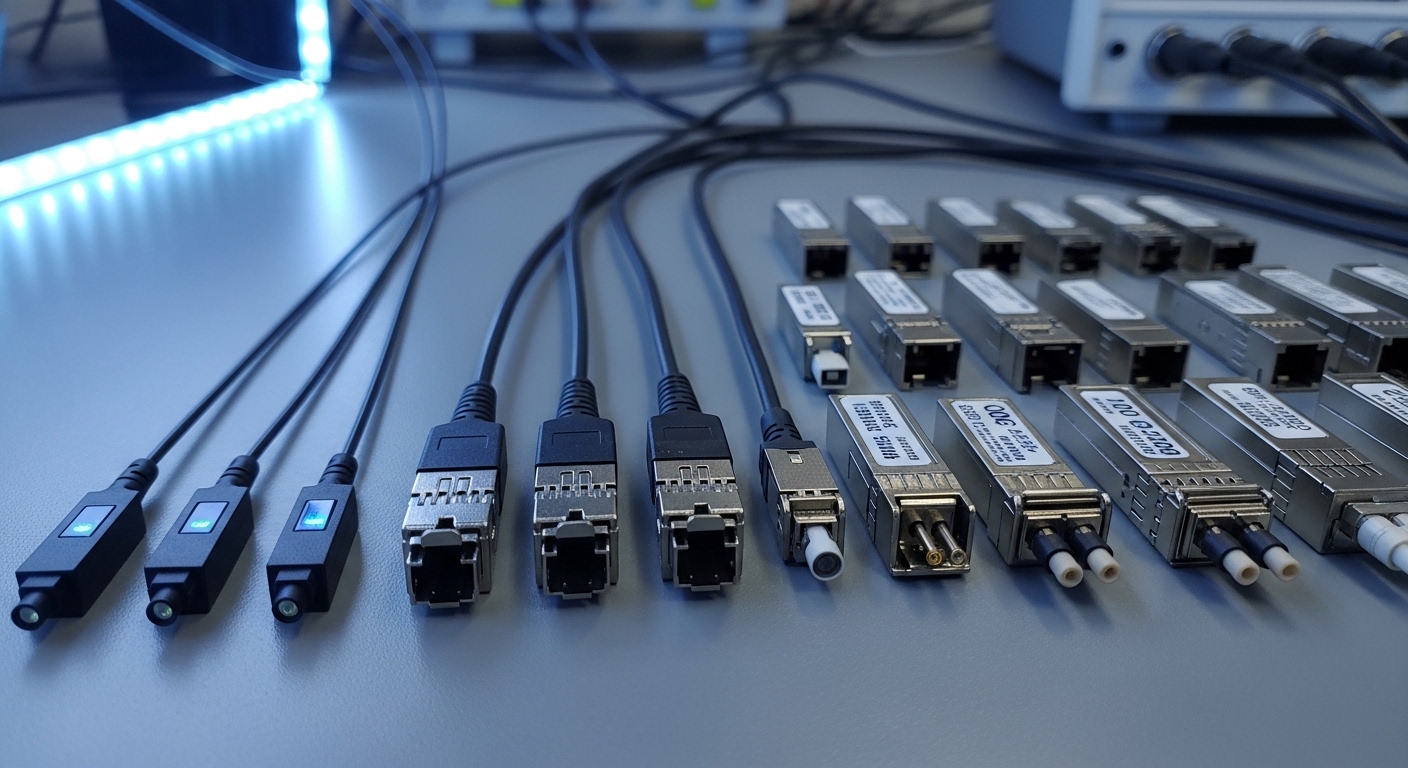
In hydroelectric environments, the limiting factors are often not raw data rate, but optical budget margin, connector losses, and temperature-induced optical power drift. Most dam control deployments use fiber runs that range from a few hundred meters to several kilometers between substations and control cabinets. For SFP-class optics, engineers typically pick multimode for short runs and single-mode for longer spans, while ensuring the receiver sensitivity and transmitter launch power maintain margin across aging and cleaning variance.
Key SFP link parameters that matter in the field
- Wavelength: 850 nm for OM3/OM4 multimode; 1310/1550 nm for single-mode.
- Reach: target the vendor-rated distance, then add real-margin for patch cords and splices.
- Receiver sensitivity: impacts link survivability when fiber is dusty or connectors are not polished.
- Power consumption: relevant for panel thermal design and DC power budgets in remote sites.
- Operating temperature: dam control cabinets often exceed standard office ranges due to HVAC failures.
Performance comparison snapshot
Below is a realistic head-to-head comparison of common SFP optics used in hydroelectric plant fiber networks. Exact values vary by vendor and DOM implementation, so validate against the specific datasheet and your link budget model.
| Option | Nominal Wavelength | Typical Reach | Connector | Data Rate | Tx/Rx Power (typ.) | Optical Class | Operating Temp |
|---|---|---|---|---|---|---|---|
| 10G SFP+ SR (multimode) | 850 nm | ~300 m (OM3) / up to ~400 m (OM4) | LC | 10G | Tx around a few dBm; Rx sensitivity depends on vendor | Short-reach | 0 to 70 C typical; -40 to 85 C available on some industrial SKUs |
| 10G SFP+ LR (single-mode) | 1310 nm | ~10 km | LC | 10G | Higher link budget margin via SMF | Long-reach | -40 to 85 C common for industrial optics |
| 1G SFP (single-mode) | 1310 nm | ~10 to 20 km | LC | 1G | Lower power; often more tolerant to marginal links | Legacy control networks | -40 to 85 C available |
For reference on Ethernet optical interfaces, validate that your target transceivers align with IEEE 802.3 requirements for the speed class you deploy. Source: IEEE 802.3 Working Group
Pro Tip: In dam control cabinets, the optical budget loss you do not model is usually patch-cord contamination. If you enforce a quarterly inspection and cleaning workflow for LC connectors and train field techs to verify polarity and end-face quality, you often recover more link margin than switching from one vendor optic to another.
Cost and ROI tradeoffs: OEM vs third-party SFPs under OT constraints
When budgets are tight, OEM optics can look expensive, but the total cost of ownership (TCO) depends on failure rates, warranty handling, and whether your switch vendor’s optics validation pipeline accepts third-party modules. In dam control systems, the ROI is not just purchase price; it is the reduction in unplanned downtime during seasonal peak generation or flood events.
Typical cost bands you can plan around
- OEM 10G SFP+ LR: often priced materially higher than compatible optics; field replacement lead times can dominate spend.
- Third-party 10G SFP+ SR/LR: frequently 20% to 50% less per module, but validate DOM behavior and switch compatibility.
- Industrial temperature-rated SKUs: cost premium versus standard 0 to 70 C parts, but they reduce warranty churn when HVAC degrades.
ROI framing IT directors can defend
Use a simple model: expected downtime cost plus maintenance labor hours plus spares inventory carrying costs. For example, if a remote site experiences one optics-related outage per year across 50 links, and each incident costs 8 hours of technician time plus an outage penalty, the savings from cheaper modules can disappear if compatibility issues cause reboots, link flaps, or monitoring blind spots. Also consider power draw: even if transceivers differ by only a few watts, panel thermal headroom can affect MTBF for nearby components.
For governance, require that any third-party dam control transceiver supports Digital Optical Monitoring (DOM) so NOC and OT monitoring tools can alert on optical power and temperature drift. DOM support aligns with operational monitoring expectations described by common SFF specifications and vendor datasheets; validate per the module you procure. Source: SNIA (storage and monitoring context for operational telemetry practices)
Compatibility and governance: switch behavior, DOM, and optics validation
Compatibility failures in the field are usually not about physics; they are about platform behavior. Some switches enforce optics vendor whitelists, others tolerate third-party optics but may provide partial DOM visibility. In hydroelectric plants, where you often have a mix of legacy and modern switching, you should treat optics selection as a controlled change with documented acceptance tests.
Decision matrix signals engineers should check
- Speed and interface: SFP vs SFP+ vs SFP28 must match the switch port capability.
- DOM implementation: verify whether your monitoring stack can read Tx/Rx power and temperature.
- Wavelength and fiber type: SR optics require OM3/OM4; LR optics require single-mode.
- Connector standards: LC for most SFP optics; confirm patch panel cabling type.
- Regulatory and safety: confirm laser class compliance and labeling for OT site policy.
Deployment scenario: SFP-based dam control network in a leaf-spine edge
Consider a 3-tier topology at a hydroelectric plant: two leaf switches in the powerhouse, two aggregation switches in a control building, and a dedicated OT access switch in the switchyard. Each leaf has 48x 10G downlinks to industrial controllers and 8x 10G uplinks to aggregation over fiber. The typical distances are 0.4 km between powerhouse cabinets (multimode), 6 km to the switchyard (single-mode), and 12 km to a remote monitoring outpost (single-mode).
In this environment, engineers often choose 10G SFP+ SR for 850 nm multimode links within the powerhouse and 10G SFP+ LR for the longer single-mode legs. They also enforce DOM monitoring so the OT NOC can alert when Rx optical power drops beyond a threshold, indicating connector contamination or fiber microbends. For seasonal stress, they deploy -40 to 85 C industrial optics where cabinet thermal cycling is frequent, reducing the probability that a transceiver fails during peak-load periods.
Selection criteria checklist for a dam control transceiver purchase
- Distance and fiber type: map each link to OM3/OM4 or SMF and compute an optical budget with connector and splice losses.
- Switch compatibility: confirm port speed support (SFP vs SFP+ vs SFP28), and validate third-party optics behavior in a lab or staged rollout.
- DOM and monitoring integration: require readable Tx/Rx power and temperature to support OT alerting and root-cause analysis.
- Operating temperature: prioritize industrial-rated modules for cabinets exposed to HVAC instability and sunlight-driven heating.
- Connector and polarity plan: standardize LC polarity mapping and document it for field techs.
- Vendor lock-in risk: define an approved list of optics vendors and maintain spares strategy across at least two source options where feasible.
- Warranty and lead time: remote sites need predictable replacement logistics; include shipping time in your TCO model.
Common mistakes and troubleshooting tips in dam control fiber links
Even experienced teams encounter recurring failure modes. Below are concrete pitfalls seen in OT environments, with root causes and practical remedies.
Link is down after optics swap
Root cause: SFP type mismatch (SFP vs SFP+ vs SFP28) or selecting the wrong speed mode for the switch port. Some switches will not negotiate and will disable the interface.
Solution: verify port capability in the switch datasheet, then match transceiver speed class. Stage-test in a maintenance window with link-state verification and interface counters.
Flapping link under vibration or temperature cycling
Root cause: connector end-face contamination or marginal fiber routing causing microbends; multimode SR is especially sensitive to cleanliness and patch cord quality.
Solution: clean and inspect LC connectors using end-face inspection tools, then re-terminate if scratches are present. Re-route cables away from stress points and confirm strain relief.
DOM alarms but data plane seems partially working
Root cause: DOM telemetry thresholds differ across vendor implementations; your monitoring rule may be too strict or misinterpreting units.
Solution: baseline DOM values under known-good conditions, then tune thresholds. Confirm your monitoring collector parses DOM fields correctly and stores units consistently.
“Works on bench, fails in cabinet”
Root cause: temperature rating mismatch and insufficient airflow around the transceiver cage; power supply ripple can also stress optics electronics.
Solution: select industrial temperature-rated dam control transceiver SKUs and validate thermal design. Measure cabinet temperatures at the switch and transceiver area during worst-case operation.
Decision matrix: which dam control transceiver option fits your constraints?
| Reader profile | Best-fit optics type | Why | Primary risks | Governance action |
|---|---|---|---|---|
| OT network engineer optimizing short runs | 10G SFP+ SR (850 nm multimode) | Lower cost and dense cabinet wiring support | Cleanliness sensitivity; patch cord variability | Enforce connector cleaning SOP and DOM-based monitoring |
| IT director standardizing across multiple substations | 10G SFP+ LR (1310 nm single-mode) | Better reach and margin for varied cabling lengths | Higher per-module cost; fiber type constraints | Require optical budget documentation per link in change tickets |
| Budget-constrained site with constrained spares | Third-party compatible optics with DOM | Lower acquisition cost; faster procurement | Compatibility differences and monitoring gaps | Run staged acceptance tests and maintain dual-source approved list |
| Remote plant with HVAC instability | Industrial temperature-rated optics | Reduced thermal failure probability | Premium cost; lead time variability | Standardize on -40 to 85 C and verify thermal margins annually |
Which Option Should You Choose?
If your hydroelectric network has sub-kilometer cabinet links and you can enforce connector hygiene, choose a dam control transceiver based on 10G SFP+ SR (850 nm) with DOM support and industrial temperature rating where cabinets run hot. If you need consistent performance across several kilometers with uneven fiber quality, prefer 10G SFP+ LR (1310 nm single-mode) and require per-link optical budget sign-off in governance workflows. For cost-sensitive rollouts, third-party optics can work, but only after staged validation on the exact switch models and with DOM monitoring confirmed end-to-end
