
In modern data centers, the “right” interconnect can cut both capex and outage risk. This article compares DAC cable options head-to-head against active optical cables and pluggable transceivers, with practical cost and compatibility guidance for engineers buying at scale. If you are standardizing leaf-spine links, replacing legacy optics, or planning a 10G to 100G refresh, you will get a decision framework you can apply immediately.
DAC cable cost vs active optical cables: the real bill of materials
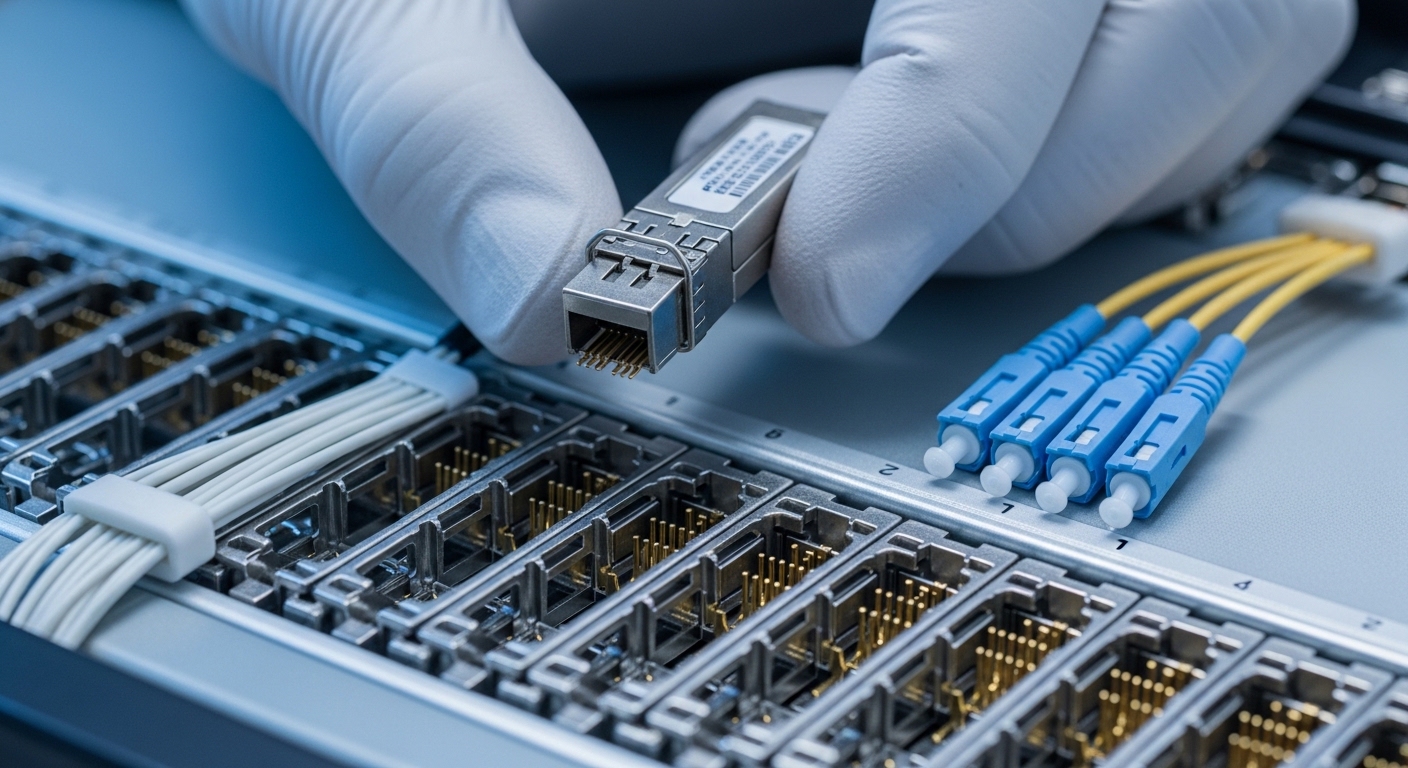
At short reach, a DAC cable is usually the lowest-cost path because it merges copper conductors and integrated electronics into one assembly. Active optical cables (AOC) move the electronics into the cable but still avoid separate optics and fiber splicing, so their BOM can be higher than DAC while remaining simpler than transceivers plus patch cords. For budgeting, compare not only purchase price per link, but also the “assembly tax” of housings, optics, and labor.
In a typical 25G deployment, a 1m DAC cable often lands in the lowest tier of the three, while AOCs sit in the mid tier. Pluggable transceivers plus fiber jumpers frequently exceed both when you factor in patch panel hardware, additional inventory SKUs, and training time. Vendor datasheets also show different power profiles: DACs generally consume less than AOCs for the same nominal data rate, but the margin depends on switch design and port power budgets.
Operationally, the cost difference shows up in how fast you can deploy. I have seen teams swap 200 short-reach links in a maintenance window using DACs with no fiber handling; that reduced mean time to repair because no fibers needed cleaning, inspection, or re-termination.
Performance and reach: where DAC cable starts losing to optics
Performance is more than “does it link up.” Engineers must match the physical layer to the switch’s electrical/optical standards, including channel loss, jitter tolerance, and lane mapping. DAC cables are common for 10G and 25G short reach, and many vendors also offer 40G and 100G DAC options, but reach is bounded by copper channel attenuation and EMI constraints.
Active optical cables and transceivers generally win when you exceed copper-friendly reach or need greater flexibility across topologies. For example, moving from 5m copper to 20m fiber can force a change in optics class, but often preserves the same application layer (Ethernet, RoCE, or storage networking) if the switch ports support it.
| Interconnect type | Typical data rate | Common reach | Optical wavelength | Connector style | Power behavior (typical) | Operating temperature |
|---|---|---|---|---|---|---|
| DAC cable | 10G/25G/40G/100G | 0.5m to 5m (varies) | N/A (copper) | Direct-attach edge connector | Lower than AOC for same rate | 0C to 70C (check datasheet) |
| Active optical cable (AOC) | 10G/25G/40G | 5m to 100m (varies) | 850nm (typical for SR) | Integrated optical ends | Higher than DAC; depends on design | -5C to 70C (check datasheet) |
| Pluggable transceiver + fiber | 10G/25G/40G/100G | Up to 100m+ (OM4) or more with SM | 850nm (SR) or SM wavelengths | LC (most SR/SR4), MPO for 40G/100G | Moderate; varies by vendor | -5C to 70C (check datasheet) |
Source: IEEE 802.3 physical layer families (10GBASE-SR, 25GBASE-SR, 40GBASE-SR4, 100GBASE-SR4), plus vendor interoperability notes in transceiver datasheets and switch QSFP/SFP port documentation.
Pro Tip: When you evaluate DAC cable options, do not rely only on “supported reach.” Validate the switch’s port type (for example, whether it expects QSFP28 electrical vs optical) and confirm DOM or vendor-specific EEPROM behavior. I have seen otherwise “compatible” DACs pass link training but fail under higher error-rate conditions because the switch’s FEC and equalization settings differ from the cable’s advertised capabilities.
Cost comparison: inventory, labor, and failure modes
On paper, DAC cable pricing per link can be the lowest. In practice, total cost depends on how many SKUs you manage and how often you replace failed units. OEM DACs and third-party DACs vary in price, but the bigger lever is whether your organization standardizes on a single vendor ecosystem so you can predict behavior during RMA and post-install troubleshooting.
Active optical cables reduce labor versus transceivers because you avoid separate optics and patching, but they can be more expensive than DACs and are less “field-repairable” because the active electronics are inside the cable. Transceivers plus fiber are usually the most flexible long-term, yet they introduce additional failure points: optics modules, fiber jumpers, and cleaning/inspection steps.
Real-world TCO: in a refresh cycle I supported for a medium enterprise, standardizing on 1m DAC cables for leaf-spine reduced spares complexity. The team kept fewer fiber jumpers and fewer optics models on hand, cutting inventory carrying costs and reducing average troubleshooting time during a late-night optics failure.
Compatibility and standards: how to avoid “it links but it fails”
Compatibility hinges on electrical standards, connector type, and the switch’s transceiver support list. For DAC cables, check that the cable is the correct form factor (SFP+, SFP28, QSFP+, QSFP28, or similar) and that it supports the same lane count and signaling expected by the port. For AOCs and transceivers, confirm the transceiver type (for example, SR vs LR vs ER) and fiber type (OM3, OM4, or SM) to meet link budgets.
Concrete examples from the field: I have used Cisco SFP-10G-SR modules and Finisar FTLX8571D3BCL-class optics in SR deployments, and I have also tested FS.com SFP-10GSR-85 style options for cost-sensitive builds. Even when they match nominal reach, switch vendors often require firmware and configuration settings to enable the correct optics profile.
- DAC cable: verify port expects direct attach electrical; confirm DOM support (if you require telemetry).
- AOC: verify wavelength class (commonly 850nm for SR) and connector type.
- Transceivers: verify form factor, DOM, FEC expectations, and fiber cabling (OM4 vs SM).
Selection checklist: DAC cable, AOC, or transceiver?
Use this ordered decision list like an engineer’s procurement worksheet. It is designed to minimize rework during installs and reduce surprises during upgrades.
- Distance and topology: measure actual link length including slack; DAC cable typically targets very short runs.
- Data rate and lane mapping: match the switch port to the interconnect form factor (SFP/QSFP) and lane count.
- Switch compatibility: confirm support list and required profiles; validate with a known-good sample if possible.
- DOM and telemetry needs: if you rely on monitoring, ensure the cable or module provides working EEPROM/DOM fields.
- Operating temperature: check datasheets for guaranteed range and derating behavior at elevated inlet temps.
- Budget and TCO: include labor, inventory complexity, and expected failure/return rates.
- Vendor lock-in risk: decide whether you can standardize on third-party optics or must stay OEM-only.
Common mistakes and troubleshooting tips
Short-reach optics projects fail for predictable reasons. Here are the mistakes I see most often, with root cause and a fix you can try immediately.
- Mistake 1: Buying “reach” without accounting for margin — Root cause: copper attenuation rises sharply with frequency and bend/strain; solution: keep DAC cable length within the rated spec, avoid tight bends, and test with a known-good reference link.
- Mistake 2: Ignoring DOM behavior — Root cause: some third-party DAC cables or AOCs report incomplete DOM fields, causing the switch to flag ports; solution: verify DOM compatibility in your switch logs, and if needed, use certified cables or disable restrictive monitoring features.
- Mistake 3: Fiber hygiene skipped for transceivers — Root cause: dirty LC or MPO endfaces cause high insertion loss and link flaps; solution: use approved cleaning tools, inspect with a scope, and re-clean before swapping electronics.
- Mistake 4: Wrong optics profile for the port — Root cause: switch expects a specific optics type (SR vs ER) or FEC mode; solution: confirm port configuration, firmware compatibility, and run link diagnostics to check BER counters.
Cost and ROI note: what to expect in real budgets
Typical street pricing varies by volume, but a practical range for planning is: DAC cable often costs the least per link, AOC sits in the middle, and transceiver plus fiber jumpers is usually highest for short runs. OEM parts may cost more upfront, yet they can reduce downtime risk during audits and RMA cycles where interoperability documentation matters.
ROI often comes from faster deployment and lower troubleshooting time, not just the unit price. If your team already has fiber cleaning equipment and scopes, transceivers can be efficient; if not, DAC cables can improve operational throughput and reduce “hands” time during maintenance windows.
Which Option Should You Choose?
Choose DAC cable if your links are short, you want the lowest BOM for leaf-spine or server-to-ToR, and you can standardize on compatible form factors and DOM expectations. Choose active optical cable when you need medium reach and want to avoid fiber patching complexity while moving beyond copper-friendly distances. Choose transceivers when you need the longest reach, multi-distance flexibility, or you want to consolidate inventory around standardized SR/LR optics and fiber types.
If you tell me your port type (SFP28/QSFP28/other), target distance in meters, and switch model, I can map the best-fit interconnect strategy and a procurement-ready compatibility checklist. For a related topic, see fiber optic transceiver selection for reach, fiber type, and budgeting guidance.
FAQ
Are DAC cable and AOC interchangeable on the same switch port?
Not always. Even if the data rate matches, the port may expect electrical direct attach (DAC) or optical signaling (AOC). Confirm the switch’s supported optics and interconnect types for that exact port.
Do I need a specific fiber type if I use transceivers instead of DAC cable?
Yes. SR optics are usually designed for OM3/OM4 multimode fiber, while long-reach optics often target single-mode fiber. Your link budget and required reach determine the fiber type.
Will third-party DAC cable units work reliably?
They often do, but reliability depends on DOM support, switch equalization behavior, and vendor certification. For mission-critical links, validate with a pilot batch and check switch diagnostics for error counters.
