
If your ISP is transitioning from xDSL to fiber, the riskiest part is often not the fiber plant, but the handoff gear. This article helps network and field engineers choose an FTTx migration transceiver that will survive real splice closures, uneven link budgets, and mixed vendor optics. You will get practical selection checks, a spec comparison table, troubleshooting pitfalls, and ROI notes grounded in typical access and aggregation designs.
Why migration optics fail during xDSL to fiber rollouts
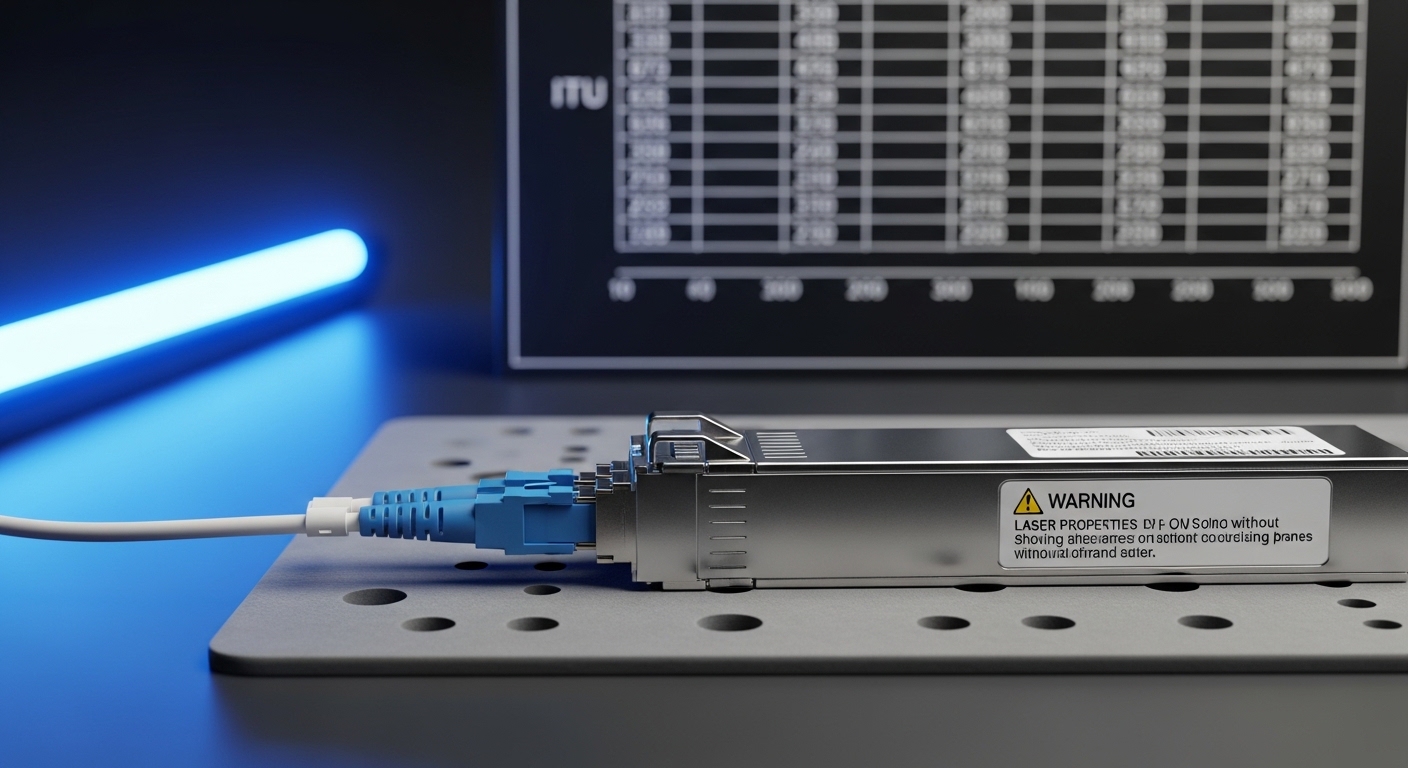
During xDSL to fiber migration, you frequently run transceivers in environments that differ from lab benches: higher insertion loss from patching, aging connectors in cabinets, and intermittent dust exposure. Many teams also inherit legacy switch optics profiles, so a “functionally compatible” module may still fail due to timing, DOM reporting, or receiver sensitivity mismatches. IEEE 802.3 defines electrical and optical behavior for Ethernet optics, but operational success depends on the vendor’s implementation details and your plant’s actual loss and dispersion.
In a typical phased rollout, you might connect new GPON or XGS-PON drops while keeping existing DSLAM or aggregation uplinks active. The FTTx migration transceiver selection must therefore align with the target Ethernet line rate, optics type (SR or LR class), wavelength, and the switch’s supported optics and DOM thresholds. For authoritative baselines, review vendor datasheets plus IEEE 802.3 for link layer expectations; see [Source: IEEE 802.3].
Core specs that determine link budget and interoperability
Start by mapping your migration topology to an optics class. For access-to-aggregation backhaul, most ISPs use 1G/10G Ethernet with fiber distances ranging from a few hundred meters in street cabinets to several kilometers in ring or spur designs. For each segment, confirm wavelength, reach, connector type, and operating temperature so the module matches the cabinet and splice-closure environment.
Practical spec comparison: common 10G fiber options
The table below compares representative modules often evaluated for migration paths. Always confirm exact part numbers and DOM support in the switch vendor compatibility list.
| Module example | Data rate | Wavelength | Reach class | Fiber type | Connector | Typical power | DOM support | Operating temp |
|---|---|---|---|---|---|---|---|---|
| Cisco SFP-10G-SR | 10G | 850 nm | Up to ~300 m (OM3) | MMF | LC | Low single-digit W | Usually supported | Commonly -5C to 70C or similar |
| Finisar FTLX8571D3BCL (10G SR class) | 10G | 850 nm | Up to ~300 m (OM3) | MMF | LC | Low single-digit W | Often available | Commonly -5C to 70C or similar |
| FS.com SFP-10GSR-85 (10G SR class) | 10G | 850 nm | Up to ~300 m (OM3) | MMF | LC | Low single-digit W | Varies by SKU | Varies by temperature grade |
| 10G LR SFP+ class (example for reference) | 10G | 1310 nm | Up to ~10 km (SMF) | SMF | LC | Low single-digit W | Often supported | Varies by grade |
Notice how the “reach” label is not a guarantee for your splice closure. Link success depends on your actual fiber type (OM3 vs OM4), connector quality, patch cord length, and the switch’s receiver sensitivity. For a reliable baseline on Ethernet optical interfaces, use IEEE 802.3 and the module datasheets; see [Source: IEEE 802.3] and [Source: vendor datasheets].
Pro Tip: Before you buy a pallet, validate receiver margin using measured attenuation at the exact wavelengths your plant uses. Field teams often test with a generic tone and assume uniform loss, but connector contamination can add several dB during the first weeks, especially in outdoor cabinets.
Real deployment scenario: cabinet-to-aggregation migration
In a 3-tier ISP access design, you may have street cabinets with new fiber drops terminating at curbside patch panels, then uplinks to aggregation switches in a nearby hut. Imagine 48-port 10G ToR switches at aggregation, each uplink carrying 10G Ethernet toward a core router. During migration, you install a mix of MMF and SMF links: MMF from cabinet to hut spans 180 to 260 meters, while SMF ring links span 4 to 7 km. The FTTx migration transceiver strategy must therefore standardize on SR-class optics for MMF segments and LR-class optics for the ring, while keeping the switch optics compatibility consistent.
Field measurements matter: if OM3 cabling has a measured attenuation of 2.3 dB/km at 850 nm, a 240 m run contributes about 0.55 dB fiber loss, but patch cords and connectors can easily add 2 to 4 dB total. If your splices are not cleaned and re-terminated, you might add another 1 to 2 dB and push the link close to the receiver sensitivity limit. This is why the transceiver choice must match not only the nominal reach but also your measured loss budget and temperature grade.
Selection criteria checklist for engineers rolling out FTTx migration optics
Use this ordered checklist to reduce truck-rolls and avoid late-stage incompatibilities.
- Distance and fiber type: Confirm OM3/OM4 for SR, SMF for LR, and verify attenuation using an OTDR or certified loss test results.
- Switch compatibility: Check the exact SFP or SFP+ cage model and vendor compatibility list; some ports enforce optical power and DOM thresholds.
- Data rate and coding expectations: Ensure the transceiver supports your Ethernet rate and optical interface class expected by the switch firmware.
- DOM and monitoring: Validate DOM fields, alarm thresholds, and telemetry access for your network management platform.
- Operating temperature and thermal derating: Cabinets can exceed indoor specs; pick modules with a verified temperature grade and consider airflow constraints.
- Connector and cleaning workflow: LC vs other connectors must match your patch panels, and you need a consistent cleaning process.
- Vendor lock-in risk: OEM optics may be more predictable, but third-party options can work if they pass your switch validation and DOM profile checks.
Common mistakes and troubleshooting tips in the field
Even well-planned migration projects stumble. Here are frequent failure modes with root causes and fixes.
- Symptom: Link flaps or stays down after installation. Root cause: Excess loss from dirty connectors or unseated fiber ends. Solution: Clean with approved fiber cleaning tools, re-seat connectors, and re-measure loss at the cabinet patch points.
- Symptom: “Module not supported” or port errors. Root cause: Switch rejects optics due to DOM, optical power, or transceiver type mismatch. Solution: Confirm the switch’s optics compatibility list for the exact cage; update switch software if the vendor supports additional optics profiles.
- Symptom: High error counters (CRC, FCS) under load. Root cause: Marginal receiver sensitivity caused by longer-than-assumed patch cords or higher-than-expected attenuation from aging splices. Solution: Shorten patch cords, replace worst connectors, and validate with certified link tests.
- Symptom: Works indoors, fails outdoors or in huts. Root cause: Temperature exceedance and insufficient thermal design. Solution: Use the correct temperature grade and improve airflow; consider derating schedules and enclosure ventilation.
Cost and ROI: how to budget without surprises
Pricing varies widely by OEM vs third-party and by temperature grade. In many markets, 10G SR SFP/SFP+ optics commonly land in the tens to low hundreds of USD per module range depending on brand and volume, while LR-class SMF modules often cost more due to different optical components. For TCO, include labor and testing: a single failed cabinet deployment can cost more than the optics difference due to truck rolls, downtime, and rework.
From an ROI perspective, OEM optics can reduce compatibility risk and improve first-pass acceptance, which is valuable during migration windows. Third-party modules can be cost-effective, but only if you validate them across switch models and confirm DOM behavior. Track failure rates using your maintenance logs and compute MTBF trends; the goal is not just low purchase price, but stable field performance.
FAQ
What does an FTTx migration transceiver need to support?
It must match the Ethernet rate and optical interface used by your access and aggregation equipment, including wavelength and reach class. It also needs to meet your switch’s optics acceptance rules, often involving DOM telemetry and optical power thresholds. Confirm both the electrical and optical expectations with your switch vendor compatibility guidance.
Can I use SR optics for cabinet distances during migration?
Often yes, if your fiber is MMF (OM3/OM4) and the measured loss stays within the module’s budget after patch cords, connectors, and splices. Use certified loss testing rather than relying on “nameplate reach.” If the plant includes longer patching or mixed cable types, LR or revised routing may be safer.
How do I verify compatibility before mass purchase?
Validate on the exact switch model and port type in a controlled test rack. Install the candidate transceivers, check port state, DOM alarms, and sustained traffic error counters. Then run a representative link test that reflects real cabling and patching lengths.
What DOM issues cause operational problems?
Some platforms expect specific DOM field ranges or alarm behavior and can treat out-of-profile telemetry as unsafe. This can lead to port disable events or management warnings. Ensure the module SKU explicitly supports DOM and that it behaves correctly with your network management system.
How should we handle temperature in outdoor huts?
Use modules with a temperature grade that matches the enclosure reality, including worst-case seasonal peaks. Also check that the optics cage and airflow do not create localized hot spots. If your enclosure is stagnant, thermal margin can vanish even when the ambient reading looks acceptable.
Is third-party optics a good idea for migration programs?
It can be, but only with a validation plan and documented acceptance criteria. Compare MTBF and failure logs against your OEM baseline, and keep a small pilot pool before scaling. If you cannot validate DOM and compatibility, OEM optics may be the lower-risk choice.
Choosing the right FTTx migration transceiver
