
In 5G fronthaul builds, the optics choice can make or break timing budgets, link stability, and maintenance windows. This article helps network and field engineers select the right eCPRI fiber module by translating fronthaul requirements into practical optical and operational criteria. You will also get a troubleshooting checklist for the most common failure modes seen in leaf-spine and O-RAN environments.
Fronthaul context: where eCPRI fiber modules sit in the stack
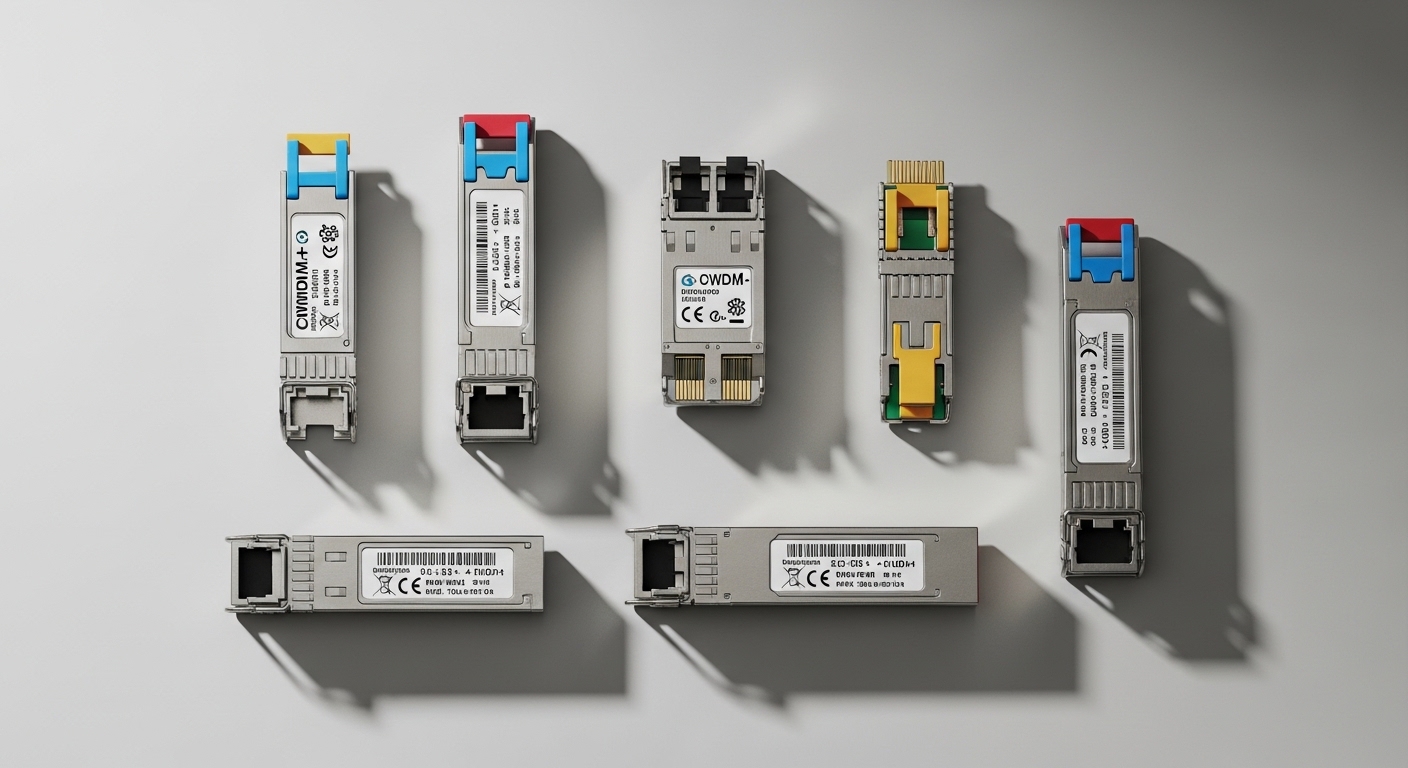
In classic CPRI deployments, digitized radio samples are transported over dedicated links, pushing strict latency and synchronization requirements. eCPRI replaces some of that rigid mapping with more flexible packetization, but the transport still demands deterministic behavior and low jitter so that the radio unit can recover timing reliably. Practically, the eCPRI fiber module you pick must support the required data rate per sector, meet optical power and receiver sensitivity targets, and remain stable across temperature and aging. For reference, the functional split and fronthaul transport expectations are described across vendor O-RAN integration guides, while the Ethernet and physical layer fundamentals align with IEEE 802.3 transceiver and optical link behavior. anchor-text
CPRI versus eCPRI: what changes for optics selection
With CPRI, the line rate is typically fixed and the optical design follows a predictable mapping. With eCPRI, traffic patterns can vary more with scheduling and packetization, so the transport can expose marginal optics that previously “worked” under a narrower load profile. The most visible differences during commissioning are link training behavior, error counters under burst traffic, and how quickly the system flags link instability. Your optics must therefore be validated not only for nominal reach but also for real BER under the equipment’s traffic model.
Pro Tip: In field testing, many “it should work” optics failures are not optical budget misses at nominal power. Instead, they show up as receiver overload or marginal sensitivity when the link is installed closer than expected (short patch cords) or when connector cleanliness is inconsistent. Always measure received power at the installed distance and verify polarity, cleaning state, and MPO/LC mapping before swapping modules.
Key eCPRI requirements you must map to module specs
Engineers usually start with the network equipment requirement: the baseband unit expects a certain line rate and optical interface type, and the radio unit expects the same timing and transport integrity. Then you translate those needs into optical parameters: wavelength, reach, transmit power, receiver sensitivity, and connector type. For eCPRI fiber module selection, the most operationally relevant constraints are temperature range, DOM support (for monitoring), and whether the module is supported by the switch or O-RAN transport platform. If you skip these, you can end up with link instability that only appears after hours of operation.
Technical specifications comparison for common module classes
The table below compares representative pluggable optics used in fronthaul-like deployments. Actual supported line rates vary by vendor and platform, so treat these as selection anchors and confirm with your host’s datasheet and compatibility list.
| Module type | Wavelength | Typical reach | Data rate class | Connector | DOM / monitoring | Operating temperature |
|---|---|---|---|---|---|---|
| 10G SFP+ SR | 850 nm | Up to 300 m (OM3) | 10.3125 G | LC | Usually yes (I2C) | 0 to 70 C (commercial) |
| 25G SFP28 SR | 850 nm | Up to 100 m (OM4 typical) | 25.78125 G | LC | Usually yes | -5 to 70 C (varies) |
| 100G QSFP28 SR4 | 850 nm | Up to 100 m (OM4 typical) | 103.125 G | MPO (4 lanes) | Yes (I2C) | -5 to 70 C (varies) |
| 100G QSFP28 LR4 | 1310 nm (4 wavelengths) | Up to 10 km (singlemode) | 103.125 G | LC | Yes | -5 to 70 C (varies) |
DOM, alarm thresholds, and what the host actually checks
Most modern hosts query the module’s digital optical monitoring (DOM) via an I2C interface. The host may enforce acceptable ranges for transmit power, receive power, and laser bias current to prevent unsafe operation. If you use a third-party eCPRI fiber module that reports values outside the host’s expected thresholds, you can see “link up then drop” behavior during temperature ramps. Always confirm whether your platform expects specific DOM fields and whether it tolerates vendor variation.
Reach planning: optical budget math that field teams can verify
Reach planning for fronthaul is not just “module reach on a datasheet.” You need a budget that includes fiber attenuation at the wavelength, connector and splice losses, patch cord aging, and a margin for installation variability. A practical approach is to start from the module’s stated transmit power and receiver sensitivity, then subtract worst-case losses for the installed cable plant and add a fade margin. This is where many eCPRI fiber module projects succeed or fail during acceptance testing.
Example: budget for a 5G fronthaul cabinet-to-cabinet link
Consider a data center row with baseband cabinets connected to radio cabinets using OM4 multimode fiber. You have a 70 m run including patch cords and two connector pairs. If the fiber attenuation is about 3.5 dB/km at 850 nm, the fiber loss is roughly 0.25 dB. Add connector loss (for example, 0.5 dB per mated pair, depending on polishing and cleanliness) and patch cords, and you might land near 2 to 3 dB total insertion loss before margin. With an SR module that specifies sufficient receiver sensitivity margin at 70 m, the link should hold under burst traffic—assuming connector cleanliness is verified and polarity is correct.
Module selection checklist for eCPRI fronthaul deployments
Use this ordered checklist during procurement and commissioning. It is designed for the tradeoffs engineers actually face when selecting an eCPRI fiber module under schedule pressure.
- Distance and fiber type: confirm OM3/OM4/OS2, measured length, and expected worst-case insertion loss (including connectors and splices).
- Data rate and host port capability: verify the fronthaul platform supports the module’s line rate and interface mode (for example, SR4 versus LR4 lane mapping for 100G).
- Connector and polarity: ensure LC versus MPO type, and confirm polarity mapping for MPO (or LC) at both ends.
- DOM and monitoring compatibility: confirm the host accepts the module’s DOM implementation and does not block link due to threshold differences.
- Operating temperature range: validate whether you need commercial (0 to 70 C) or extended (-10 to 85 C) for outdoor cabinets or high-heat rooms.
- Vendor lock-in risk: check the vendor compatibility matrix and whether the host uses hardware checks that reject non-approved optics.
- Power and thermal behavior: ensure the module’s optical output and host thermal design can handle sustained operation at the target ambient.
- Acceptance test plan: define what you will measure (received power, link error counters, thermal cycling if required) before cutover.
Compatibility caveats that matter in the field
Many hosts are tolerant when the optics are compliant with the expected electrical and optical interface behavior, but some enforce strict vendor checks. If your O-RAN transport platform is from a specific OEM, confirm whether it requires an “approved optics list.” Even when a module is electrically compatible, a mismatch in DOM behavior can cause the host to log alarms or refuse link activation.
Common mistakes and troubleshooting tips
Below are failure modes that appear frequently during fronthaul commissioning. Each includes the root cause and a pragmatic fix.
Link flaps after temperature change
Root cause: the module is operating near its threshold due to short-reach installation, higher-than-expected transmit power, or receiver overload. Some hosts also apply strict DOM threshold checks that become invalid as bias current shifts with temperature.
Solution: measure received power using the correct method, clean and re-seat connectors, and validate with a known-good module from the approved list. If possible, test with adjusted patch cord lengths or attenuators to bring the link into the module’s linear operating region.
“Link up” but high error counters under burst traffic
Root cause: fiber contamination, micro-bends, or patch cord damage can pass basic link detection but degrade BER when traffic patterns stress timing recovery. Another cause is lane mapping mismatch on MPO connectors.
Solution: clean connectors with approved lint-free methods and inspection tools, then re-terminate or swap patch cords to verify polarity. For MPO, confirm lane-to-lane mapping and use a polarity tester if available.
Host rejects module or reports DOM alarms
Root cause: DOM implementation differences or unsupported threshold behavior can trigger host-side safety limits. In some cases, a module is from a third-party that does not fully match the host’s expectations for DOM fields.
Solution: check the host logs for the exact DOM alarm reason, try an OEM-approved optic, and compare DOM readings (transmit power, temperature, bias current). If the host supports it, update platform firmware; otherwise, replace with a compatible optic SKU.
Works in one cabinet, fails in another
Root cause: inconsistent fiber plant quality, uneven patch cord insertion losses, or different ambient heat profiles. A module might be within spec on a bench but outside budget after installation.
Solution: run the same optical budget calculations for each cabinet pair, measure insertion loss per link, and standardize patch cord types and connector cleanliness procedures across the project.
Cost and ROI: what to budget for an eCPRI fiber module program
Pricing varies by data rate, reach class, and whether the module is OEM-approved. As a realistic planning range, 10G and 25G short-reach optics often land in the tens to low hundreds of dollars per module, while 100G optics can be materially higher, especially for long-reach singlemode designs. Third-party modules may reduce unit cost, but total cost of ownership (TCO) can rise if you incur additional spares, longer troubleshooting cycles, or repeated acceptance failures due to compatibility checks.
From a field operations perspective, the dominant ROI drivers are: (1) reduced downtime during commissioning, (2) fewer truck rolls due to predictable compatibility, and (3) lower probability of thermal or DOM-related faults. If your environment has strict acceptance criteria, OEM-approved optics typically reduce risk even when the per-unit cost is higher. For references on transceiver interfaces and compliance behavior, consult vendor datasheets and IEEE 802.3 optical interface guidance. anchor-text: IEEE 802.3 Working Group
FAQ: eCPRI fiber module buying questions from 5G fronthaul teams
What fiber type is most common for an eCPRI fiber module in fronthaul?
Many indoor fronthaul deployments use multimode fiber for shorter cabinet-to-cabinet distances, especially at 850 nm using SR optics. If you need longer spans or outdoor runs, singlemode at 1310 nm (and sometimes 1550 nm) with LR optics becomes more practical. Your choice should be based on measured insertion loss, not just the nominal “reach” marketing number.
How do I verify DOM compatibility before ordering?
Start with the host platform’s optics compatibility list and confirm the expected monitoring interface behavior. During pilot testing, record DOM readings and any host log messages under both cold and warm operating conditions. If your host blocks non-approved optics, you should plan procurement around the approved SKUs to avoid schedule risk.
Is a higher-power transmitter always better for eCPRI?
No. Higher transmit power can overload the receiver when links are installed closer than expected, leading to bit errors or link flaps. The correct approach is to meet the receiver’s sensitivity while staying within the receiver’s safe input range, using measured received power at installation.
What is the most common cause of “works initially then degrades”?
Connector contamination and inconsistent cleaning are among the most frequent causes, especially with high-density patching. Micro-bends from cable management can also cause intermittent degradation. The fix is to inspect with an optical microscope or inspection tool, clean properly, and validate with a polarity and insertion loss check.
Do I need to support a specific wavelength for eCPRI modules?
Yes, but the requirement is tied to your fiber type and distance. Multimode SR modules typically use 850 nm, while singlemode LR modules commonly use 1310 nm. Ensure wavelength matches both the module specification and the installed fiber plant characteristics.
Can I mix vendors for spares in an eCPRI fiber module pool?
Sometimes, but it depends on host acceptance behavior and DOM thresholds. If the host enforces vendor checks, mixing can fail acceptance. Even when mixing works electrically, you should validate that error counters and DOM alarms remain within acceptable ranges across the full operating temperature.
Choosing an eCPRI fiber module for 5G fronthaul is primarily an engineering exercise in optical budget accuracy, host compatibility, and operational validation under real traffic and temperature conditions. If you want the next step, review your host platform’s optics matrix and then run a short pilot with measured received power and BER checks using your actual patch cords via related topic: 5G fronthaul optics acceptance testing checklist.
Author bio: Field-focused network engineer who has commissioned fronthaul optical links in high-density switching rooms and validated optics using received power, DOM telemetry, and BER counters. Product-minded writer translating vendor datasheets and IEEE behavior into procurement and troubleshooting decisions for real deployments.
