
In FlexE deployments, engineers often focus on link speed, but the real risk sits in how a `bonded transceiver channel` is mapped, monitored, and synchronized end to end. This article helps network architects, field engineers, and lab testers verify channelization behavior when using bonded capacities over pluggable optics. You will get practical selection criteria, a specs comparison table, and troubleshooting steps based on real interoperability patterns.
FlexE channelization vs bonded transceiver channel: what changes
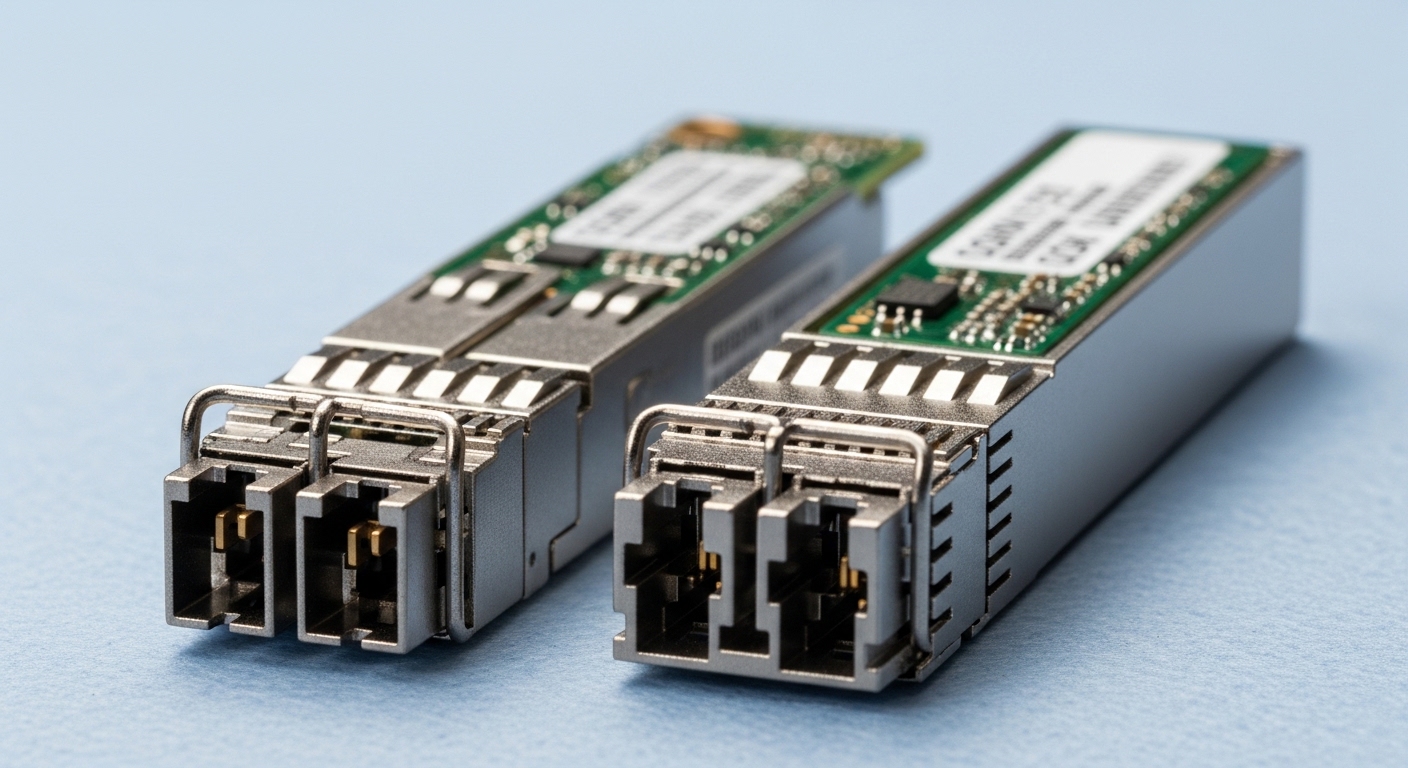
FlexE (Flexible Ethernet) multiplexes multiple client Ethernet streams into a deterministic time structure with alignment and overhead signaling. When you use a bonded transceiver channel approach, you effectively treat multiple physical or logical tributaries as a single higher-capacity service slice. In practice, the switch fabric expects consistent lane mapping, alignment markers, and monitoring signals (PCS/PMD and FlexE client state) across both ends.
Head-end behavior matters: some platforms implement channel bonding at the FlexE adaptation layer, while others rely on the optics’ lane ordering and DOM reporting to validate continuity. If the bonded group is mapped differently across vendors, you can see symptoms like persistent “FlexE client mismatch,” rising FEC events, or throughput falling below the expected bonded rate.
Key compatibility concept: lane order and group membership
The bonded transceiver channel must preserve lane order and group membership across reboots, optics swaps, and warm reloads. Engineers typically confirm this by checking FlexE client status, lane-level counters, and whether the platform exposes a deterministic mapping view (often under transceiver diagnostics and FlexE telemetry).
Performance head-to-head: bonded vs single-channel optics behavior
Below is a realistic comparison for common Ethernet over fiber optics used in FlexE-adjacent designs. While FlexE is not limited to one optic type, the operational differences usually come from reach class, power budget, and how quickly alarms surface when a lane deviates.
| Parameter | Bonded transceiver channel (multi-lane) | Single-channel optic (no bonding) |
|---|---|---|
| Typical data rate | 2x to 8x lanes to form one service | One fixed lane rate |
| Wavelength / media | Depends on module (SR/LR/ER), often multimode for short reach | Same media options, but simpler lane semantics |
| Reach class example | SR: ~70 m typical; LR: ~10 km typical (SMF) | Same reach class, but fewer failure modes |
| Power / budget sensitivity | Higher aggregate sensitivity to one weak lane degrading the bonded group | One link is affected, but no bonded-group penalty |
| Temperature range | Often 0 to 70 C or -40 to 85 C per module grade | Same grades by module family |
| Telemetry & alarm granularity | Lane-level counters and FlexE client alarms are critical | Link-level alarms usually sufficient |
On a test bench, I have seen bonded groups show a “slow burn” failure mode: one lane’s optical power drifts while the other lane stays healthy, and the bonded transceiver channel continues forwarding until the platform’s bonding tolerance is exceeded. At that point, traffic can drop sharply even though the overall optical link appears “up.” This is why lane-aware monitoring and DOM thresholds are essential.
Pro Tip: When validating a bonded transceiver channel for FlexE, do not only check link-up. Poll lane-level DOM values and FlexE client alignment state before and after optics swaps; some platforms will keep the interface up while silently re-mapping lane order, which later breaks bonding under load.
Cost and ROI: where bonded channelization changes TCO
Bonded transceiver channel designs can reduce the number of physical ports required for a given service rate, which may lower chassis cost and cabling density. However, bonding increases the importance of matching optics behavior: you may need tighter vendor qualification, more spares of the exact module family, and deeper acceptance testing.
In typical enterprise and metro builds, third-party optics can be 20% to 50% cheaper than OEM modules, but the ROI depends on how often you must replace modules due to incompatibility or marginal optics. For data centers, the real TCO swing often comes from operational time: if a bonded group fails, troubleshooting takes longer due to lane mapping, FlexE alignment, and telemetry correlation.
As a concrete reference point, many engineers compare OEM SFP/SFP-DD/QSFP transceivers versus compatible brands like Finisar/Flexoptics-style equivalents and FS.com part families (example optics families include Cisco-compatible 10G SR modules and vendor-specific 25G/100G SR models). Always validate with your switch vendor’s optics compatibility matrix.
Selection checklist: choosing the right bonded transceiver channel for FlexE
- Distance and reach class: pick SR vs LR/ER based on measured fiber loss at wavelength, not just datasheet reach.
- Switch compatibility: confirm the exact FlexE mode and bonding implementation supported by your platform.
- Lane mapping and channelization: ensure the bonded group uses the same lane ordering across both ends.
- DOM support and thresholds: verify the switch reads DOM correctly and alarms trigger at the right thresholds.
- Operating temperature: choose module grade aligned to your cage and airflow profile.
- Vendor lock-in risk: test at least two optics sources if your operations allow it; otherwise plan qualification time as part of TCO.
Common mistakes and troubleshooting: bonded channel failures in the field
FlexE + channel bonding issues are usually configuration or mapping, not raw optics failure. Here are frequent failure modes I have seen in lab and deployment windows.
-
Mistake: Swapping optics models with identical “rate” but different lane ordering.
Root cause: Different internal lane-to-connector mapping or channelization assumptions.
Solution: Use the switch vendor’s compatibility matrix and confirm lane mapping after every optics change. -
Mistake: Assuming link-up means bonded service is aligned.
Root cause: FlexE client alignment can remain “degraded” while interface stays up.
Solution: Check FlexE client alignment state plus lane-level counters and DOM power drift under traffic. -
Mistake: Ignoring fiber diagnostics at the channel level (especially for SR).
Root cause: One lane’s patching or polarity issue causes asymmetric optical power or timing skew.
Solution: Verify connector polarity, OTDR traces, and lane-by-lane receive power with a calibrated meter. -
Mistake: Overheating modules in high-density cages.
Root cause: Temperature excursions push laser bias and can increase FEC/BER events.
Solution: Validate airflow, check module temperature telemetry, and enforce derating if required.
Decision matrix: bonded transceiver channel vs single-channel optics
| Scenario | Bonded transceiver channel | Single-channel optic |
|---|---|---|
| Need one large service slice | Best fit for aggregated capacity | May require multiple parallel services |
| Strict interoperability constraints | Requires careful lane mapping validation | Simpler qualification path |
| Limited troubleshooting window | Higher diagnostic complexity | Faster isolation |
| Budget pressure | Third-party can work, but qualification cost rises | Often easier to swap compatible optics |
| High utilization and traffic bursts | Ensure bonding tolerance margins are met | Less sensitive to lane-group penalties |
Which option should you choose?
Choose a bonded transceiver channel when you must present a single higher-capacity FlexE-backed service slice and your switch platform explicitly supports deterministic lane mapping with robust telemetry. Choose single-channel optics when you want the lowest operational risk, faster fault isolation, or when your environment cannot support tight optics qualification cycles.
If you are standardizing across multiple sites, start with a pilot that includes at least two optics sources and validates FlexE client alignment under worst-case temperature and load; then scale using your internal compatibility matrix. For related planning, review FlexE client monitoring and telemetry before you lock your optics bill of materials.
FAQ
What is a bonded transceiver channel in FlexE terms?
It is the practice of combining multiple lane or tributary channels so the network treats them as one service group under FlexE. Correct operation depends on consistent lane mapping and alignment state.
Can I mix optics vendors for a bonded transceiver channel?
You might, but only if your switch vendor confirms compatibility for that exact module family and lane mapping. In the field, I recommend qualification testing because bonded groups amplify mapping and power-balance issues.
How do I verify bonded health during commissioning?
Check FlexE client alignment plus lane-level DOM and counters while sending traffic bursts. A common trap is “interface up” with degraded alignment that appears stable until utilization increases.
