
Radio telescope backends move wideband digitized streams over kilometers of fiber with tight latency, strict link budgets, and harsh environmental constraints. This article helps network and field reliability engineers choose the right astronomical data SFP for fiber transport in telescope sites, where temperature swings, vibration, and long run lengths can dominate failure rates. You will get selection criteria, a spec comparison table, troubleshooting pitfalls, and practical ROI considerations for OEM versus third-party optics.
Why radio telescopes stress an astronomical data SFP more than data centers
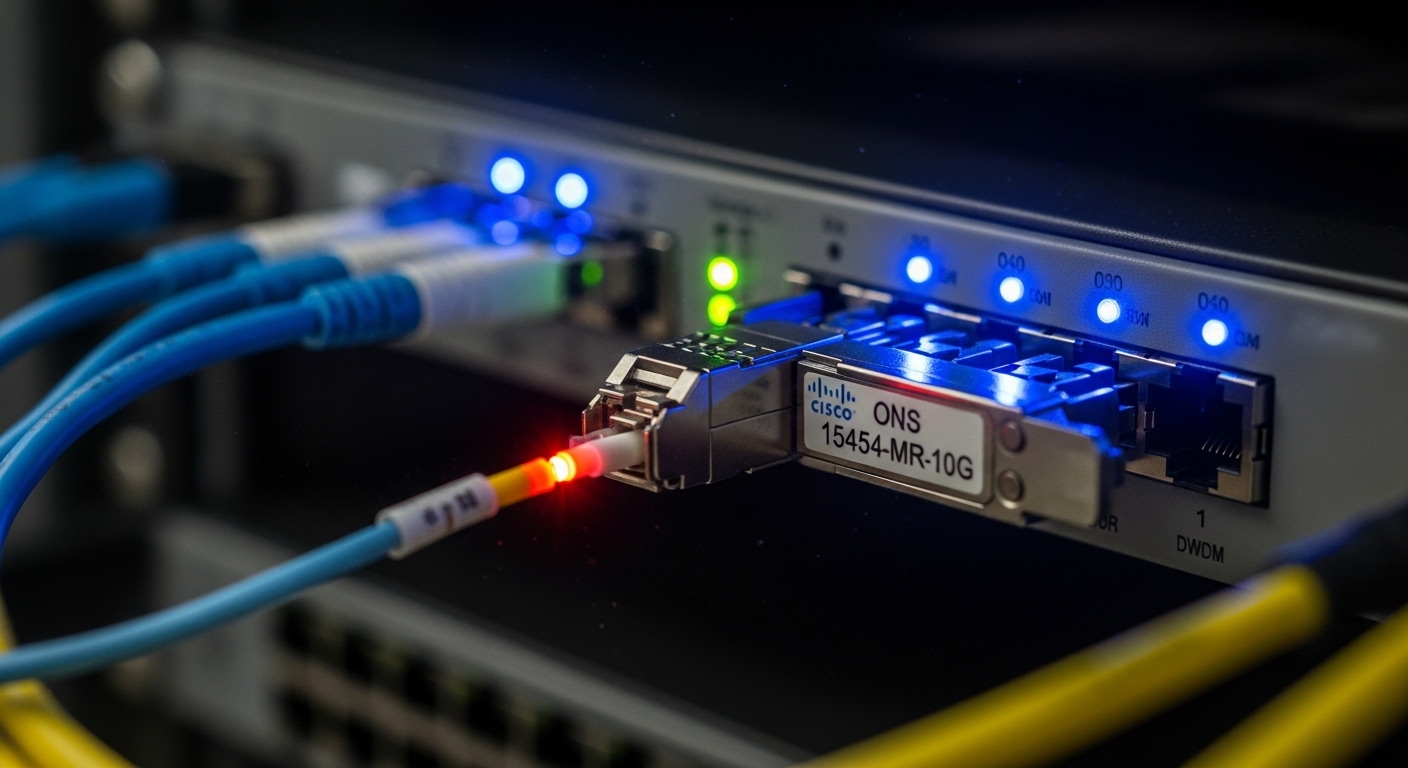
In a typical data center, transceivers operate in controlled HVAC conditions and are often replaced on predictable maintenance cycles. In radio telescope fiber networks, the optical link may span 1 km to 20 km depending on station layout, with fiber routes routed through cable trays, conduits, and sometimes outdoor sections. The receiver sensitivity margin is affected by aging fiber, connector contamination, and weather-driven temperature gradients. Reliability engineering also matters: MTBF assumptions based on telecom lab profiles can be optimistic when optics see sustained thermal cycling and micro-vibration.
Most telescope deployments use Ethernet or custom packetized framing over optical transceivers, often with deterministic timing overlays. Many teams standardize on SFP/SFP+ for cost and availability, even when later expansions move to QSFP+. The key is to match the transceiver to the switch or FPGA SerDes electrical interface and to validate optical power, wavelength, and DOM telemetry behavior under the site’s environmental envelope. Standards alignment matters too: Ethernet PHY requirements are grounded in IEEE 802.3 line-rate behavior and optical module expectations; see [Source: IEEE 802.3].
Pro Tip: For telescope sites, treat DOM telemetry accuracy as a reliability input, not just monitoring. If DOM readings drift with temperature, you can mis-estimate link margin and delay corrective actions during seasonal extremes; log DOM versus ambient and correlate with BER counters before declaring the link healthy.
Core specifications that decide reach and link margin
The optical interface choice for an astronomical data SFP is usually dominated by wavelength family, fiber type, and power budget. Most telescope links use 1310 nm (O-band) for single-mode reach with lower dispersion sensitivity, while 850 nm (SR) is common for short indoor runs. If you are transporting higher-rate Ethernet lanes, you may use SFP+ (10G) optics; for intermediate rates, some designs use SFP (1G) variants. Always verify the module’s supported data rate and whether your host expects SFP or SFP+ electrical characteristics.
| Parameter | Typical Choice for Telescope Links | What to Verify |
|---|---|---|
| Data rate | SFP: 1G; SFP+: 10G | Host compatibility with IEEE 802.3 line rate |
| Wavelength | 1310 nm (SM long reach) or 850 nm (short reach) | Match to fiber plant and dispersion assumptions |
| Reach (ballpark) | 850 nm SR: tens to a few hundred meters; 1310 nm LR: up to ~10 km class | Confirm vendor link budget, not only “max reach” marketing |
| Connector | LC duplex (common) | Adapter and bulkhead standardization across racks and enclosures |
| Optical power | Tx output and Rx sensitivity define margin | Ensure margin remains after aging and worst-case temp |
| DOM support | Digital Optical Monitoring often available | Telemetry behavior under thermal cycling; alarms thresholds |
| Operating temperature | Industrial grades often required | Confirm ambient at mount location, not just datasheet spec |
For concrete module examples, you may encounter 10G SFP optics such as Cisco-compatible style 10G SR modules (for short runs) and 10G LR/ER style 1310 nm modules for longer single-mode runs. When selecting, cross-check vendor datasheets and host vendor compatibility notes; see [Source: Cisco SFP documentation] and [Source: Finisar datasheets].
How to choose the right astronomical data SFP for your fiber plant
Start with a link worksheet that combines measured fiber loss, expected connector losses, and worst-case temperature effects. Then map that to the transceiver’s stated optical budget and sensitivity. For telescope networks, you also need operational discipline: define who owns link validation, how often you run optical cleaning verification, and what alarms trigger maintenance.
Decision checklist (in the order engineers should apply it)
- Distance and fiber type: confirm single-mode versus multimode, and measure end-to-end attenuation at operating wavelengths.
- Data rate and host signaling: verify SFP vs SFP+ electrical support on the switch, NIC, or FPGA-based line cards (IEEE 802.3 compliance expectations).
- Wavelength family: choose 1310 nm for typical long single-mode runs; choose 850 nm only when multimode plant and reach requirements align.
- Optical budget margin: compute worst-case margin using Tx power, Rx sensitivity, connector/splice losses, and any patch panel penalties.
- DOM telemetry behavior: confirm presence and how your NMS reads thresholds; validate alarms under thermal cycling.
- Operating temperature and enclosure airflow: validate the module temperature at the cage inlet during peak site conditions.
- Switch compatibility and vendor lock-in risk: check host vendor lists where available; plan for interoperability testing if using third-party optics.
Validation steps that reduce field failures
Before deploying in a telescope back-end, perform a burn-in and link test using a stability-focused pattern. Capture baseline BER (bit error rate) behavior if your equipment exposes it, and record DOM values at multiple ambient points (for example, at cold-start, mid-cycle, and near peak enclosure temperature). Perform at least one clean-and-retest event: clean both ends, re-seat connectors, and confirm the link margin recovers as expected. This practice prevents “it works on the bench” outcomes that later fail during field vibration.
Common mistakes and troubleshooting patterns in telescope SFP deployments
Failures in astronomical data SFP links often look like “random disconnects” or “intermittent errors,” but root cause is frequently deterministic: power budget collapse, connector contamination, or host signaling mismatch. Below are concrete pitfalls observed in field troubleshooting workflows, along with corrective actions.
Connector contamination causes optical budget collapse
Root cause: microscopic contamination on LC faces increases insertion loss, pushing Rx below sensitivity during temperature extremes. Wetting from humidity or dust migration accelerates this in outdoor installations.
Solution: implement a cleaning SOP using lint-free wipes and appropriate cleaning tools; inspect with a fiber microscope; re-test after every maintenance action. Track link changes in your ticketing system so you can correlate symptom onset with cleaning events.
SFP versus SFP+ electrical mismatch leads to link instability
Root cause: installing an optics module that does not match the host cage expectations (or a host that only supports specific transceiver revisions) can cause repeated training failures. This is more common during equipment swaps or when mixing OEM and third-party optics.
Solution: confirm module type and revision compatibility in the host documentation; run an acceptance test that includes link up/down cycling and sustained traffic validation. If your equipment supports it, verify DOM presence and that the host reports expected lane status.
Temperature-driven DOM drift hides margin loss
Root cause: DOM temperature compensation may not align with your enclosure thermal profile. Engineers see “reasonable” thresholds but the actual optical output or receiver behavior degrades under seasonal peak ambient.
Solution: plot DOM readings versus ambient temperature and correlate with error counters. Set maintenance triggers based on observed BER or packet error trends, not only DOM alarms.
Wrong wavelength family or assumed reach
Root cause: selecting 850 nm SR for a run that includes splices and patch panels, then assuming the datasheet “max reach” survives real-world losses. Telescope facilities often have additional connectorization between buildings and equipment rooms.
Solution: perform a measured loss audit with a proper optical power meter and wavelength-specific test. Recompute budget with worst-case losses and choose an optics class that leaves margin for aging.
Cost, TCO, and reliability math for optical module sourcing
For an astronomical data SFP, the purchase price is only a small fraction of lifecycle cost when you include field labor, downtime, and rework. In practice, OEM-branded 10G optics and third-party compatible optics can differ by a noticeable amount per module, but the real TCO depends on failure rate, compatibility friction, and spares management. For example, third-party modules may cost less upfront, but if they require more acceptance testing or trigger host compatibility issues, the labor cost can outweigh savings.
Typical market pricing varies by rate and reach, but for budgeting you often see tens to low hundreds of USD per SFP/SFP+ module for common short-reach variants, with higher cost for longer-reach single-mode optics and industrial temperature grades. Use a reliability model: estimate MTBF from vendor claims only as a starting point, then adjust using your own field return data. If you can maintain a stable replacement interval and keep clean connector practices, you reduce mean time to repair and improve effective availability. For standards and reliability references, consult vendor reliability guidance and general optical performance frameworks like [Source: ITU-T recommendations for optical interfaces] where applicable.
Pro Tip: Maintain a “spares with traceability” inventory. Track each module’s serial number, DOM baseline at installation, and the fiber path it serves; when failures occur, you can separate optics defects from plant problems within hours instead of days.
FAQ on selecting and deploying astronomical data SFP modules
Q1: What wavelength should I pick for long-distance astronomical data transport?
For typical long single-mode runs, 1310 nm optics are a common choice because dispersion effects are manageable and reach classes are well supported. If your plant is multimode for short internal runs, 850 nm can be cost-effective, but you must validate actual attenuation and patch panel losses.
Q2: Do I need DOM support on an astronomical data SFP?
DOM is strongly recommended when you have seasonal temperature swings and want to correlate optical behavior with error counters. Even if the host does not fully alarm on DOM thresholds, you can still trend Tx power, Rx power, and temperature for proactive maintenance.
Q3: Are third-party SFP modules safe for telescope networks?
They can be, but you must run compatibility and acceptance tests with your exact host hardware and optics cages. Host vendors sometimes restrict unsupported revisions; document outcomes and avoid mixing module types across redundant links without verification.
Q4: How do I validate link margin before installation?
Measure end-to-end fiber loss at the correct wavelength, include connector and splice penalties, and compare against the module’s optical budget (Tx power and Rx sensitivity). Then confirm with sustained traffic and BER or error counter monitoring under at least two ambient conditions.
Q5: Why does the link fail only during cold nights?
Cold can shift alignment and change connector contamination behavior, and it can also alter optical output and receiver sensitivity margins. Start by checking DOM trends versus temperature, inspect connectors, and verify that the transceiver temperature stays within the intended operating envelope.
Q6: What is the most common field fix for intermittent errors?
Connector cleaning and reseating is often the fastest path to recovery, especially after maintenance work or seasonal humidity exposure. If cleaning does not restore margin, then evaluate host compatibility and re-check that the selected optics wavelength and data rate match the link design.
Selecting an astronomical data SFP for radio telescope fiber networks is an engineering problem that blends optical budgets, host electrical compatibility, and environmental reliability controls. The next step is to build a link worksheet with measured loss, then run acceptance tests that include thermal cycling and sustained traffic; see optical transceiver link budget for a practical workflow.
Author bio: I have led field reliability validation for fiber optic backhaul in precision instrumentation networks, including acceptance testing with thermal cycling and optical budget audits. I apply ISO 9001-style traceability and MTBF-informed maintenance planning to reduce downtime in long-lived deployments.
