
Studio networks fail in quiet ways: a link comes up, yet audio drops on the downbeat. This article helps studio engineers and network leads choose the right ADAT fiber SFP for carrying AES67 traffic over fiber, with practical checks you can run before the session starts. You will get a head-to-head comparison of common module options, plus troubleshooting patterns field techs see in racks, patch panels, and media converters.
ADAT fiber SFP vs copper: where the fiber link earns its keep
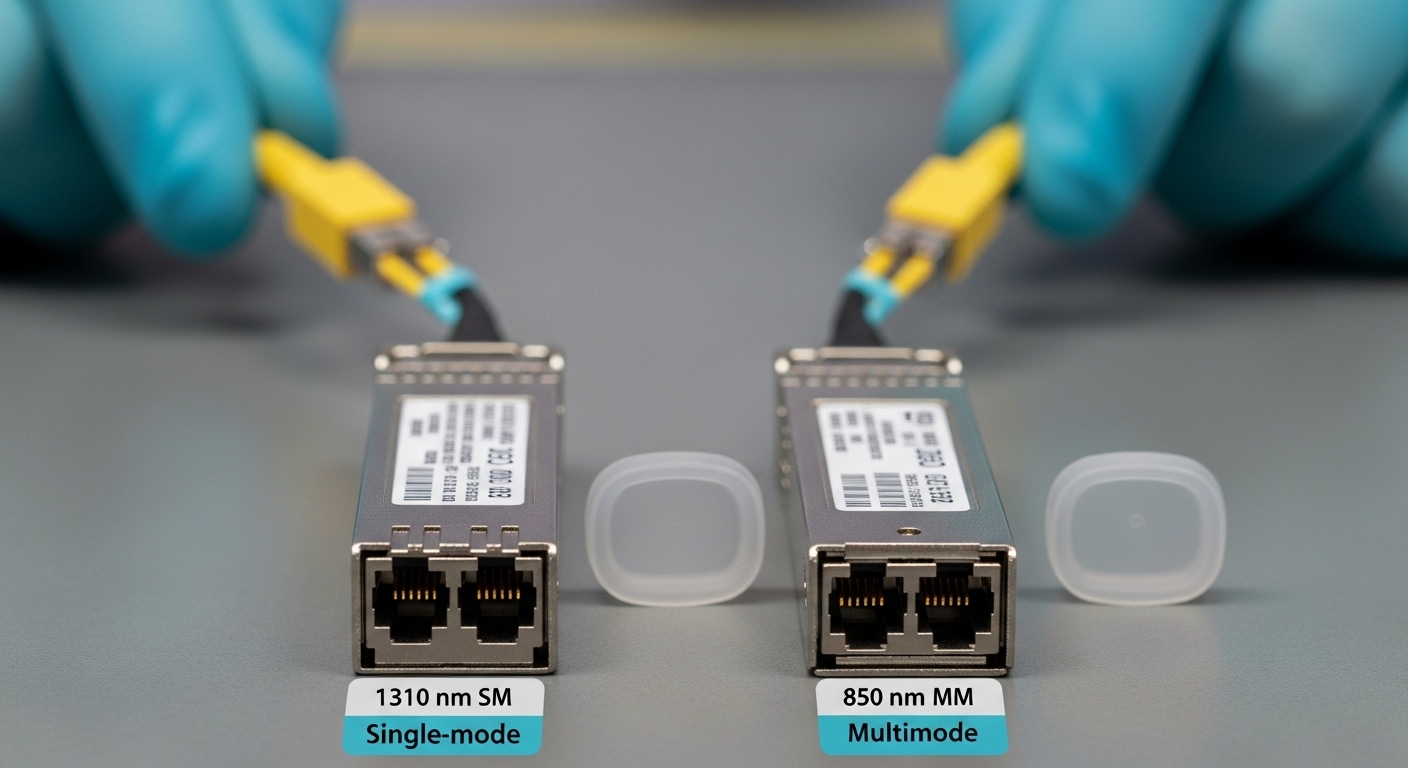
For AES67, what matters is not just bandwidth, but timing stability and error behavior under load. Fiber SFP links reduce ground-loop risk and electromagnetic coupling compared to copper, which is helpful when consoles, stage boxes, and monitoring amps share power circuits. In real studios, a typical failure mode is intermittent CRC errors caused by marginal copper runs; fiber replaces that with a clearer optical margin problem you can measure.
IEEE 802.3 defines physical layer behavior for Ethernet, and AES67 rides on top of standard IP transport; your SFP choice therefore dictates the physical layer envelope: wavelength, reach, and optical power class. Before buying, confirm your switch or media converter supports the module type and that its firmware does not enforce strict vendor ID checks. For authority on Ethernet physical behavior and link negotiation, see [Source: IEEE 802.3]. For SFP optical class and DOM behavior, consult vendor datasheets such as [Source: Finisar] and [Source: Cisco].
Pro Tip: In many studio deployments, the “audio problem” is actually an optical margin issue that only appears after warm-up. If your SFP has digital optical monitoring (DOM), log rx power for the first 30 minutes; a module that starts healthy but drifts low is a better candidate for preemptive replacement than for endless cable swapping.
Performance head-to-head: reach, wavelength, and optical margin
Most studio ADAT-over-fiber designs use short-reach multimode optics in patch-panel runs, while longer backbone segments may use single-mode. The head-to-head decision is usually between 850 nm multimode (MMF) and 1310 nm single-mode (SMF), often with LC connectors. If you are targeting ADAT-style audio transport carried via Ethernet, you still want the SFP that keeps bit error rates low across the actual installation temperature range.
Key specs to compare before you commit
Below is a practical comparison of commonly deployed SFP classes. Exact values vary by vendor and part number, so treat this as a selection lens rather than a guarantee.
| Spec | 850 nm MMF SFP (LC) | 1310 nm SMF SFP (LC) |
|---|---|---|
| Typical wavelength | 850 nm | 1310 nm |
| Connector | LC duplex | LC duplex |
| Typical reach | 300 m to 550 m (MMF, depends on OM3/OM4 and link budget) | 10 km to 40 km (SMF, depends on optic class) |
| DOM support | Often available (readable rx power, tx bias) | Often available (same DOM model) |
| Temperature range | Commonly 0°C to 70°C or extended industrial options | Commonly -5°C to 70°C or extended variants |
| Best use in studios | Patch panel to rack, nearby stage boxes | Rooms, control booths, and backbone runs |
Concrete module examples you may encounter
For 10G short-reach multimode, engineers often choose optics like Cisco SFP-10G-SR or third-party equivalents such as FS.com SFP-10GSR-85. For single-mode 10G, you may see Finisar or FS.com variants such as Finisar FTLX8571D3BCL (single-mode class depends on exact suffix) and corresponding SMF SFPs from distributors. Always match the fiber type: OM3/OM4 for 850 nm, and the correct SMF grade for 1310 nm.
Also verify the data rate your audio-over-IP design expects at the physical layer. Many AES67 deployments run on 1G or 10G Ethernet; the SFP must match the switch port speed and the switch’s optics expectations. If you use a media converter between console DSP and the network, check whether it supports SFP DOM passthrough and whether it enforces optical thresholds.
Cost and ROI: OEM stability vs third-party optical reality
Studio budgets are real, but so is downtime. OEM SFPs typically cost more yet may reduce time spent on compatibility quirks, especially with DOM and vendor ID checks. Third-party SFPs can be economical, but you should treat them like any other critical component: validate in a pilot link with DOM logging and error counters.
As of recent market pricing, a 10G SR SFP often lands in a broad range depending on brand and warranty tier; third-party modules are frequently less expensive than OEM. Total cost of ownership is not only purchase price: consider labor hours for swaps, the risk of intermittent failures, and the value of having consistent behavior across every stage-box link. If your studio runs live sessions with tight turnaround, the ROI favors modules that behave predictably under thermal cycling and that match the switch’s optics policy.
Use-case comparison: patch-panel runs vs backbone segments
In a 3-tier data center leaf-spine topology you might care about fan-out and oversubscription, but a studio network cares about latency stability and predictable link health during rehearsals. Imagine a control room connected to three performance rooms: 12 stage-box uplinks terminate at a patch panel, then fan into a 10G core switch. If the average path is 80 m of OM4 multimode fiber with short patch cords, a 850 nm MMF ADAT fiber SFP class is usually the simplest match.
Now consider a remote booth 2.5 km away through a conduit. That distance pushes you toward 1310 nm SMF optics with an appropriate reach rating. The operational difference is that SMF links often provide a larger margin for attenuation and connector losses, while MMF links can be more sensitive to dirty ferrules and poor cleaning practices. If you are carrying AES67 audio streams that require stable transport, the bigger margin can translate to fewer “mystery” dropouts when the venue changes equipment or moves patch cords.
Selection checklist: the order engineers should verify
- Distance and fiber type: confirm OM3/OM4 for 850 nm MMF, or SMF for 1310 nm. Use measured attenuation when possible.
- Switch and media converter compatibility: verify supported optics list and whether the device enforces vendor ID or DOM thresholds.
- Data rate and duplex: match the port speed (e.g., 1G vs 10G) and ensure the link negotiates cleanly.
- DOM support: prefer optics with readable rx power and tx bias; plan to monitor during warm-up.
- Operating temperature: studios can swing from cold mornings to warm evenings; confirm the module’s rated range.
- Connector cleanliness and patching: LC ferrules must be clean; plan for inspection tools and cleaning supplies.
- Vendor lock-in risk: pilot third-party optics in a non-critical link before scaling across all stage-boxes.
Common mistakes and troubleshooting tips
When ADAT fiber SFP links go wrong, the symptoms can look like “audio format issues,” but the root cause is often physical.
- Mistake: Using an 850 nm SFP on the wrong fiber type (or assuming “multimode is multimode”).
Root cause: OM1 vs OM3/OM4 mismatch changes link budget and modal bandwidth.
Fix: verify fiber type on the label and measure or confirm with documentation; re-terminate or switch to SMF 1310 nm if needed. - Mistake: Ignoring DOM and relying only on link-up LEDs.
Root cause: the link can come up with marginal rx power, then drop under temperature shift or connector micro-movement.
Fix: read DOM rx power over time; on Cisco-class platforms, check interface counters for CRC and alignment errors. - Mistake: Dirty LC connectors after repeated patching.
Root cause: ferrule contamination increases attenuation and triggers receiver overload or insufficient optical power.
Fix: inspect with a fiber scope, clean with approved wipes and solvent where appropriate, then retest; replace damaged patch cords. - Mistake: Mismatched transceiver speed class (e.g., 1G optic on a 10G-required port).
Root cause: port optics policy may force fallback or fail negotiation depending on firmware.
Fix: confirm port configuration and ensure the SFP part matches the intended Ethernet rate.
Decision matrix: which ADAT fiber SFP option fits your studio
Use this matrix to make the choice quickly, then validate with a pilot link and DOM monitoring.
| Scenario | Recommended optic | Why | Watch-outs |
|---|---|---|---|
| Patch panel to rack, under a few hundred meters | 850 nm MMF ADAT fiber SFP | Cost-effective and common in studio racks | OM3/OM4 mismatch and connector cleanliness |
| Backbone across rooms or long conduit runs | 1310 nm SMF ADAT fiber SFP | Higher margin for attenuation and distance | Ensure SMF grade and correct reach class |
| Strict uptime requirements during live sessions | Either, but prioritize DOM-capable and validated models | Faster diagnosis and proactive replacement | Third-party optics need a pilot and monitoring plan |
| Budget-sensitive multi-room installs | Third-party compatible optics after validation | Lower purchase price and easier spares | Vendor ID checks and inconsistent DOM behavior |
Which Option Should You Choose?
If you are wiring stage boxes and patch panels within typical studio distances, choose an 850 nm multimode ADAT fiber SFP with DOM and LC connectors, matched to your OM3/OM4 fiber type. If you have long runs between rooms or risk higher attenuation, choose 1310 nm single-mode ADAT fiber SFP for margin and fewer optical surprises. For rapid deployment under deadline, pilot the exact optic model in one critical link, monitor rx power for warm-up, and only then scale across the ensemble.
Next, align your transport layer and cabling hygiene with the audio workflow by reviewing How to design AES67 network latency and routing for studio stability.
FAQ
What does “ADAT fiber SFP” mean in practice?
It typically refers to an SFP optical transceiver used to carry audio-over-IP traffic associated with ADAT-style workflows over Ethernet. The SFP itself is a physical layer device; your AES67 behavior depends on the switch, routing, and clocking strategy above it.
Can I use a third-party ADAT fiber SFP in a managed switch?
Often yes, but compatibility varies by vendor and firmware. Validate with a pilot link, confirm link stability, and check DOM fields and interface error counters during temperature changes.
How do I choose between multimode 850 nm and single-mode 1310 nm?
Use multimode for short runs where OM3/OM4 is documented and cleaning is consistent. Use single-mode when distance grows, conduit losses rise, or you need extra optical margin for long-term stability.
Why does my link flap
