
AI data center networking is forcing a faster shift from 400G optics to 800G links that can feed GPUs without choking on latency, power, or cabling constraints. This reference focuses on what you need to decide in the field: optics type, reach, connector and fiber planning, DOM behavior, and switch compatibility. It is written for network engineers and field technicians deploying new leaf-spine or AI fabric upgrades.
800G transceivers in AI data center networking: what changes at scale
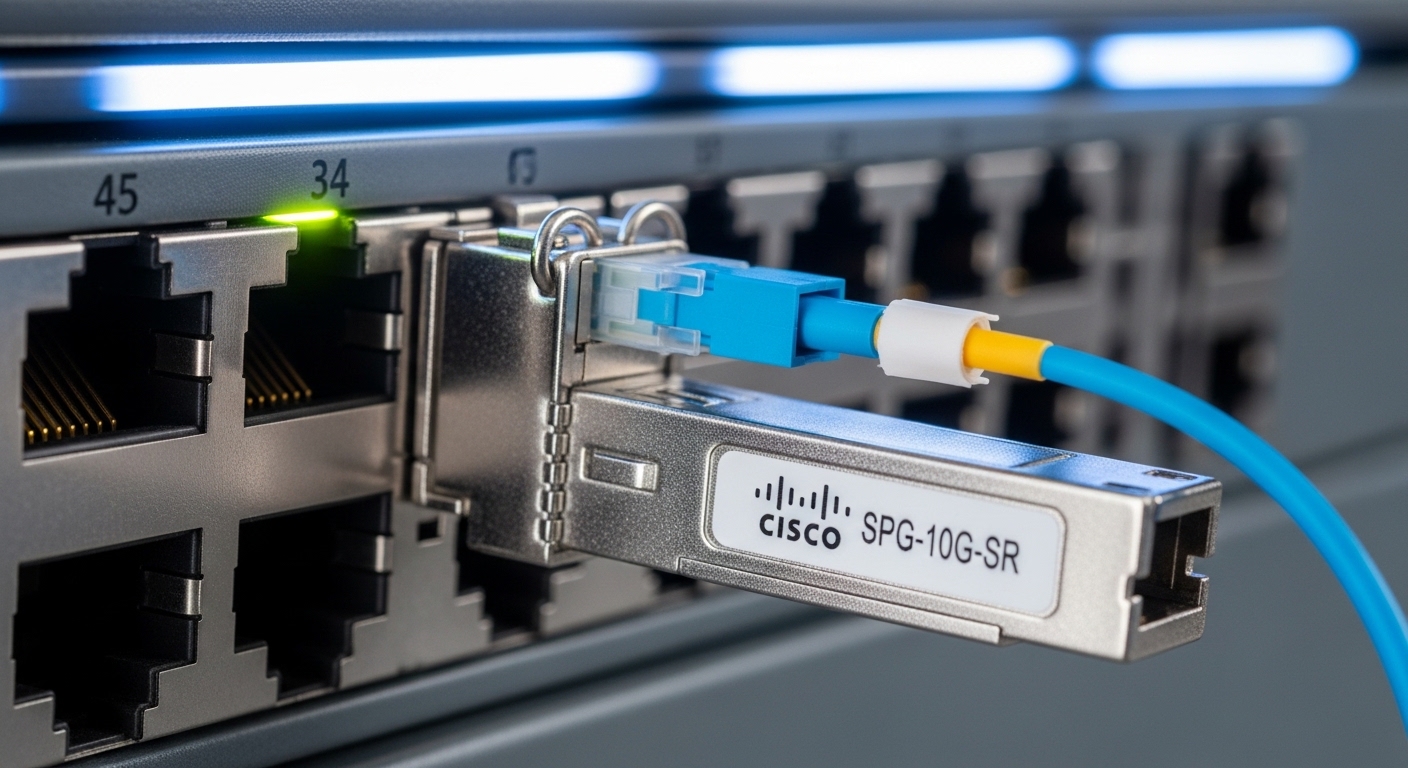
At 800G, transceiver design typically emphasizes higher lane counts and tighter electrical/optical tolerances. In practice, that means more sensitivity to transceiver model selection, vendor firmware, and optical budget than many teams saw at 400G. Most deployments use QSFP-DD form factor for 800G pluggables, with either OSFP-style alternatives in some vendors’ ecosystems.
For AI data center networking, the real operational difference is that cabling and optics planning become a first-order constraint. A “works in the lab” link can fail intermittently in production if patch cords, MPO polarity, or cleaning practices introduce extra loss or reflections. Engineers also watch DOM readings (laser bias, supply voltage, received power) because they correlate strongly with early-life degradation.
Key standards and what to verify
Most 800G optical implementations align with Ethernet transport expectations in IEEE 802.3 and vendor-specific transceiver compliance. For optical behavior and interface details, you should rely on the transceiver datasheet and the switch vendor’s compatibility matrix. For switch-side expectations, also check vendor notes on supported optic part numbers and firmware interoperability. [Source: IEEE 802.3]
When evaluating transceivers, confirm the module is designed for the target lane mapping and that the switch supports the exact pluggable type (for example, QSFP-DD) and the intended speed mode. Also verify DOM support and what the switch expects for alarms and thresholds.
Spec-by-spec: comparing common 800G optics choices for AI fabrics
In AI data center networking, the most common decision is between short-reach multimode and long-reach single-mode options, based on distance and fiber plant. The table below compares typical parameters you will see in datasheets and vendor ordering guides.
| Spec | 800G SR (MMF) | 800G LR4 / ER4 (SMF) | 800G DR4 / FR4 (SMF, if offered) |
|---|---|---|---|
| Typical wavelength | 850 nm class | ~1310 nm class | ~1310 nm class |
| Typical reach target | 100 m–150 m over OM4/OM5 (depends on exact module and fiber) | 10 km–40 km class (depends on module) | 2 km–10 km class (depends on module) |
| Fiber type | OM4 or OM5 multimode | Single-mode OS2 | Single-mode OS2 |
| Connector style | Commonly MPO-16 or MPO-12 (MTP/MPO variants) | LC duplex or MPO (varies by vendor) | LC duplex or MPO (varies by vendor) |
| DOM support | Usually yes (vendor-specific thresholds) | Usually yes | Usually yes |
| Operating temp | Often 0°C to 70°C or -5°C to 70°C class | Often wider industrial options exist | Often wider industrial options exist |
| Compatibility risk | Medium (lane mapping and DOM handling) | Medium-high (vendor firmware expectations) | Medium-high (vendor firmware expectations) |
Examples of modules you may encounter include vendor-specific 800G SR products in the QSFP-DD family, such as Cisco SFP and QSFP optics catalog items (exact part numbers vary by platform) and third-party equivalents like Finisar/FS.com style 800G SR modules. Before purchase, cross-check the exact switch model and the transceiver ordering number from the vendor’s compatibility list.
Choosing MMF vs SMF in the same AI fabric
Many AI data center networking designs use MMF for top-of-rack to leaf hops, then SMF for aggregation, or to connect across buildings. The key is not just reach; it is link budget headroom after including patch cords, splitters (if any), and aging margins. If you use OM5, validate that your switch and transceiver pair are explicitly rated for it.
Pro Tip: In day-two operations, the fastest early warning for a “bad but not dead” 800G link is to trend DOM received power and error counters together. If received power is drifting toward the module’s lower threshold while BER or FEC counters slowly worsen, you often have a cleaning or micro-bend issue rather than a transceiver failure.
Deployment playbook: installing 800G optics without surprises
This section is the hands-on checklist you can run on every rack rollout for AI data center networking. It is designed to reduce avoidable downtime during cutover windows and to keep optics within spec from day one.
Step-by-step field checklist
- Confirm switch compatibility: verify the exact transceiver part number is supported for your switch SKU and firmware level.
- Lock the fiber plan: confirm MMF OM4/OM5 vs SMF OS2, patch cord length, and connector type. For MPO/MTP, verify polarity and lane mapping.
- Inspect and clean: clean every connector endface before seating. Use lint-free wipes and connector-cleaning tools rated for MPO/LC endfaces.
- Seat with correct orientation: for MPO, ensure proper keying and polarity labeling. A reversed polarity can create a “link down” or high-error scenario.
- Validate link bring-up: after insertion, check interface status, negotiated speed, and DOM readings. Record baseline received power and alarm flags.
- Set monitoring thresholds: align threshold alarms with your operational range; do not rely only on default vendor alarms.
- Document lane mapping: store a short per-link record: transceiver part number, fiber type, patch cord lengths, and polarity label.
For measured operational reality: in a typical AI leaf-spine, a 48-port top-of-rack switch might carry 40 to 48 active 800G downlinks during a training cluster expansion. Teams often schedule maintenance windows of 30 to 90 minutes per row, so pre-staging cleaned patch cords and a printed polarity map can prevent cascading delays.
Selection criteria: the decision checklist engineers actually use
When you are buying and deploying 800G transceivers for AI data center networking, selection is less about “best spec on paper” and more about fit with your switch, plant, and maintenance model.
- Distance and fiber type: choose SR for short reach on OM4/OM5, and SMF options for longer aggregation or cross-row links.
- Switch compatibility matrix: confirm exact part numbers are supported, including firmware interactions and speed modes.
- DOM behavior: verify the module’s DOM implementation is recognized by the switch, including alarm thresholds and vendor-specific fields.
- Operating temperature and thermal design: ensure the module is within rated range for the specific rack airflow pattern.
- Connector and polarity constraints: ensure MPO/MTP polarity and keying match your patch-cord ecosystem.
- Power and budget impacts: estimate transceiver power draw and cooling implications for dense ports.
- Vendor lock-in risk: assess whether third-party optics are supported long-term, and whether RMA processes are practical.
- Lead time and spares strategy: plan spares per row, not per entire cluster, because optics swaps are localized.
Common mistakes and troubleshooting tips
Even experienced teams can hit predictable failure modes at 800G. Below are common pitfalls with root causes and practical solutions.
Link flaps or stays down after insertion
Root cause: MPO polarity reversal, wrong lane mapping, or incorrect connector orientation/keying. Solution: verify polarity labels end-to-end, re-seat the MPO with correct keying, and test with a known-good patch cord pair.
High error rate with “mostly working” traffic
Root cause: dirty fiber endfaces, micro-bends, or excessive loss from patch cord length beyond budget. Solution: clean both ends, inspect under magnification if available, measure received power via DOM, and compare against the vendor’s recommended optical budget.
DOM alarms or missing telemetry
Root cause: DOM implementation mismatch, unsupported transceiver vendor, or firmware threshold differences. Solution: confirm the module is on the switch vendor’s supported list; update switch firmware if permitted; then align monitoring thresholds to the transceiver’s datasheet values.
Thermal-related performance degradation
Root cause: insufficient airflow at the rack face, blocked vents, or modules operating near upper temperature limits. Solution: check rack temperature sensors, verify fan tray health, and ensure front-to-back airflow paths are not obstructed.
Cost and ROI note for AI data center networking optics
Prices vary widely by vendor and volume, but for budgeting, many teams see third-party 800G pluggables in the rough range of $1,000 to $2,500 per module, while OEM-branded optics can be higher depending on support agreements. Total cost of ownership (TCO) is driven by RMA rates, failure patterns, and labor time during swaps. If third-party modules are not supported by the switch vendor, you may reduce purchase price but increase deployment and troubleshooting time, which can erase ROI.
From an operational standpoint, align spares with your topology: for example, keep 1 to 2 spares per row during a rollout phase, then reduce once the fleet stabilizes and you track actual failure rates. Also include cooling impact in dense racks; even small per-module power differences can matter at scale.
FAQ
What is the most common 800G optic type for AI data center networking?
For short in-rack or near-rack connectivity, teams commonly use 800G SR over multimode fiber (OM4 or OM5) with MPO-style connectors. For longer aggregation distances, they switch to single-mode options such as LR4/ER4 class modules, based on your reach needs and fiber plant.
How do I confirm DOM support before ordering?
Check the transceiver datasheet and the switch vendor’s compatibility list, focusing on what DOM fields the switch reads and how alarms map to interface counters. During staging, record baseline DOM values (supply voltage, laser bias, received power) and confirm the switch reports them reliably.
Can I mix OEM and third-party optics in the same AI fabric?
You can sometimes, but supportability is the deciding factor. If the switch firmware or optics verification logic differs, you may see telemetry gaps, higher error rates, or RMA complications, even if basic link negotiation works.
What fiber polarity mistakes cause the worst outcomes at 800G?
MPO polarity reversal is a frequent cause of links that never come up. Another common issue is using patch cords with mismatched polarity conventions, leading to elevated errors that look intermittent under load.
What temperatures should I plan for in 800G deployments?
Many modules are rated for 0°C to 70°C or similar ranges, but real rack conditions depend on airflow and placement. Use rack sensor data and verify thermal design assumptions during commissioning, especially in high-density rows.
Do I need special cleaning tools for MPO connectors?
Yes. MPO endfaces are easy to contaminate across multiple lanes at once, so field-proven cleaning kits for MPO and lint-free procedures matter. If you observe rising errors after a maintenance event, cleaning is often the fastest first step.
Updated: 2026-04-29. If you want the next step after selecting modules, review your topology’s distance and cabling constraints using AI fabric cabling and polarity planning so your optics land within budget from day one.
Author bio: I work with field deployments of high-density Ethernet optics and validate DOM telemetry against link budget targets during commissioning. I also document compatibility and troubleshooting patterns to reduce downtime in AI data center networking rollouts.
