
In hyperscale networking, a single transceiver mismatch can turn a stable 400G upgrade into an outage window. This guide targets data center and network operations engineers who must select, validate, and troubleshoot 400G QSFP-DD optics for leaf-spine and spine-core links. You will get spec checkpoints, compatibility criteria, and field-tested failure modes tied to real deployment constraints.
What “400G QSFP-DD” must satisfy in hyperscale networking
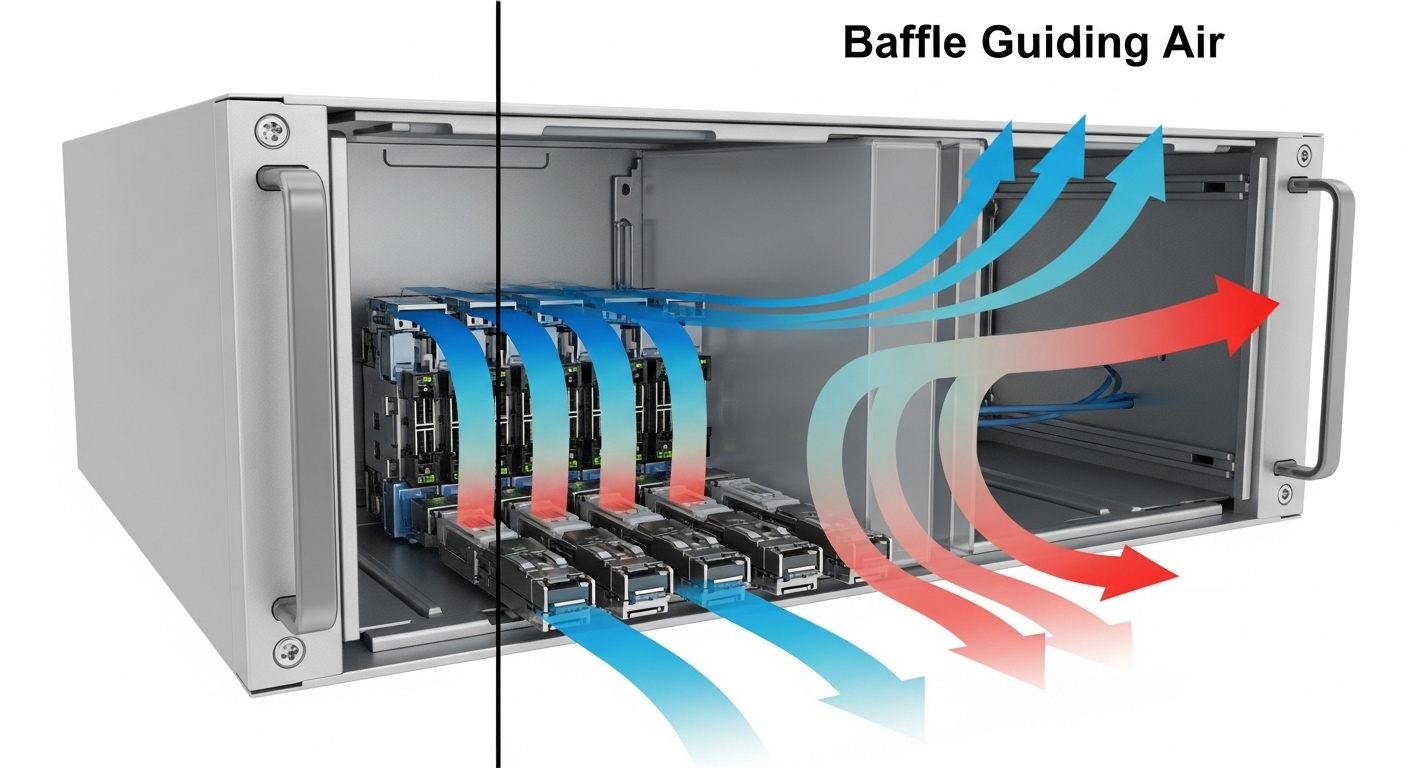
QSFP-DD is designed for high-density, pluggable 400G transport using either coherent or non-coherent electrical-to-optical conversion depending on the optical type. In most data center deployments, 400G over fiber is typically delivered as 8x50G lanes (or equivalent internal mapping), with strict requirements on host electrical signaling, FEC expectations, and power budgets. Before you buy, confirm the switch or router line card supports QSFP-DD at 400G and that the optics meet the vendor’s optics qualification list.
Core spec variables engineers actually verify
- Wavelength and optics type: SR4/DR4 style multimode or LR4 style single-mode variants (exact naming depends on vendor)
- Reach: multimode typically measured in hundreds of meters; single-mode extends to kilometers
- Connector: LC duplex is common for fiber optics in data centers
- Power draw: important for high-density cages and airflow constraints
- Temperature range: standard commercial vs industrial-grade operating envelopes
- DDM/DOM support: digital diagnostics over I2C/SFF modules for monitoring
Reference interoperability expectations
QSFP-DD optics are standardized through the QSFP-DD ecosystem and governed by IEEE Ethernet PHY behavior at the 400G framing level. For link behavior and lane mapping assumptions, align your optics selection with the Ethernet PHY and FEC strategy used by your platform, consistent with IEEE 802.3 Ethernet specifications. For optics form-factor and management, use vendor datasheets and the SFF Alliance guidance where applicable. IEEE 802.3 standards SFF Committee resources
Key spec comparison: common 400G QSFP-DD options
Below is a practical comparison template engineers use when mapping optics to distance and budget. Exact values vary by vendor and part number, so treat this as a checklist, not a guarantee.
| Optics variant (example) | Typical wavelength | Typical reach | Connector | Data rate | Power (typ.) | Operating temperature | |
|---|---|---|---|---|---|---|---|
| 400G QSFP-DD SR8 (multimode, lane-mapped) | 850 nm class | ~100 m class (distance depends on MMF grade) | LC duplex | 400G | ~10–18 W class | 0 to 70 C (typ.) | |
| 400G QSFP-DD DR4/DR8 (multimode extended) | ~1310 nm class | ~500 m class (depends on MMF) | LC duplex | 400G | 400G | ~10–18 W class | 0 to 70 C (typ.) |
| 400G QSFP-DD LR4 (single-mode long reach) | ~1310 nm class | ~10 km class | LC duplex | 400G | 400G | ~12–22 W class | -5 to 70 C (typ.) |
For concrete part examples used in the field, you may see optics families such as Cisco-compatible transceivers and vendor-labeled modules (for instance, Cisco-qualified optics often map to third-party vendors). When validating, check vendor datasheets for DOM thresholds, link budget, and fiber type requirements. Examples of transceiver families include SFP/QSFP modules from Cisco and optics from Finisar/FS, such as Finisar and FS.com 10G/25G families; for 400G QSFP-DD, always use the exact 400G datasheet for the part number you plan to deploy. Cisco QSFP optics documentation FS.com transceiver datasheets
Pro Tip: In hyperscale networking, most “it should work” failures come from host-side electrical tuning and FEC policy mismatch, not from the fiber itself. Capture optical receive power (DOM) and PHY error counters immediately after link bring-up; if CRC/FEC counters climb while optical power looks nominal, suspect lane mapping, breakout mode settings, or platform FEC configuration drift.
Selection checklist for hyperscale networking upgrades
Use this ordered checklist during procurement and pre-install validation. It is built for engineers who must reduce truck rolls and shorten change windows.
- Distance vs reach: compute a link budget using your exact fiber type (OM3/OM4/OS2), measured attenuation, and patch cord losses.
- Platform compatibility: confirm the switch/router line card explicitly supports QSFP-DD at 400G and that the optics are in the vendor optics qualification list.
- DOM/monitoring support: verify the module supports the expected diagnostic registers and that your NMS polls DOM without errors.
- Operating temperature and airflow: validate cage airflow assumptions; a higher module power draw can push optics to thermal throttling.
- Budget and supply risk: compare OEM vs third-party pricing, but also check lead times and return/RMA terms.
- Vendor lock-in risk: plan a dual-vendor validation so you can pivot during supply constraints without re-qualifying from scratch.
DOM validation you can run before rollout
- Verify DOM reads: optical Tx bias, Tx power, Rx power, and temperature.
- Baseline expected Rx power at target distance; flag modules outside vendor-specified ranges.
- During acceptance testing, monitor link stability over at least one full traffic pattern cycle (peak + idle) to surface marginal thermal or power supply conditions.
Common pitfalls and troubleshooting in 400G QSFP-DD deployments
These are failure modes you can diagnose quickly if you know where to look.
Link won’t come up after install
Root cause: host port does not support the specific QSFP-DD electrical mode, or the optics are not qualified for that platform’s PHY configuration. Solution: confirm the port profile and transceiver type in the switch CLI; try a known-good qualified module; remove any accidental port mode settings (e.g., incompatible breakout profiles).
Link flaps under load, DOM looks “mostly OK”
Root cause: marginal thermal behavior or airflow blockage causing momentary receiver sensitivity drop. Solution: measure cage temperature and verify fan speed targets; reseat the module; inspect for dust in fiber endfaces and confirm connectors are clean.
High error counters, CRC/FEC anomalies, but optical power is within spec
Root cause: FEC or lane mapping mismatch between the platform and optics behavior, or a configuration drift during orchestration. Solution: compare running config to golden templates; verify FEC mode; capture PHY error counters at steady state and after traffic bursts.
Works at first, then degrades over weeks
Root cause: connector contamination or micro-bending in patch cords; hyperscale deployments amplify this because of constant thermal cycling. Solution: run fiber cleaning verification (inspection scope), replace suspect patch cords, and re-measure Rx power distribution across channels.
Cost and ROI note: OEM optics vs third-party in hyperscale networking
In practice, 400G QSFP-DD modules often vary in street price by reach and vendor. Typical budgets for engineering forecasts might place many non-OEM options in the hundreds of USD per module range, while OEM-qualified optics can be higher; the exact number depends on market cycles, lane mapping, and warranty terms. Your total cost of ownership should include: failure rate and RMA handling, qualification time, spares inventory, and the cost of outages during change windows.
If your operations team can validate DOM telemetry and error counters quickly, third-party optics can lower module spend. However, if you lack an established acceptance test harness and golden configuration baseline, OEM optics can reduce integration risk and shorten time-to-stability, improving ROI through fewer incidents.
FAQ
Which 400G QSFP-DD optics should I choose for leaf-spine links?
Start with the required reach and fiber type. For short in-rack or nearby-row links, multimode variants are often cost-effective; for longer paths, single-mode LR variants reduce operational complexity. Always validate against your switch vendor’s QSFP-DD compatibility list.
Do I need to worry about FEC when deploying hyperscale networking optics?
Yes. Even if the optics are electrically compatible, FEC policy mismatches can produce elevated error counters under load. Confirm the platform’s FEC mode and align it with the expected behavior for the optics and PHY.
How do I use DOM to detect a bad module early?
Collect baseline Tx/Rx power, temperature, and bias values immediately after bring-up, then compare across channels. During traffic soak tests, watch for Rx power drift and temperature excursions that correlate with error spikes. If the module stays within thresholds but errors rise, suspect configuration mismatch rather than optics health.
Are third-party 400G QSFP-DD transceivers safe for production?
They can be, but only after qualification in your exact platform and cabling conditions. Build a small pilot with acceptance criteria: link stability, DOM threshold compliance, and sustained error-rate performance under peak load.
What fiber cleaning standard should I follow?
Use microscopic inspection and cleaning before insertion, and enforce a consistent cleaning workflow for every connector. In hyperscale networking, contamination is a top cause of intermittent receiver issues, especially after repeated maintenance cycles.
Closing
Choosing 400G QSFP-DD transceivers for hyperscale networking is less about “matching a datasheet” and more about validating compatibility, thermal behavior, and PHY error expectations under real traffic. Next, review your platform’s optics qualification list using related topic and align your acceptance tests to DOM and F
