
Choosing between 100GBase-SR4 and 100GBase-LR4 QSFP28 optics can quietly determine your cabling cost, spare strategy, and outage risk. This reference helps data center and network teams map the right optics to their actual fiber plant, switch port behavior, and operating constraints. You will get side-by-side specs, a decision checklist, troubleshooting patterns, and ROI guidance for typical leaf-spine deployments.
What 100GBase-SR4 and LR4 really imply for cabling
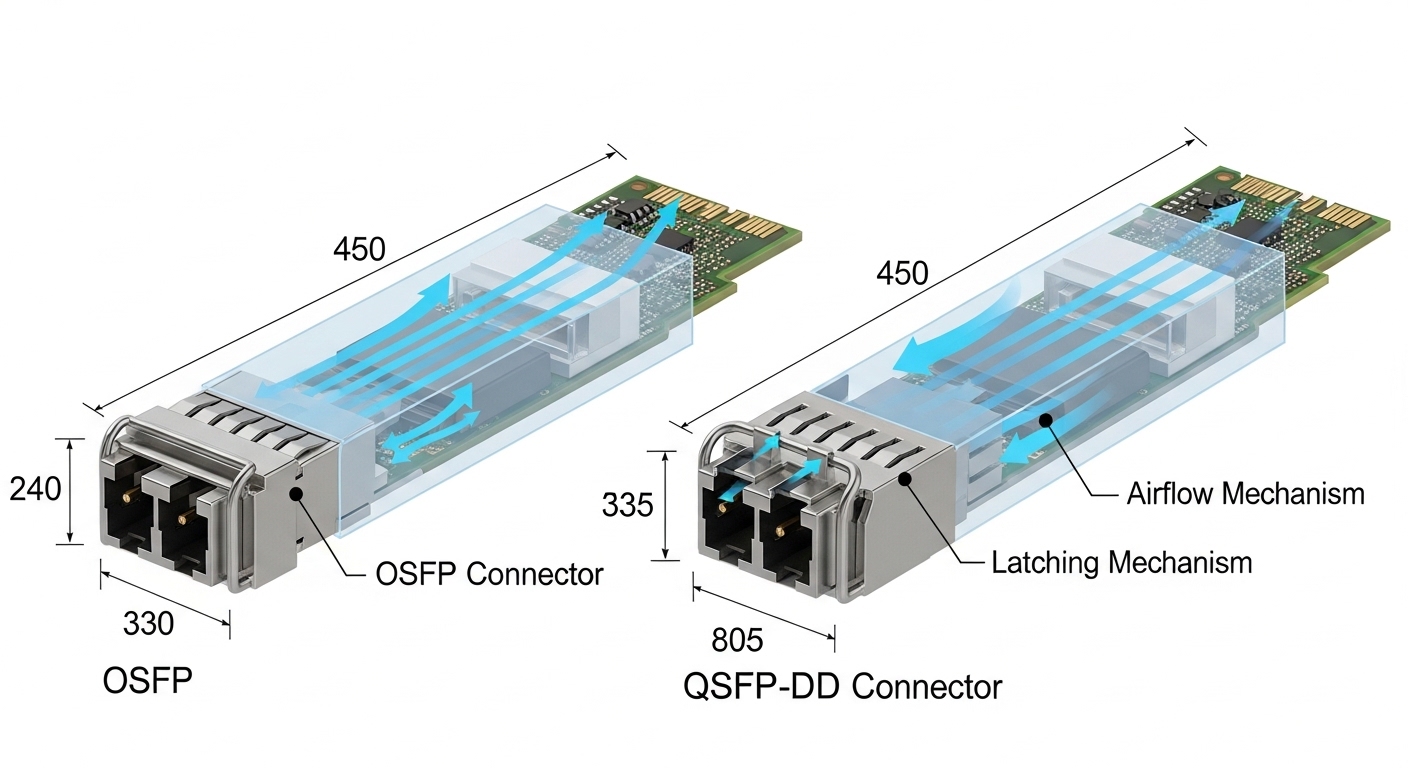
Both 100GBase-SR4 and 100GBase-LR4 run over QSFP28 optics using four lanes. The practical difference is reach and how that affects your fiber topology: SR4 is designed for short distances (typical within a data hall or between adjacent rows), while LR4 is intended for longer links (often spanning larger campus or inter-row routing). In cabling terms, LR4 can reduce the number of intermediate patch points, but SR4 can reduce optic cost and simplify compliance testing if your plant is already engineered for short-reach.
Distance and fiber type mapping
Engineers usually match optics to OM3 or OM4 multimode fiber for SR4 and to the vendor’s specified multimode or single-mode expectations for LR4. In mixed-planned facilities, it is common to discover that “available fibers” are not the same as “qualified fibers for 100G.” Qualification hinges on link loss, modal bandwidth, connector cleanliness, and patching practices. For LR4, you also need to respect the vendor-defined launch power and receiver sensitivity budget; for SR4, the budget is typically tighter on longer runs.
Network design pattern that drives the choice
In a leaf-spine fabric, ToR-to-spine links often run from end-of-row to aggregation across predictable distances. If your horizontal cabling is engineered with OM4 and conservative link budgets, SR4 can be a cost-effective fit. If your design includes unpredictable reroutes, higher patch counts, or longer interconnect runs where you cannot guarantee qualified multimode performance, LR4 becomes a risk reducer. The best choice is the one that keeps the optical link within budget after moves, adds, and changes (MACs).
Side-by-side specs: SR4 vs LR4 QSFP28
Below is an engineer-oriented comparison focused on the parameters that affect cabling, thermal behavior, and interoperability. Always confirm exact values in the transceiver datasheet and the switch vendor’s compatibility list.
| Parameter | 100GBase-SR4 (QSFP28) | 100GBase-LR4 (QSFP28) |
|---|---|---|
| Target standard | IEEE 802.3ba 100GBASE-SR4 | IEEE 802.3ba 100GBASE-LR4 |
| Nominal wavelength | ~850 nm (4 wavelengths) | ~1310 nm (4 wavelengths) |
| Typical reach (datasheet-dependent) | ~100 m over OM4 (often cited) | ~10 km over SMF (often cited) |
| Fiber type | OM3/OM4 multimode (vendor-specific) | Typically single-mode fiber (SMF) |
| Connector | Commonly LC duplex (4-lane inside) | Commonly LC duplex (4-lane inside) |
| Data rate / lanes | 100G aggregate, 4 lanes | 100G aggregate, 4 lanes |
| Optical power class | Short-reach multimode budget; verify Tx/Rx specs | Long-reach budget; verify Tx/Rx and OSNR |
| Operating temperature | Commonly 0 to 70 C (commercial); -40 to 85 C available | Commonly 0 to 70 C (commercial); -40 to 85 C available |
| DOM / monitoring | Often supported via QSFP28 MSA; verify vendor support | Often supported via QSFP28 MSA; verify vendor support |
Examples of real modules you may encounter in procurement include Cisco-branded and compatible third-party optics such as Cisco SFP-10G-SR (not QSFP28), while for QSFP28 you will see models like Finisar FTLX8571D3BCL and FS.com families such as FS.com SFP-10GSR-85 (note: not always the same form factor). For QSFP28 specifically, confirm the exact part number and reach class; vendors frequently publish multiple variants that look similar but differ by reach, fiber type, and power class. For engineering validation, reference IEEE and vendor datasheets: [Source: IEEE 802.3ba] and [Source: QSFP28 Multi-Source Agreement].
Pro Tip: In real deployments, the biggest SR4 failure mode is not “distance” alone; it is patch-point entropy. Every added connector and dirty LC end can erode your link margin faster than the remaining fiber length budget, so measure and document end-to-end loss after each cabling change, not just at initial install.
Decision checklist for data center cabling (engineers use this)
Use this ordered checklist to decide between 100GBase-SR4 and 100GBase-LR4 for a specific link. The goal is to minimize rework, reduce optical margin surprises, and avoid incompatibility with switch optics policies.
- Distance and measured link loss: Use OTDR for SMF or certified end-to-end test results for MMF. Confirm worst-case loss at the target wavelength (and polarity/connector grade).
- Fiber plant type and bandwidth: Verify OM3 vs OM4, core size, and modal bandwidth qualification (where applicable). For LR4, confirm SMF availability and end-to-end splices/connectors.
- Switch compatibility: Check the switch vendor’s optics compatibility matrix for the exact QSFP28 transceiver family. Some platforms enforce vendor-specific optics EEPROM behavior.
- DOM and monitoring behavior: Validate that the switch reads DOM fields correctly (temperature, laser bias current, Rx power). Mismatched threshold interpretation can create false alarms.
- Operating temperature and airflow: Confirm the transceiver temperature rating and that the cage airflow meets vendor guidance. High-density QSFP28 deployments often run hotter than racks designed for older optics.
- Budget and TCO: Compare module purchase price plus expected failure handling. Include planned spare inventory for each type to avoid downtime.
- Vendor lock-in risk: If you rely on one vendor’s LR4 optics, factor price volatility and lead time. Use a compatibility-tested second source where allowed.
Cost and ROI: where the money actually goes
SR4 optics are commonly cheaper than LR4 optics because the reach and optical complexity differ, and because SR4 aligns with prevalent OM3/OM4 multimode plants in many facilities. In typical budgets, SR4 modules can be materially less expensive per port, which matters when you are buying hundreds of QSFP28 links for a leaf-spine fabric. LR4 optics can cost more upfront, but they may eliminate additional patching, reduce the need for fiber rewiring, and improve operational flexibility when link distances vary.
Realistic cost and TCO framing
Typical module pricing ranges vary by vendor, temperature grade, and volume, but for engineering planning you should treat “OEM vs third-party” as the key lever. OEM optics often carry higher unit cost and sometimes longer lead times, while compatible third-party optics can reduce capex but may require more qualification testing and careful compatibility checks. TCO also includes labor for installation and troubleshooting: if LR4 avoids re-cabling, the labor savings can outweigh the optic premium.
For reliability, plan spares based on your risk model: high-density racks with frequent MAC activity benefit from keeping a small pool of known-good optics for each reach class. Also factor in power and thermal effects; QSFP28 optics consume power and contribute to thermal headroom management, especially when ports are fully populated. Use vendor datasheets for power draw and ensure the switch’s thermal design margin is not exceeded.
Sources to anchor the compliance and expectations: [Source: IEEE 802.3ba] for the link behavior and [Source: QSFP28 MSA]. For procurement validation, use each vendor’s QSFP28 datasheet and the switch compatibility guide.
Common mistakes and troubleshooting patterns (field failures)
These are the errors that show up repeatedly in data center cabling and optics rollouts. Each includes root cause and the fix you can apply quickly.
-
Mistake: Assuming any OM4 fiber is “good for 100G”
Root cause: Link certification was done years ago, or patch cords/connectors differ from the tested channel.
Solution: Re-certify end-to-end after patching changes; verify connector inspection and clean all LC ends before reseating optics. -
Mistake: LR4 installed on the wrong fiber type or with excessive loss
Root cause: LR4 is sensitive to SMF assumptions; using the wrong plant or adding bad splices pushes the receiver outside sensitivity/OSNR targets.
Solution: Confirm the fiber type at the patch panel (MMF vs SMF). Use OTDR/splice loss checks and validate with the vendor link budget. -
Mistake: Polarity and lane mapping issues
Root cause: Some cabling harnesses and patch panels invert transmit/receive polarity; with four lanes, the symptom can look like “link flaps” or “no link.”
Solution: Verify polarity with a known-good test method. Reseat or swap LC duplex connectors at the patch points while monitoring Rx power and link state. -
Mistake: DOM alarms ignored during burn-in
Root cause: Switch thresholds may flag low Rx power early, but teams ignore it until traffic fails.
Solution: During acceptance, log DOM values (Tx bias, Rx power, temperature). If Rx power is near threshold, clean and re-terminate before going live.
FAQ: SR4 vs LR4 QSFP28 for real cabling purchases
Which is better for ToR-to-spine in a standard leaf-spine rack?
If your horizontal and inter-row links are engineered for OM4 and you have measured loss within the SR4 budget, 100GBase-SR4 is usually the ROI-friendly option. If your distances or patch counts vary and you cannot confidently certify the channel, 100GBase-LR4 can reduce operational risk by leveraging longer reach and SMF.
Can I mix SR4 and LR4 optics in the same switch fabric?
Yes, on many platforms, but only if the switch supports the optics and the port behavior matches the transceiver type. Always check the vendor compatibility list; some switches apply strict optics validation via QSFP28 EEPROM fields and may enforce lane-rate or DOM expectations.
What fiber certification matters most for SR4?
For 100GBase-SR4, you should rely on certified MMF results for the actual channel you will deploy, including connector and patch cord contributions. Confirm OM3 vs OM4 labeling and verify that end-to-end test results match the planned polarity and patch configuration.
When would LR4 be worth the extra cost?
Choose 100GBase-LR4 when SMF is available and when your link distance or patch complexity makes SR4 margin uncertain. LR4 can also simplify upgrades when you plan future reroutes and want fewer cabling constraints.
How do I validate optics before production traffic?
Run link establishment tests, then monitor DOM for Rx power and temperature stability. Use a traffic test with error counters (BER/CRC counters where supported) and keep a short history log to catch marginal links early.
Do third-party QSFP28 optics work reliably?
Often yes, but you must validate switch compatibility and confirm the exact part number and reach class. Treat third-party optics as a qualified supply chain item: test in a pilot group, verify DOM readings, and document acceptance criteria.
Updated: 2026-04-29. If you want a second reference for procurement and compatibility planning, see QSFP28 optics selection.
Author bio: I deploy and troubleshoot QSFP28 optics in multi-vendor data centers, focusing on optical budgets, DOM monitoring, and cabling certification outcomes. I write from field experience measuring link loss, connector cleanliness, and failure patterns to improve ROI and reduce outage risk.
