
Service providers often inherit fiber that was built for a different era, then need to add capacity without laying new strands. A tunable DWDM transceiver lets you align each optical channel to the network’s plan while reducing spare inventory. This article helps network planners and field engineers choose modules that will actually light up reliably across distance, temperature, and vendor interoperability constraints.
When a tunable DWDM transceiver is the right tool
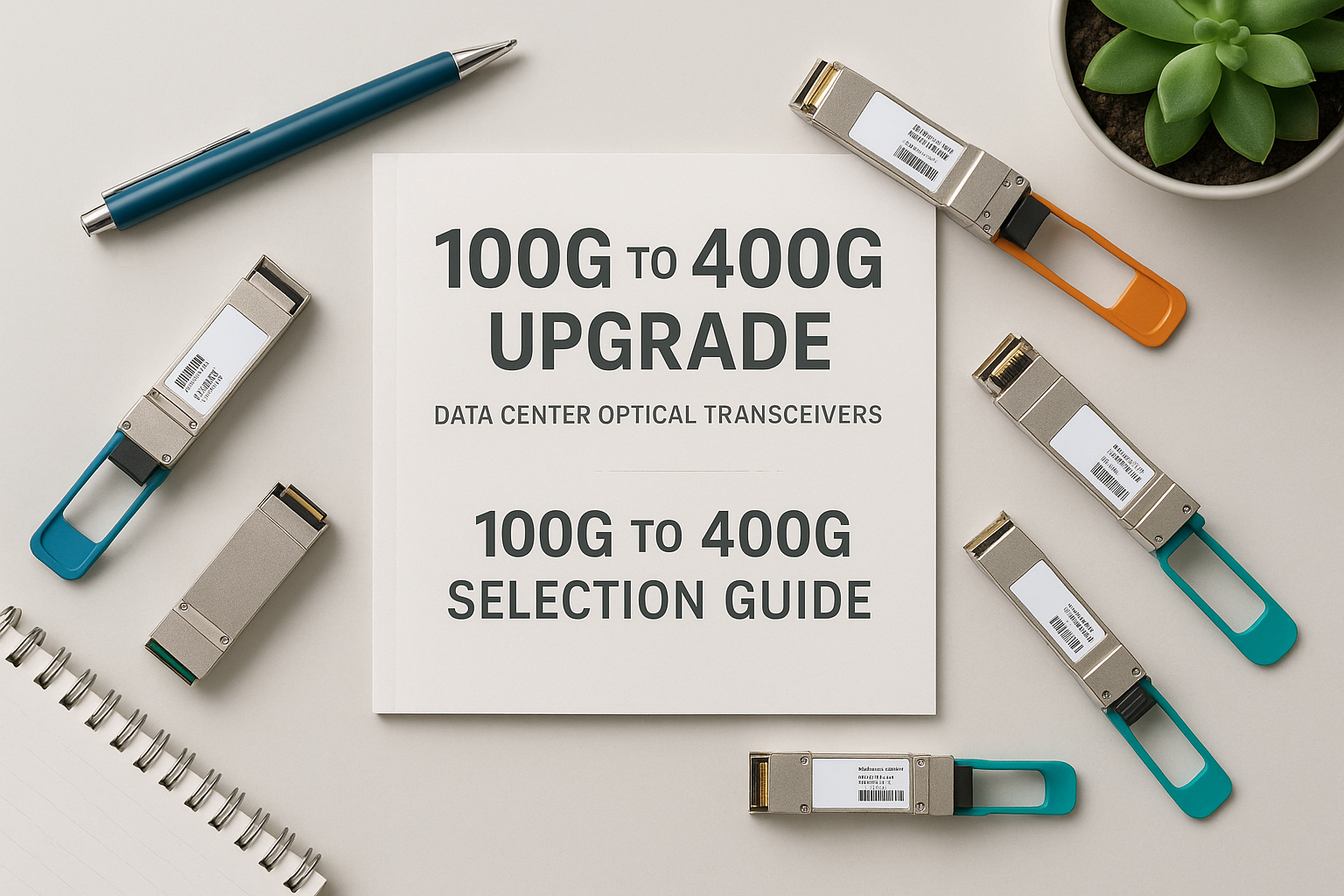
Unlike fixed-wavelength optics, a tunable DWDM transceiver uses a tunable laser (commonly with a PLC/DWDM filter front-end and a control loop) so you can select the ITU grid channel at commissioning time. This is valuable when your service provisioning team needs to bring up new customers quickly, or when you must reassign wavelengths due to spectrum usage changes. In practice, you still need to match the module’s channel spacing, center wavelength accuracy, and optical power budget to the line system.
For service providers, the key operational benefit is inventory efficiency: instead of stocking dozens of fixed-wavelength SKUs, you can stock fewer tunable modules and assign channels dynamically. The trade-off is that tunable optics can have more complex calibration, tighter requirements for optical feedback, and sometimes stricter constraints on control-plane timing during auto-tuning.
Core standards and what to verify
Most DWDM systems implement ITU-T channel grids (for example, 100 GHz or 50 GHz spacing). You also need to ensure the transceiver’s electrical interface matches your host (commonly 10GBASE-LR style lanes via a pluggable form factor, or OTN/ROADM transport expectations depending on the platform). For Ethernet transport, the physical layer behavior should be consistent with IEEE 802.3 requirements where applicable; for coherent or OTN layers, follow the platform vendor’s optical performance requirements. Reference: IEEE 802.3.
Key specifications that decide success in the field
Before procurement, collect the line-side requirements from the ROADM or muxponder and compare them to transceiver datasheet values. The most common “it should work” failures come from mismatched channel spacing, insufficient launch power, or spectral width that violates the system’s filtering assumptions.
| Spec | What it affects | Typical values (examples) | What to check in your design |
|---|---|---|---|
| Center wavelength / tuning range | Whether you can hit the ITU grid channel | Common ranges cover multiple C-band channels | Confirm exact ITU grid (100 GHz vs 50 GHz) |
| Channel spacing | How the ROADM filters your signal | 100 GHz or 50 GHz grids | Match to mux/demux and OADM/ROADM plan |
| Optical reach (system claim) | Budget and OSNR margin | Varies by rate and platform | Use your vendor’s link budget model |
| Output power (launch) and receiver sensitivity | Power budget and BER margin | Launch typically in the order of 0 to +5 dBm | Verify with fiber attenuation and amplifier gains |
| Optical return loss (ORL) | Reflections causing transmitter instability | System-dependent | Check connector cleanliness and patch panel ORL |
| Tx spectral width / side-mode suppression | Adjacent channel interference | Platform dependent | Match to ROADM filter bandwidth |
| Power consumption | Thermal load in the shelf | Often higher than fixed optics | Confirm airflow and power budget |
| Operating temperature | Laser tuning stability | Commercial vs industrial variants | Match shelf ambient and worst-case excursions |
Example third-party optics you may see in provider environments include C-band tunable pluggables from vendors such as Finisar and FS.com; always validate against your platform’s compatibility list and DOM behavior. For reference, consult the exact module datasheet for items like tuning accuracy, spectral characteristics, and supported control interfaces. Example part families you can start from: Finisar optics catalog and FS.com optics catalog.
Real deployment scenario: adding capacity without new fiber
In a regional provider network with a 3-site ring, engineers upgrade a leaf-spine metro aggregation layer to support incremental customer growth. Each site has two ROADMs feeding an amplifier chain; the wavelength plan uses 100 GHz spacing across the C-band. Instead of adding new fibers, the team provisions new services by mapping customers to specific ITU channels and using a tunable DWDM transceiver to select the channel during turn-up. Over a 6-week rollout, they reduce spare stock from roughly 30 fixed-wavelength modules to 8 tunable modules, while maintaining BER targets by enforcing the link budget OSNR margin and verifying spectral compliance at commissioning.
Decision checklist: how to choose the right tunable DWDM transceiver
Use this ordered checklist so you do not discover incompatibilities after the truck roll.
- Distance and budget: confirm span loss, amplifier gains, and required OSNR/BER margin for your transport layer.
- ITU grid and channel spacing: match the module to the ROADM/mux filter plan (for example, 100 GHz vs 50 GHz).
- Host switch compatibility: verify the exact pluggable type and supported rates with the platform vendor.
- DOM support and alarms: confirm whether your host expects vendor-specific DOM behavior (temperature, bias, received power thresholds).
- Operating temperature and shelf airflow: ensure tuning stability and optical power drift remain within limits at your worst-case ambient.
- Launch/receive power range: verify against your link budget and safety margins for aging and connector loss.
- Vendor lock-in risk: plan for interoperability testing windows and keep a documented acceptance test procedure.
Pro Tip: In many provider networks, the hidden failure mode is not “dead optics,” but “channel misalignment under thermal drift.” Always validate tuning lock and optical output power at the final shelf ambient (after the system stabilizes), not just in a test bench at room temperature.
Common mistakes and troubleshooting tips
Below are field-proven failure patterns you can avoid with disciplined acceptance testing.
Wrong channel spacing or filter mismatch
Root cause: The module is tuned to a channel that exists on paper, but the ROADM/mux filter bandwidth assumes a different grid or guard band. Symptoms: intermittent loss of lock, high error counts, or adjacent-channel interference. Fix: confirm ITU grid mapping and verify the system’s channel plan against the module’s tuning step granularity and spectral width.
Power budget shortfall masked by “works on bench” tests
Root cause: Bench tests ignore real patch panel loss, connector contamination, and amplifier aging. Symptoms: link flaps after hours, degraded BER, or receiver power below threshold. Fix: measure end-to-end optical power with the same patch cords and cleaning standard used in production; re-run the link budget with measured losses and margin targets.
DOM/management incompatibility leading to false alarms or disabled auto-tuning
Root cause: Some hosts expect specific DOM register mappings and alarm threshold formats. Symptoms: “transceiver not supported,” inability to set wavelength via management, or misleading temperature/bias alarms. Fix: validate DOM readings during acceptance, and if needed, use the platform vendor’s recommended tuning workflow (or lock wavelength via the supported control method).
Cost and ROI: what to expect in TCO
Pricing varies by data rate, tuning range, and vendor support model, but tunable DWDM transceivers typically cost more upfront than fixed optics due to tunable laser complexity and tighter performance verification. In many provider bids, third-party tunables can land in a broad range, often roughly 1.2x to 2.0x the cost of fixed modules, while OEM options may be higher but include deeper platform integration. The ROI usually comes from reduced spare inventory, faster provisioning, and fewer truck rolls for wavelength swaps; however, you must include TCO for acceptance testing, interoperability validation, and potential higher power/thermal management costs in the shelf.
FAQ
What is a tunable DWDM transceiver used for?
It is used to select an optical carrier on an ITU grid so you can provision services on specific wavelengths without stocking a dedicated fixed-wavelength transceiver for every customer channel. It is especially common in ROADM and service-provider wavelength planning.
Do I need to match ITU channel spacing exactly?
Yes. If the module tuning step and spectral characteristics do not align with the ROADM/mux filter plan, you can see loss of lock or elevated error rates even when the link “appears up.” Confirm grid assumptions and guard-band requirements during design.
Will a third-party tunable module work with an OEM transport chassis?
Sometimes, but compatibility is not guaranteed. You must validate host support, DOM behavior, and the platform’s tuning workflow; plan a structured acceptance test before scaling deployment.
How do I verify tuning lock and stability during commissioning?
Measure optical output power and confirm lock status after the system reaches final shelf ambient conditions. Then run error-rate or transport-layer health checks for a sustained period (often 24 hours) to catch thermal drift issues.
What are the most common reasons tunable optics underperform?
Mismatch between filter bandwidth and channel plan, insufficient link budget
