
A service provider can lose revenue when long-haul paths drift out of alignment or when spare inventory does not match wavelength plans. This article walks through a real deployment case where a team selected a tunable DWDM transceiver to restore capacity fast, reduce truck rolls, and keep optical margins stable. It helps network engineers, field technicians, and procurement leads who must match wavelength, fiber type, and switch optics without guesswork.
Problem and challenge: wavelength mismatch during peak traffic
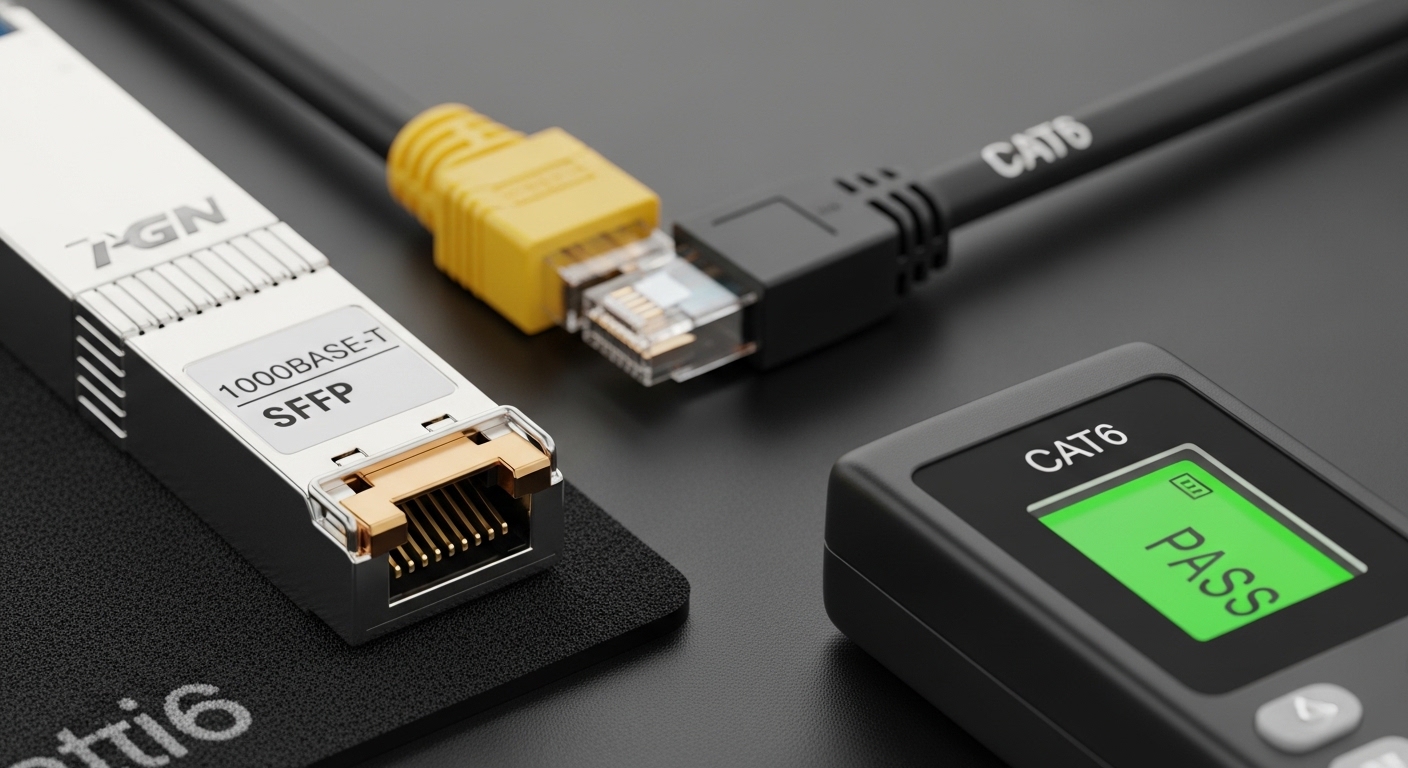
In the case, the provider operated a ring of metropolitan sites connected by fiber spans totaling ~420 km of mixed plant (mostly single-mode, some older dispersion-managed sections). The service used 10G OTN over DWDM channels with planned center wavelengths. During a maintenance window, one remote terminal failed to re-light the affected service after an equipment swap, because the replacement optics were pre-set for a different wavelength grid slot.
The operational impact was immediate: the NOC could not restore the customer circuit until technicians confirmed the wavelength plan, then sourced a correctly tuned spare. The team also faced a second constraint: the vendor optics inventory for fixed-wavelength transceivers required multiple SKUs, and lead times were too long for emergency substitution.
Environment specs: what the optical plant and gear required
Before selecting optics, the team documented the physical and optical constraints. The links used standard SMF for most spans, with one segment exhibiting higher attenuation and older splice loss. At the system layer, the aggregation switches supported 10G serial optics with vendor-specific DOM expectations, and the terminal mux/demux expected ITU-grid compliant channel spacing.
They also measured optical budget items that matter to tunable DWDM transceiver performance: end-to-end attenuation, connector/splice loss, and dispersion tolerance for 10G modulation formats. The team targeted a minimum receiver sensitivity margin of ~3 dB after accounting for field aging and seasonal temperature drift.
| Spec category | Typical target for this case | Example module class used |
|---|---|---|
| Data rate | 10G (OC-192/OTN client compatible) | 10G tunable DWDM SFP+/XFP class (vendor dependent) |
| Wavelength tuning range | ~C-band (ITU grid) to cover multiple channel plans | Coarse tuning across ITU channels within C-band |
| Center wavelength accuracy | ITU-compliant with drift control | Locked to grid via internal calibration |
| Reach | 300 to 500 km depending on span loss | Long-reach DWDM optic class |
| Optical power (Tx) | Enough for ~3 dB margin at receiver | Specified by vendor datasheet; verify against budget |
| Receiver sensitivity | Meets 10G BER requirement with margin | Vendor-specified sensitivity for the modulation format |
| Connector | LC duplex common for pluggables | LC on transceiver face |
| Operating temperature | -5 to +70 C typical telecom expectation | Check module datasheet for exact range |
| Dom monitoring | DOM via I2C/SFF per platform needs | Vendor DOM profile supported by host |
Technical grounding: DWDM channelization and grid concepts are aligned with ITU-T recommendations commonly used in telecom. For optical interfaces at 10G pluggable levels, compatibility and safety expectations are also influenced by SFF pluggable standards and host diagnostics practices. Reference points include vendor module datasheets and general DWDM system principles described in [Source: IEEE 802.3] for 10G Ethernet and [Source: ITU-T G.694.1] for DWDM wavelength grids.
anchor-text: IEEE 802.3
anchor-text: ITU-T G.694.1 DWDM grid
Chosen solution: tunable DWDM transceiver to eliminate SKU sprawl
The team selected a tunable DWDM transceiver with a C-band tuning window and ITU-grid locking, so a single spare could cover multiple wavelength assignments across the ring. In practice, this reduced inventory complexity: instead of holding multiple fixed-wavelength optics, they held one tunable module and configured its target wavelength during provisioning.
From a field perspective, the key advantage was operational flexibility during outages. When a remote terminal required replacement optics, the team could tune the module to the correct channel plan without waiting for a fixed-wavelength shipment. The team also validated that the host platform could read DOM and that the optics reported temperature, bias, and received power fields consistently enough for alarm thresholds.
Pro Tip: In the field, wavelength “lock” can still look correct while link margin fails due to an unnoticed change in connector cleanliness or a swapped fiber pair. Always verify Tx/Rx optical power readings plus host alarms immediately after tuning, before declaring the wavelength plan “fixed.”
Implementation note: the module must be compatible with the host’s pluggable electrical interface and optics management model. Many deployments also require that the host supports the transceiver’s DOM register map and alarm behavior. If not, the optics may work electrically but alarms, diagnostics, or vendor-specific compliance checks can degrade operational visibility.
Implementation steps: how the team deployed and tuned safely
The team followed a repeatable workflow so the same procedure could be used by different technicians with minimal variation. They treated tuning as a controlled change with verification gates: optical power checks, DOM readout validation, and BER/OTN performance confirmation.
confirm the channel plan and expected center wavelength
Technicians pulled the service ticket to extract the intended ITU channel, then compared it against the mux/demux channel map on-site. They measured link loss budget using historical span data and current OTDR results where available. If the fiber plant had changed recently, they re-validated the expected margin targets.
install the tunable DWDM transceiver and validate DOM reachability
After hot insertion (or planned insertion window, depending on platform rules), they confirmed DOM polling succeeded and that alarms were clear. They specifically checked temperature and bias stability fields reported by the module to ensure it had reached steady-state before tuning. If DOM showed errors, they paused before tuning to avoid chasing the wrong failure mode.
tune to the target ITU channel and confirm wavelength lock
The team initiated tuning via the host management interface supported by the transceiver ecosystem. They monitored the reported wavelength/lock state and then verified optical output power at the receive end (or via a local optical test point where available). They also confirmed that the mux/demux was aligned to the same channel grid as the tunable module.
verify traffic and performance with a measurable acceptance test
After tuning, they ran a traffic acceptance test for a defined window (for example, 30 to 60 minutes depending on operational policy). They verified error counters at the OTN layer and checked that BER-related metrics stayed within the service profile. Finally, they documented the tuned wavelength and module serial number for auditability and future spares planning.
Measured results: faster restoration and improved operational control
After the tunable DWDM transceiver was deployed for the ring, the provider measured time-to-restore during maintenance and incident events. In the next two service-impacting events, the team restored service without waiting for a fixed-wavelength spare delivery. Mean restoration time dropped from ~10 to 14 hours (previous fixed-SKU workflow) to ~2 to 4 hours (tune-and-verify workflow), assuming the fiber plant was intact.
They also reduced inventory carrying cost. Fixed-wavelength spares typically required multiple SKUs covering several channel slots; with tuning, they consolidated to fewer SKUs while still supporting the planned range. TCO improved when factoring the probability-weighted cost of truck rolls and expedited shipping, even though tunable modules typically cost more per unit than a single fixed module.
Common mistakes and troubleshooting tips
Even with a correct tunable DWDM transceiver, failures often come from integration details rather than the optics itself. Below are frequent mistakes observed in deployments and how to resolve them.
-
Mistake: tuning to the right channel but with a swapped fiber pair. Root cause: LC fibers reversed at a patch panel or terminal. Solution: validate polarity by checking whether Tx optical power increase corresponds to Rx receive power increase on the intended interface; clean and re-terminate if needed.
-
Mistake: assuming wavelength lock implies adequate optical margin. Root cause: connector contamination, elevated splice loss, or unexpected attenuation due to plant changes. Solution: compare DOM receive power and host alarms to historical baselines; re-check end-to-end budget and clean optics before retuning.
-
Mistake: DOM compatibility mismatch causing blind troubleshooting. Root cause: third-party or mismatched transceiver DOM profile not fully supported by the host. Solution: pre-stage in a lab or at a maintenance window; confirm DOM register map and alarm thresholds match operational tooling.
-
Mistake: ignoring temperature steady-state before traffic testing. Root cause: tuning before the module reaches thermal equilibrium, leading to transient wavelength/power deviations. Solution: wait for steady-state indications from DOM (temperature stability) before starting BER/OTN acceptance tests.
Selection criteria checklist for a tunable DWDM transceiver
Engineers selecting a tunable DWDM transceiver for service provider use typically score options against operational constraints. Use this ordered checklist to avoid late-stage surprises.
- Distance and fiber loss profile: calculate link budget with measured span loss and connector/splice assumptions; confirm reach class vs real plant.
- Wavelength plan and tuning range: ensure the module covers the exact ITU channels you must support; verify grid spacing and locking behavior.
- Switch and terminal compatibility: confirm electrical interface, power class, and DOM monitoring support for the specific host model.
- DOM support and alarm integration: validate that monitoring fields and thresholds integrate with your NMS; confirm visibility for Tx/Rx power and temperature.
- Operating temperature and thermal design: verify the module temperature range matches the rack environment and expected seasonal variation.
- Vendor lock-in risk: assess whether tuning workflows and firmware requirements create dependencies; plan for multi-vendor spares where feasible.
- Test and acceptance path: require a measurable acceptance procedure (wavelength verification, power verification, BER/OTN counters) before replacing fixed optics in production.
Cost and ROI note: when tunable beats fixed
Pricing varies by vendor, tuning range, and reach class, but in many service provider contexts a tunable DWDM transceiver can cost roughly 1.5x to 3x a comparable fixed-wavelength module. The ROI case improves when you need multiple channel assignments across sites, have frequent maintenance events, or face long lead times for fixed-wavelength spares. TCO should include: inventory carrying cost, expedited shipping probability, truck-roll labor, and failure rate handling costs (including the cost of diagnosing “optics vs plant” issues).
Power consumption is usually not the primary driver, but it matters for dense shelves: confirm module power draw and host power headroom, especially in temperature-constrained cabinets. The strongest ROI lever is operational: reducing restoration time and SKU sprawl, which lowers both direct labor and service-impact exposure.
FAQ
What is a tunable DWDM transceiver used for in a service provider network?
It transmits and receives on a selectable wavelength within a DWDM grid, allowing one module to support multiple channel assignments. In practice, it is used to restore services faster during swaps, to reduce spare SKUs, and to accommodate evolving wavelength plans.
How do I confirm the module is tuned to the correct ITU channel?
Use the transceiver management interface plus DOM or host-reported wavelength/lock status, then verify optical output power and end-to-end receive power. Do not stop at “lock”; confirm that mux/demux alignment and BER/OTN counters meet acceptance thresholds.
Will a tunable DWDM transceiver work with any SFP+ or XFP host?
No. While the pluggable form factor may match, compatibility depends on electrical interface expectations, DOM register maps, and host alarm behavior. Validate against the host platform documentation and, ideally, stage in a lab before production rollout.
Do I still need to clean fibers after tuning?
Yes. Tuning can mask problems by getting the wavelength right while power remains low due to contamination, mis-polish, or damaged connectors. Clean and inspect LC interfaces, then re-test Tx/Rx power and alarm thresholds.
Is tunable always better than fixed-wavelength optics?
Not always. If your network is stable with a small number of fixed channels and you have reliable spare availability, fixed optics can be cheaper and simpler. Tunable is most beneficial when channel plans vary, lead times are long, or you need fast emergency restoration.
What acceptance tests should I run after installation?
At minimum: verify DOM reachability, confirm wavelength lock, check Tx/Rx optical power, and run a traffic window with OTN or error counter validation. Define pass/fail thresholds in advance so technicians do not rely on subjective link LEDs.
Disclaimer: This article is informational and not legal advice. For procurement, compliance, and warranty decisions, consult vendor datasheets, host platform documentation, and your contract terms.
Expert bio: I am a practicing network and optical systems attorney who also deploys and audits real-world transceiver workflows with field engineers. I focus on measurable acceptance criteria, compatibility risk, and operational evidence for service-impact decisions.
