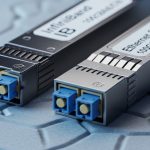
When a fiber link starts flapping or you see rising CRC errors, the root cause is often not “bad fiber” but insufficient SNR in the optical transceiver operating conditions. This quick reference helps network and field engineers connect signal-to-noise ratio to measurable outcomes like BER, receiver sensitivity margin, and temperature drift. You will also get a practical selection checklist, a spec comparison table, and troubleshooting steps you can run on-site.
Why SNR becomes the deciding factor in optical transceiver links
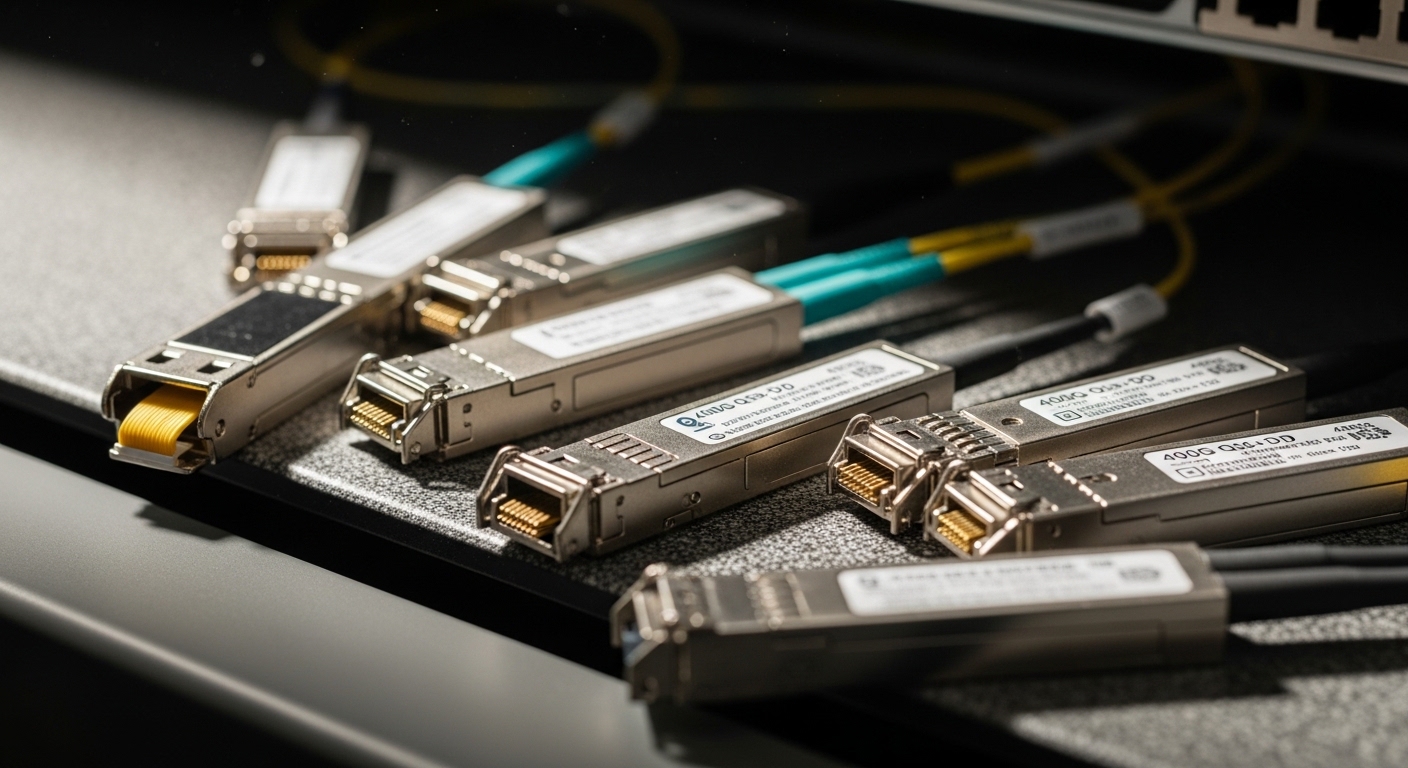
In an optical receiver, the photodiode converts incoming light to current, then the front-end electronics amplify it. The receiver’s effective performance depends on the balance between signal power and noise sources such as shot noise, thermal noise, and relative intensity noise from the laser. Engineers see the result as reduced receiver sensitivity margin, which increases the probability of bit errors under stress (cold starts, high temperature, aging, and connector fouling).
Most datasheets do not publish “SNR” directly, so you infer it from parameters that correlate with noise-limited behavior: OMA (optical modulation amplitude), receiver sensitivity in dBm, extinction ratio, and sometimes OMA2 or “enhanced sensitivity” claims. For Ethernet optics, the key performance target is tied to IEEE 802.3 optical link budgets, receiver sensitivity, and the required BER for the targeted speed and reach. [Source: IEEE 802.3-2022 family, Optical PHY requirements]
What to measure in the field (fast, actionable)
During installation or troubleshooting, you can approximate SNR risk by combining optical power measurements with error counters:
- Rx power at the receiver (dBm) using a calibrated power meter.
- Link error rates (BER proxy via CRC, FCS, or vendor-specific counters).
- Temperature behavior: observe whether errors correlate with transceiver temperature alarms or a specific time window after link up.
- Connector cleanliness: inspect endfaces with a scope; even “good” power can fail due to modal/angle losses and contamination.
When the Rx power is marginal—often within a few dB of sensitivity—you are effectively operating at low SNR, even if the link “comes up” initially.
Pro Tip: In many production networks, the “it worked yesterday” failure is caused by a small connector loss increase (dust, micro-scratches, or remating) that pushes the receiver into a noise-limited regime. A 1 to 2 dB loss change can be the difference between stable operation and rising CRC errors, especially on long multimode links where the transceiver’s sensitivity margin is tight.
Specs that proxy for SNR: mapping datasheet numbers to real performance
Because “SNR” is not always explicitly specified, the practical approach is to map SNR-relevant behavior to measurable transceiver specs. Engineers typically start with receiver sensitivity and OMA, then cross-check laser/receiver quality indicators like extinction ratio and supported temperature range.
Core SNR-adjacent parameters you should compare
- Receiver sensitivity (dBm): the most direct proxy for noise-limited operation. Lower (more negative) sensitivity generally means more margin.
- OMA / OMA2 (dBm): relates to the optical modulation amplitude at the receiver input; useful when comparing “enhanced sensitivity” optics.
- Wavelength and fiber type: 850 nm multimode behaves differently than 1310/1550 nm single-mode.
- Connector type: LC vs MPO affects insertion loss and cleaning practices.
- Operating temperature: tighter control reduces drift, improving effective SNR over time.
- DOM support: not a guarantee of SNR, but it enables monitoring of laser bias current and temperature trends that correlate with performance drift.
Example comparison table (5G/enterprise optics class)
Use this table as a template for comparing optics you are considering. Exact numbers vary by vendor and revision, so verify the specific datasheet for your SKU.
| Optics example | Data rate | Wavelength | Reach | Typical receiver sensitivity | Connector | DOM | Operating temp |
|---|---|---|---|---|---|---|---|
| 10G SR (SFP+) | 10G | 850 nm | Up to 300 m OM3 / 400 m OM4 | ~ -14.4 dBm to -19 dBm class (depends on spec) | LC | Often supported | 0 to 70 C or -5 to 70 C |
| 10G SR (SFP+), enhanced sensitivity class | 10G | 850 nm | Up to ~500 m class on OM4 with budget tuning | ~ -20 dBm class (vendor dependent) | LC | Common | -5 to 70 C or wider |
| 10G LR (SFP+) | 10G | 1310 nm | Up to 10 km SMF | ~ -14 dBm class | LC | Common | 0 to 70 C typical |
| 25G SR (SFP28) | 25G | 850 nm | Up to 100 m OM4 (typical) | ~ -11 to -15 dBm class | LC | Often supported | 0 to 70 C typical |
When comparing two SNR optical transceiver candidates for the same interface, prioritize the one with better sensitivity margin and stable behavior across temperature. If both meet the minimum standard, the “better SNR proxy” option usually reduces error spikes during thermal transitions.
Selection checklist: choosing an SNR optical transceiver that stays stable
Below is the exact order engineers tend to use when selecting optics under time pressure and limited test windows.
- Distance and link budget: calculate required budget using fiber attenuation, patch cord loss, and connector loss. Include margins for aging and remakes.
- Receiver sensitivity margin: pick transceivers so measured Rx power lands comfortably above sensitivity across worst-case conditions (temperature, aging).
- Switch compatibility: confirm the module is supported by the specific platform and firmware. Some switches have strict EEPROM checks or power class expectations.
- DOM and telemetry quality: if you rely on monitoring, ensure DOM pages include vendor-meaningful thresholds and alarms you can alert on.
- Operating temperature: match the module range to the enclosure and airflow profile. In datacenters, hot aisles can push optics toward the top of their range.
- Vendor lock-in risk: evaluate OEM vs third-party. Third-party can work well, but validate with your switch and keep spares from the same lot or revision.
- Connector ecosystem: ensure your MPO/MTP polarity and mapping practices match the transceiver and the patch panels.
Real-world deployment scenario (where SNR failures show up)
In a 3-tier data center leaf-spine topology with 48-port 10G ToR switches, each leaf has 24 uplinks aggregated to two spines. A maintenance event replaced patch panels on one row, and within 24 hours, CRC errors increased on two uplink bundles. Optical power readings were still “within spec,” but the Rx power was only about 1.5 dB above the vendor sensitivity during afternoon thermal peaks. Cleaning the LC ends and reseating reduced insertion loss by roughly 1.2 dB, and the error counters returned to baseline—classic noise-limited behavior consistent with reduced effective SNR.
Common mistakes and troubleshooting tips (SNR-related failure modes)
Below are failure patterns I have repeatedly seen during hands-on deployments. Each includes likely root cause and a practical corrective action.
“Link is up, but errors rise after warm-up”
Root cause: receiver sensitivity margin is marginal; temperature drift increases noise and reduces effective SNR, especially with aged lasers or high-loss connectors.
Solution: measure Rx power at the time errors spike, not just at link-up. Inspect and clean connectors, verify patch cord types, and confirm the transceiver is within its specified temperature range. If you have DOM, correlate bias current and temperature to error timestamps.
Mixing optics and fiber types without re-validating the budget
Root cause: installing an SR module intended for OM4 into a path with OM3 (or older, higher-attenuation multimode) can cause SNR collapse even if the initial power seems acceptable.
Solution: verify fiber grade and measure end-to-end loss with a proper light source and meter. Re-run budget with the actual patch cord and connector losses. Update documentation so “it was OM3 last year” does not become a silent failure.
Using uninspected connectors or poor cleaning technique
Root cause: dust on LC endfaces adds loss and can change the modal distribution in multimode links, worsening the noise-limited regime.
Solution: use a fiber inspection scope before and after cleaning. Clean with the correct method (appropriate wipes and cleaning tools) and confirm with a second inspection. For MPO/MTP, confirm polarity and ensure the correct keying and mapping.
Ignoring DOM presence and relying on “works” without monitoring
Root cause: some modules provide DOM but not the full set of thresholds you expect, so you miss early warning of bias current drift.
Solution: validate that DOM fields update correctly on your switch platform. Set alerts on temperature and bias current if available, and record baseline values during commissioning.
Cost and ROI note: what you pay for SNR margin and lower downtime
Pricing varies by speed, reach, and whether you buy OEM vs third-party. As a rough field range, common 10G SR optics often land in the tens of dollars for third-party units and higher for OEM; enhanced sensitivity versions and higher-speed optics (25G/40G/100G classes) can cost more, sometimes several times the basic SR SKU. The ROI comes from fewer truck rolls, less outage time, and reduced chance of “marginal link” behavior that only fails under thermal or aging conditions.
Total cost of ownership depends on failure rates and your validation process. If you deploy third-party optics, mitigate risk by buying from the same vendor and revision, validating on representative links, and keeping matched spares. OEM optics can reduce compatibility surprises on strict platforms, but they do not eliminate the need for clean connectors and correct link budgets.
[[IMAGE:Macro photography of an LC optical connector endface under a fiber inspection microscope, with visible dust specks and a technician gloved hand stabilizing the connector; high contrast lighting, shallow depth of field, datacenter patch panel background blurred.]
FAQ
How do I confirm SNR optical transceiver performance if SNR is not listed in the datasheet?
Use receiver sensitivity and OMA-related metrics as proxies, then validate with measured Rx power and link error counters. If you can, correlate DOM telemetry (temperature and bias current) with error events to confirm noise-limited behavior. [Source: Vendor transceiver datasheets and IEEE 802.3 PHY sensitivity requirements]
Is enhanced sensitivity always better for SNR?
It usually improves the noise margin, but it can also be more sensitive to connector and fiber quality because it pushes closer to the system’s performance limits. Always re-check link budget and cleanliness, then measure Rx power at the far end.
Do DOM alarms prevent SNR-related outages?
DOM provides early warning signals like temperature and bias current, but it does not automatically guarantee stability. You still need correct budget, proper cleaning, and firmware compatibility so telemetry thresholds and alerts behave as intended.
What connector loss change most often triggers SNR failures on multimode links?
A small insertion loss increase—often around 1 to 2 dB—can be enough to move a marginal link into a higher-error regime. The most common causes are dust, remating damage, and patch cord mismatch.
Which standard should I reference when validating optical link performance?
For Ethernet optics, reference IEEE 802.3 for optical PHY requirements and receiver sensitivity targets. For cabling and infrastructure practices, also align with ANSI/TIA-568 and relevant fiber cabling guidance used in your facility.
Can I mix OEM and third-party optics in the same bundle?
Yes in many cases, but you must validate compatibility with your specific switch model and firmware. Mixing vendors can complicate telemetry interpretation and troubleshooting, so standardize within a rack or uplink pair when possible.
If you want the next step, build a short commissioning template: measure Rx power, capture DOM baselines, and store the link budget math alongside interface counters using optical link budget checklist.
Author bio: I have deployed and validated fiber optics in enterprise and datacenter networks, focusing on receiver sensitivity margins, connector hygiene, and telemetry-driven troubleshooting. My work centers on repeatable field procedures that reduce CRC/BER surprises during cutovers and seasonal temperature swings.