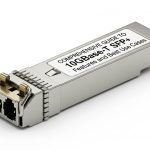
SFP Form Factor: Mini-GBIC History and Evolution
The SFP form factor, often called the Small Form-factor Pluggable, is one of the most enduring and versatile solutions in networking hardware. Emerging from the demand for compact, hot-swappable modules, SFPs transformed how data centers, enterprise networks, and telecommunications operate. This article dives into the history, evolution, and practical technical details of SFPs, explaining how they shaped modern networking and why Mini-GBICs became a cornerstone of scalable optical and copper connectivity.
The Genesis: From GBIC to SFP
In the late 1990s and early 2000s, network designers relied on larger GBIC modules (Gigabit Interface Converters) to add optical or copper ports to switches and routers. While GBICs offered plug-and-play convenience, their bulky size limited port density and increased chassis power and cooling requirements. The need for a smaller, lower-power, and more cost-effective transceiver led a consortium of manufacturers to develop the SFP module, officially standardized as SFP, with its own set of interoperability guidelines.
The key breakthroughs of SFP included:
- Hot-swappability to replace transceivers without powering down equipment.
- Reduction in physical footprint from GBIC to a compact 7.0 mm by 13.4 mm pluggable module.
- Modular flexibility enabling support for a wide range of fiber types ( multimode and single-mode) and copper Ethernet.
- Lower power consumption and improved scalability for high-density deployments.
As SFPs became standardized, switch vendors embraced the format, accelerating adoption in data centers, campus networks, and telecom backbones. This period also saw the rise of hot-pluggable optics that could be swapped in service without downtime, a critical capability for uninterrupted 24/7 operation.
The Mini-GBIC Era: Practical Advantages and Adoption
The term “Mini-GBIC” is sometimes used interchangeably with SFP, reflecting the transition phase where vendors marketed SFP modules as a direct successor to GBICs. The practical advantages were compelling:
- Higher port density: SFP modules allowed more ports per line card, significantly increasing switch capacity without expanding the chassis size.
- Lower cost per port: Smaller modules reduced manufacturing and cooling expenses, lowering total cost of ownership (TCO).
- Optical and copper versatility: SFPs supported multi-rate interfaces (e.g., 100 Mbps, 1 Gbps, and beyond) and various fiber standards, including LX, SX, and CWDM/DWDM variants, as well as 10G SFP+ and beyond in later iterations.
- Backup and maintenance ease: Field replacement minimized network disruption and maintenance windows.
During this era, SFPs standardized electrical and mechanical specifications across vendors, enabling interoperable deployments. Network engineers could mix transceivers from different suppliers, provided they adhered to the same MSA (Multi-Source Agreement) standards, such as SFP MSA, SFP+ MSA, and later QSFP+ and QSFP28 for higher speeds.
Evolution Through Speed: SFP to SFP+/QSFP and Beyond
The increasing demand for higher bandwidth propelled a family of related pluggable transceivers. Key milestones include:
- SFP+ (Enhanced Small Form-factor Pluggable): Introduced to support 10 Gigabit Ethernet over optical fiber and copper, enabling 10G links in data centers and enterprise networks. SFP+ preserved the compact form factor while delivering higher data rates.
- QSFP and QSFP+ (Quad Small Form-factor Pluggable): Moved toward aggregating four lanes in a single module, suitable for 40 Gbps (QSFP+), and later 100 Gbps with QSFP28. These modules dramatically increased port densities for high-performance networks and data center interconnects.
- CFP, CXP, and beyond: While less common for mainstream access ports, these form factors addressed even higher densities and longer reach in core and metro networks, illustrating the ongoing drive for scalable optics.
Despite the advent of higher-speed modules, SFP and SFP+ remain ubiquitous in many networks due to cost, availability, and compatibility with legacy hardware. The industry trend has been toward backward-compatible, modular, and hot-swappable designs that minimize downtime while delivering incremental bandwidth upgrades.
Technical Details: What SFPs Do and How They Proliferate
Understanding SFPs involves a few practical considerations that network engineers frequently encounter. Here are essential technical details:
- Reach and fiber types: SFPs support diverse fiber types, including multimode (OM1/OM2/OM3/OM4), single-mode (OS1/OS2), and copper-based SFPs for Ethernet or Fibre Channel. Reach varies from a few meters (for short-range multimode) to tens of kilometers (for single-mode long-haul).
- Wavelengths and standards: Common wavelengths include 850 nm (short-range multimode), 1310 nm, and 1550 nm (single-mode), with CWDM and DWDM variants enabling multiple channels over the same fiber.
- Deterministic interfaces: SFPs are typically designed for 1 Gbps, with SFP+ for 10 Gbps, and later variants for 25 Gbps, 40 Gbps, and 100 Gbps. The electrical interfaces, TX/RX standards, and management features align with vendor and MSA guidelines.
- Power and thermal management: Small form factors are sensitive to heat; higher-speed modules often include features like digital diagnostics (per IEEE 802.3ah and SMI – Serial Management Interface) to monitor temperature, current, and optical power.
- Management and interoperability: Many SFPs support digital diagnostics (DOM) and can be managed via SNMP or vendor-specific software. Interoperability depends on conforming to MSA specs and firmware compatibility with the host switch or router.
In practice, an SFP module is the coupling device that translates electrical Ethernet signals to optical or copper signals (and back). It also contains a small transceiver that manages laser diodes, photodiodes, and interface logic, all within a robust, protected enclosure designed to plug into a metal-heat-dissipating host.
Practical Deployment Considerations
When planning SFP-based connectivity, network administrators should weigh several practical factors to maximize performance and reliability:
- Density and cabling: Choose SFP modules that maximize port density in your switch or router. For high-density data centers, QSFP/QSFP28 solutions can dramatically reduce hardware footprint while delivering essential bandwidth.
- Fiber management: Ensure proper cable routing, grip, and strain relief. Use correct connectors (LC, SC, MPO) and install protective dust caps when SFPs are not in use.
- Modal vs. single-mode considerations: Multimode SFPs (e.g., SX) are typically cheaper for short-reach intra-building links, while single-mode SFPs (e.g., LX, EX) are preferable for longer distances and lower attenuation.
- Compatibility and procurement: Verify vendor compatibility with existing hardware. While SFP MSAs promote interoperability, firmware versions and hardware revisions can impact operation.
- Future-proofing: If upgrades are anticipated, consider SFP+ or QSFP28 options that align with your roadmap. Ensure the switch supports the desired speeds on the same platform to avoid costly replacements.
The Bottom Line: SFP’s Lasting Relevance
The SFP form factor represents a pivotal shift toward modular, scalable, and maintainable network design. By enabling hot-swappable, high-density, and cost-effective transceivers, SFPs unlocked flexible deployments across data centers, enterprise LANs, and carrier networks. Although newer form factors like QSFP and CFP introduced higher aggregate bandwidths, SFP and SFP+ remain foundational for many networks thanks to broad compatibility, aggressive pricing, and mature ecosystems of modules for diverse reach and fiber types.
As networks continue to evolve toward 25/40/100 Gbps and beyond, the SFP family illustrates a timeless principle: modular optics coupled with standardized interfaces empower rapid, resilient networking. Whether upgrading an aging switch in a campus core or configuring a dense data center spine, the Mini-GBIC lineage remains a practical, cost-effective path to scalable connectivity.