
Service providers hit a familiar wall: trenching new fiber is slow, permits are expensive, and metro capacity upgrades arrive faster than construction cycles. A tunable DWDM transceiver lets you light new wavelengths on existing fiber, so you can add routes and bandwidth with fewer physical assets. This article helps network planners, transport engineers, and field technicians evaluate wavelength tunability, interoperability, and operational costs before buying.
Why wavelength tuning changes the economics of metro upgrades
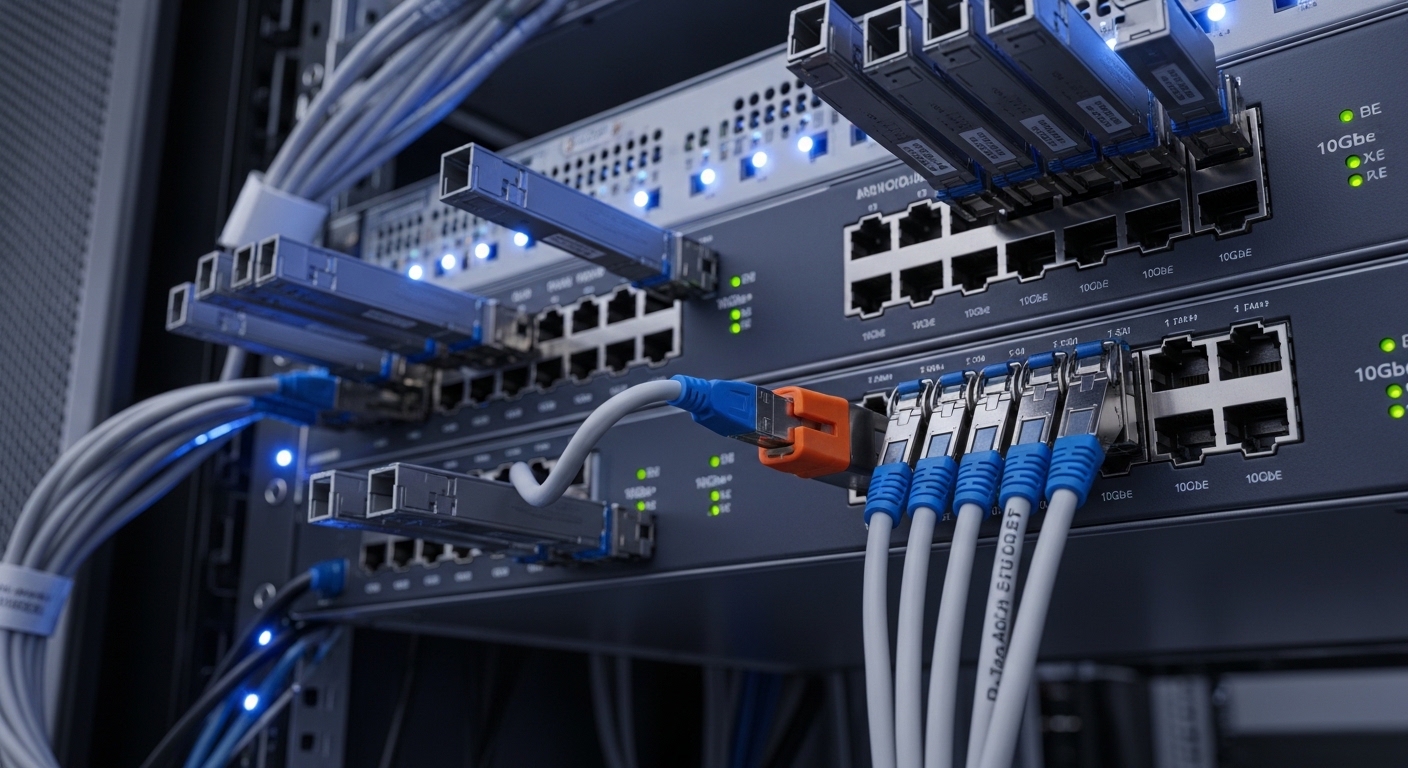
In a typical metro transport network, you may already have deployed fiber pairs with some margin for additional wavelengths. Instead of provisioning new optics and new wavelengths blindly, a wavelength-tunable DWDM transceiver supports fine-grained frequency planning, enabling incremental capacity expansion. That means you can respond to demand spikes by allocating an available ITU-T grid slot, rather than waiting for new cable installation.
From an operations perspective, tuning is not just “select a color.” Modern tunable optics implement a controlled laser source with a defined tuning range and a stability target, so the transceiver can lock to a specific ITU channel and maintain alignment through temperature and aging. Service providers also benefit from reduced truck rolls during early rollouts: you can correct wavelength mismatches without swapping the entire link end-to-end.
How tunability maps to ITU grid reality
Most wavelength planning follows the ITU-T DWDM channel grid (commonly 50 GHz or 100 GHz spacing). A tunable DWDM transceiver is constrained by its tuning range and its channel step granularity. If your network uses 50 GHz spacing, you need a module whose tuning grid can reliably hit the required center frequencies without excessive guard bands.
Operationally, engineers also care about power budgeting and receiver sensitivity. Your link budget must account for fiber attenuation, connector and splice losses, and the insertion loss of ROADM add-drop filters or mux/demux components. The tuned wavelength affects the effective OSNR and thus the achievable reach for the modulation format you run.
Key specifications that actually decide link viability
Specs on a datasheet can look similar across vendors, but the differences show up in field behavior: tuning reproducibility, optical power stability, and temperature behavior. Below is a practical comparison of representative tunable DWDM transceiver families you will encounter in service provider deployments. Always verify exact part numbers against your vendor’s datasheet and your optics vendor compatibility matrix.
| Spec | Example tunable 10G-class | Example tunable 40G/100G-class | Why it matters in the field |
|---|---|---|---|
| Data rate | 10.3125 Gb/s (common) | 40G or 100G (varies) | Determines modulation and required OSNR |
| Wavelength band | C-band (typical) | C-band or extended C/L (varies) | Must align with ROADM and mux/demux plan |
| Tuning range | Broad C-band coverage (varies by model) | Often wider range for reconfigurability | Controls how many ITU channels you can reuse |
| Channel spacing | 50 GHz or 100 GHz support (varies) | Depends on platform | Impacts guard bands and filter compatibility |
| Optical output power | Typical tens of dBm class (varies) | Higher classes for longer reach (varies) | Drives link budget margin |
| Connector type | LC (most common) | LC or MPO-based depending on form factor | Must match patch panels and transceiver cage |
| DOM support | Digital Optical Monitoring via I2C | Enhanced DOM; vendor-specific alarms | Enables monitoring, alarms, and performance logging |
| Operating temperature | Commercial: 0 to 70 C; Industrial options exist | Often broader for outside plant shelters | Temperature swings affect tuning stability |
For standards context, many pluggable optical modules report status through management interfaces aligned with common optics monitoring conventions, while the underlying Ethernet and transport framing choices follow IEEE Ethernet specifications where applicable. For DWDM channelization and system behavior, engineers also cross-check requirements against the ITU-T DWDM grid and system guidance referenced in vendor documentation. [Source: IEEE 802.3; Source: ITU-T G.694.1]
What to look for in DOM fields and alarms
In the field, the value of a tunable DWDM transceiver is partly operational: you need DOM telemetry that can be correlated with alarms. Typical items include laser bias current, TEC current (if applicable), optical output power, received power, temperature, and sometimes tuning state or channel identifier. If DOM only reports raw values without channel context, your NOC will spend extra time correlating logs.
Selection checklist: deciding which tunable module fits your network
Buying optics is less about maximum reach and more about matching constraints: channel plan, platform compatibility, monitoring depth, and operational risk. Use this ordered checklist before you authorize procurement.
- Distance and link budget: Calculate fiber attenuation, splice and connector losses, and ROADM insertion loss for the exact route. Confirm transmitter power and receiver sensitivity for your modulation format and line rate.
- ITU channel grid alignment: Verify the tunable range covers the exact wavelengths you need, and confirm support for your channel spacing (for example 50 GHz vs 100 GHz). Confirm guard band requirements with your mux/demux vendor.
- Switch and chassis compatibility: Confirm the transceiver form factor and electrical interface match your line card. A tunable module that is “C-band compatible” may still fail if the host expects a specific management profile or optical power class.
- DOM and alarm granularity: Ensure the platform can read alarms and performance counters. Validate whether channel ID and tuning state are exposed in telemetry for NOC workflows.
- Operating temperature and thermal design: Match module operating range to the environment. In shelters, airflow and heat soak can shift tuning behavior; confirm stability specs and any TEC power draw.
- Vendor lock-in risk: Tunable systems can be sensitive to vendor-specific calibration routines. Plan for interoperability tests and consider whether you need dual-vendor sourcing for resiliency.
Pro Tip: In live networks, the biggest tuning “surprises” are not center wavelength errors but filter mismatch after ROADM reconfiguration. Before rollout, run an end-to-end wavelength sweep and verify received power and error-rate stability for the exact ROADM port configuration your wavelength plan will use.
Common mistakes and troubleshooting patterns you will see in the field
Even careful teams can get burned because tunable optics interact with the rest of the optical chain. Here are concrete failure modes, their likely root causes, and how teams typically resolve them.
Mistake 1: Using the wrong channel spacing assumption
Root cause: The planning team assumes 50 GHz spacing, but the ROADM mux/demux or filter set effectively behaves closer to a different grid or has stricter passband edges. The tunable transceiver locks to a valid ITU-like frequency, yet the filter attenuates it enough to fail.
Solution: Confirm filter specifications and insertion loss vs wavelength for the exact ROADM model. Perform a wavelength sweep using the same channel identifiers the ROADM controller will apply, not just a lab-only mapping.
Mistake 2: Ignoring DOM tuning state during incident triage
Root cause: Teams monitor only transmit power and temperature, but not the tuning status. If the module is in a partial lock, or the host instructs a channel change that did not fully converge, the link may show intermittent errors.
Solution: Capture DOM telemetry at the moment of failure, including any tuning lock indicator, channel ID, and TEC or laser bias metrics. Update runbooks so NOC engineers pull the right fields immediately.
Mistake 3: Underestimating thermal and airflow effects in shelters
Root cause: A tunable transceiver may have stable tuning in a controlled rack, but in an outside plant shelter the airflow pattern is uneven. Temperature gradients can affect TEC response time and laser stability.
Solution: Validate thermal behavior by running sustained traffic while logging temperature and optical metrics. If needed, adjust fan curves, add baffles to improve airflow, or move modules to zones with consistent cooling.
Mistake 4: Overlooking connector cleanliness and polarization-dependent losses
Root cause: A tunable link can have enough margin in the daytime, then fails after maintenance because of dirty LC connectors or increased insertion loss. Polarization effects become more noticeable when the optical chain includes multiple components with polarization sensitivity.
Solution: Follow a strict cleaning and inspection process: use microscope inspection, replace patch cords if contamination is repeated, and confirm whether your system includes polarization-sensitive elements.
Cost and ROI: what you should expect in total cost of ownership
Pricing depends on data rate, tuning bandwidth, and host platform. In many service provider procurement cycles, a tunable DWDM transceiver will cost materially more than a fixed-wavelength counterpart. Typical street-price ranges vary widely by vendor and contract, but teams often see a spread where tunable modules can be several times the cost of fixed optics at the same line rate.
ROI usually comes from avoiding physical fiber builds and reducing operational friction. The most measurable savings are: fewer new trenching projects, faster turn-up for new customers or routes, and reduced inventory complexity when demand shifts across wavelengths. However, TCO also includes calibration time, test bench time for wavelength sweeps, and potential higher failure exposure if modules are frequently tuned and handled.
If you run a high-utilization metro ring with ROADM switching, tunability can reduce stranded capacity by reassigning wavelengths. If your network is already capped by electronic reach or by fixed filter constraints, the ROI may be smaller; you should compare tunable vs fixed for each route class.
FAQ
What is a tunable DWDM transceiver used for in a service provider network?
A tunable DWDM transceiver is used to select and transmit on a specific wavelength channel over existing fiber. Service providers use it to add incremental capacity, support reconfigurable routing, and reduce the need for new fibers when demand changes.
How do I confirm compatibility with my ROADM and transport chassis?
Start with the host vendor’s optics compatibility list, then validate against your exact ROADM filter model and channel plan. In practice, you should run a wavelength sweep and verify received power and error-rate stability for the same channel identifiers the ROADM controller will set.
Does tunability increase failure rates or reduce reliability?
It can increase operational complexity because tuning and thermal control add moving control loops. Still, reliability is often comparable when modules are deployed within rated temperature and when DOM alarms are monitored correctly. The real risk comes from poor cleaning practices and filter mismatch rather than tuning itself.
What wavelength range should I target for future growth?
Target enough coverage to span your planned ITU channels plus operational headroom for future ROADM reconfiguration. If your roadmap includes new service classes at different times, prefer a broader tuning range that matches your expected channel grid and avoids late-cycle hardware changes.
Do I need special management software to monitor a tunable module?
You need telemetry integration so your NOC can interpret DOM fields and correlate them with alarms. Many platforms can ingest standard optics telemetry, but tuning-specific fields like channel lock status may be vendor-specific, so test your monitoring workflow before rollout.
Where can I verify standards and channel grid assumptions?
For channel grid guidance, check ITU-T DWDM recommendations such as [Source: ITU-T G.694.1]. For electrical framing behavior when applicable, consult [Source: IEEE 802.3]. Always verify final system constraints in your vendor datasheets and ROADM documentation.
If you want to scale capacity without waiting for fiber builds, the tunable DWDM transceiver becomes a planning tool as much as an optics part number. Next, compare how fixed vs tunable optics change inventory and operations using tunable vs fixed DWDM transceivers for carriers.
Author bio: I have deployed and troubleshot DWDM optics in metro transport environments, validating wavelength plans with ROADM sweeps and DOM-driven incident workflows. I also evaluate optical link budgets and TCO tradeoffs for carrier procurement teams, focusing on measurable reliability and interoperability outcomes.
