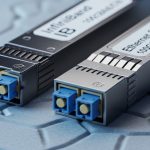
Passive vs Active SFP Optical Cables Explained
In the world of fiber networking, the choice of transceivers and cables can make or break performance, reliability, and cost. Small Form-factor Pluggables (SFPs) are popular for their compact design and versatility, but the cables and modules paired with them matter just as much as the transceivers themselves. A common point of confusion is the distinction between passive and active SFP optical cables. This guide explains the differences, use cases, benefits, and practical considerations to help you decide which option best fits your network.
What is an SFP, and how does the cable fit in?
An SFP is a compact, hot-swappable transceiver used for both Ethernet and other data communication standards. It converts electrical signals into optical signals (and vice versa) to travel over fiber optic cables. The term “SFP cable” can refer to several configurations, including direct-attach copper (DAC) cables and fiber-based fiber optic cables paired with SFPs. When we talk about passive vs active SFP optical cables, we’re focusing on fiber-based solutions paired with SFPs that transmit data via light, rather than copper paths.
Passive SFP Optical Cables: What they are and how they work
Since there are no active components along the link, the only power required is from the SFP transceivers themselves. This can simplify deployment and reduce failure points. Short-range data center links (e.g., rack-to-rack, blade enclosure connections) where you need reliable, low-cost, low-latency connectivity without extra electronics in the cable path.
Active SFP Optical Cables: What they are and how they work
An external power source or an active module within the cable drives the electronics, which can add complexity but extends reach and timing accuracy. Long-distance data center interconnects, campus networks, or environments requiring greater link budgets and higher fidelity over extended runs. - Cons: Higher cost, more potential points of failure, power management considerations, more complex installation and compatibility checks.
Key technical differences to consider
- Distance and Link Budget: Passive cables rely on the SFP’s own transmitter power and the fiber’s attenuation. Active cables provide additional gain or regeneration, enabling longer distances or higher performance in environments with greater cable loss.
- Power and Cabling Complexity: Passive cables require no extra power. Active cables need power to drive their electronics, which may affect cabinet layouts, cooling, and cable management.
Passive links generally have lower latency because there are no active electronics in the path. Active links introduce minimal, but measurable, additional latency due to signal processing. Passive cables are mechanically simple but limited in reach. Active cables may offer better performance but require power management and potential firmware updates for longevity.
Performance considerations: data rate, distance, and environmental factors
Passive SFP cables are common for 1 Gbps and 10 Gbps links over short distances. Active cables are often selected for higher data rates (40 Gbps, 100 Gbps) or longer links where passive constraints become critical. Temperature, vibration, and connector cleanliness impact both passive and active links. Active cables may add sensitivity to power supply stability and thermal environments due to onboard electronics. Proper fiber routing, duplex polarity, and correct connector mating are essential. Active solutions can mitigate some transmission impairments but do not replace good installation practices.
Practical deployment tips
For a few meters in a dense data center, passive SFP cables are typically sufficient and cost-efficient. For longer runs or higher speeds, evaluate active options or alternative fiber paths. Verify vendor compatibility matrices for transceivers, cables, and firmware. Mixed-vendor configurations can lead to service interruptions if not supported. If using active cables, plan for power availability at the cable path and ensure adequate cooling in racks or cabinets to prevent thermal-related performance issues. Run acceptance testing with a known-good baseline. Measure optical power, bit error rate (BER), and latency to confirm the link meets your requirements. Keep spare cables and modules on hand. Active cables may require firmware updates or periodic power cycling as part of standard maintenance.
Choosing the right option for your network
Choosing between passive and active SFP optical cables depends on distance, speed, budget, and reliability requirements. Consider these practical guidelines:
Active SFP optical cables can fill gaps in reach and performance, especially when upgrading existing infrastructure or deploying high-density, high-speed connections. For pods or racks within the same row, passive cables may suffice. For inter-rack or cross-bedroom layouts, active cables or separate fiber runs with traditional transceivers might be more appropriate. Include cable cost, power consumption, potential warranty coverage, and anticipated upgrades. In some cases, the higher upfront cost of active cables saves time and disruption later.
Conclusion: making an informed, future-proof choice
Both passive and active SFP optical cables have their place in modern networks. Passive cables excel in simplicity, low cost, and reliability for short distances, while active cables unlock greater reach and performance where distance and data rates push passive solutions to their limits. By understanding the technical distinctions, compatibility considerations, and deployment implications, you can design networks that meet current demands while staying ready for future growth. When in doubt, consult with your vendor’s interoperability guides and run a controlled pilot to validate performance under your unique workload and environment.