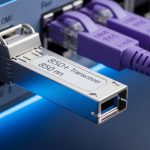
You are buying transceivers for a real rack, not a spec sheet. This article compares how MTP, LC, and SC connector transceivers behave in day-to-day deployments, including density, patching workflow, and compatibility with common switch ports. It helps network engineers and field technicians choose the right connector style before they order pallets of optics.
MTP vs LC vs SC: what changes at the fiber interface

Connector choice affects more than aesthetics. It determines how many fibers you can route through a given rack footprint, how patching is performed under time pressure, and what adapter hardware you will need at either end. In practice, LC dominates high-density 10G to 100G deployments, SC is common in older enterprise and some telecom gear, and MTP is widely used for parallel multi-fiber links such as MPO/MTP-based 40G and 100G.
Key field reality: many “mismatched connector” problems are not transceiver failures. They are patch panel and adapter mismatches that lead to signal loss, swapped polarity, or incomplete seating.
Performance and optics fit: reach, lane count, and polarity
Connector style is tightly coupled to the transceiver optics type. LC is usually single-fiber per lane (Simplex/Duplex) for 1G to 10G and common 25G/50G single-lane designs. SC is also typically single-fiber per lane, but physical bulk and adapter availability can differ by vendor. MTP typically supports parallel fiber arrays; that means you must align lane mapping and polarity correctly, especially for 40G/100G.
| Connector + typical transceiver type | Common data rates | Typical reach (examples) | Wavelength examples | Connector style | Power and thermal envelope | Operating temperature |
|---|---|---|---|---|---|---|
| LC (e.g., Cisco SFP-10G-SR) | 1G, 10G, 25G, 40G (with appropriate optics) | Up to ~300 m on OM3, ~400 m on OM4 (50/125) | 850 nm (SR-class) | Duplex LC (2 fibers) | Often ~1 W class (varies by vendor) | 0 to 70 C (commercial) or wider (industrial) |
| SC (e.g., legacy enterprise optics) | 1G, 10G (older deployments) | Similar SR/LR reach ranges depending on optics | 1310/1550 nm for LR-class; 850 nm for SR-class | Simplex SC (single fiber per lane) | Often ~1 W class | 0 to 70 C typical |
| MTP (e.g., 40G/100G parallel optics) | 40G, 100G (parallel lanes) | OM4-based multi-fiber links commonly used within data centers | 850 nm parallel (typical) | Parallel MTP (8/12 fibers depending on polarity scheme) | Can be higher per module due to multiple lanes | 0 to 70 C typical |
For vendor-specific compatibility, verify the exact module family. For example, Finisar offers 40G/100G MPO/MTP optics with lane mapping requirements, while Cisco and FS.com provide widely used SR modules in LC form factors for 10G and 25G. When you mix connector ecosystems, you often need branded or spec-accurate adapter kits.
External references: [Source: IEEE 802.3], [Source: ANSI/TIA optics and cabling guidance].
Pro Tip: If you are troubleshooting “link up but no traffic” on MTP-based parallel optics, treat polarity and lane mapping as the first suspect. Many failures come from using the right cable but the wrong patch-panel orientation, not from the transceiver itself.
Deployment workflow: what technicians feel during patching
In a 3-tier data center leaf-spine topology with 48-port 10G ToR switches, engineers often standardize on LC for access and MTP for uplinks where parallel interfaces reduce rack patch clutter. A typical day: you add 20 uplinks, each requiring two LC fibers per link in duplex, and you update patch records to keep polarity consistent. When you move to 40G/100G uplinks, MTP assemblies can reduce the number of patch cords, but they increase the importance of correct lane mapping.
SC is often encountered in retrofit scenarios: an older enterprise core might still use SC-based optics or patch panels, while new downstream gear expects LC. In those cases, the “connector decision” becomes a “patching and adapter decision,” including whether your patch panels support SC duplex adapters with the right geometry and strain relief.
Cost and ROI: how connector choice changes TCO
Connector style influences both unit cost and operational cost. LC optics are usually the most cost-effective per lane for short-reach within modern cabinets due to mature supply chains and high volume. SC optics can be slightly higher or lower depending on your existing inventory ecosystem; they often cost more once you include adapter hardware and patch panel revisions. MTP-based optics can reduce the number of patch cords and save rack space, but they can raise the cost of correct cabling components and rework when polarity mistakes happen.
Realistic budget behavior: in many enterprise refresh cycles, third-party LC SR modules (and compatible optics) can be 20% to 50% cheaper than OEM equivalents, but you must account for higher failure variance and the time cost of RMAs. Total cost of ownership is frequently dominated by labor and downtime rather than the optics’ purchase price, especially when patching errors require truck rolls.
Selection checklist: decision factors engineers actually weigh
- Distance and fiber type: confirm OM3/OM4/OS2 and the required reach for your optics class.
- Switch and chassis compatibility: verify the transceiver form factor and whether the vendor requires specific optical parameters.
- Connector ecosystem: match LC vs SC vs MTP to your patch panel standard, or plan adapters and re-termination.
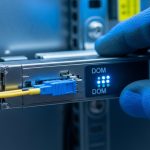
- DOM support: check digital optical monitoring requirements (vendor-specific thresholds and alarms).
- Operating temperature: confirm module temperature range for the exact aisle/cabinet airflow conditions.
- Vendor lock-in risk: evaluate whether the platform enforces vendor optics or only standards-compliant performance.
Common mistakes and troubleshooting tips
1) Wrong adapter type between connector families. Root cause: using an LC to SC or MTP to MPO adapter with incorrect geometry or ferrule type. Solution: match adapter part numbers to both connector types and verify ferrule cleanliness before seating.
2) Polarity and lane mapping errors with MTP parallel links. Root cause: patching one end with reversed orientation or using a cassette/panel that expects a different polarity scheme. Solution: follow the cabling polarity diagram from the vendor and validate with a continuity check before inserting optics.
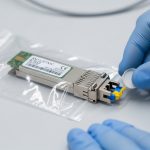
3) Dirty ferrules and poor cleaning procedure. Root cause: dust on LC or SC ferrules causes intermittent link flaps and high optical power penalties. Solution: use lint-free wipes plus isopropyl alcohol or approved cleaning cartridges, then inspect under a microscope-style viewer.
4) Exceeding optical budget through excess patching. Root cause: extra patch cords, too many mated connections, or using a cable grade that does not meet OM4 requirements. Solution: measure or estimate link loss and keep within the optics budget; reduce unnecessary jumpers.
Decision matrix: which connector transceiver fits your project
| Project driver | Best fit | Why | Main limitation |
|---|---|---|---|
| High-density 10G/25G within a modern patching standard | LC | Duplex LC is compact and widely supported | More patch cords per lane vs parallel MTP |
| Legacy retrofit with existing SC patch panels | SC | Minimizes rework when SC is already standardized | Adapters can add loss and bulk if you mix ecosystems |
| 40G/100G parallel links and rack space reduction | MTP | Parallel arrays reduce patch clutter | Polarity and lane mapping must be exact |
| Mixed environment with multiple switch vendors | LC-first planning | LC is the most universal baseline across modern optics | May require adapter strategy for MTP/SC segments |
Which Option Should You Choose?
If you are building or upgrading a data center with a modern cabling standard, choose LC optics for most access and aggregation links because it minimizes operational friction and preserves straightforward troubleshooting paths. Choose MTP only when you are deploying 40G/100G parallel optics and you can enforce strict polarity documentation and patch-panel discipline. Choose SC when you must preserve an existing SC patch ecosystem to avoid costly re-termination.
Next step: audit your patch panels and current transceiver inventory, then map each port group to a connector standard using fiber patch panel connector compatibility checklist.
FAQ
Q: Can I use an MTP LC SC connector transceiver interchangeably?
No. MTP, LC, and SC refer to different physical connector families and typically different optics types. You can bridge them only with the correct adapter or re-cabling, and parallel optics require careful lane mapping.
Q: What happens if I plug the wrong connector but the adapter fits?
You might get link detection but elevated errors due to polarity inversion or increased insertion loss. For MTP, “it fits” does not guarantee correct lane alignment, so traffic can fail while LEDs still show link.
Q: How do I confirm DOM compatibility across vendors?
Check the transceiver datasheet for DOM functionality and the switch platform’s supported diagnostics. On some platforms, thresholds and alarm behavior vary by vendor, so validate in a staging rack before full deployment.
Q: Are third-party optics safe for production?
They can be, but