Understanding 1G SFP Modules for SMB Network Deployments
Small and medium-sized businesses (SMBs) increasingly rely on robust, scalable networks to support daily operations, remote work, and cloud-based applications. As budgets tighten, choosing the right connectivity hardware becomes critical. 1G SFP modules offer a cost-effective, flexible solution for SMB networks that need reliable gigabit performance without the complexity or expense of higher-speed optics. This article dives into what 1G SFP modules are, why they matter for SMB deployments, practical implementation tips, and how to select the right modules for various network scenarios.
What Are 1G SFP Modules and How Do They Work?
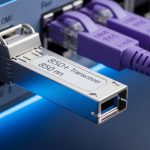
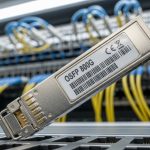
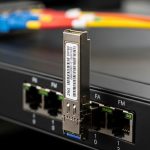
Small Form-factor Pluggable (SFP) modules are hot-swappable transceivers that plug into SFP ports on network devices like switches, routers, and media converters. A 1G SFP module, also known as a 1000BASE-SFP, provides 1 gigabit per second Ethernet connectivity over fiber or copper media. These modules translate electrical signals to optical or electrical signals suitable for transmission over fiber or copper cables, enabling flexible distance options and upgrade paths without replacing entire devices.
Key characteristics include:
- Media options: Multimode fiber (MMF), single-mode fiber (SMF), or copper (RJ-45) variants exist depending on distance and networking goals.
- Wavelengths: Common optical wavelengths include 850 nm (MMF) and 1310/1550 nm (SMF), chosen based on distance and dispersion considerations.
- Distance support: MMF SFPs cover shorter runs (tens to hundreds of meters), while SMF SFPs support longer links (up to several kilometers, depending on the module).
- Form factor: Standard SFP or SFP+ footprints; 1G modules are designed to be hot-swappable and compatible across many vendors’ devices.
Why 1G SFP Modules Are Still Relevant for SMBs
Even with the proliferation of 2.5G, 5G, and 10G links, 1G SFP modules remain attractive for SMBs due to several practical benefits:
- Cost-effectiveness: 1G SFPs are typically cheaper than higher-speed optics and require less investment in high-end switches or routers.
- Upgrade flexibility: Use existing copper or fiber infrastructure and scale gradually as bandwidth needs grow.
- Port reuse and segmentation: Layered networks can be segmented with VLANs while maintaining affordable uplinks to core devices.
- Compatibility and availability: They’re widely available and supported by most vendors, reducing procurement risk.
- Easy maintenance: For small teams, the plug-and-play nature of SFP modules simplifies deployment and replacement.
Practical Technical Details for SMB Deployments
When planning to deploy 1G SFPs in an SMB network, consider these practical details to ensure reliable performance and long-term value:
- Media choice based on distance and environment: For short office-run distances (within a building or campus), MMF 1G SFPs are cost-efficient. For longer runs between buildings or across campus, SMF SFPs with dispersion-managed wavelengths (1310 nm) are preferred.
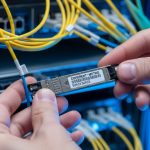
- Cable quality and termination: Use high-quality cables with proper termination. MMF requires correct OM-grade rating (e.g., OM1/OM2/OM3), while SMF uses standard single-mode fiber with LC/SC connectors depending on the module and device.
- Link budget and power budget: Verify the per-link attenuation budget and device power budgets. 1G SFPs are generally forgiving, but dead zones due to connector quality or dirty fiber can cause link drops.
- Distance guidelines by module type: Typical 1G MMF modules support up to 550 meters on 50/125 µm OM2 fiber or about 300 meters on OM3. SMF 1G modules can reach several kilometers depending on the specific module (e.g., 2–20 km with certain transceivers). Always check the datasheet for exact figures.
- Duplex and fiber types: Ensure the receiving equipment supports full-duplex operation and that the fiber type (MMF vs SMF) matches the module. Mixing MMF with SMF requires careful planning and may reduce performance.
- Power and heat management: SFPs generally draw little power, but dense deployments can add up. Ensure adequate cooling and airflow around switches and patch panels.
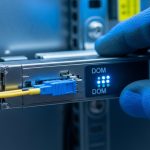
- Monitoring and management: Many modern switches offer SFP health monitoring, SFP presence, TX/RX power levels, and error counters. Enable SNMP or vendor management to predict failures before they occur.
- Redundancy planning: For critical SMB networks, implement link redundancy with dual uplinks to the core or to a NAS/SD-WAN gateway. Consider stacking or MLAG (if supported) for resilience.
Common SMB Use Cases for 1G SFP Deployment
1G SFP modules fit several typical SMB scenarios, including:
- Office-to-poE access or distribution: Connect a PoE-enabled switch to a distribution switch in a core closet using 1G SFPs over MMF to provide reliable, budget-friendly throughput for IP cameras, VoIP phones, and wireless access points.
- Remote office interconnects: Use SMF 1G SFPs to link branch offices back to a main data center over longer distances with low latency and predictable performance.
- Data center edge connectivity: In small data centers, 1G SFPs can connect top-of-rack (ToR) switches to aggregation switches, supporting management networks, storage replication, or backup traffic that does not require higher bandwidth.
- Backup and archival links: 1G links are often sufficient for periodic backups to NAS devices or offsite cloud gateways, reducing the need for higher-speed optics in non-critical paths.
Choosing the Right 1G SFP Module for Your SMB Network
Selecting the right 1G SFP module involves evaluating distance requirements, media type, and compatibility with your existing devices. Consider these criteria:
- Media type: Decide between MMF versus SMF based on distance and cabling already installed. MMF is typically cheaper for short runs; SMF enables longer links.
- Wavelength and distance: Check the module’s specified reach (e.g., 550 m for 62.5/125 μm MMF OM1, 550 m for OM2/OM3 at 1300 nm, or multiple kilometers for SMF at 1310/1550 nm). Plan for future expansion when selecting spacing.
- Vendor compatibility: While SFPs are designed to be cross-vendor, some devices have strict optics compatibility lists. Confirm your switches/routers support third-party SFPs if you plan to mix brands.
- Warranty and support: Prefer SFPs with a solid warranty and vendor support. This ensures replacements and firmware alignment with device software.
- Power budgeting and thermal considerations: Dense deployments on a single switch may require thermal management. Ensure the chosen SFPs do not push the device beyond recommended heat levels.
- Monitoring features: Look for modules with robust diagnostic capabilities like TX/RX power, optical return loss, or digital diagnostics (unsafe to rely on old IBIS data).”
Best Practices for Implementing 1G SFPs in SMB Environments
Adopt these practical practices to maximize uptime and performance:
- Start with a network map: Document all devices, fiber runs, and VLANs. This minimizes guesswork when adding 1G links or performing troubleshooting.
- Test before deployment: Use a portable SFP tester or a test link to validate distance, attenuation, and link stability before committing to a production path.
- Label and color-code cables: Clear labeling reduces confusion during maintenance and future upgrades.
- Implement redundancy where possible: If uptime is critical, deploy dual 1G uplinks to eliminate single points of failure on access switches.